
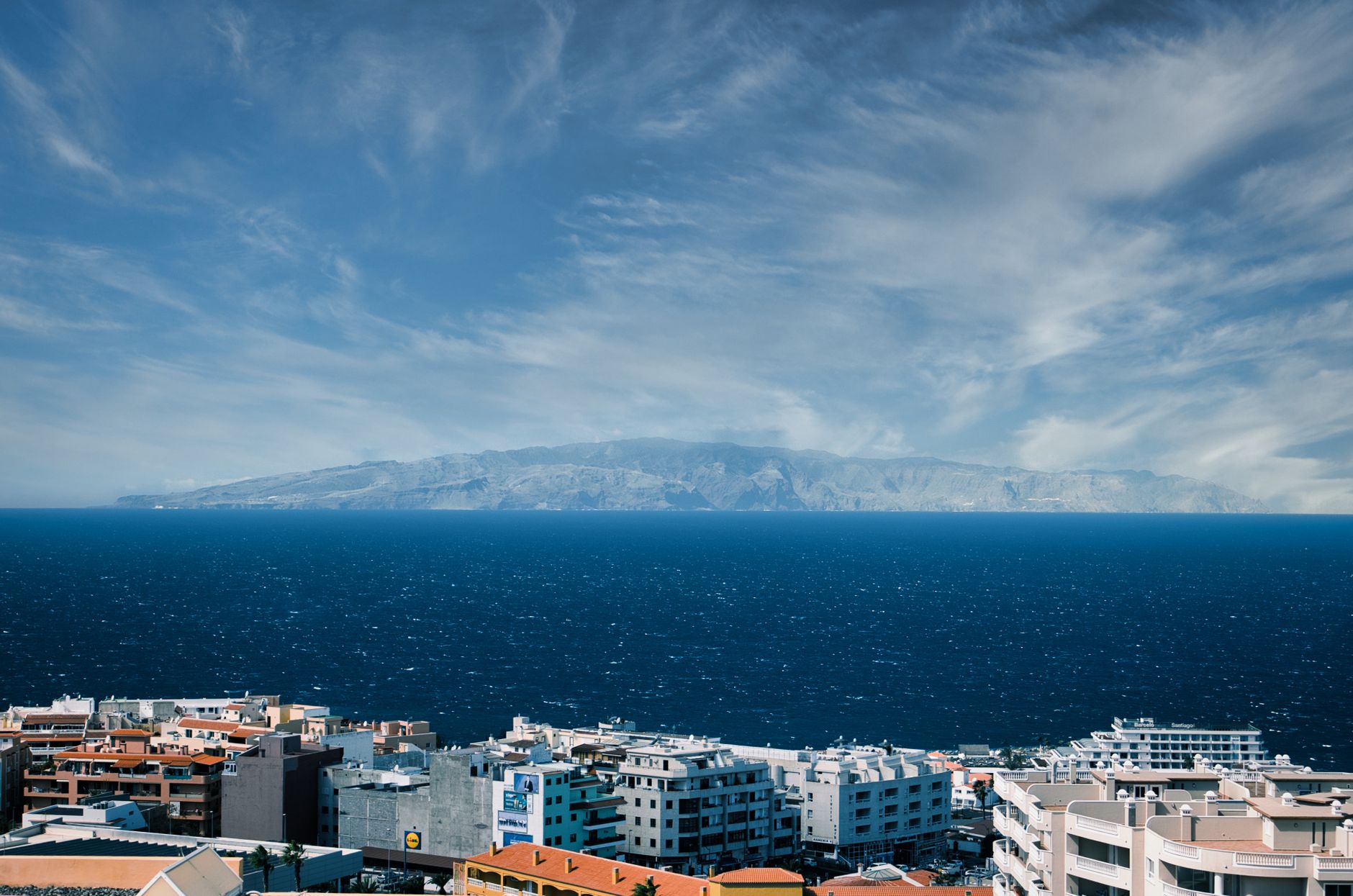

The Vertical Island and Its Fragile Balance
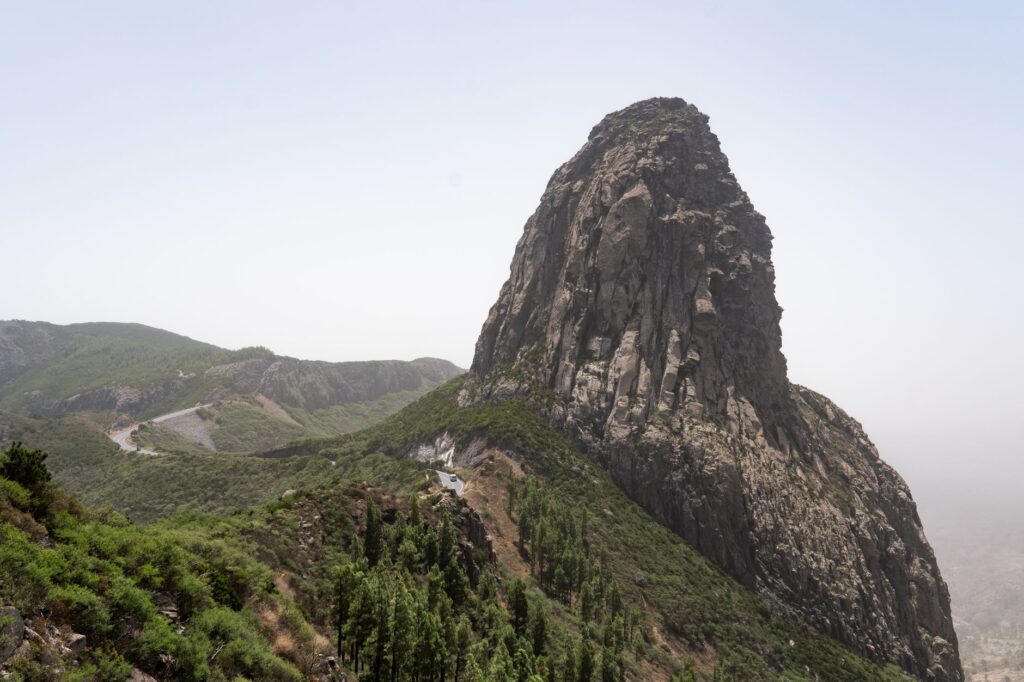
The topography of La Gomera defies any conventional notion of island landscapes. Here, deep ravines carve the earth like scars of fire and water, converging on a green heart where time seems to stand still. In this insular territory, environmental conservation is not an aesthetic luxury, but an existential necessity tied to the survival of water resources and endemic biodiversity. The island’s summits act as a giant natural sponge, capturing the moisture of the trade winds in a phenomenon known as horizontal precipitation.
For decades, demographic pressure and the progressive abandonment of mid-altitude farmlands put this fragile balance at risk. However, a paradigm shift driven by local scientists and rural communities has begun to reverse historical degradation. The key to this renaissance lies in understanding that environmental protection cannot be achieved by turning away from those who have traditionally inhabited the land, but by integrating their ancestral knowledge with modern ecological science.
The role of the Biosphere Reserve has been fundamental in articulating strategies that go beyond the mere declaration of protected areas. Today, efforts are concentrated on healing the wounds of past forestry practices, restoring spaces where livestock and intensive logging once decimated the plant canopy. This process does not seek to recreate an untouchable museum, but rather a dynamic, resilient ecosystem capable of coping with the climatic challenges of the twenty-first century.
The Silent Return of the Laurisilva
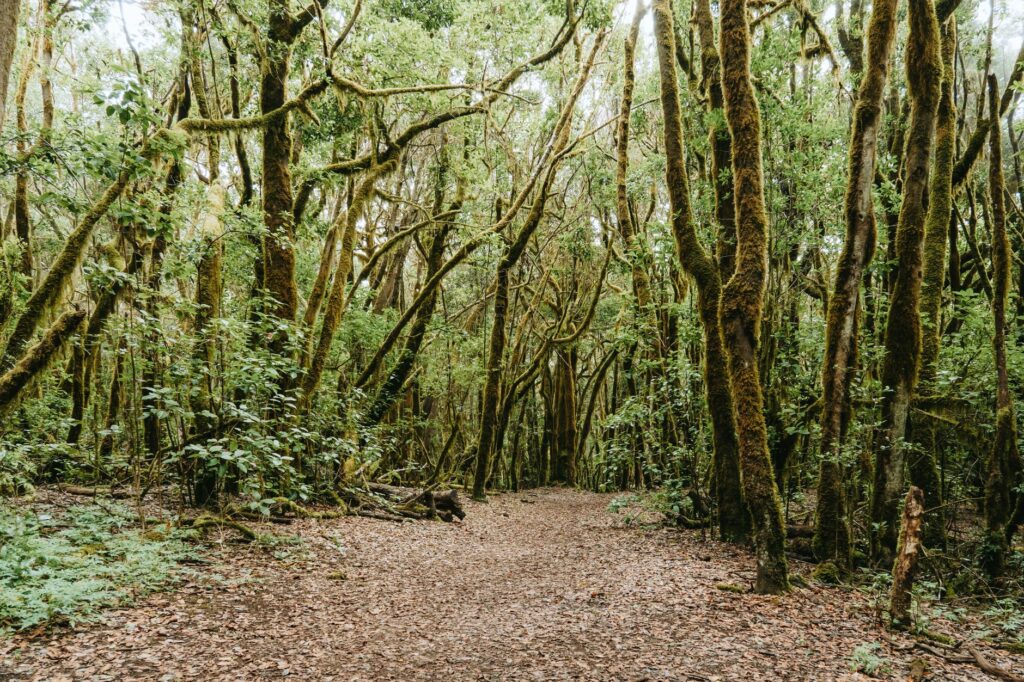
The laurisilva is much more than a forest; it constitutes a living fossil from the Tertiary period that finds its most emblematic refuge in the Canary Islands. In La Gomera, this subtropical humid forest covers large areas of Garajonay National Park, a natural sanctuary declared a UNESCO World Heritage Site. The forest restoration work carried out in recent years has prioritized the removal of invasive species and the reintroduction of native trees such as the vining, tile trees, and barbusano.
Biologists in charge of the project point out that the recovery of the understory is just as important as planting adult trees. The dense carpet of mosses, lichens, and ferns acts as an irreplaceable hydrological regulator, filtering mist water into the underground aquifers that supply the entire island. This natural process ensures that ravines maintain a minimum ecological flow during the driest summer months.
Restoring an ancient forest is not about planting trees quickly, but about giving the soil back its memory capacity and returning the original hydrological pulse to micro-basins.
Furthermore, connectivity between isolated fragments of laurisilva has become a technical priority. Through ecological corridors crossing abandoned agricultural plots, the movement of endemic fauna—such as the Bolle’s pigeon and the laurel pigeon—is facilitated, acting as key species for seed dispersal and the overall health of the insular ecosystem.
Regenerative Agriculture in Northern Terraces
Descending from the mist of the summit toward the northern slopes, the landscape changes drastically. Here, terraced fields carved into steep slopes tell the story of a titanic effort to cultivate the land without destroying it. In recent years, a regenerative agriculture movement is transforming these traditional crops, replacing chemical fertilizers with organic compost and recovering local fruit and vegetable varieties adapted to water stress.
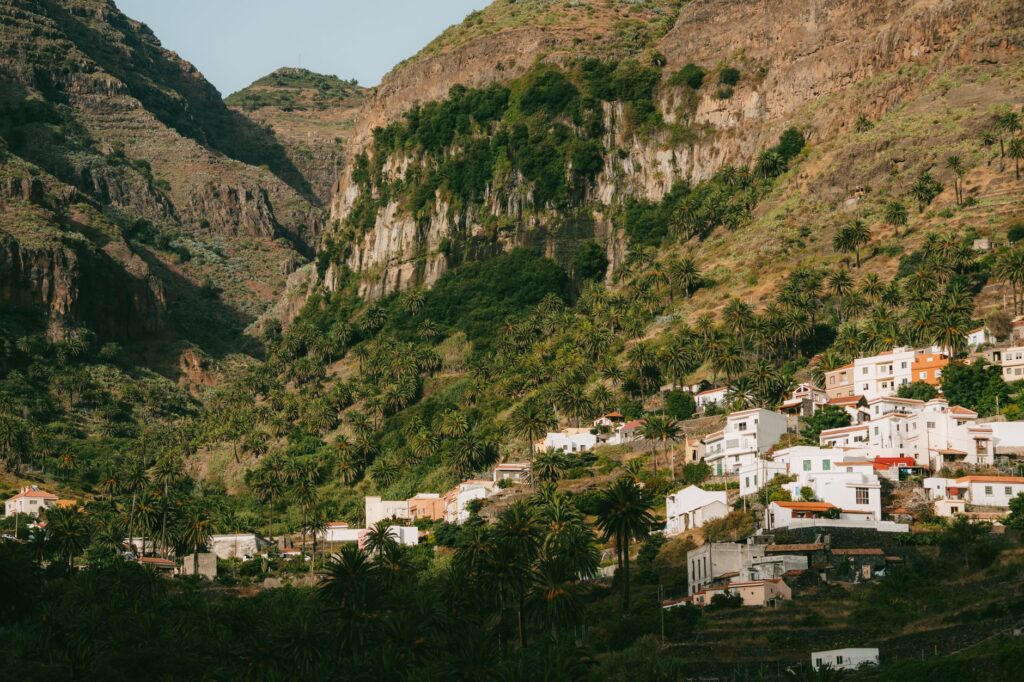
Local farmers, advised by agricultural technicians, have adopted practices such as mulching and crop rotation to improve moisture retention in sandy-loam soils severely affected by erosion. These techniques not only increase the natural fertility of the land but also drastically reduce surface runoff during seasonal torrential rains.
This agricultural rebirth has a direct impact on the local economy and the island’s tourism offering. Visitors walking along Gomera’s trails have the opportunity to understand that every fruit consumed implies a pact of respect with the landscape. Conscious agroturismo thus positions itself as an educational tool, where the traveler participates in terrace workshops and tastings of local products, indirectly financing the continuity of these sustainable practices.
Water Management and the Culture of the Ravine
Water is the most precious and scarce resource in La Gomera. The survival of its inhabitants has historically depended on a complex network of water galleries, springs, and irrigation channels channeling water from the summits down to coastal crops. Today, the modernization of these infrastructures is combined with rigorous citizen auditing to prevent losses and optimize drip irrigation across all agricultural holdings.
Local communities actively participate in island water councils, a model of participatory governance prioritizing the ecological flow of ravines over tourist or agricultural overexploitation. This transparent management ensures that the island’s socioeconomic development does not mortgage its future water security, a latent risk in many other archipelagos worldwide subjected to seasonal pressure.
- Real-time monitoring of groundwater levels in major river basins.
- Community maintenance of traditional irrigation channels to preserve riparian biodiversity.
- Environmental education programs in local schools focusing on the insular water footprint.

Montane Beekeeping and Pollinator Biodiversity
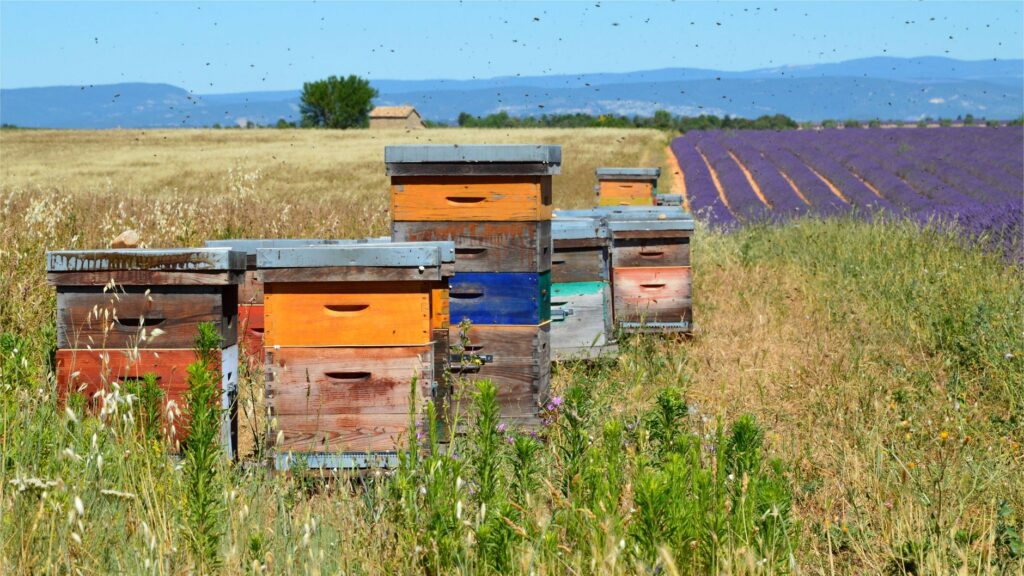
among the codeso shrubs and taginaste flowers, beekeeping plays a crucial ecological and economic role that often goes unnoticed. The production of monofloral laurisilva and retama honeys not only represents a gastronomic identity sign but also guarantees the cross-pollination of hundreds of endemic plant species. Local beekeepers have abandoned the use of aggressive pharmaceutical treatments in hives, opting for certified organic management.
Recent entomological studies confirm that the presence of well-managed hives near protected natural areas increases the density of wild fruits available for forest avifauna. In this way, traditional beekeeping integrates as an indispensable link in the insular trophic chain, demonstrating that primary production and strict conservation can walk hand in hand.
Low-Intensity Tourism and Interpretive Hiking
La Gomera has resisted the temptation of mass tourism, opting for a model based on low-intensity hiking, regulated whale watching, and absolute respect for the territory’s carrying capacity. The island’s trail network, waymarked and maintained with strict conservation criteria, allows hikers to traverse ravines and ridges without altering sensitive habitats.
Local guides play an essential educational role, turning every walk into a masterclass in volcanology, botany, and ethnography. This approach transforms the visitor into an ally of conservation, aware that their presence generates a direct economic impact on small rural guesthouses, family-run restaurants, and artisanal recovery projects.
True ecotourism leaves no trace other than the walking stick’s mark on the path, and carries away in memory a profound understanding of a living, resilient land.
The Green Future Facing Climate Change
Climate scenarios projected for Macaronesia indicate rising average temperatures and a potential reduction in the frequency of trade winds, factors that could compromise fog formation on the summits. Faced with this panorama, island administrations and scientific research centers have launched adaptation plans based on microhabitat diversification and satellite monitoring of forest health.
La Gomera’s resilience no longer depends solely on the natural inertia of its ecosystems, but on the capacity for anticipation and cooperation of its community. The combination of traditional knowledge, citizen science, and bold public policies paints a hopeful horizon for this small Atlantic territory.
Practical Guide
How to Get There: Access to La Gomera is primarily maritime via regular ferries from the port of Los Cristianos in Tenerife to San Sebastián de La Gomera or Playa de Santiago. The island also features a small regional airport in Alajeró with inter-island connections from Tenerife North and Gran Canaria.
When to Visit: The spring months (April to June) and autumn (September to November) offer mild temperatures and lower visitor numbers, ideal for walking the laurisilva trails in optimal conditions of tranquility and natural light.
Where to Stay: It is recommended to prioritize restored rural houses in inland municipalities such as Hermigua, Agulo, or Vallehermoso, as well as small eco-sustainable hotels committed to efficient waste management and local product consumption.
Conservation Rules: Leaving waymarked trails in Garajonay National Park is strictly prohibited, as is lighting fires in any forest area and collecting plant or mineral species. Visitors must dispose of waste in designated bins located in urban centers.
Legacy in the Mist
As dusk falls, the mist gently rolls back over the ancient treetops in Garajonay, wrapping the landscape in solemn silence. At that precise moment, the island reveals its true essence: a fragile yet tenacious territory where every inhabitant, tree, and ravine weaves a common story of survival and mutual respect. La Gomera demonstrates that it is possible to inhabit the world without devouring it, allowing nature to recover its original pulse in the heart of the Atlantic.


