Introduction to the Southern Frontier
The vastness of the Argentine Patagonian steppe has historically represented one of the greatest territorial integration challenges in the South American cone. In this boundless territory where the horizon is broken solely by the relentless wind and basaltic cliffs, the construction of a railway was never merely a transportation project, but an authentic feat of geopolitics and survival. The Patagonian Railway, linking the Atlantic Ocean coast with the Andean lakes of San Carlos de Bariloche, embodies the materialization of a titanic engineering effort conceived in the early 20th century to unite the geographical extremes of Río Negro province.
Far from conventional tourist circuits and the homogeneous comfort of European high-speed rail, this railway corridor maintains the living pulse of southern logistics. It traverses stations that seem frozen in time, defies extreme climatic rigors, and offers an unparalleled perspective on landscape transformation, transitioning from the saline aridity of the coast to the sub-Antarctic forests of coihue and cypress trees. Analyzing its current route involves understanding the gears of an irreplaceable transportation system for local communities and a piece of historical heritage for contemporary travelers seeking rigor, authenticity, and distance from mass tourism.
Origins and Consolidation of the Steel Track
The genesis of the branch dates back to the aftermath of the National Territories Development Law enacted in the late 19th century. The Argentine state understood that consolidating sovereignty over Patagonia required replacing slow ox-drawn carts and stagecoach journeys with a metallic artery capable of guaranteeing regular provisions and the transport of wool livestock. Construction began fragmentarily, starting from the port of San Antonio Oeste deep westward, a territory dominated by water scarcity and climatic hostility.

British and local engineers faced unprecedented operational conditions. The lack of potable water sources for hundreds of kilometers forced the design of complex rolling cistern systems and water trains dedicated exclusively to supplying steam locomotives and construction camps. Each red quebracho sleeper transported from the northern reaches of the country represented a logistical battle against geographical isolation. By 1934, the track finally reached the station of San Carlos de Bariloche, crowning an eight-hundred-kilometer route that radically transformed the regional economy.
Steppe Topography and Gauge Challenges
The route of the Patagonian Railway runs primarily across the central plateau of Río Negro, a geography characterized by basaltic tablelands, deep canyons, and stony soils subjected to intense wind erosion. The choice of standard gauge and curve radii responded to the need to balance construction costs with safe operating speeds in terrain where thermal amplitude can shift abruptly within a single day.

During the southern winter, heavy snowfall in the western sections near the cordillera and persistent frosts on the high plateau impose severe demands on track infrastructure and rolling stock. Track maintenance crews perform a constant and silent task, replacing fastenings, leveling ballast, and repairing culverts affected by seasonal thaws. This rigorous maintenance is the fundamental guarantee that allows connectivity to be maintained in areas where asphalt roads are frequently interrupted or severely complicated by adverse weather conditions.
Logistics, Freight, and Community Connectivity
While the collective imagination often associates the Patagonian Railway exclusively with expedition tourism, daily operational reality proves that its primary role remains social and logistical. The towns along the route—such as Maquinchao, Ingeniero Jacobacci, or Comallo—depend heavily on the regular formation for local passenger transport, mail, foodstuffs, and medical supplies that prove uneconomical to transport by other means in reduced volumes.
In addition to the traditional passenger service, the state-operated enterprise manages freight convoys primarily destined for the region’s non-metallic mining industry and sheep farming sector. The integration of these freight services optimizes the provincial supply chain and drastically reduces pressure on single-lane roads.
The railway in the steppe is not a nostalgic luxury, but the invisible thread keeping entire communities united against geographical desolation.
This functional interdependence transforms the journey into a deeply human experience, where the carriage becomes a space for coexistence among local shepherds, scientists, road workers, and long-distance travelers.
Rolling Stock Heritage and Technical Mastery
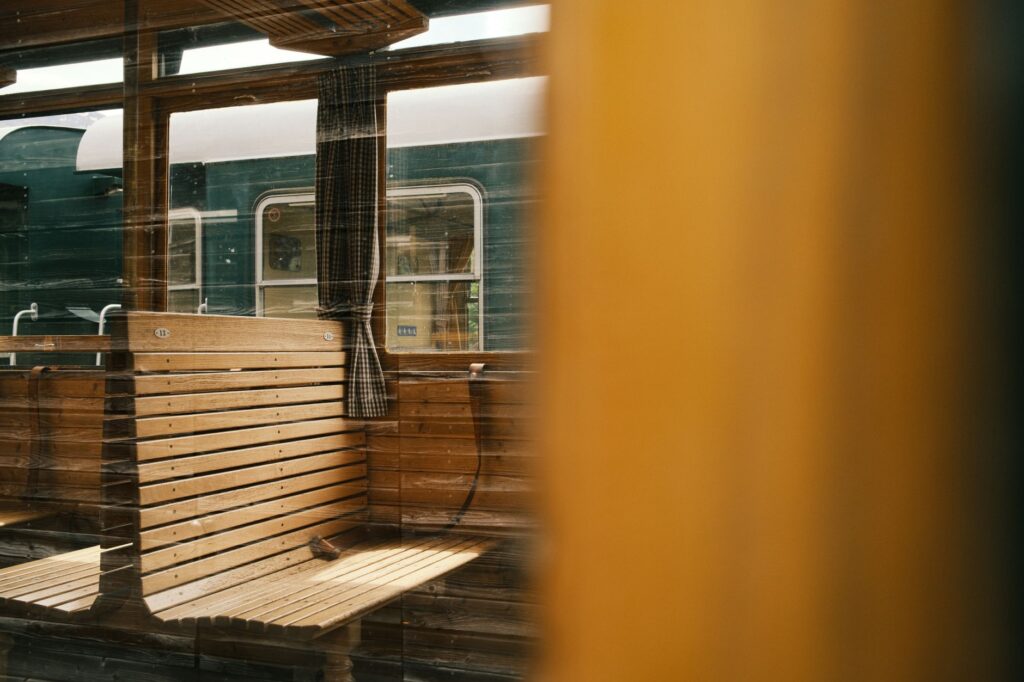
The rolling stock traversing the steppe constitutes a living museum of past-century railway technology. Internationally manufactured diesel-electric locomotives and refurbished passenger coaches retain the charm of a golden age of mechanical engineering applied to passenger transport. The railway workshops located at the Jacobacci terminal and in Viedma house specialized mechanics capable of turning out-of-print parts and keeping operational engines that exceed four decades of continuous service.
Every component of the train, from pneumatic braking systems to the interior woodwork of Pullman and first-class coaches, reflects a philosophy of durability and robustness. Unlike contemporary high-speed trains built with lightweight alloys and complex electronic components, the Patagonian rolling stock is designed to be repaired in the field using traditional mechanical tools, a vital characteristic when operating hundreds of kilometers from the nearest central workshop.

The mechanical endurance of these trains is the exact reflection of the resilience inhabited by the men and women of the Río Negro plateau.
Landscape Transition: From Desert to Andean Forest
One of the greatest structural attractions of the journey is the radical visual metamorphosis experienced by the passenger over the course of hours. The journey typically begins near the Atlantic littoral or the provincial capital of Viedma, where clay bluffs and the ochre and tan tones of the Patagonian desert predominate. As the convoy advances westward, vegetation shrinks to small tussocks of coirón grass and low shrubs adapted to extreme aridity.
Upon passing the town of Ingeniero Jacobacci—the historic junction point with the legendary steam train known as La Trochita—the relief begins to gain noticeable altitude. Rock formations become more rugged, and the arid steppe begins to blend with patches of Andean vegetation. Finally, after crossing the region of minor lakes and eastern foothills, the train descends gently toward the basin of Lake Nahuel Huapi, where the steppe landscape abruptly gives way to the intense green of temperate forests and the snow-capped peaks of the Andes.

Practical guide
Planning a journey aboard the Patagonian Railway requires understanding its operational particularities and its weekly or biweekly frequency, which may vary depending on the summer or winter season. The essential logistical keys for ensuring an optimal experience are detailed below.
- Frequencies and Reservations: Regular long-distance services generally operate once a week in each direction, increasing frequencies during the southern summer and winter holidays. Securing ticket reservations months in advance through the state enterprise’s official website is imperative.
- Service Classes: The formation typically includes Pullman cars with reclining seats, first class, and sleeper cars with two-bed compartments. For complete journeys exceeding 18 hours, booking a sleeper compartment is highly recommended for comfort and privacy.
- Luggage and Provisions: Standard baggage transport is permitted, but bringing layered warm clothing is advised due to thermal contrasts between day and night in the steppe. Although the train features a dining car, bringing personal water and snacks is a good preventive practice.
- Connectivity and Station Logistics: Cellular phone signal is nonexistent across long stretches of the central plateau. Coordinating transfers and destination accommodations prior to initiating the rail journey is recommended.
- Health and Acclimatization: Low humidity and moderate altitude in the Andean zone rarely present serious issues, but staying hydrated throughout the onboard journey is essential.
Emotional Epilogue Under the Andean Light
When the final afternoon lights begin to dye the peaks of Cerro Catedral with fiery hues and the convoy reduces its speed, announcing the proximity of San Carlos de Bariloche, the traveler realizes they have participated in something far vaster than a mere tourist trip. The steady clatter over rail joints, the aroma of fine wood in the interiors, and the silent vastness of the receding steppe merge into an indelible memory. The Patagonian Railway is not merely a means of uniting two geographical points on the South American map; it is a living bridge toward a profound understanding of time, distance, and human perseverance at the ends of the earth.