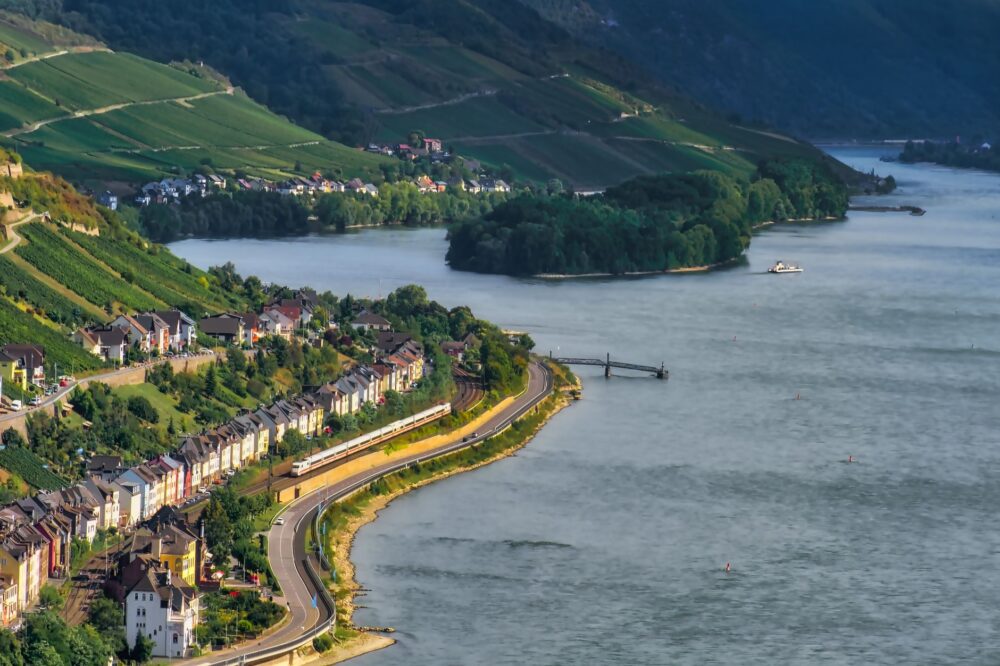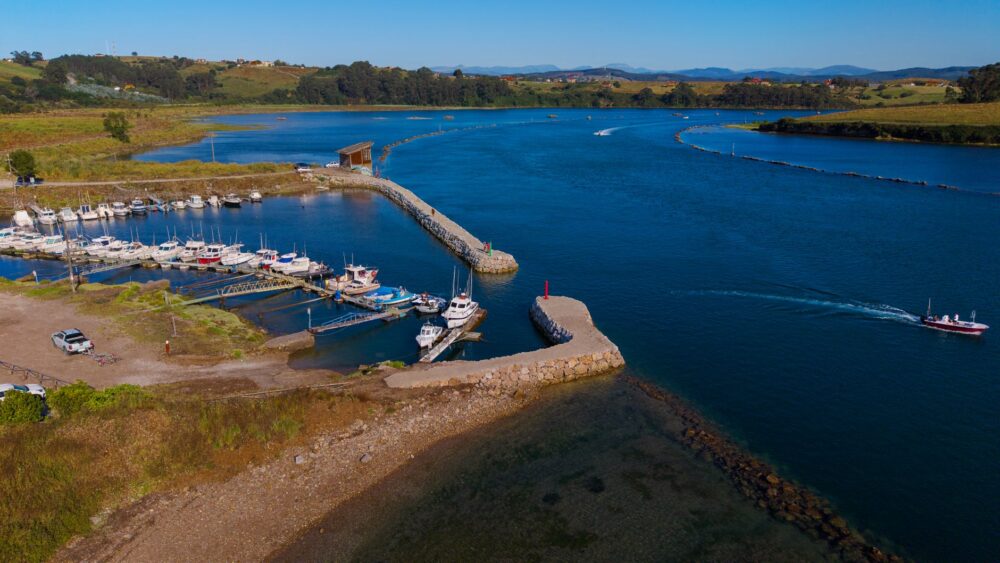

In the southwestern corner of Bolivia, the blinding white expanse of the Salar de Uyuni stretches like a colossal mirror, fusing sky and earth into a single horizontal line. For decades, this salt desert spanning over ten thousand square miles has posed a monumental logistical challenge for local residents and travelers eager to venture into its geological depths. Traditional routes relied almost exclusively on heavy-duty diesel vehicles, whose environmental impact on the fragile salt crust and high-altitude atmosphere began leaving scars that could no longer be ignored. Today, however, a silent transformation courses through the lakeside communities of Uyuni, Colchani, and Tahua, where climate urgency has catalyzed a transition toward clean mobility.
This transition project does not originate in distant bureaucratic offices, but from a collaborative pact between local transport cooperatives and Bolivian scientists committed to converting traditional off-road vehicles into 100% electric propulsion systems. This initiative aims to demonstrate that energy transition is feasible even under the most extreme geographic and climatic conditions on Earth, where nighttime temperatures plunge far below freezing. Through photovoltaic solar charging stations installed at strategic points along the salt flats’ perimeter, the region is beginning to chart a new connectivity map that respects the delicate balance of this high-Andean ecosystem.
The White Geography and the Challenge of Historical Connectivity
Understanding the magnitude of this shift requires looking back. For centuries, llama caravans and, later, cargo trucks crossed the salt flats guided solely by natural landmarks and the accumulated experience of generations. Communication routes were informal and shifting, dictated by the rainy season that temporarily flooded the salt crust. With the arrival of mass international tourism in the late 20th century, vehicular traffic grew exponentially, placing unsustainable environmental pressure on the edges of the flats and the communities living alongside them.
Greenhouse gas emissions and accidental hydrocarbon leaks threatened not only the landscape but also the subterranean water resources relied upon by both locals and regional wildlife, including James’s, Andean, and Chilean flamingos. Redesigning regional transport became an unavoidable priority. This was not simply a matter of restricting access, but of offering a viable, modern alternative that kept trade and tourism routes alive without compromising the future of the endorheic basin.
The Engineering of Adaptation: Electric Vehicles at Altitude
The technical heart of this transformation lies in local mechanical workshops in Uyuni, where engineers and artisan mechanics have developed conversions of traditional 4×4 vehicles into high-density lithium battery systems. The challenge was substantial: operating electric motors at over 3,600 meters above sea level reduces cooling efficiency due to low air density, and extreme cold drastically impacts energy cell autonomy.
To overcome these technical barriers, engineers designed reinforced thermal insulation systems and intelligent energy management software that harnesses regenerative braking during descents from surrounding volcanoes. These modified vehicles not only reduce local carbon emissions to zero, but also completely eliminate noise pollution, allowing travelers to experience the awe-inspiring acoustics of the salt flats without the constant roar of internal combustion engines.
Restored Mining Trails and Ancient Drover Paths
Alongside the electrification of road transport, the plan has integrated the restoration of old mining trails and drover paths that historically connected salt-harvesting operations with mountain villages in the Lípez range. These pathways, neglected for decades, have been rehabilitated as exclusive transit routes for mountain bikes and guided hikers, creating an active ecotourism corridor that diversifies the local economy.
The recovery of these routes required no heavy paving or concrete—materials that would have irreversibly altered the terrain’s aesthetics and structure. Instead, natural stabilization techniques using local clays and manual compaction were employed, supervised by anthropologists and geologists to protect archaeological sites and chullpares—ancient pre-Hispanic burial towers—dotting the hillside slopes.
The Role of Local Communities and Participatory Governance
None of these innovations would have succeeded without the active leadership of indigenous communities who traditionally control territorial access. Through open town halls and communal agreements, residents of Tahua, Llica, and Colchani have established their own regulatory framework to govern the flow of electric vehicles and define daily visitor quotas, preventing overcrowding at major scenic points like Incahuasi Island.
This participatory governance model ensures that economic benefits derived from clean mobility remain within the region. Communal transport cooperatives directly manage solar charging stations and bicycle rental points, ensuring that the energy transition also functions as a tool for social justice and wealth redistribution in one of the country’s traditionally most marginalized areas.

Solar Infrastructure and Desert Energy Autonomy
The deployment of the charging network represents a technological milestone in the Bolivian Altiplano. Situated in one of the planet’s highest solar radiation zones due to altitude and reflectance—the famous albedo effect of the white surface—the Salar de Uyuni offers exceptional photovoltaic potential.
The energy stations are designed with bifacial panels capable of capturing both direct sunlight and light reflected from the salt floor. These modules store energy in solid-state battery banks engineered to withstand the extreme thermal amplitude of the desert. Thanks to this decentralized infrastructure, transporters can complete circular routes of up to two hundred kilometers without relying on fossil fuels or unstable national grid connections in such remote areas.
True sustainability in the Altiplano does not consist of imposing foreign technologies, but of allowing ancestral wisdom to converse with clean engineering to heal the land we walk upon.
The Impact on Biodiversity and Water Mirrors
The elimination of heavy internal combustion traffic has had an immediate, measurable impact on local flora and fauna. Flamingos nesting in the peripheral lagoons of the salt flats now experience lower levels of acoustic and visual stress, which has boosted reproductive success in recent seasons. Furthermore, the degradation of secondary salt crusts—which act as natural dikes retaining mineral-rich brines and endemic microorganisms—has been successfully prevented.

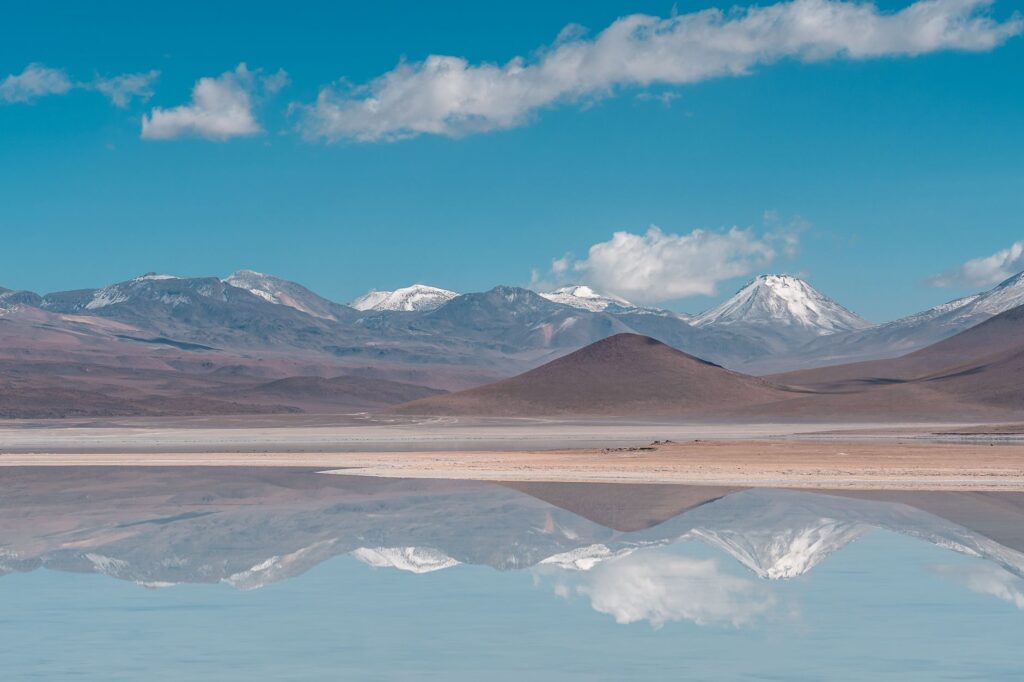
Field biologists note that the reduction of soot and suspended dust particles settling on salt crystals has improved the transparency of water mirrors during the rainy season, enhancing the visual appeal of the phenomenon without altering ecosystem chemistry. Landscape conservation is understood here as a dynamic process where human activity and nature find an operational equilibrium.
Practical guide
Getting there: The main gateway is the town of Uyuni, accessible via domestic flights from La Paz or through railway connections and long-distance buses from Oruro and Potosí.
When to visit: From May to November (dry season) to traverse the salt flats in their entirety; from December to April (rainy season) to witness the giant mirror phenomenon, though certain routes may require detours.
Clean mobility options: Hire exclusively certified local operators in Colchani or Uyuni operating fleets of electric off-road vehicles and accredited community guides.

Recommended gear: Layered thermal clothing due to sharp temperature contrasts between day and night, category 4 sunglasses with high UV protection, mineral sunscreen, and reusable canteens to avoid plastic waste.
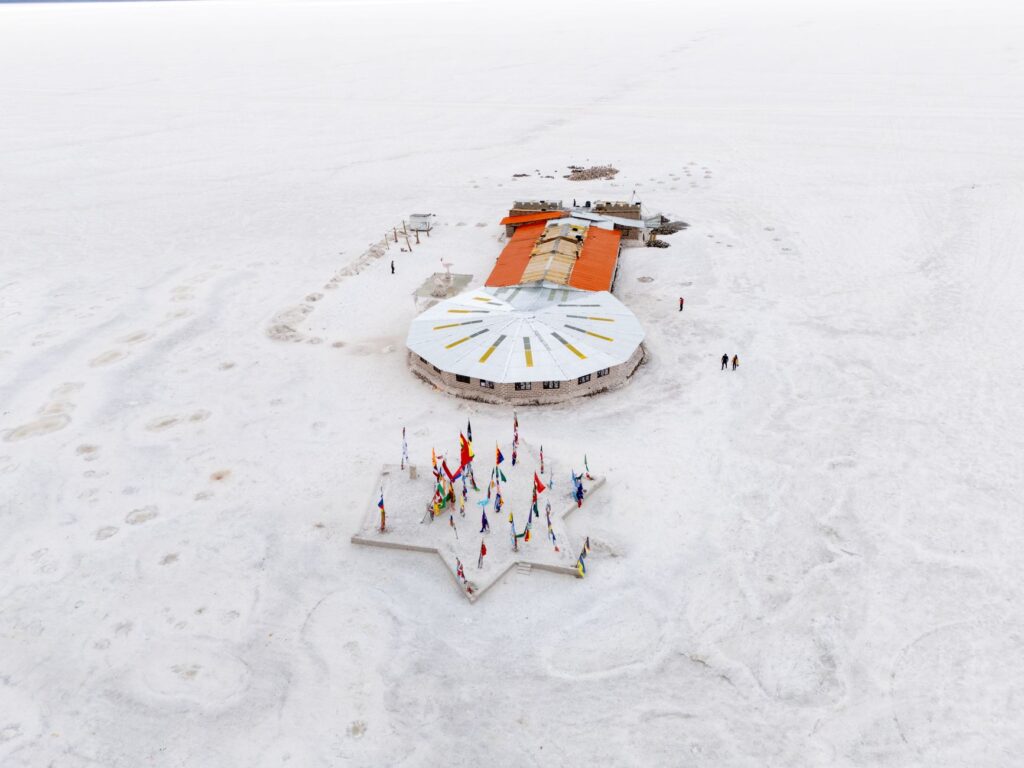
Accommodation: Eco-lodges built from salt blocks are located along the desert’s edge, operating under strict criteria for energy efficiency, graywater recycling, and local sourcing.
Final Reflections on the White Horizon
As the sun begins to dip below the western mountain range, the Salar de Uyuni bathes in violet, ochre, and golden hues that defy artistic description. In that absolute silence, broken only by the subtle crunch of cooling salt crystals, the transition toward sustainable mobility acquires its most deeply human dimension. This is not merely a technical victory over geographic hurdles, but a truce signed between humankind and an ancient territory demanding respect. Traversing this immense white desert aboard sun-powered wheels steered by local hands, the traveler understands that the true luxury of our time is not speed, but the certainty that the path we leave behind remains open for generations to come.