Conquering the Nordic Summit
The railway line connecting the Norwegian capital with the Atlantic coastal city of Bergen stands as one of the most audacious milestones in European civil engineering. Officially inaugurated in 1909 after decades of meticulous planning and titanic labor under punishing climatic conditions, this corridor is much more than a mere transportation route; it is the structural backbone that successfully integrated communities geographically isolated by the imposing barrier of fjords and granite plateaus. Spanning over five hundred kilometers, the railway defies alpine logic as it climbs toward Finse station, situated more than twelve hundred meters above sea level, establishing itself as the highest mainline railway crossing in Northern Europe.
The genesis of this masterpiece responded to an imperative geopolitical and economic need at the close of the nineteenth century: linking the agrarian and administrative east with the maritime and commercial west across a territory where roads were virtually nonexistent during harsh winter months. Norwegian and British engineers were compelled to devise unprecedented technical solutions to bore tunnels through solid rock, erect massive retaining walls capable of withstanding avalanches, and design sophisticated snow-shed protection systems that kept the line operational through severe blizzards. Today, the route retains its full relevance not only as an essential logistics corridor, but as one of the most celebrated rail travel experiences globally, drawing naturalists, historians, and travelers captivated by the poetic harshness of the Scandinavian landscape.

Extreme Topography and High-Mountain Architecture
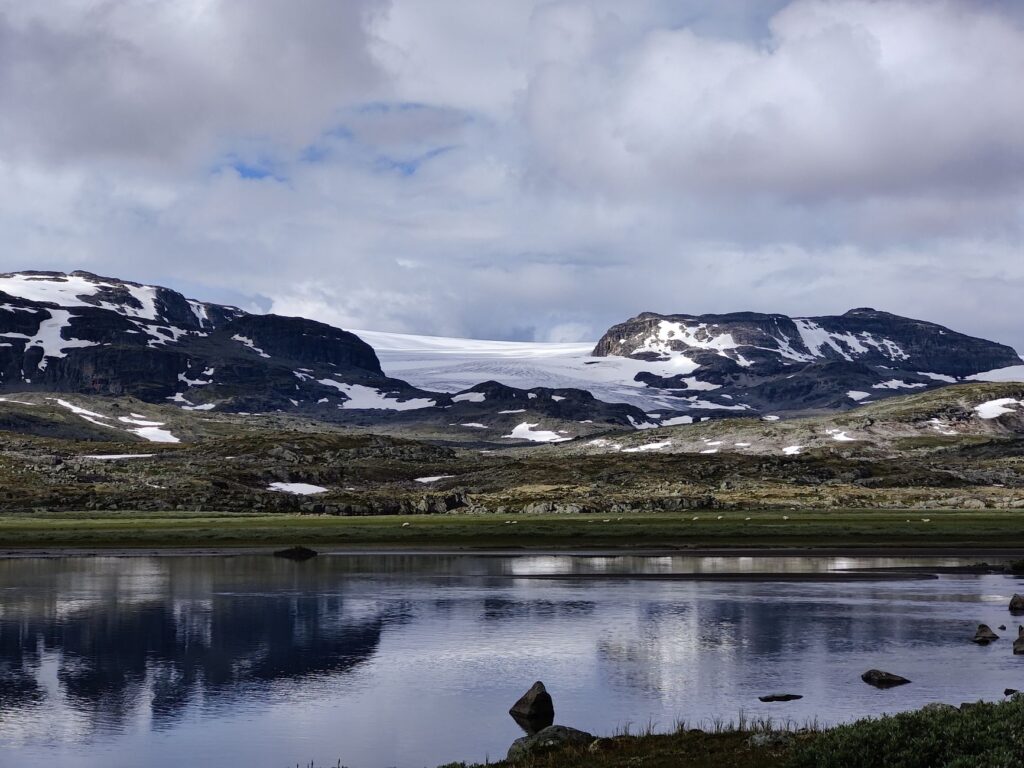
The altimetric profile of the Bergen Railway is a masterclass in topographical adaptation. Departing from Oslo Central Station, the train meanders gently through the peaceful Hallingdal valley, hugging salmon-rich rivers and dense coniferous forests that gradually yield to the alpine tundra of the Hardangervidda plateau—a desolate expanse of rock, moss, and perpetual ice where arboreal vegetation vanishes entirely. Across this section, the tracks transform into a solitary metallic ribbon winding between glacial tarns and snow-capped peaks, exposed directly to the whims of arctic weather.
Constructing this section posed a colossal challenge for the laborers of the era, known as rallarer, who toiled with manual tools, black powder, and unyielding determination under conditions of absolute isolation. To safeguard the tracks from inevitable avalanches and windstorms, kilometers of timber snow-sheds and stone galleries were erected, forming an integral part of Norway’s industrial architectural heritage. Remote stations like Finse, which once served as base camps for the polar expeditions of Fridtjof Nansen and Roald Amundsen, retain the nostalgic atmosphere of the golden age of rail, reminding passengers that every meter of track was won inch by inch from an unforgiving wilderness.

Arctic Logistics and Winter Maintenance
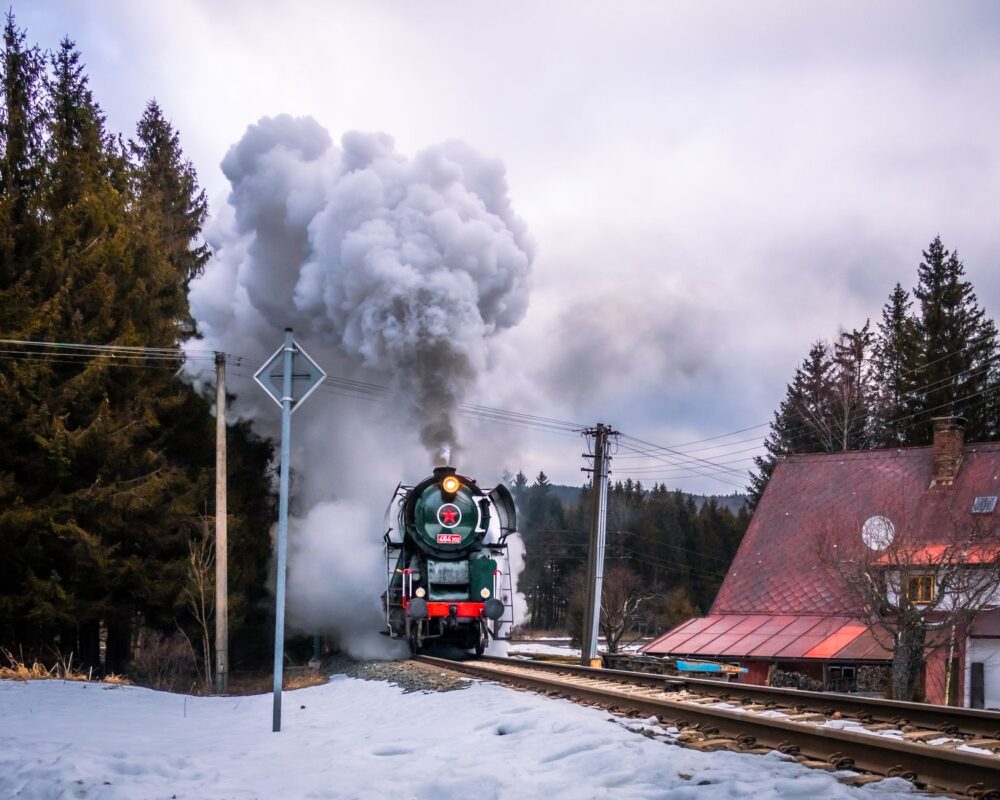
Operating a high-mountain railway line in northern latitudes demands a complex logistical machinery that defies the laws thermodynamics. During winter, when temperatures plummet far below freezing and snowfalls reach depths of several meters, track maintenance requires the continuous deployment of specialized snow-clearing locomotives equipped with powerful rotary turbines. These specialized units, operated by highly trained crews, work relentlessly to clear ice blockages that threaten to sever communication between the country’s two principal cities. The punctuality and safety of the service rely on a real-time meteorological monitoring system that anticipates Atlantic gales before they strike the plateau.
Keeping the Bergen route open in January is not merely a technical challenge; it is an exercise in logistical sovereignty and an unwavering commitment to the connectivity of remote fjord communities.
Beyond climatological hurdles, the logistics of this railway corridor involve meticulous management of mixed traffic comprising passenger services and light freight. Unlike purely commercial high-speed lines, the Bergen Railway balances international tourism demand with the daily necessities of local residents, who depend on the train for the transport of provisions, mail, and school correspondence from the most isolated enclaves. This duality transforms the journey into a social microcosm where outdoor enthusiasts equipped with skis and snowshoes share space with local workers in an atmosphere of respectful everyday routine.
The Descent Into the Realm of the Fjords
Having crowned the plateau at its highest elevation, the train begins a dizzying descent toward the western coast through the Raundalen gorge. This final stretch offers an overwhelming landscape contrast: in just a few short hours, the traveler leaves behind the stark white desolation of the arctic tundra to plunge into a world of intense greens, thundering waterfalls, and vertical rock faces plunging directly into the dark waters of the fjords. Railway engineering once again demonstrates its mastery through an almost endless succession of rock-hewn tunnels and metal bridges spanning vertiginous chasms with absolute precision.
The approach to Bergen’s terminal station unfolds across the scenic coastal landscape of western Norway, dotted with traditional red-painted timber cabins and bustling fishing harbors. This visual transition encapsulates the essence of the journey: a bridge built by human technique connecting two contrasting geographic realities. Arrival at Bergen’s historic station, a neo-Romanesque stone building, marks the conclusion of a voyage that is simultaneously an industrial history lesson, a triumph of technical endurance, and one of the purest aesthetic contemplations in the European continent.
Sustainability and the Future of the Rail Corridor
Within the contemporary framework of energy transition, the Bergen Railway stands as a model of low-carbon sustainable mobility. Fully electrified in the mid-twentieth century utilizing locally sourced hydroelectric power, the line demonstrates that heavy high-mountain transport can operate harmoniously within the fragile ecosystems it traverses. Norwegian rail authorities continually invest in signaling modernization, fleet energy efficiency upgrades, and satellite communication enhancements to guarantee maximum safety along exposed stretches.
Simultaneously, passenger flow management has become a strategic priority to prevent overcrowding during peak summer months, protecting both the traveler’s experience and the integrity of the surrounding natural environment. Incentives for off-season travel, promotion of low-impact activities like cycling along the Rallar Road, and close collaboration with local operators ensure that the railway remains an engine of balanced regional development, proving that historical infrastructure can evolve without losing its authenticity or its commitment to the territory.
Practical guide
Planning a journey aboard the Bergen Railway requires understanding the operational specifics of a mountain line subject to North Atlantic weather conditions. Essential recommendations for organizing the trip with precision and foresight are detailed below.
- Ticket Reservations: Tickets for the complete route between Oslo and Bergen can be purchased via the official website of the national rail company (Vy). Booking several months in advance is highly recommended, especially when traveling during summer months or the winter ski season.
- Service Classes: The train offers two primary categories: Vy Komfort, which includes more spacious seating, power outlets, and complimentary coffee, and standard class, which is exceptionally comfortable and features large panoramic windows ideal for landscape viewing.
- Luggage and Restrictions: There is no strict weight limit for luggage, but passengers must handle their own bags when boarding and alighting. Dedicated spaces are available for bulky gear like skis and bicycles, which must be reserved in advance.
- Key Connections: At Myrdal station, located high in the mountains, passengers can transfer to the famous Flåmsbana, a scenic branch line descending steeply to the Aurland Fjord, constituting a highly recommended side excursion.
- Climatic Preparation: Weather on the Hardangervidda plateau is unpredictable year-round. Layered warm clothing, windbreakers, and sturdy footwear are strongly advised, even for travel undertaken during summer months.
- Onboard Connectivity: Complimentary Wi-Fi is available on most convoys, though signal reception may fluctuate intermittently through long tunnel sections and high-mountain zones.
- Accessibility: Modern trains are fully adapted for passengers with reduced mobility, featuring boarding ramps, designated wheelchair spaces, and accessible restrooms onboard.
Visual Epilogue in the Fjord Mist
When the train finally comes to a halt beneath the iron-and-glass canopy of the Atlantic station, the silence of the high mountain yields to the steady murmur of sea breezes and gulls. In that twilight moment, the golden northern light filters through the salty mist wrapping Bergen’s historic docks, outlining silhouettes of fishing vessels and damp slate roofs. The rail journey concludes, but the impression of the white plateau and the vertigo of granite chasms remains etched in memory as the enduring testimony of one of humanity’s greatest engineering and willpower achievements in European territory.