
The Pyrenees mountain range has historically represented one of the most formidable geographical barriers in Western Europe, separating valleys, cultures, and economies with rock walls exceeding three thousand meters in altitude. For centuries, the transit of goods and people between the Iberian Peninsula and the European continent depended on rugged mountain passes, impassable during harsh winter months. However, the advent of the railway in the late 19th century radically transformed the vision of engineers and rulers, who conceived the titanic enterprise of piercing the rock to unite towns through steam and iron. In this context, the railway section connecting Ripoll with Puigcerdà emerges as one of the most fascinating engineering feats in southern Europe, a high-mountain route defying impossible slopes and vertiginous abysses.
This report examines the evolution of the railway line that vertebratres the Girona counties of Ripollès and Cerdanya, delving into the technical details of its construction and its current status as a strategic axis for sustainable mobility. Through a meticulous journey across century-old tunnels, noble stone viaducts, and high-mountain stations, we analyze how the infrastructure continues to play a vital role in territorial cohesion and low-intensity tourism, resisting the onslaught of modernity with the solidity of its granite ashlar masonry.
The Origins of an Alpine Chimera
The genesis of the eastern trans-Pyrenean railway dates back to the late 19th century, a period when European powers competed to weave transport networks capable of shortening commercial distances. In Catalonia, the need to connect industrial ports with southern France drove the creation of various study committees. The route running parallel to the Ter River and subsequently ascending toward the Coll de Tosses presented unprecedented orographic challenges. Engineers of the era faced the challenge of laying a railway capable of overcoming sharp gradients without the use of rack systems, relying entirely on adhesion and the power of steam locomotives.
Construction works on the Ripoll to Ribes de Freser section formally began at the dawn of the 20th century, facing adverse weather and a chronic scarcity of financial resources. Workers, popularly known as pickaxe pioneers, labored in extreme conditions, excavating living rock with dynamite and picks. Every kilometer won from the mountain represented a triumph of civil engineering against the fury of the elements. The massive use of local stone masonry endowed bridges and retaining walls with exceptional landscape integration, turning the technical work into a natural extension of the Pyrenean environment itself.
Conquering the Coll de Tosses and the Toses Tunnel
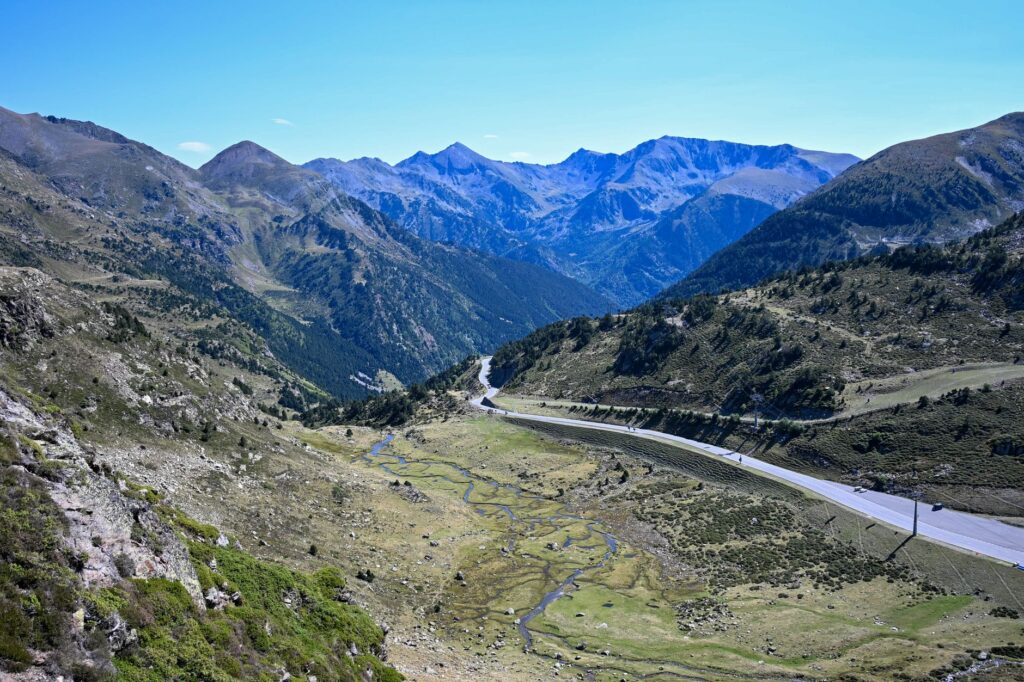
The most complex and celebrated segment of the line is located in the ascent to the Coll de Tosses, where the train reaches its maximum elevation at La Molina station, situated over fourteen thousand meters in altitude. To overcome this mountainous col, designers drafted a winding route characterized by continuous gradients that demand maximum mechanical effort from rail formations. The nerve center of this section is the Toses Tunnel, an underground gallery over three kilometers long piercing the heart of the mountain massif, allowing the crossing of the divortium aquarum between the Mediterranean and Atlantic watersheds.
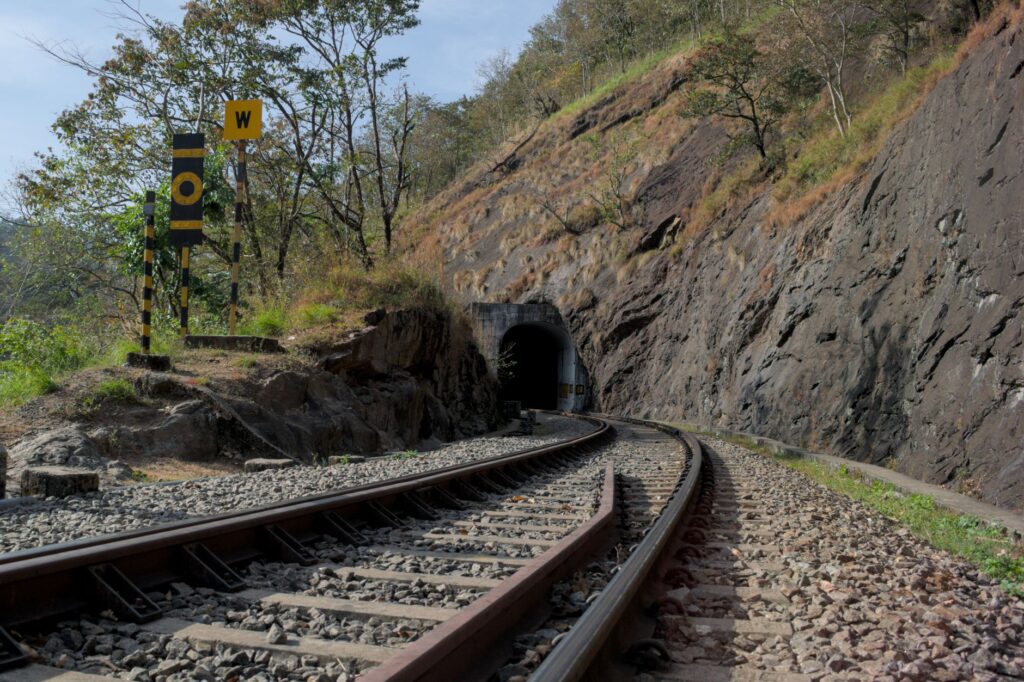
The excavation of this tunnel constituted a genuine human and technical feat. Constant trickles of freezing water, gallery collapses due to unstable terrain, and harsh sanitary conditions inside tested the endurance of excavation crews. Despite delays caused by international conflicts and local economic crises, the completion of the tunnel marked the definitive integration of Cerdanya into the general railway network. Today, crossing this dark, cold passageway continues to evoke the tension and wonder of travelers who, over a century ago, first beheld how the machine devoured subterranean darkness.
Architecture of Iron and Stone in the Upper Ripollès
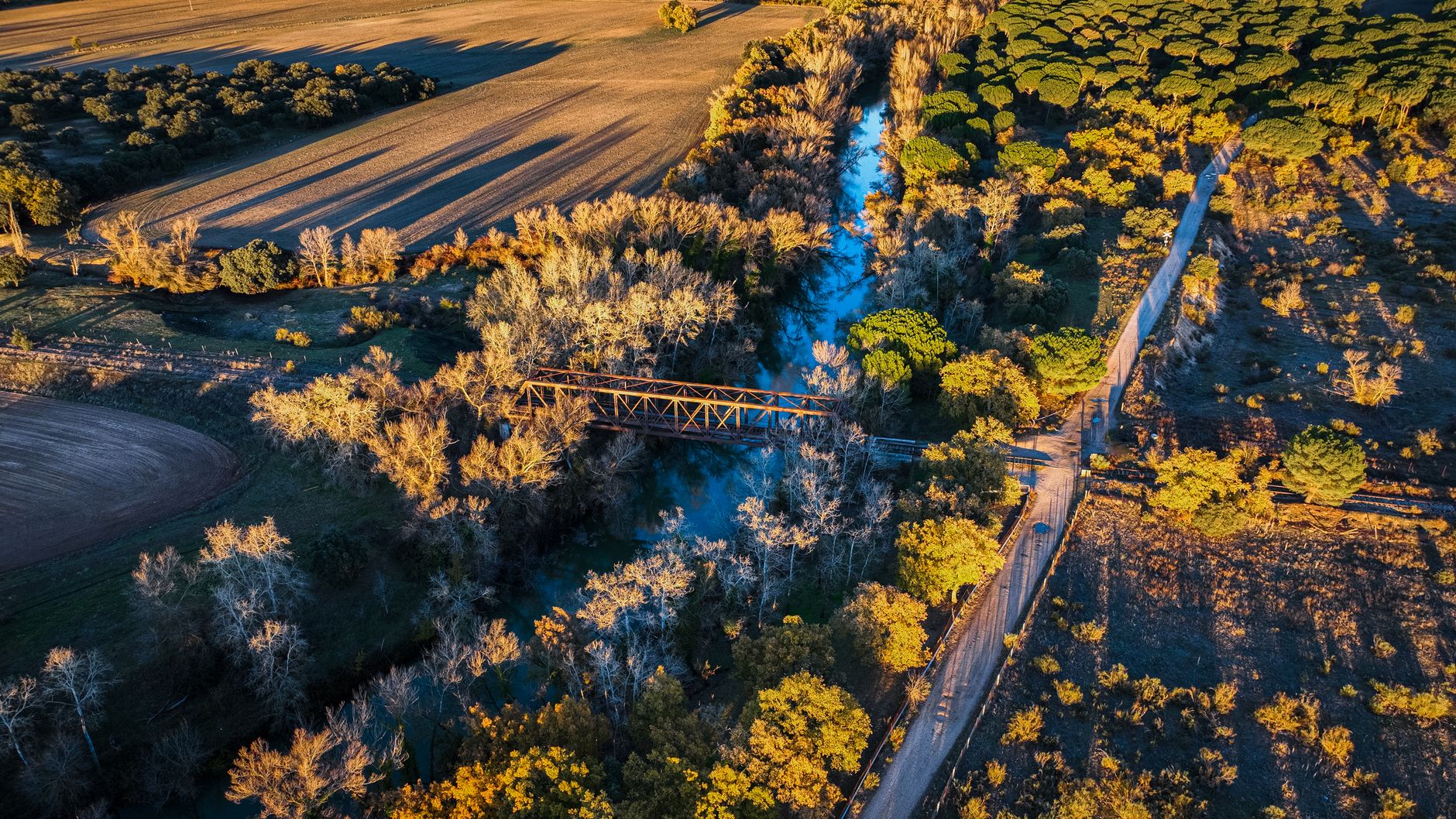
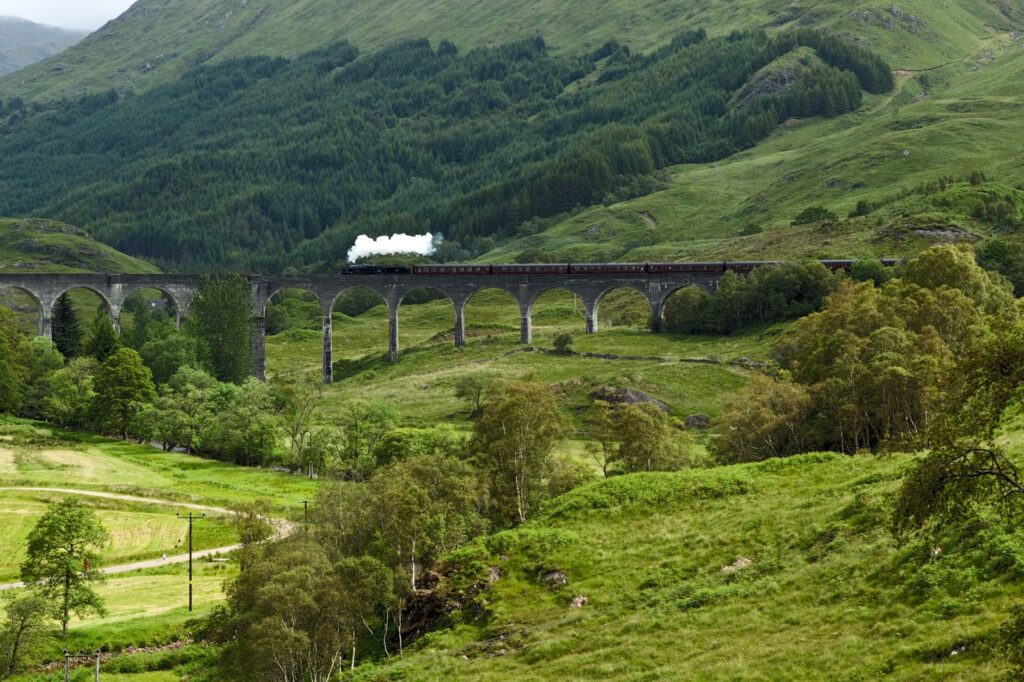
Beyond large metric figures and overcome gradients, the heritage value of the Ripoll-Puigcerdà railway lies in its civil architecture. Along the route, riveted lattice metal bridges alternate with ashlar stone semicircular arch viaducts. These structures not only respond to functional resistance criteria against convoy weight and winter ice pressure but also reflect the industrial aesthetic of an era where material robustness was synonymous with eternal durability.
Emblematic stations such as Planoles, Toses, or La Molina preserve original elements of their construction typology, characterized by double-pitched slate roofs designed to handle heavy snow accumulations, exposed stone walls, and noble wood canopies. These buildings formed part of a self-sufficient logistical network including freight warehouses, water tanks for vintage steam locomotives, and residences for traffic agents. Preserving this architectural heritage is a priority challenge today for administrations managing the territory, seeking to balance operational modernization with the safeguarding of historical memory.

The railway track is not merely a means of transport; it is a suture of steel and stone uniting isolated valleys with the pulse of industrial progress, forever transforming the human geography of the Pyrenees.
Winter Logistics and Maintenance Under Extreme Conditions
Operating a high-mountain railway line in the 21st century entails considerable operational challenges differing substantially from lowland transport. Heavy snowfall, rockfalls caused by freeze-thaw cycles, and tree branches falling on the catenary demand permanent logistical deployment by the infrastructure manager. Maintenance brigades operate twenty-four hours a day during winter months, utilizing snowplow trains equipped with front wedges and milling systems to clear the most exposed sections prone to snowdrifts.
Likewise, infrastructure renewal has required introducing multi-purpose concrete sleepers, upgrading electronic signaling systems, and reinforcing unstable slopes through metallic meshes and deep anchors. These technical actions ensure the service maintains optimal safety and punctuality standards despite limitations inherent to a single-track layout with tight curve radii. The symbiosis between contemporary railway technology and the 19th-century historical layout demonstrates that classical engineering can successfully adapt to modern mobility demands.
Socioeconomic Impact on Pyrenean Valleys
Since its partial inauguration in the early 20th century, the railway exerted a transformative influence on the economy of the traversed counties. Traditionally reliant on high-mountain livestock, forestry, and subsistence farming, the populations of Ripollès and Cerdanya found in the train a rapid exit route for their products and the gateway to modern tourism. The arrival of skiers from Barcelona to the ski resorts of La Molina and Masella drove the development of a thriving winter tourism industry that today sustains a large part of the local economic fabric.
Furthermore, the railway has historically acted as a buffer against rural depopulation, facilitating daily commutes for students and workers toward larger urban centers. Unlike mountain highways, frequently clogged by traffic jams or cut off by snowstorms, the train offers a reliable and decarbonized mobility alternative. This operational resilience revalues the role of conventional railway infrastructure as a fundamental tool for territorial cohesion and ecological transition in mountain zones.
Rail Tourism and Moving Landscapes
Currently, the Ripoll-Puigcerdà line has established itself as one of the most attractive routes for rail tourism and landscape enthusiasts. The journey itself constitutes a first-order aesthetic experience, where travelers can witness the gradual transition from lush riparian forests and river gorges in the Lower Ripollès to high alpine meadows and the wide horizons of the Cerdanya plain. The relative slowness of the convoy, imposed by orography, paradoxically becomes a qualitative advantage, allowing for restful contemplation of the natural surroundings.
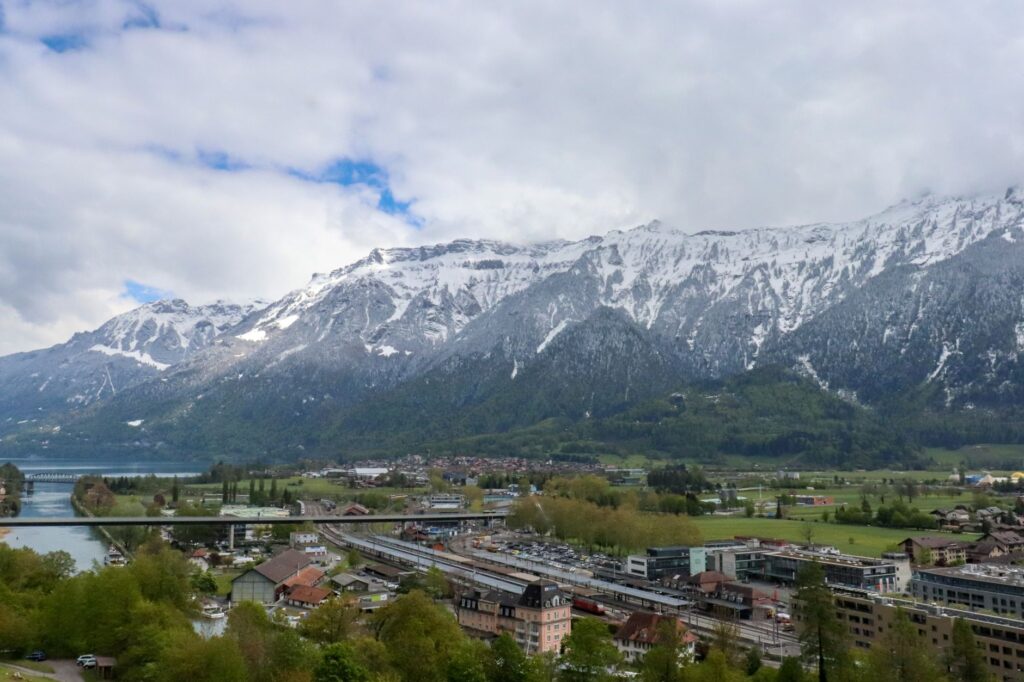
Tourism promotion bodies and railway enthusiast associations drive initiatives to highlight this route through heritage trains and integrated packages combining rail travel with hiking routes and visits to industrial heritage interpretation centers. This sustainable tourism model promotes environmental respect and the economic revitalization of small municipalities along the route, proving that railway heritage can generate tangible added value for local communities.
Practical guide
Planning a trip along the historic railway corridor of Ripollès and Cerdanya requires understanding essential operational and logistical aspects to ensure an optimal experience.
- How to get there: The line is part of the Rodalies de Catalonia network, specifically the R3 line connecting L’Hospitalet de Llobregat with Puigcerdà (extending some services to Latour-de-Carol – Enveitg). The advisable starting point for the historic itinerary is Ripoll station.Frequencies and Tickets: Trains run on a regular schedule, though it is advisable to check updated timetables on the official Renfe or Adif websites, especially during winter ski season weekends when demand surges considerably. Integrated transport passes or single tickets can be used.Recommended Season: Every season offers a distinct appeal. Autumn stands out for the chromatic palette of riparian forests; winter for the snowy high-mountain landscape; spring and summer for green meadows and mild weather ideal for hiking.Connections and Hiking: From stations like Ribes de Freser, passengers can transfer to the Núria Rack Railway to ascend to the high-mountain sanctuary. Additionally, numerous long-distance hiking trails (such as the GR-11) cross or run parallel to the railway track.Travel Recommendations: Warm clothing is recommended even in summer when descending at high-altitude stations like La Molina or Toses, as temperatures can drop sharply due to altitude.
Alpine Epilogue
When the railway convoy undertakes its final descent toward the Puigcerdà plateau, bordering golden meadows that announce the natural border with France, the feeling washing over the traveler is having participated in an ancient ritual of human perseverance. The granite walls flanking the route guard the silent memory of thousands of men who sculpted with titanic effort a communication route against the adversity of nature. In every wooden sleeper and steel rivet lives on the conviction that the Pyrenees, rather than an insurmountable border, are a meeting space that technical ingenuity managed to tame. Upon shutting down engines at the terminal station, under the watchful gaze of snowy peaks, we understand that this railway is not merely a vestige of industrial past, but a living promise of mobility, beauty, and respect for the territory continuing to defy time with the dignity of its first day in service.