
The Geometry of Color Sealed in Fire
In the urban labyrinth of Seville, where the midday light transforms white stucco walls into screens of lime and silence, a quiet art survives that defies the fleeting nature of contemporary design: cuerda seca ceramics. This late-medieval technique, introduced to the Iberian Peninsula during the Caliphate’s splendor and perfected in Sevilian potteries during the 15th and 16th centuries, is not merely a decorative procedure, but a complex chemical and geometrical engineering feat. In traditional workshops hidden behind the walls of Triana and Macarena, time is still measured by the firing of kilns and the millimeter precision of the stroke. Here, red clay and metallic oxides continue to converse with the same aesthetic rigor that captivated the master builders who raised the Royal Alcázars.
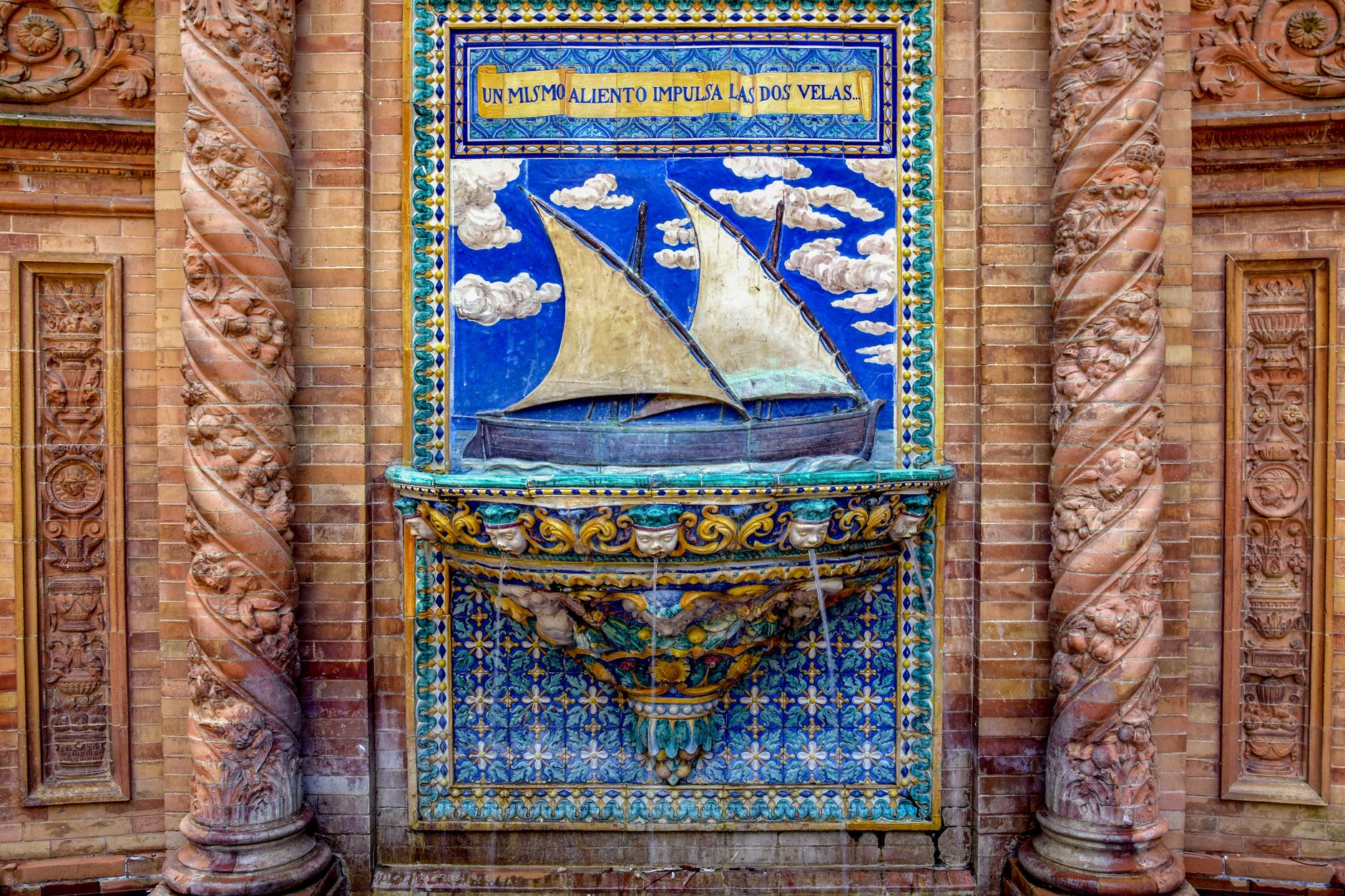
Observing a master ceramist trace the contour of a Mudéjar interlace pattern is to witness an exercise in absolute concentration. The term cuerda seca—dry cord—refers to the procedure by which color fields are delimited by applying a greasy mixture, traditionally linseed oil blended with manganese, onto the ceramic bisque. This oily barrier acts as an impassable dike when liquid glazes, loaded with copper, cobalt, or iron oxides, are deposited with a pipette into each delimited cell. During high-temperature single firing, the greasy cord volatilizes without a trace, allowing the glazes to vitrify and remain separated without mixing, creating a subtle relief and an unmistakable visual contrast.
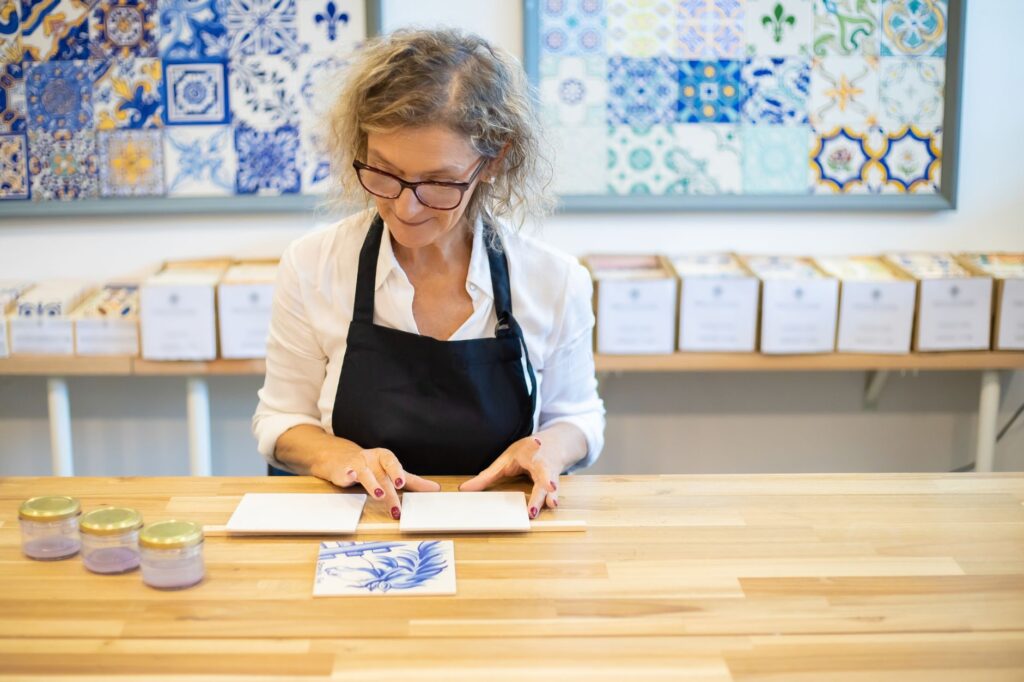
The Legacy of Triana in the Contemporary Artisanal Map
The neighborhood of Triana, historically segregated from Seville’s monumental core by the waters of the Guadalquivir River, has for centuries been the beating heart of Andalusian pottery. Although real estate speculation and tourism pressure have drastically transformed the area’s commercial fabric, pushing some workshops out to peripheral industrial estates, the redorts that hold their ground in the old town keep the flame of authenticity alive. Streets like Alfarería and Antillano Campos still showcase tilework signed by the great 22nd-century ceramic dynasties, silent testimonies of an era when every urban wainscot was conceived as a unique work of art.
Inside these workspaces, the scent of damp clay mingles with the fine dust of feldspar and powdered pigments. Today’s artisans do not merely replicate Nasrid or Renaissance geometric motifs; they establish a critical dialogue with contemporary design. Architects and interior designers from across Europe flock to these Sevilian studios in search of custom wall coverings that shun the cold perfection of industrial manufacturing. Each piece emerging from these kilns bears the slight irregularity of manual labor: a minuscule bubble in the glaze, a faint deviation in the manganese line that betrays the human pulse and imbues the material with an irreproducible organic vibration.
The Alchemy of Oxides and the Science of the Kiln
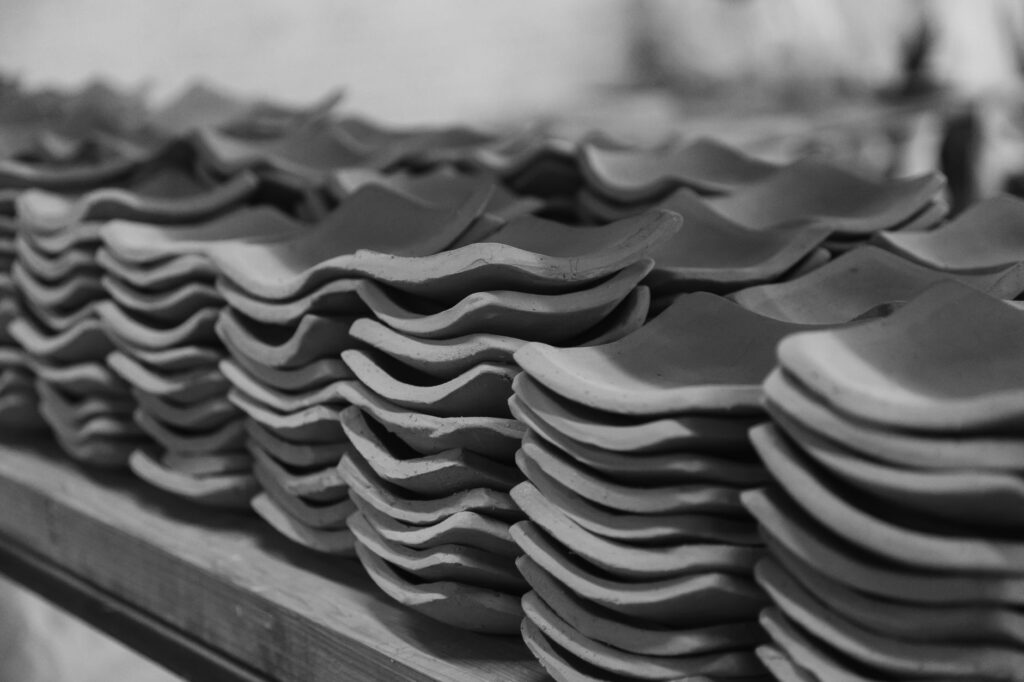
Understanding cuerda seca requires delving into applied chemistry. Unlike on-glaze painting, where pigments are spread over a previously fired glazed surface, in this technique color is applied directly onto the porous piece. The master ceramist must anticipate how metallic oxides will react when subjected to temperatures exceeding one thousand degrees Celsius. Copper oxide, for instance, can shift from intense greens to luminous turquoises depending on the kiln’s atmosphere and the amount of oxygen present during the reduction phase.
True mastery in Triana’s ceramics does not lie in the geometric perfection of the line, but in the ability to listen to fire and anticipate its unpredictable verdict.
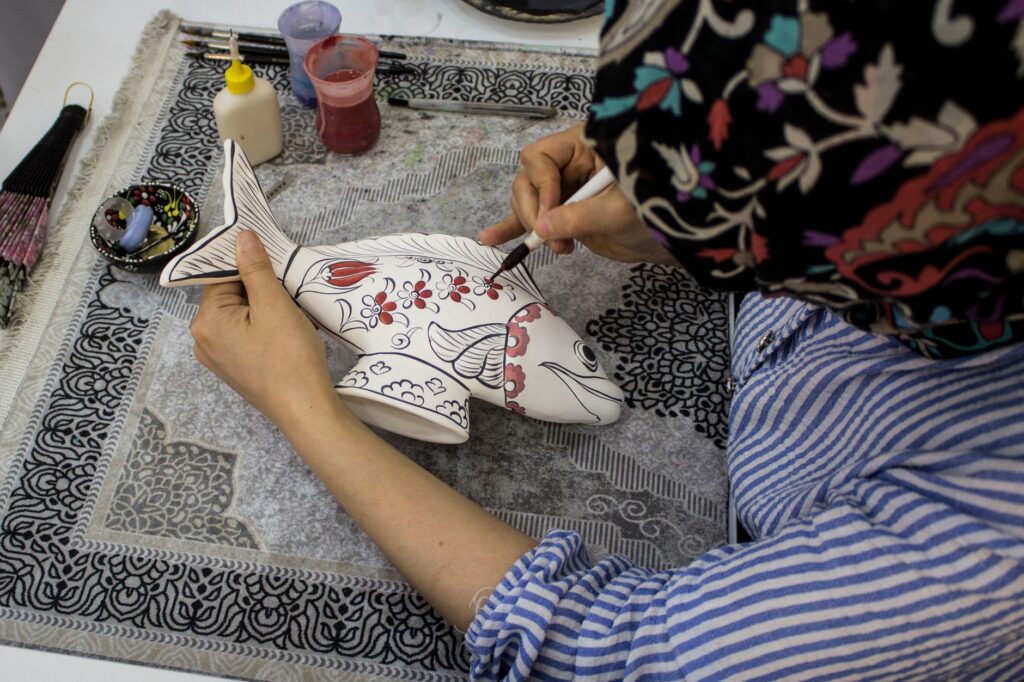
This empirical mastery of matter is transmitted almost exclusively through oral tradition and continuous observation. Young apprentices spend years refining their hand before daring to trace a single eight-pointed star. The hand must glide at a constant speed: if the manganese stroke is too thin, the glaze will overflow its compartment; if it is excessively thick, it will choke the chromatic surface and impoverish the final relief. It is a dynamic equilibrium where fluid mechanics meets the precision of the geometer.
Monumental Restoration and the Defense of Living Heritage
One of the most critical aspects for the survival of cuerda seca in Seville is its application in the restoration of historic heritage. The great ceramic ensembles decorating Andalusian churches, convents, and palaces suffer the inexorable wear of atmospheric pollution, rising dampness, and urban traffic vibrations. When an original 16th-century piece fractures or vanishes entirely under the action of time, traditional workshops become the sole depositories of the technical knowledge required to manufacture an exact replica respecting both the mineralogical composition of the support and the original glaze formulation.

This active conservation labor transcends mere decorative craft to become a matter of cultural sovereignty. Public administrations and private foundations increasingly collaborate with these workshops through specific commissions aimed at restoring the original splendor of historic facades and porticoed courtyards. Nevertheless, master ceramists denounce the lack of generational handover and the scarcity of targeted institutional aid to protect traditional kilns against the constant rise in energy costs—a factor that threatens the economic viability of firings that can last up to forty continuous hours.
Interior Design as a New Form of Patronage
Faced with local market difficulties, Sevilian cuerda seca has found an unexpected ally in the luxury design and international architecture sectors. Interior design studios in New York, Paris, and Tokyo incorporate custom ceramic panels into high-end residential and hospitality projects. This commercial diversification has allowed small family workshops to modernize their distribution channels without sacrificing traditional production methods. The exclusivity of the product, guaranteed by the impossibility of automating the tracing and glazing process, constitutes its greatest competitive advantage in the global market.

Contemporary creators now experiment with new scales and chromatic palettes, moving away from traditional greens, ochres, and purples to explore matte monochromies and minimalist geometric contrasts. Yet respect for historical rigor remains intact. Each international commission is approached as an archaeological and aesthetic research project, documenting the provenance of clays and certifying the traceability of pigments used, ensuring that Seville’s artisanal legacy continues to expand worldwide with the same dignity with which it decorated the palaces of Al-Andalus.
Practical guide
- Getting There: The Triana neighborhood and its historic workshops are within easy walking distance of Seville’s monumental center across the Triana Bridge. San Pablo International Airport connects with major European capitals.
- When to Visit: Spring months (March to May) and autumn offer optimal weather conditions for exploring the workshops without the extreme temperatures of the Andalusian summer.
- Workshop Itinerary: It is advisable to schedule visits in advance, as many studios are active workspaces where masters restrict access during critical glazing and firing phases.
- Etiquette and Purchases: When acquiring cuerda seca pieces, always request a certificate of authenticity and artisanal origin. Avoid touching pieces displayed in the workshops without the ceramist’s prior consent.
Epilogue: Memory Arrested in Clay
As evening falls, when the heat subsides and the bells of the Giralda echo across the city rooftops, Triana’s workshops close their heavy wooden doors. Inside, freshly glazed pieces rest, waiting in silence for the purifying fire that will fix their colors for decades to come. Cuerda seca is not merely an archaeological vestige rescued from the Islamic past; it is a form of cultural resistance in a digitized world. In every line of manganese and every vitrified glaze cell beats the certainty that true contemporary luxury lies in the time invested by human hands to transform earth into eternal beauty.