

Flying today means embarking surrounded by a constellation of electronic devices. From smartphones and laptops to high-resolution cameras, tablets, wireless headphones, smartwatches, and portable chargers or power banks, our reliance on portable power is absolute. However, the convenience of keeping all our gadgets charged collides directly with an inescapable technical reality: lithium-ion batteries, which are ubiquitous in our daily lives, possess a high energy density that, under certain conditions of pressure, temperature, or short circuit, can trigger complex and hazardous thermal reactions in an aircraft’s cargo hold.
Faced with this challenge, international aviation authorities, led by the International Civil Aviation Organization (ICAO) and adopted by the International Air Transport Association (IATA), have tightened and standardized applicable protocols for 2026. The fundamental rule remains unchanged but requires precise nuances: loose lithium batteries and portable chargers must travel exclusively in carry-on baggage. Understanding the rationale behind this regulation, how to calculate capacity in watt-hours (Wh), and what exceptions exist has become an essential competency for any contemporary traveler seeking to avoid equipment confiscation at security checkpoints or, worse yet, compromising flight safety.
The Hidden Chemistry in Luggage: Why Lithium Batteries Worry Airlines
To understand the rigor of current regulations in 2026, one must look beyond the plastic casing of our devices. Lithium-ion batteries operate through the movement of lithium ions between an anode and a cathode via a liquid electrolyte. This design offers an exceptional ratio between weight and stored energy, allowing powerful computers to run for hours. However, if a battery suffers a manufacturing defect, severe physical damage, or a short circuit due to contact with metal objects, it can initiate a process known as thermal runaway.
Thermal runaway is a self-sustaining chain reaction where rising temperatures cause internal components to break down, releasing flammable gases and generating extreme heat that can reach one thousand degrees Celsius. In the passenger cabin, such an incident can be detected and extinguished immediately by the crew using specific protocols and appropriate extinguishers. Conversely, if the same incident occurs in the cargo hold, where checked luggage travels stacked and out of the visual and physical reach of flight personnel, the consequences can be catastrophic. This elementary physical principle justifies the absolute ban on placing independent power sources in bags handed over at check-in counters.
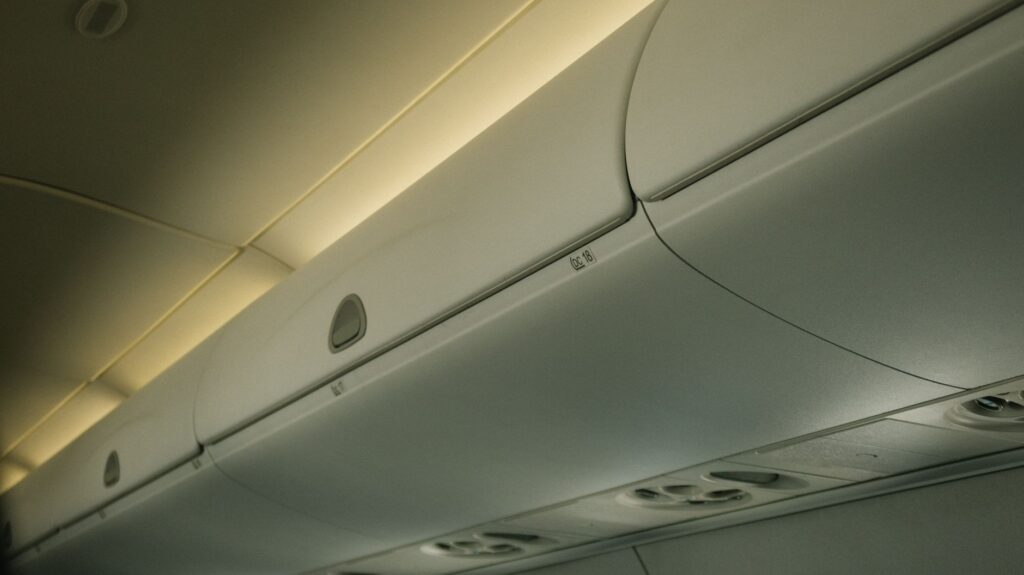
Carry-On versus Checked Luggage: The Unbreakable Boundary
The operational distinction between what can fly in the cabin and what must remain in the cargo hold is sharp. Any lithium battery not installed inside a primary electronic device is classified as a spare part or independent power source. This includes power banks, portable solar chargers, spare batteries for professional cameras, and external accumulators of any kind. All of them are strictly prohibited in checked luggage across all commercial airlines worldwide regulated by international standards.
Conversely, electronic devices containing internal batteries—such as laptops, tablets, phones, and e-readers—can be transported in both carry-on and checked luggage, although with very clear safety recommendations. If a laptop travels inside checked luggage, IATA protocols require the device to be completely powered down—never in sleep or hibernation mode—adequately protected against accidental impacts using clothing or other cushioning material, and isolated from any element that could trigger unintended activation. Although this option is technically permitted for integrated equipment, the general recommendation from security experts is to always carry high-value electronic devices and their primary batteries in the cabin.
How to Interpret Watt-Hours: The Global Capacity Standard
One of the greatest sources of confusion at airport checkpoints is measuring battery capacity. For years, manufacturers have used milliampere-hours (mAh) as the primary marketing metric. However, global aviation regulations rely exclusively on watt-hours (Wh), a unit that more accurately reflects the actual amount of electrical energy stored and available.
For the vast majority of standard power banks designed to recharge mobile phones, capacity typically ranges between 10,000 mAh and 20,000 mAh. Translated into watt-hours using the standard cell voltage of 3.7V, a typical 20,000 mAh power bank equals approximately 74 Wh. International regulations establish a clear threshold: devices with a capacity of less than 100 Wh (or 2 grams of equivalent lithium content) are permitted in carry-on bags without the need to request special authorizations from the airline. This range comfortably covers the needs of 95% of leisure and business travelers.
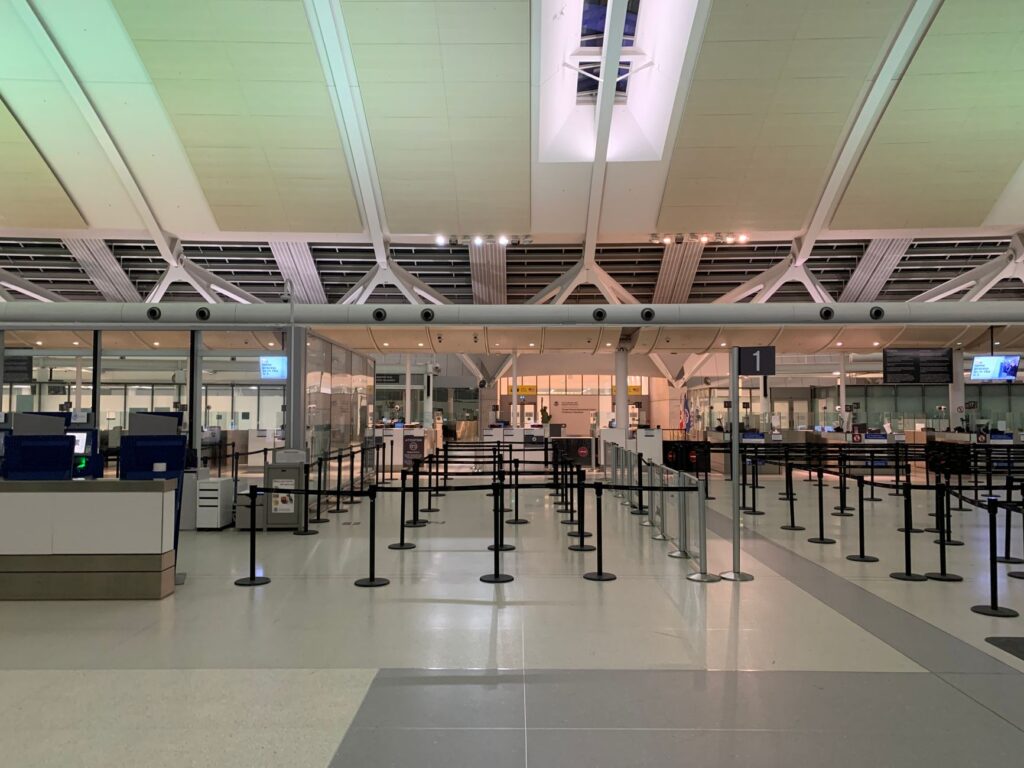
Upper Limits and Special Permits for Professional Equipment
What about photographers, videographers, sound technicians, or professionals who transport high-capacity batteries to power cinema cameras, portable lighting, or advanced drones? The 2026 rules address this reality through a scale of regulated thresholds requiring rigorous administrative control by airlines.
Batteries exceeding 100 Wh but not surpassing 160 Wh fall into an intermediate category subject to restrictions. Their transport in carry-on luggage is permitted, but with a strict limit of two spare units per passenger and, in the vast majority of cases, requires prior and explicit approval from the airline before the flight date. Attempting to board with these medium-high power accumulators without proper notification at the check-in desk usually results in the immobilization of the equipment at the security checkpoint.
Above 160 Wh, the prohibition for commercial passengers is absolute. Industrial batteries, large-format accumulators for portable power stations, or heavy production equipment exceeding this limit cannot be transported on commercial passenger flights in either the cabin or the cargo hold, and must instead be shipped exclusively through specialized air cargo services under Dangerous Goods Regulations.
Aviation safety is not a matter of convenience, but an exact science based on rigorous risk management and the prevention of thermal incidents at ten thousand meters of altitude.
Another fundamental aspect travelers often overlook is the physical condition of the components. A battery showing visible dents, cracks in the casing, deformation, obvious signs of corrosion, or emitting unusual odors is automatically classified as defective or damaged. The 2026 regulations strictly prohibit the transport of any damaged battery on commercial aircraft, whether in carry-on luggage or the cargo hold. Attempting to travel with a dented power bank or a phone with a swollen battery not only exposes the passenger to immediate confiscation by airport authorities but also poses an imminent danger to the safety of the aircraft and all its occupants.
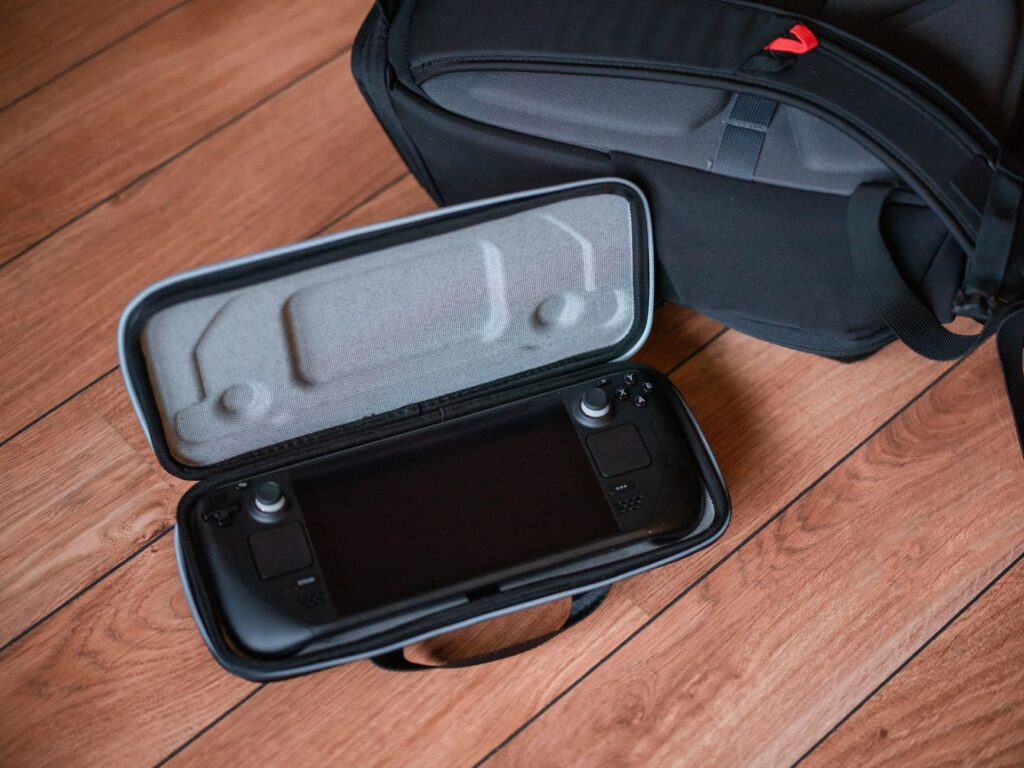
The Correct Packaging Protocol for Spares in the Cabin
Carrying power banks and spare batteries in carry-on luggage is only half the process; the other half is ensuring these items travel properly insulated to prevent any potential short circuit during movement in overhead bins or under seats.
The greatest risk in storing loose batteries occurs when metal terminals come into direct contact with other conductive objects present in the same pocket, such as keys, coins, paperclips, jewelry, or other metal plugs. To mitigate this risk, international regulations require every spare battery to be transported in its original retail packaging, with terminals covered using non-conductive electrical tape, or individually stored in a heavy-duty plastic bag or protective case specifically designed for that purpose. Experts recommend dedicating a small organizer pouch exclusively to portable power, ensuring all connectors remain inaccessible to outside contact.
Practical guide
Pre-check verification: Locate the technical label on the base or reverse of your power bank and note its capacity in watt-hours (Wh), or calculate the value by multiplying milliampere-hours (mAh) by voltage (3.7V) and dividing by one thousand.
Luggage distribution: Strictly pack all portable chargers, camera batteries, and spare accumulators in your carry-on baggage. Never place them in bags you intend to check in.

Power limits: Ensure your portable power devices do not exceed 100 Wh to travel freely, or arrange prior clearance with your airline if carrying units between 100 Wh and 160 Wh.
Terminal insulation: Cover the poles of loose batteries with adhesive tape or place them in individual bags before putting them in your travel pouch to prevent accidental short circuits.
Visual inspection: Check the physical condition of your devices before heading to the airport. Discard any battery showing dents, punctures, cracks, or obvious swelling.
Integrated devices: If you decide to check in a laptop or tablet with its internal battery, ensure the device is completely powered off and protected against impacts with cushioned clothing.
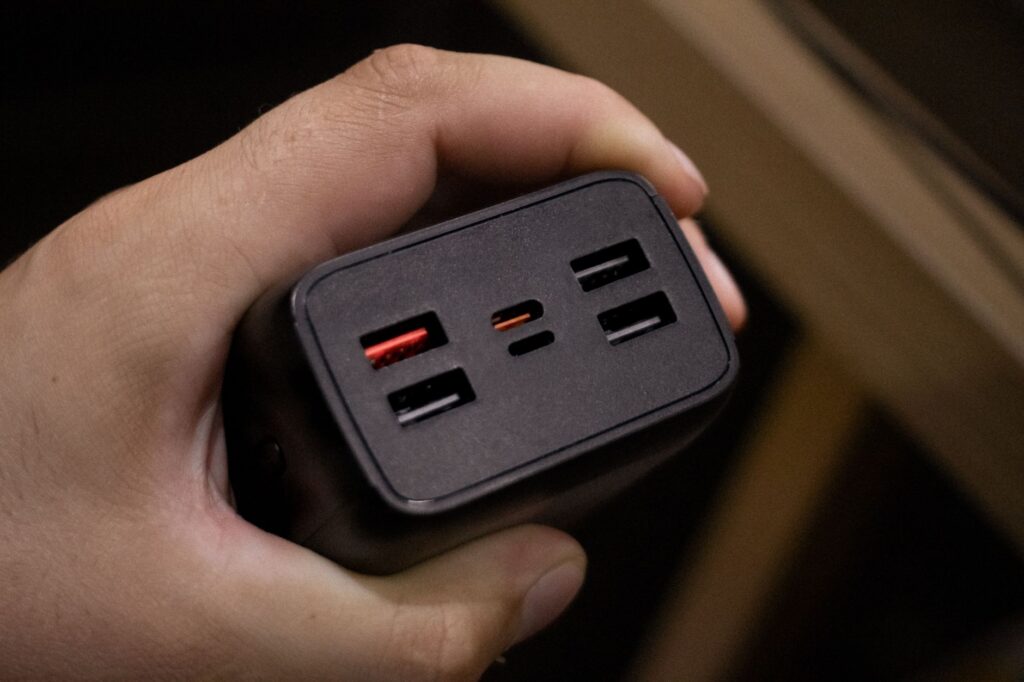
Airport regulations: Keep in mind that airport security officers hold final authority and may require you to take power banks out of your backpacks during X-ray screening.
The Human Dimension and Collective Consciousness in Modern Aviation
Behind every technical manual, every watt-hour capacity diagram, and every rigorous inspection at international airport security checkpoints lies a fundamental purpose: safeguarding the well-being of thousands of people sharing an enclosed space ten thousand meters in the air. The regulations concerning lithium batteries and portable chargers are not intended to be a bureaucratic obstacle to digital mobility, but an invisible pact of shared responsibility between air carriers and travelers.
As technology advances and our reliance on portable power deepens, passenger education stands as the first line of defense. Understanding the science behind the devices we carry in our pockets transforms us from bewildered users into conscious, prepared travelers. Ultimately, traveling safely in the digital age requires as much respect for the laws of physics as for the rules governing the global skies.
Source in EN: The Planet D (Can You Pack Power Banks in Checked Luggage? 2026 Airline Battery Rules Travellers Need to Know).