In the southwestern corner of the Iberian Peninsula, water is not merely a natural resource; it is the vital pulse governing one of Europe’s most complex ecosystems. Doñana National Park, an ancient crossroads between continents for millions of migratory birds, is navigating a historical junction where intensive agricultural pressure, climate change, and an urgent reorientation of conservation policies converge. Far from catastrophic rhetoric yet acutely aware of the fragility of the aquifer sustaining the system, the scientific community and local managers are championing a new model of water governance aimed at restoring ecological stability to the marshes, scrublands, and shifting dunes.
The transformation of this territory is not a recent whim, but the result of decades of rigorous field monitoring. Biologists, hydrologists, and local associations have demonstrated that recovering natural surface water flows is the only viable path to halt the degradation of wetland habitats. By disconnecting obsolete artificial canals and restoring historic watercourses, Doñana is pioneering soft ecological engineering that prioritizes terrain self-regulation over the grandiose interventions of the past. This paradigm shift requires constant dialogue among regional farmers, conservationists, and public administrations—a delicate yet indispensable balance to ensure the park’s survival.
The Invisible Architecture of Water: Restoring Underground Flows
Doñana’s subsoil is a massive reservoir of sand and clay that has functioned for centuries as a natural sponge. However, the overexploitation of Aquifer 27 for early-crop irrigation under plastic greenhouses has strained the limits of sustainable extraction. To reverse this trend, technicians from the Spanish National Research Council (CSIC) and the Doñana Biological Station have intensified the piezometric monitoring network. This sensor infrastructure measures underground water reserves with millimeter precision, providing evidence-based data that dismantles political improvisation and serves as the foundation for environmental decision-making.

The progressive reduction of illegal water extractions and the conversion of agricultural holdings toward dry-farming practices or regenerative agriculture form the bedrock of the new territorial strategy. The goal is not to demonize farming activity—historically rooted in the provinces of Huelva, Seville, and Cadiz—but to align its metabolism with the carrying capacity of the natural environment. European Common Agricultural Policy (PAC) subsidies are being gradually redirected to reward farmers who adopt water-saving techniques and drastically cut the use of nitrogen fertilizers that contaminate runoff toward the marshes.
Doñana’s conservation does not depend on climatic charity, but on management discipline and absolute respect for the physical limits of the aquifer.
Simultaneously, river restoration projects along streams flowing into the park, such as El Pilón and La Rocina, have demonstrated remarkable efficacy in sediment retention and the natural purification of nutrients. These interventions reduce marsh siltation and ensure cleaner, more oxygenated water reaches the nesting grounds of flagship species like the Spanish imperial duck and the marbled teal, one of the most endangered ducks on the European continent.
The Winged Sanctuary: Avifauna as an Indicator of Environmental Health
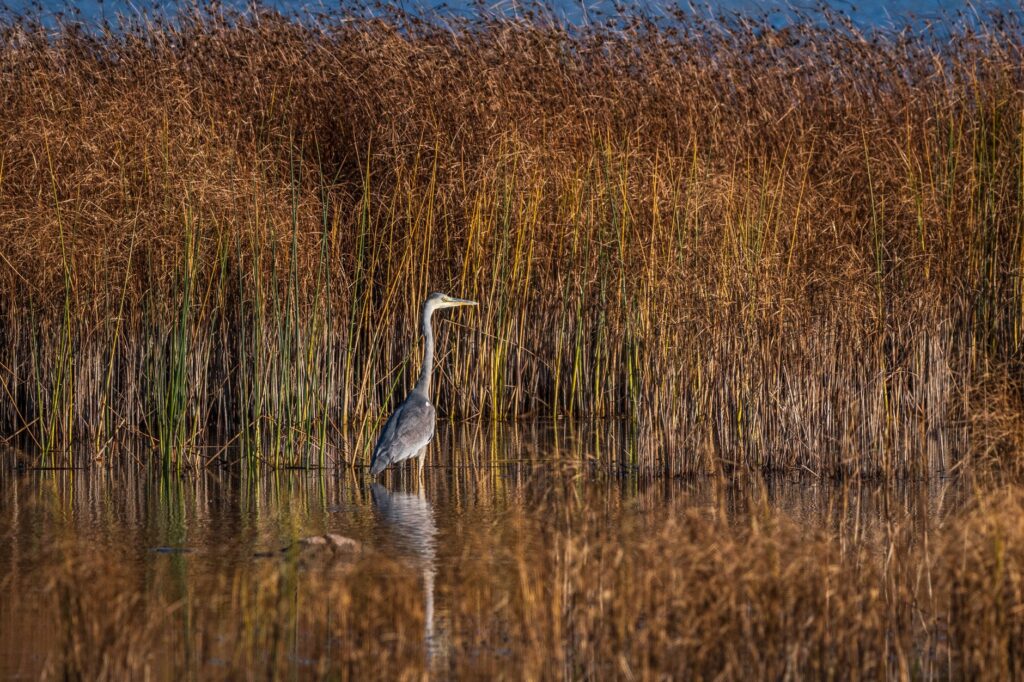
Few natural spectacles possess the evocative force of an inundated marsh at dawn, populated by tens of thousands of flamingos, glossy ibises, purple herons, and greylag geese. Waterbirds act as the most reliable thermometer of the national park’s health. Their massive winter presence and spring breeding success verify whether the water cycle is functioning or if, conversely, prolonged droughts and lack of flooding threaten to transform the wetland into a saline wasteland.
Scientific ringing and satellite tracking programs coordinated by local ornithologists reveal notable shifts in migration routes. Faced with the instability of wetlands in North Africa and the southern Iberian Peninsula, birds exhibit high ecological plasticity, but this adaptive capacity has a limit. If flood cycles drop below three months per year, nesting species fail to complete their biological cycle, leading to drastic population collapses. For this reason, maintaining controlled artificial flooding in strategic sectors during years of extreme scarcity has become an essential management tool, albeit temporary and subject to rigorous scientific committees.
Citizen participation and sustainable birdwatching tourism also play a catalytic role in the local economy. Municipalities such as Almonte, Bonares, Lucena del Puerto, and La Puebla del Río increasingly integrate their tourism service offerings around respectful wildlife observation, breaking away from the mass sun-and-beach model. Local guides, trained in environmental interpretation, convey the complexity of the ecosystem to visitors, turning travel into an educational experience that fosters empathy toward conservation and generates direct income for families in the region.
Ecological Connectivity and the Guadiamar Green Corridor
No protected natural area can survive as an isolated island in an ocean of human alterations. Doñana’s long-term viability is intimately linked to the health of its periphery and the ecological corridors connecting it to Sierra Morena and the foothills of the Guadalquivir basin. The most paradigmatic case is the Guadiamar Green Corridor, a strip of land recovered after the Aznalcóllar mining disaster in 1998, which now functions as a vital artery for the transit of large mammals such as the Iberian lynx.
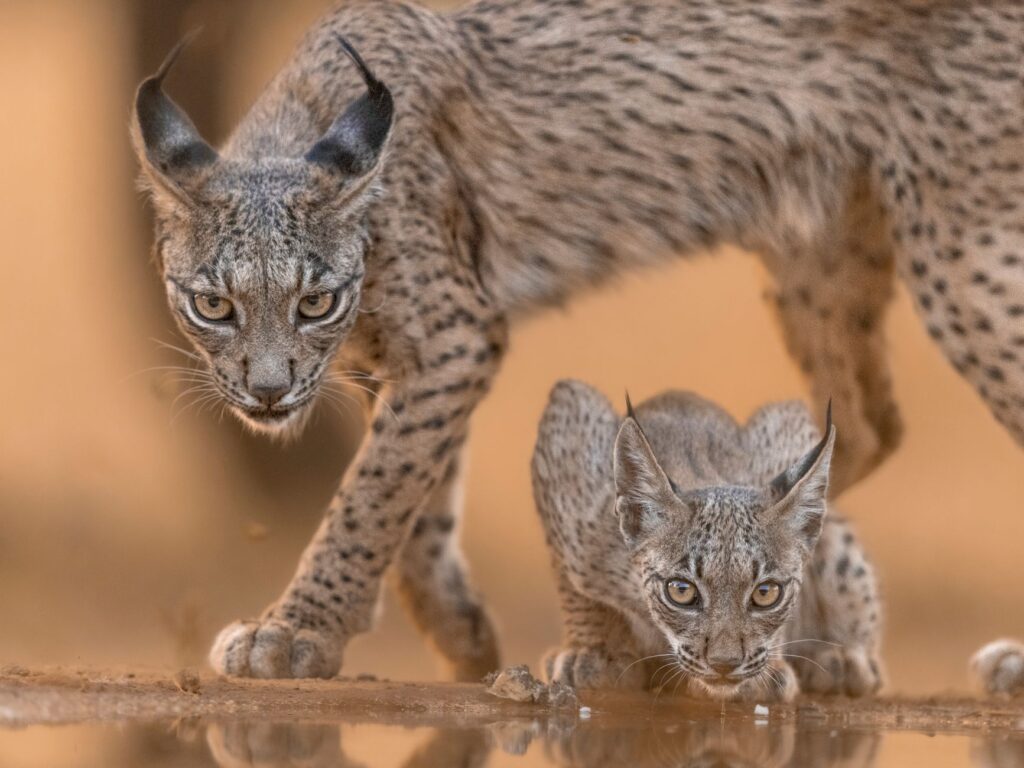
The Iberian lynx (*Lynx pardinus*), the absolute emblem of conservation success on the peninsula, illustrates how habitat recovery and the management of rabbit populations—its primary food source—can push back the threshold of extinction. Lynx populations in Doñana and the El Caracollero area have stabilized and even exchange specimens with other regions thanks to elevated wildlife overpasses and the burying of road infrastructure that previously fragmented the territory. This connectivity reduces inbreeding and strengthens the genetic resilience of a species that barely two decades ago teetered on the brink of the abyss.
Yet challenges pursue managers around every turn. Linear transport infrastructure, diffuse urban pressure around Matalascañas, and the proliferation of clandestine wells remain open fronts demanding constant vigilance from environmental agents and the Environmental Prosecutor’s Office. Earth observation satellite technology, promoted by European programs like Copernicus, now facilitates the early detection of illegal irrigation hidden beneath shade netting, neutralizing the impunity that for years hindered effective soil protection.
Practical guide
How to get there: The main access to Doñana is from Seville or Huelva via the A-49 highway, turning off onto the regional road network connecting with towns such as Almonte, El Rocío, or Sanlúcar de Barrameda. The use of fuel-efficient vehicles or public bus transport from Seville to the region is strongly recommended.
When to visit: The autumn months (October to November) and spring (March to May) offer the best climatic conditions and the highest concentration of migratory avifauna. Summer is extremely hot, making daytime walking tours across the marsh unadvisable.

Where to stay: Opt for small rural accommodations certified with sustainable tourism labels in El Rocío, Villamanrique de la Condesa, or Sanlúcar de Barrameda. These establishments actively support the local economy and minimize their water footprint.
Park rules: Private vehicle transit on restricted forest tracks, the use of drones without explicit authorization, and wild camping are strictly prohibited. Respect safety distances from wildlife at all times and use designated observatories.
The Horizon of Liquid Memory
Doñana’s history is, in essence, the chronicle of a shared resistance between indomitable nature and the lucidity of those who understood that human progress cannot be built upon the ruin of ecological cycles. As European nature restoration policies advance toward more ambitious goals, southern Europe’s great park stands as a full-scale laboratory examining contemporary societies’ capacity to manage scarcity with equity and scientific rigor. The marshes ask not for climatic miracles, but for institutional coherence, respect for groundwater, and historical memory to avoid repeating past mistakes. At the end of the day, when the sun sinks behind the dune cord and dyes the shallow waters with fire, Doñana continues to breathe with the tenacious force of its wild roots, reminding us that protecting the landscape is, ultimately, safeguarding our own human condition.