
In the altitudes where most birds surrender to the rigors of winter, a burst of olive-green feathers and a mischievous squawk defy the logic of survival. The Kea (Nestor notabilis), the world’s only alpine parrot, inhabits the rugged peaks of New Zealand’s Southern Alps—an ecosystem as breathtaking as it is fragile. In Aoraki/Mount Cook National Park, where glaciers carve deep valleys and clouds entangle in peaks exceeding three thousand meters, this bird has become the barometer for an environmental crisis that transcends its borders.
This report delves into the Kea’s territory to understand not only its astounding cognitive intelligence but also the impact of glacial retreat and the persistent threat of introduced mammals. Through a journey across karstic slopes and beech (Nothofagus) forests, we explore how science and Māori culture converge to protect a national symbol currently at an evolutionary crossroads. The mountain is not merely a backdrop; it is a living organism whose icy veins are drying up, forever altering the home of one of nature’s most curious beings.
The Sentinel of the Southern Summits
The Kea is no conventional parrot. While its tropical relatives seek refuge in the warmth of the rainforest, the Kea thrives amidst snow, ice, and the gale-force winds that sweep across the South Island. Its morphology is a triumph of adaptation: a robust, hooked beak capable of tearing through roots, wood, and occasionally animal fat; and a dense plumage that hides a vibrant orange underwing, visible only when it takes flight. Its presence in Aoraki is a constant for mountaineers, who are often surprised by its audacity and ability to solve complex problems.
The Kea’s intelligence has been compared to that of higher primates. They are capable of using tools, working in teams, and displaying an insatiable curiosity that, while helping them find food in hostile environments, also exposes them to human dangers. In recent decades, the Kea population has suffered an alarming decline, with fewer than 5,000 estimated to remain in the wild. Habitat fragmentation and the loss of natural food sources have pushed them to interact more frequently with human settlements—a phenomenon scientists call «interface conflict.»

«The Kea does not just inhabit the mountain; it challenges it. Its survival is a testament to biological resilience in one of the most volatile environments on Earth.»
Despite its protected status since 1986, the Kea faces a dark past. For nearly a century, the New Zealand government paid bounties for their beaks, under the belief that they attacked sheep. It is estimated that over 150,000 birds were exterminated before their ecological value was understood. Today, the challenge is not the farmer’s rifle, but the invisible change transforming the landscape beneath their claws.
Geology of a Moving Giant
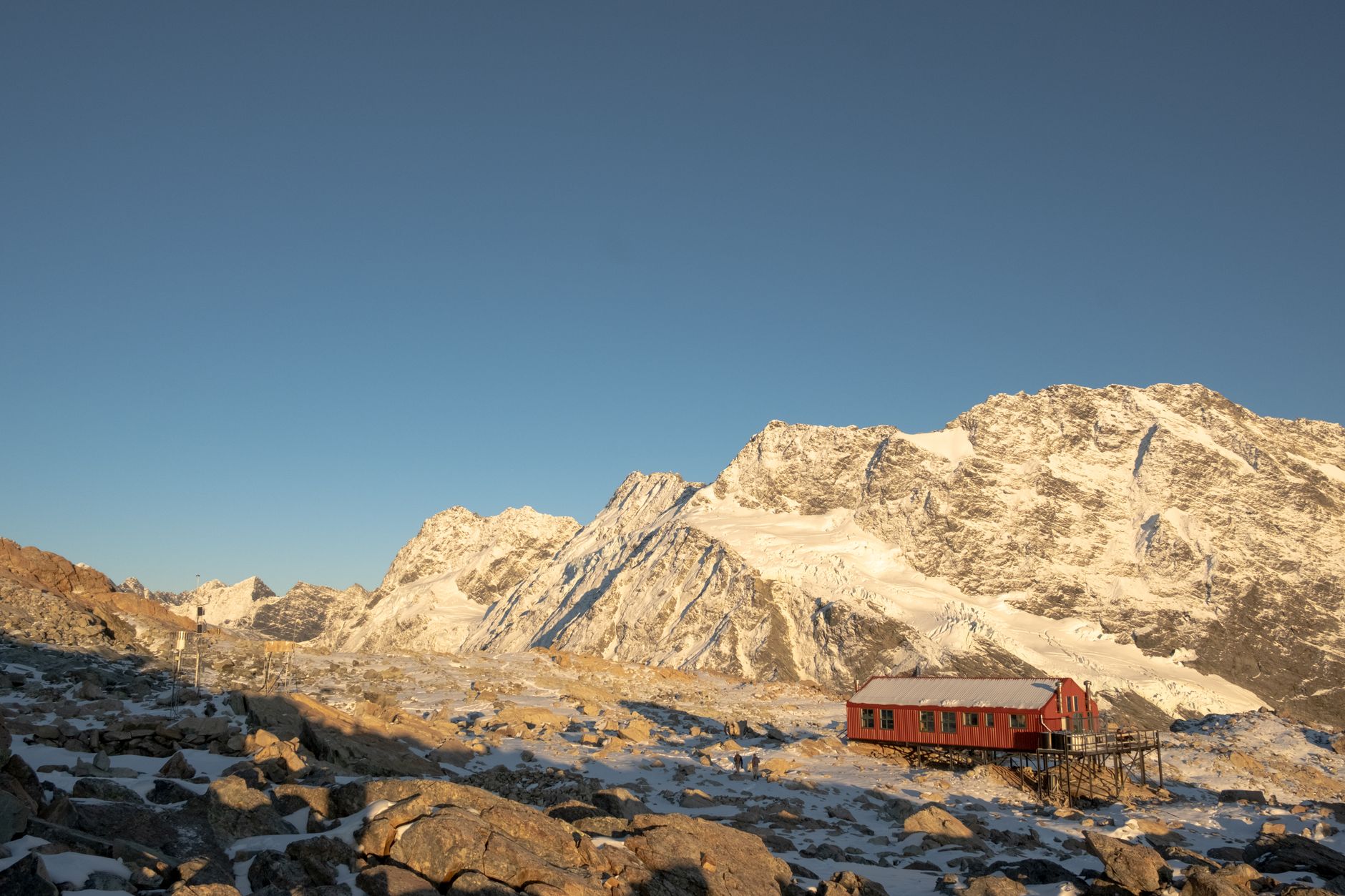
The Southern Alps are a young and dynamic mountain range, born from the collision between the Australian and Pacific plates. This transform fault, known as the Alpine Fault, uplifts the mountains at a rate of about 7 millimeters per year, though erosion and glacial activity work tirelessly to level these heights. Aoraki/Mount Cook National Park houses the country’s highest peak (3,724 meters) and constitutes a unique geological laboratory where the processes of uplift and wear are visible to the naked eye.
The predominant rock is greywacke, a hard, greyish sandstone that forms the sharp ridges characteristic of the region. The terrain is unstable, prone to rockfalls and avalanches, creating a mosaic of microclimates and ecological niches. For the Kea, this geological dynamism is fundamental. Rockfalls expose roots and insect larvae, while caves formed by the chaos of boulders provide safe nesting sites, protected from the elements and aerial predators.
However, the stability of this environment depends on permafrost and glacial ice acting as the mountain’s natural cement. As global temperatures rise, this natural glue weakens. Scientists monitoring the region have observed an increase in the frequency of major rock collapses, altering the movement routes of local fauna and destroying ancestral nesting areas that had remained stable for centuries.
The Kea Paradox: Intelligence on the Ice
What truly sets the Kea apart is its behavioral plasticity. In controlled experiments, these birds have demonstrated the ability to understand concepts of probability and cause-and-effect that many mammals do not reach. This intelligence is an evolutionary response to scarcity: in an environment where food is neither abundant nor predictable, being smart is the only way to avoid starvation. The Kea inspects every new object, tests every texture, and learns from the mistakes of its peers.

This curiosity, however, is a double-edged sword. In the Aoraki environment, Keas are known for dismantling rubber seals on cars, opening backpacks, and exploring landfills. Lead poisoning, found in old building materials and mountain hut nails, has become a leading cause of mortality. Lead has a sweet taste that attracts the birds, causing toxicity that affects their motor and cognitive abilities, making them more vulnerable to accidents or predators.
- Cognitive Ability: Multi-step puzzle-solving skills.
- Omnivorous Diet: They consume everything from nectar and berries to insects and carrion.
- Social Structure: Dynamic groups with complex hierarchies and social learning.
- Longevity: They can live up to 30 years in the wild, allowing for the transmission of knowledge.
The study of their behavior is not just an academic curiosity; it is vital for their conservation. Enrichment programs and safe feeding stations attempt to divert their attention from human-made danger zones, trying to reconnect the bird with its natural foraging cycles in the subalpine forest.
Glaciers in Retreat: The Aoraki Thermometer
The Tasman Glacier, New Zealand’s longest, flows down the eastern flank of Aoraki. In the last three decades, its retreat has been dramatic, leaving behind a proglacial lake that did not exist in the 1970s and now expands several kilometers. For the subalpine ecosystem, the retreat of glaciers is not just an aesthetic loss; it is a radical alteration of the hydrological cycle and soil temperature.
As the ice retreats, plant species from lower altitudes begin to colonize areas that were once the exclusive domain of lichens and cushion plants. This phenomenon, known as «shrubification,» changes the composition of insects and other invertebrates that form part of the Kea’s seasonal diet. The synchrony between snowmelt and the flowering of plants like the Ranunculus lyallii (the Mount Cook Lily) is being affected, forcing fauna to adjust their biological calendars.

«Glaciers are the chroniclers of our climate, and their disappearance is the prologue to an uncertain chapter for the biodiversity of the Southern Alps.»
Thermal impact also affects the snow. Fewer days with snow cover mean the ground freezes and thaws more frequently, damaging the roots of alpine plants and altering freshwater availability during the summer. The Kea, which depends on meltwater pools in high zones, must descend further into the valleys, where the risk of encountering terrestrial predators is significantly higher.
The Silent Battle Against Invasive Predators
New Zealand is a country that evolved without land mammals (except for two bat species). This allowed birds like the Kea to nest on the ground or in accessible cavities. The accidental and deliberate introduction of stoats, rats, and feral cats has been catastrophic. In Aoraki/Mount Cook National Park, the Department of Conservation (DOC) maintains an extensive network of traps to control these invasive populations.
The stoat (Mustela erminea) is enemy number one. It is an agile and voracious hunter that can enter Kea nests and kill chicks and incubating females. Without predator control, the Kea’s reproductive success rate in some areas drops below 10%. Large-scale control operations, including the use of biodegradable toxins applied aerially, are controversial but essential to prevent the local extinction of the species.
Conservation efforts also include monitoring via radio transmitters and nest cameras. Thanks to this technology, biologists have discovered that Keas are much more active during the night than previously thought, further complicating their protection against nocturnal predators. Community involvement, through the Kea Conservation Trust, allows citizens and tourists to report sightings, contributing to a massive database that helps identify high-risk areas.

The Legacy of Ngāi Tahu and the Sacred Mountain
For the Ngāi Tahu iwi (tribe), the traditional guardians of most of the South Island, Aoraki is a sacred ancestor. According to oral tradition, Aoraki and his brothers were the sons of Rakinui (the Sky Father) who became petrified and turned into the mountains of the Southern Alps. The Kea is considered a kaitiaki (guardian) of these heights, a messenger between the physical and spiritual worlds.
The management of the national park is conducted jointly between the government and Māori, ensuring that biodiversity conservation respects cultural and spiritual values. This holistic perspective recognizes that the health of the mountain (the mauri) is inseparable from the health of its creatures. Protecting the Kea is not just a matter of biopolitics, but an act of respect toward the history of the land.
In visitor centers, the Māori narrative offers a lesson in humility: humans are temporary visitors in the realm of Aoraki. This philosophy fosters more conscious tourism, where the goal is not just to «conquer» the summit, but to observe and learn from the interconnectedness of life. Respect for the Kea, therefore, becomes a symbol of reconciliation between modern society and the natural world.
Responsible Tourism in the Kingdom of Ice
Aoraki/Mount Cook National Park attracts hundreds of thousands of visitors each year. The challenge is managing this flow without degrading the environment they come to see. Infrastructure, from well-maintained trails like the Hooker Valley Track to high-mountain huts, is designed to minimize human impact. However, individual behavior remains the critical factor.
Never feed a Kea is the golden rule. Although their persistence and intelligent gaze may seem like an invitation to share food, human foods (bread, biscuits, processed meat) are highly detrimental to their digestive systems and encourage a dangerous dependency. A Kea that grows accustomed to human food stops seeking its natural sources and loses the skills necessary to survive the harshest winters.

Furthermore, mass tourism contributes to the carbon footprint that accelerates glacial retreat. Local businesses are adopting carbon-neutral practices and encouraging collective transport from hubs like Queenstown or Christchurch. Visiting Aoraki today requires an ethical commitment: to be a silent observer and an active protector of a vanishing ecosystem.
Practical guide
For those wishing to explore the Southern Alps and observe the Kea in its natural environment responsibly, meticulous planning is essential.
- Getting There: The main access is via State Highway 80, which skirts the stunning Lake Pukaki. The nearest airport for international flights is Christchurch, about a 4-hour drive away.
- Best Time to Visit: November to March (Austral summer) for hiking and flora observation. June to August for winter landscapes, though many trails require technical equipment.
- Kea Spotting: The most frequent spots are the Tasman Glacier lookout, the surroundings of mountain huts, and Mount Cook Village itself. Remember to maintain a minimum distance of 5 meters.
- Essential Gear: The weather in the Southern Alps is extremely changeable. Technical layered clothing, hiking boots with good grip, and high-intensity sun protection are mandatory due to the thin ozone layer at these latitudes.
- Accommodation: Mount Cook Village offers everything from luxury hotels to backpacker hostels and DOC-managed campsites. Booking months in advance is highly recommended.
- Safety: Before any hike, check the weather forecast and avalanche risk at the visitor center. Always notify third parties of your intended route.
The Future on a Parrot’s Wings
The story of the Kea and Aoraki/Mount Cook is a narrative of coexistence in a changing world. As glaciers continue their inevitable retreat toward the summits, the Kea remains a reminder that nature possesses its own cunning to face adversity. However, that cunning has a limit. The survival of this alpine parrot now depends on our ability to mitigate the threats we ourselves have introduced into its kingdom.
As evening falls over the Hooker Valley, and the sun tints the ice walls of Mount Cook in pink, the Kea’s cry echoes as a call to vigilance. It is a sound that has remained unchanged since the first Polynesians sighted these peaks. Protecting this refuge is not just about saving a species; it is about preserving the integrity of a landscape that defines a nation’s identity and reminds us of our place in the vast natural order. The Kea, with its curious gaze and bold flight, remains the rightful owner of the southern winds.