
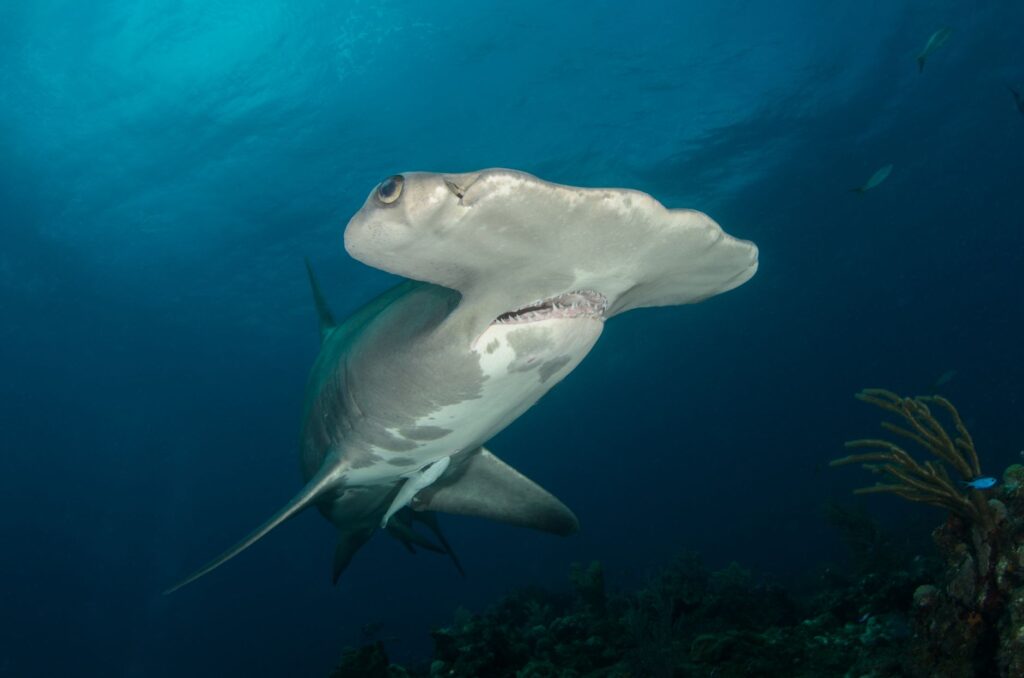
In the remote northern reaches of the Galápagos archipelago, where oceanic currents converge in an invisible yet relentless dance, the volcanic monoliths of Darwin and Wolf rise from the depths. This geographical enclave, swept by winds and bathed in nutrient-rich waters, represents far more than a geological milestone in the Ecuadorian Pacific: it constitutes the world’s last great stronghold for the scalloped hammerhead shark (Sphyrna lewini). Far from the static image found on tourist postcards, these deep waters operate as a living laboratory where physical oceanography dictates every biological pulse. Here, the survival of one of the planet’s most enigmatic marine species depends on a delicate balance between cold-water upwellings, ancient migratory routes, and an ever-evolving framework of marine governance.
Delving into the reality of this sanctuary requires shedding romantic clichés and observing the ecosystem through the lens of ocean science. The convergence of the Cromwell Current, which flows from west to east along the equatorial line, collides violently against submerged insular platforms, generating an upwelling phenomenon. This physical mechanism drags dense, cold, and extraordinarily mineral- and plankton-rich water masses toward the surface. It is precisely this oceanographic engine that sustains the region’s complex trophic web, turning the submerged walls of Darwin and Wolf into obligatory waystations for massive aggregations of hammerhead sharks that defy known biological conventions.
The Oceanographic Architecture of Northern Galápagos
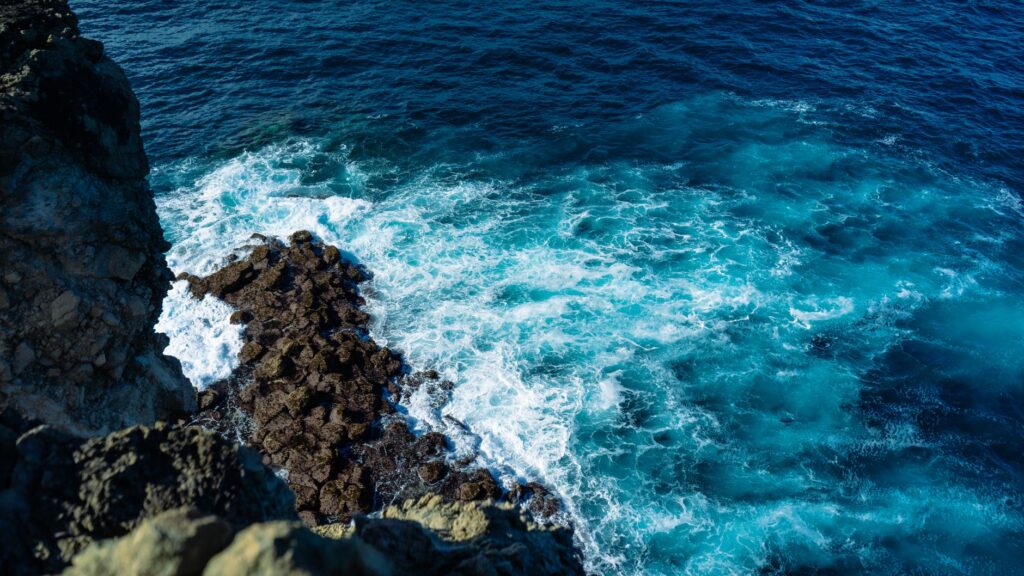
Understanding the massive presence of Sphyrna lewini in this corner of the Pacific requires analyzing submarine topography and water mass dynamics. The seamounts of Darwin and Wolf act as submerged colossi that alter the trajectories of deep oceanic currents. When the Cromwell Current strikes these bathymetric structures, a vertical acceleration of the water flow occurs, injecting nutrients into the photic zone. This constant input of chemical energy stimulates phytoplankton blooms that feed countless species of pelagic fish, creating a permanent banquet that attracts apex predators.
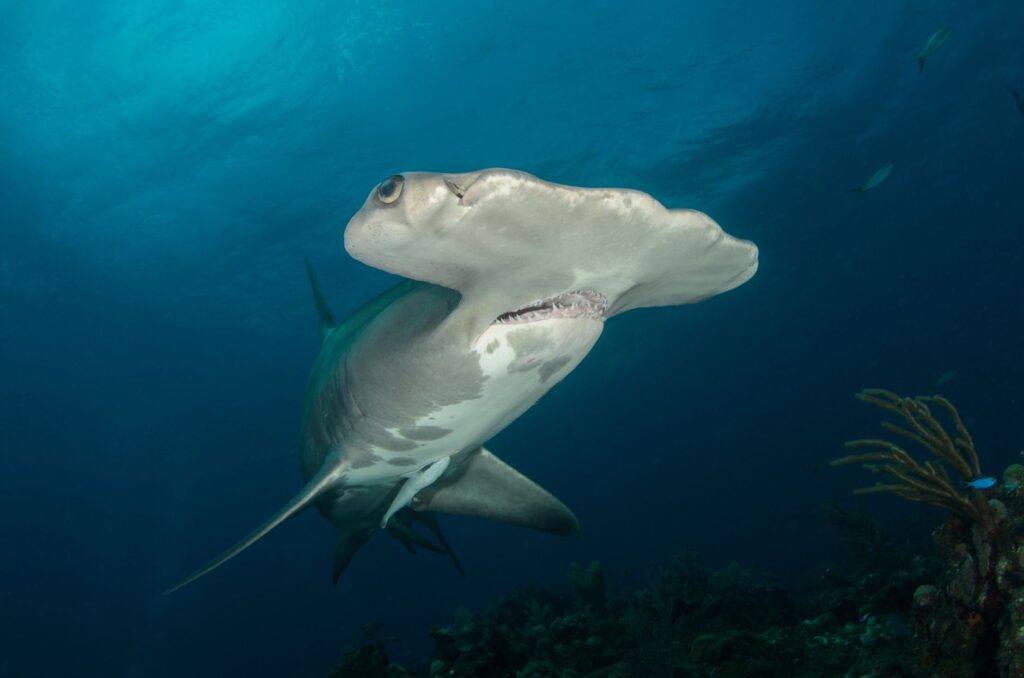
However, the stability of this physical system faces large-scale global climatic fluctuations. El Niño-Southern Oscillation (ENSO) cycles drastically alter sea surface temperature and the thermocline, displacing cold water masses to greater depths and reducing food availability along the drop-offs. During these periods of thermal stress, marine biologists have documented significant shifts in hammerhead aggregation patterns. The species’ capacity for adaptation in the face of these extreme events remains a subject of intense study, revealing a resilience as admirable as it is fragile in the face of accelerating climate change.
Demography and Gregarious Behavior at Cleaning Stations
One of the most fascinating and least understood aspects of Sphyrna lewini in the Galápagos is its gregarious behavior, particularly marked at the so-called cleaning stations situated around rocky pinnacles. Unlike in other regions of the world where these sharks display solitary or evasive habits, in Darwin and Wolf they concentrate in imposing schools formed almost exclusively by adult females, many of them of reproductive age. This phenomenon has led the scientific community to formulate diverse hypotheses regarding the use of these promontories as gathering areas for socialization, migratory orientation, or gestation preparation.
Rigorous underwater observations have helped identify that these aggregations are not random, but rather respond to complex hierarchies and circadian rhythms. At dawn, the sharks leave open and deep waters to approach the rocky walls, where they interact with cleaner fish such as the barberfish (Prionurus laticlavius). This symbiotic interaction not only fulfills a hygienic function by removing cutaneous parasites, but also acts as a visual and tactile communication mechanism among individuals. The disruption of these social dynamics, whether through invasive human presence or habitat degradation, can trigger unpredictable consequences for the population’s demography on a regional scale.
The Enigma of Transoceanic Migratory Routes
For decades, the life cycle of Sphyrna lewini was surrounded by questions regarding its destination outside the protected waters of the archipelago. Thanks to the deployment of acoustic and satellite telemetry technologies led by institutions such as the Charles Darwin Foundation and the Galápagos National Park, it is now known that these animals are not permanent residents, but tireless oceanic travelers. Electronic tags have revealed that adult females leave the northern islands to embark on journeys spanning thousands of kilometers into the open waters of the eastern tropical Pacific, venturing into high seas zones devoid of governmental protection.
This oceanic nomadism exposes hammerhead sharks to extreme vulnerability as soon as they cross the boundaries of the marine reserve. Passing through biological corridors located in international waters, the specimens face industrial fishing pressure, particularly from international longline fleets operating on the margins of protected areas. The identification of these blue highways has radically transformed conservation strategy, demonstrating that local protection within Galápagos is insufficient unless multilateral agreements and protected marine corridors encompassing the species’ entire migratory route are established.
Historical Fishing Pressure and Collateral Impact
The history of conservation in the Galápagos is also the chronicle of a constant tug-of-war between extractive economic interests and the urgency of safeguarding irreplaceable natural heritage. During the final decades of the twentieth century, targeted shark fishing for the lucrative purpose of commercializing fins in Asian markets drastically decimated populations throughout the eastern tropical Pacific. Although Ecuadorian legislation has evolved toward stricter punitive frameworks and an absolute ban on shark fishing within the marine reserve, the challenge of incidental catch and illegal poaching persists in peripheral zones.
Recent genetic analyses performed on tissue samples obtained in the water have helped estimate the magnitude of historical population loss, suggesting that current densities represent a fraction of what the ecosystem harbored prior to the intensification of industrial fishing. Furthermore, accidental capture in gillnets and pelagic longlines continues to exact a silent toll. The paradox lies in the fact that an animal with slow reproductive rates and low fecundity like the hammerhead shark possesses an extremely limited capacity for recovery, turning any spike in adult mortality into an existential threat to the demographic stability of the lineage.
Protecting the hammerhead shark in the Galápagos is not an exercise in conservationist romanticism, but an imperative necessity to maintain the thermodynamic and biological health of the entire eastern tropical Pacific.
Governance Strategies and the Expansion of the Marine Reserve
Faced with the transnational vulnerability of migratory species, Ecuador has driven geopolitical milestones of global relevance in marine conservation. The creation of the Galápagos Marine Reserve in 1998, later expanded with the establishment of the Hermandad Sanctuary in 2022, represents a paradigmatic shift in oceanic management. This new protected area connects the Galápagos Islands with Cocos Island in Costa Rica through a submarine corridor spanning over 60,000 square kilometers where industrial fishing is entirely prohibited, shielding one of the most heavily transited migratory routes for sharks, turtles, and whales.
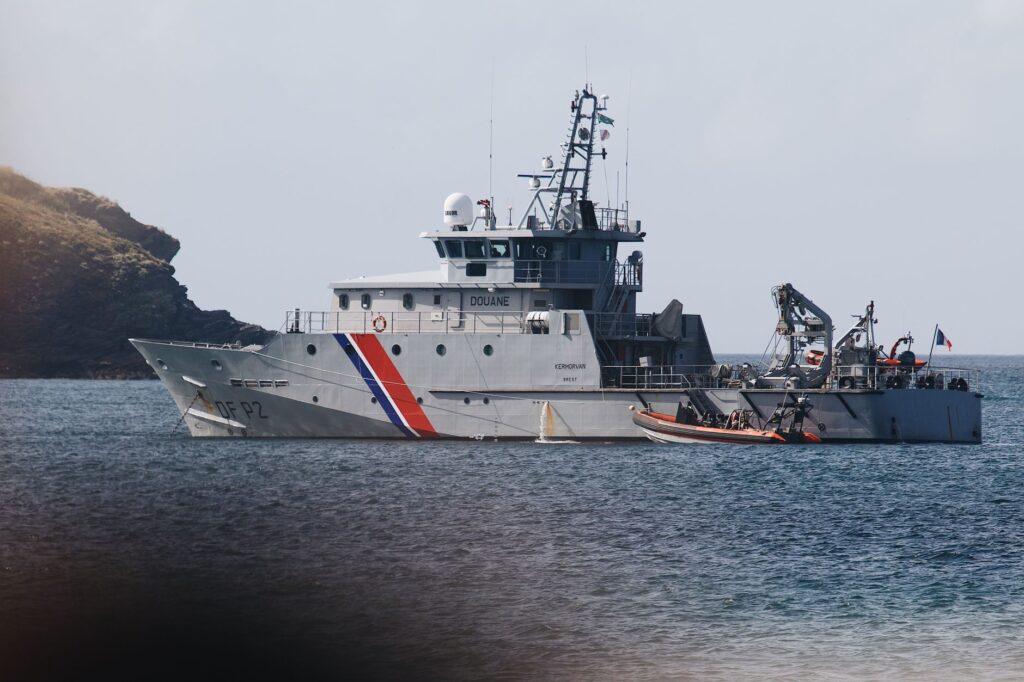
Nonetheless, the paper-bound effectiveness of these governmental decrees depends directly on the operational capacity for control and surveillance. Joint patrols between the Directorate of the Galápagos National Park and the Ecuadorian Navy, supported by high-frequency radar systems, real-time satellite imagery, and drone patrols, constitute the first line of defense against the incursion of illegal foreign fleets. The technological and logistical challenges of monitoring such an expanse of ocean are monumental, requiring sustained financial investment and robust international cooperation to guarantee the effective deterrence of violators on the high seas.
The Role of Citizen Science and Acoustic Monitoring
In parallel with major governmental operations, scientific research in Darwin and Wolf increasingly draws on collaborative alliances integrating expeditioners, experienced divers, and independent scientists. Citizen science programs such as photographic monitoring of dorsal patterns and natural markings allow researchers to conduct continuous population censuses without needing to handle or stress the animals. Through artificial intelligence recognition software, each individual photographed underwater can be cataloged and tracked over the years, providing invaluable data on survival rates and site fidelity.
Likewise, the network of underwater acoustic receivers anchored to the sea floors across the archipelago functions as an electronic nervous system recording the constant passage of sharks marked with internal transmitters. Every time a specimen swims a few meters from a receiver, the date, time, and unique identification code are logged. This continuous flow of information has allowed biologists to map habitat use dynamically, revealing how hammerhead sharks respond to seasonal water temperature variations and the presence of vessels. Science, in this context, acts as the indispensable bridge between empirical knowledge and political decision-making.
Practical guide
Planning a responsible and respectful approach toward the natural environment of Darwin and Wolf requires understanding the strict logistical and regulatory constraints governing the northern extreme of the Galápagos archipelago. Essential recommendations for researchers, documentary film crews, and specialized travelers are structured in the following points:
- Access and Navigation: Access to Darwin and Wolf islands is strictly reserved for specialized liveaboard dive vessels authorized by the Directorate of the Galápagos National Park, typically departing from the ports of San Cristóbal or Santa Cruz. The crossing requires between 18 and 24 hours of navigation in open water.
- Seasons and Oceanographic Conditions: The season for peak hammerhead aggregations coincides with the warm and wet season, from June to November, when cold waters from the Cromwell Current intensify upwelling. Water temperatures range between 18 °C and 64 °F (18 °C to 22 °C), requiring robust thermal wetsuits (5 mm to 7 mm).
- Diving Profile and Safety: Dives at these oceanic drop-offs take place under conditions of strong currents, descending tides, and variable visibility. Advanced diving certification, accredited open-water experience with currents, and the mandatory use of a Delayed Surface Marker Buoy (DSMB) are required.
- Environmental Conduct Regulations: The use of diving gloves, metal reef hooks, or any device permitting physical contact with the marine substrate or wildlife is strictly prohibited. Observation distances must be maintained passively, avoiding blocking the sharks’ approach routes toward cleaning stations.
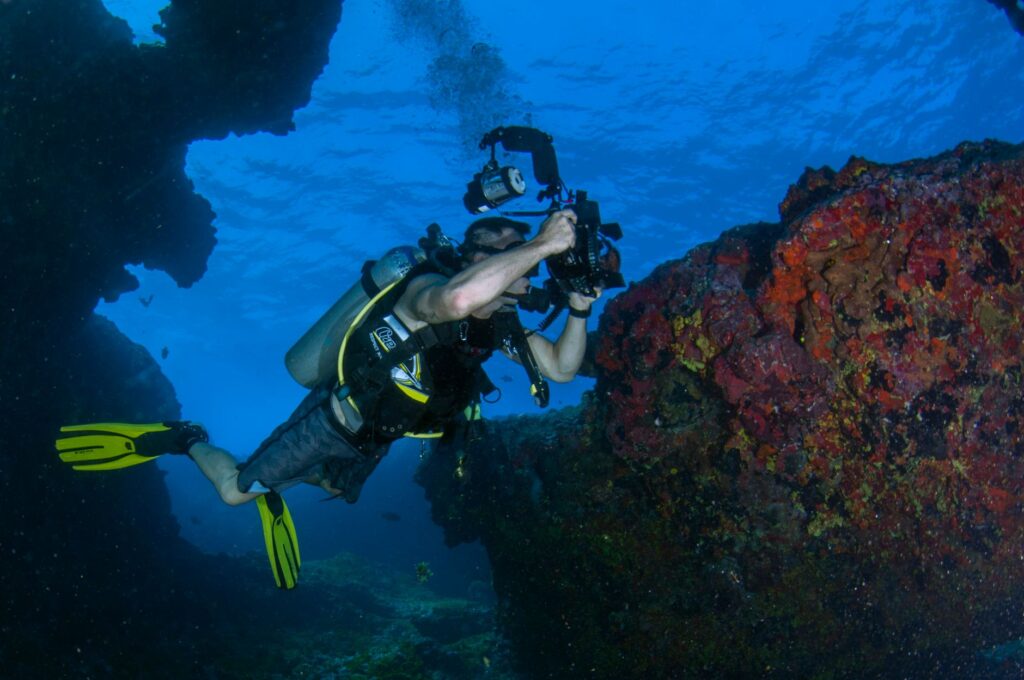
- Underwater Photography: The use of photographic and video equipment with artificial stroboscopic lighting is permitted, provided that high-power continuous light sources that alter the visual behavior of light-sensitive species in the deep water column are not utilized.
When the sun declines over the horizon of the Ecuadorian Pacific, dyeing wave crests in shades of copper and fire, the seamounts of Darwin and Wolf recover an ancestral silence broken only by the constant murmur of deep currents. In these indomitable waters, where nature operates under its own relentless laws, the hammerhead shark continues its millennial march between two worlds: the protected sanctuary of the islands and the unpredictable immensity of the open ocean. Ensuring the persistence of this colossal underwater ballet is not merely a matter of ecological preservation, but an ethical testament to our capacity to coexist with the most ancient and essential life forms of the planet’s seas.