
The Vertical Geometry of the Sacred Mountain
Mount Emei, situated on the western edge of the Sichuan Basin, is not only one of China’s four sacred Buddhist mountains but also one of the most complex environments for transport engineering in East Asia. With a summit brushing three thousand and ninety-nine meters, known as the Golden Summit, this natural colossus has demanded exceptional logistical solutions for centuries to connect lower valley monasteries with shrines suspended in perpetual mist. The transition from subtropical lowlands to alpine peaks imposes a drastic shift in climatic conditions, where constant humidity and nearly vertical slopes transform any journey into an exercise in technical precision.
For decades, access to the monasteries relied exclusively on intricate hand-carved stone paths, popularly known as the stairways to heaven. However, the sustained growth of cultural tourism and the necessity of supplying isolated monastic communities prompted a radical transformation in the region’s infrastructure. Today, an integrated network comprising winding mountain roads, high-capacity cable cars, and modern funiculars manages an annual flow of millions of visitors without compromising the ecological fragility of the natural reserve, recognized as a UNESCO World Heritage site since nineteen ninety-six.
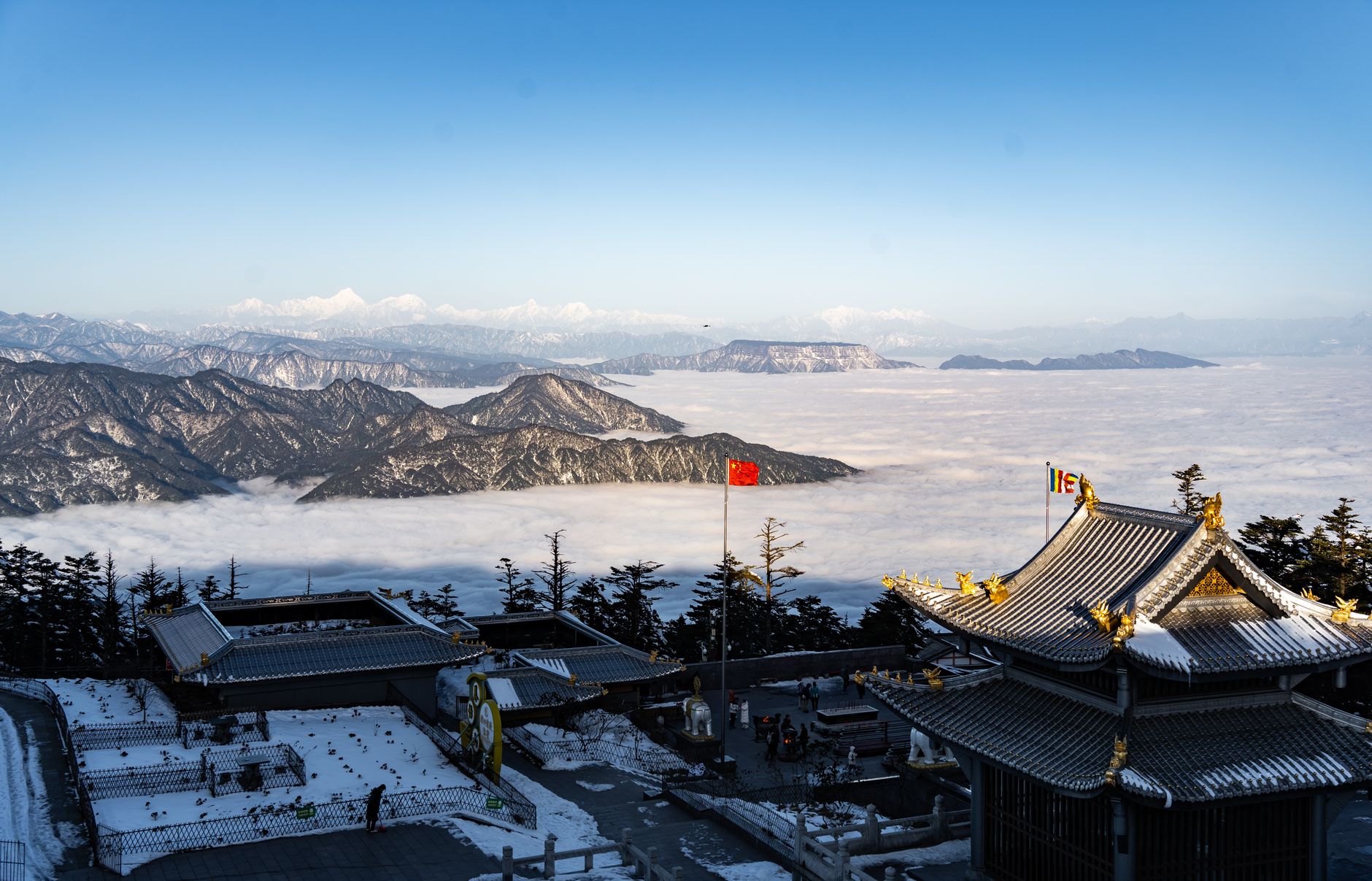
Integrating contemporary transport systems with the landscape heritage required meticulous design. Unlike other massive engineering works in China, development on Mount Emei prioritizes the visual invisibility of stations and absolute respect for limestone geological formations. Cable car cabins glide across dense seas of clouds, offering travelers an aerial perspective of the ancient fir and azalea forests blanketing the slopes, while ground-level intermodal transfer points are optimized to prevent congestion at sensitive monastic enclaves.
The Logistics of Ascent: Between Buses and Cable Cars
The journey toward the summit formally begins at the Baoguo transport hub situated at the mountain’s base. From this point, private vehicles are prohibited, giving way to a fleet of clean-energy tourist buses that wind along a thirty-six-kilometer mountain road. This carefully maintained corridor ascends gradually to the Wannian area or the Leidongping outpost, overcoming an elevation gain of over two thousand meters in less than two hours. Managing traffic along this route represents a daily logistical challenge, particularly during pilgrimage seasons and summer months.
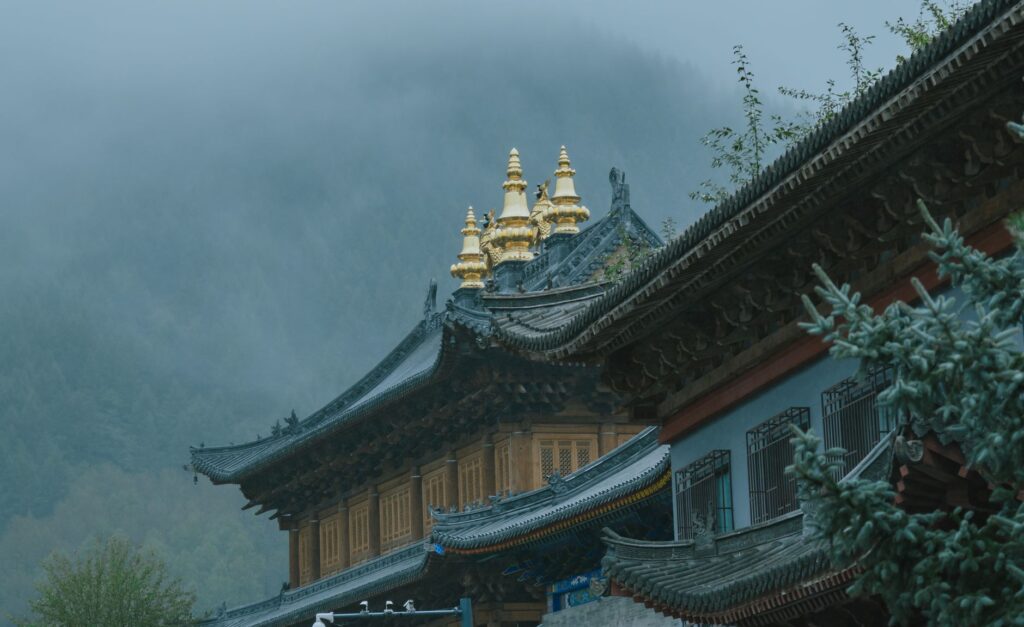
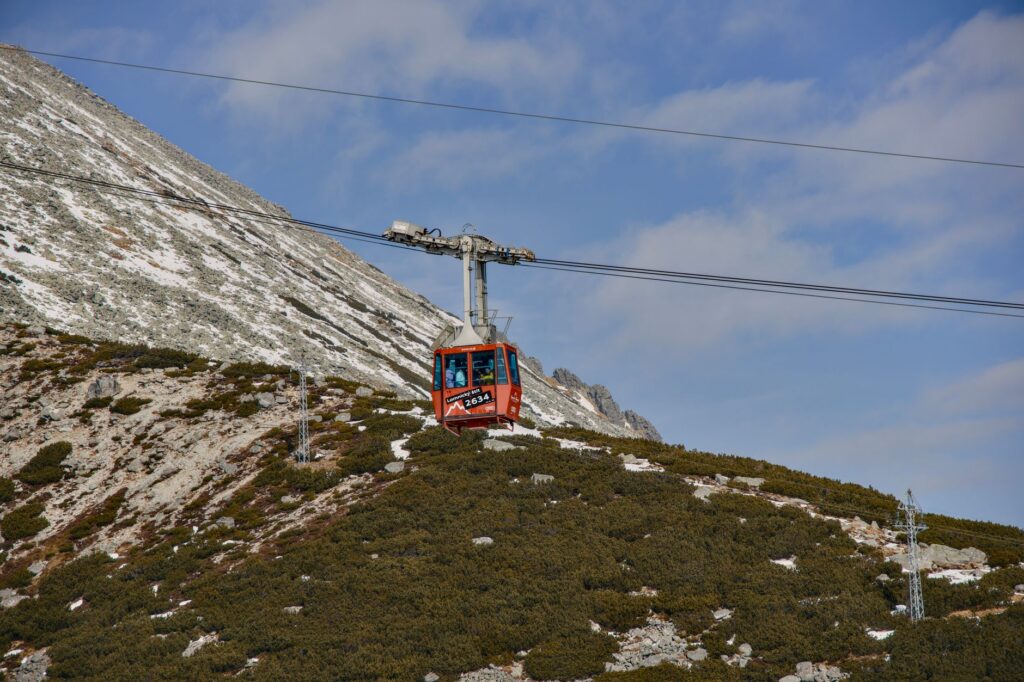
At Leidongping, the road journey concludes, requiring travelers to hike one and a half kilometers to the lower station of the Golden Summit cable car. This funicular, technologically upgraded to withstand gale-force winds and heavy loads, serves as the backbone connecting the earthly world with the snow-dusted peak. The transport capacity of these suspended cabins exceeds two thousand passengers per hour during peak periods, an operational milestone demonstrating the efficiency of Chinese logistical planning in extreme mountainous environments.
Maintaining these high-altitude infrastructures demands rigorous protocols. Engineering teams conduct constant nighttime inspections, utilizing closing hours to check tension cables, emergency braking systems, and meteorological sensors that detect thermal variations or ice accumulation. The synchronization between road transport and cable systems ensures that the logistics chain operates with millimetric punctuality, minimizing waiting times at stations exposed to sub-zero temperatures.
Monastic Architecture and Intermodal Transfer Points
Mount Emei’s transport network does more than move tourists; it acts as the umbilical cord supplying historic temples such as Wannian, the mountain’s oldest, and Qingyin, renowned for its crystal pavilion and surrounding streams. Each transfer station is architecturally designed to blend with Sichuan’s traditional style, characterized by curved gray tile roofs, upturned eaves, and wood-jointed structures built without nails, reinterpreted with reinforced concrete cores to withstand seismic activity.
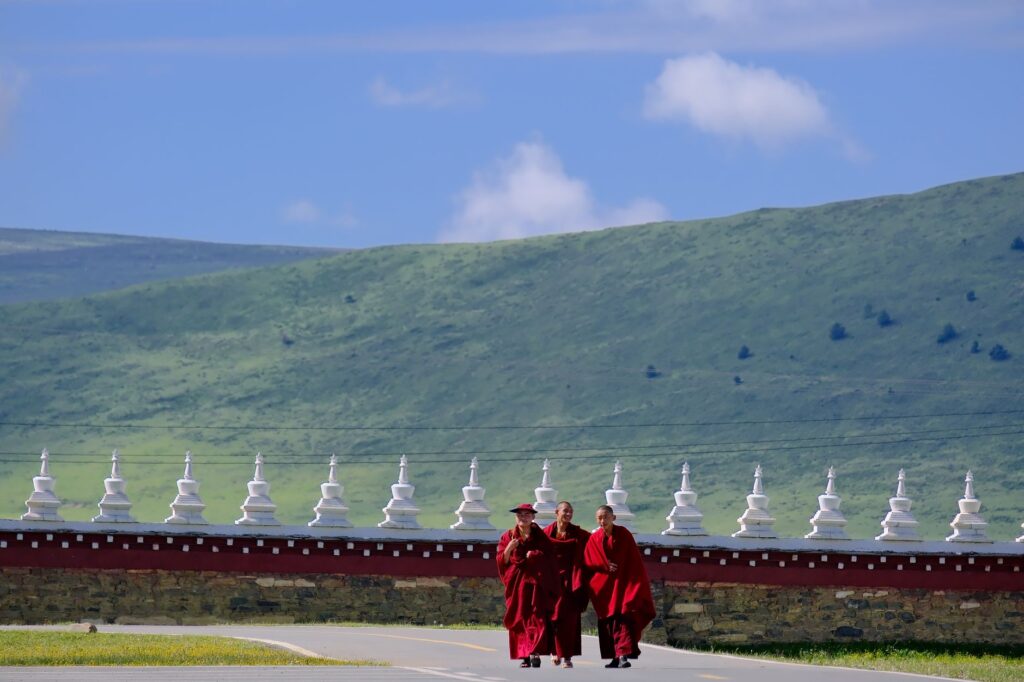
Around these transit nodes, small service villages have formed, housing traditional lodges and information centers. The spatial distribution of these points prevents human impact from dispersing uncontrollably across the national park. Pedestrian paths intersect strategically with mechanical service routes, allowing local monks and porters—historical figures who still transport goods on their backs—to coexist harmoniously with modern electromechanical transport.
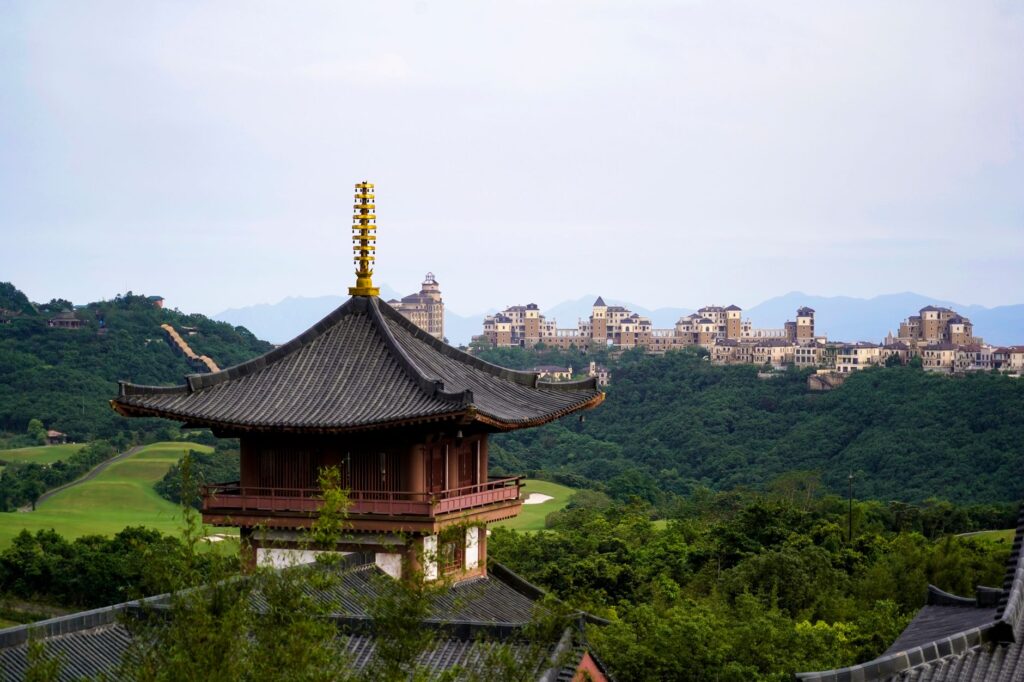
The true mastery of engineering on Mount Emei lies in its capacity to disappear before the traveler’s eyes, allowing the mountain to speak through its mist and centuries-old monasteries.
This balance between accessibility and preservation extends to waste management and energy supply. Cable car stations incorporate gray-water recycling systems and complementary solar panels to minimize the carbon footprint in such a delicate ecosystem. The result is an efficient mobility corridor where high technology serves to protect, rather than overwhelm, a landscape laden with ancient mysticism.
The Meteorological Phenomenon of the Sea of Clouds and Buddha’s Halos
One of the primary attractions justifying the complex logistics of ascending Mount Emei is the observation of its unique optical and atmospheric phenomena. From the Golden Summit, clear days afford views of the famed sea of clouds, an extensive white layer blanketing the lower valleys like a frozen ocean. Atmospheric stability created by surrounding topography generates this visual spectacle frequently during autumn and winter mornings.
Complementing this is the Buddha’s halo, or Emei glory, a multicolored circle appearing when sunlight illuminates the mist behind the observer. For centuries, pilgrims interpreted this optical illusion as a divine manifestation of Samantabhadra, the mountain’s tutelary bodhisattva. The precise scheduling of cable cars allows early-rising travelers to reach the summit just before dawn, maximizing the likelihood of witnessing these natural events that have captivated poets, monks, and scientists for millennia.
Managing observation platforms at the summit has required adapting to massive spectator influxes. Floating walkways made of galvanized steel extend over abysses, distributing weight evenly across the bedrock while protecting endemic alpine vegetation from direct trampling. These structures ensure visitor safety against strong wind gusts while admiring the golden temple and the monumental ten-faced statue of Samantabhadra.
Geological Challenges and Maintenance in Extreme Conditions
Operating a transport network on such an abrupt mountain involves constant confrontation with severe geological risks, such as rockfalls, summer monsoon-induced landslides, and black ice formation on roads. Mount Emei’s management department employs advanced radar systems and motion sensors installed on unstable rock faces to predict incidents before they impact bus routes or cable car towers.
During winter months, drastic temperature drops require specialized machinery to clear accumulated snow at Leidongping. Crews work under high physical demands to keep transport arteries open, applying eco-friendly deicers that prevent contamination of mountain springs. Likewise, funicular cables undergo regular digital dynamometer load testing to certify that material fatigue does not compromise operational safety.
Continuous investment in R&D applied to mountain civil engineering has established this enclave as an international benchmark for managing tourist infrastructure in environmentally sensitive zones. Collaboration between Sichuan universities and public engineering firms ensures structural interventions minimize alterations to natural rainwater drainage, preventing accelerated slope erosion.
Culture, Pilgrimage, and Local Economy in the Mountain Foothills
The steady flow generated by Mount Emei’s transport system supports a vibrant local economy in surrounding towns like Emeishan City and Leshan. Local markets supply area restaurants with endemic products, from Zhuyeqing high-mountain green tea to wild bamboo shoots and traditional Sichuan dishes. This food value chain directly benefits from the efficient logistics connecting rural production centers with tourist consumption points.
For monastic communities, modern transport has streamlined communal management, enabling the transfer of medical supplies, sacred texts, and architectural restoration materials without relying exclusively on traditional physical labor. Nevertheless, deep respect for secular traditions remains; monks continue their morning rituals undisturbed by the bustle of visitors arriving via funiculars, creating a fascinating duality between contemplative life and modern mass tourism.
Local authorities enforce strict regulations to prevent commercial saturation around temples, prohibiting large hotel chains in protected zones and encouraging homestays in lower valleys. This decentralized development model ensures economic benefits from rail and road tourism are distributed equitably among rural residents.
Practical guide
How to get there: The most efficient access to Mount Emei is via Emeishan High-Speed Railway Station, directly connected to Chengdu by frequent trains taking approximately one hour. From the station, local buses and official taxis transfer travelers to the Baoguo tourist center in under fifteen minutes.
When to visit: Spring (April to May) and autumn (September to November) offer optimal weather conditions with clear skies and mild temperatures. Summer brings frequent monsoon rains and dense fog, though it increases the chance of witnessing the sea of clouds. Winter transforms the summit into a snowy wonderland ideal for landscape photography, requiring proper thermal attire.
Internal transport systems: The combined bus and cable car ticket is essential. Purchased at the Baoguo center, it covers road transit to Leidongping and funicular access to the Golden Summit. Advance booking is strongly recommended during weekends and Chinese national holidays (such as Golden Week).
Recommended accommodation: For an immersive experience, overnight stays in guesthouses run by Buddhist monasteries, such as Wannian or Xianfeng, can be booked upon arrival or through authorized agencies. At the mountain’s base, international hotels and hot-spring spas offer elevated comfort standards.
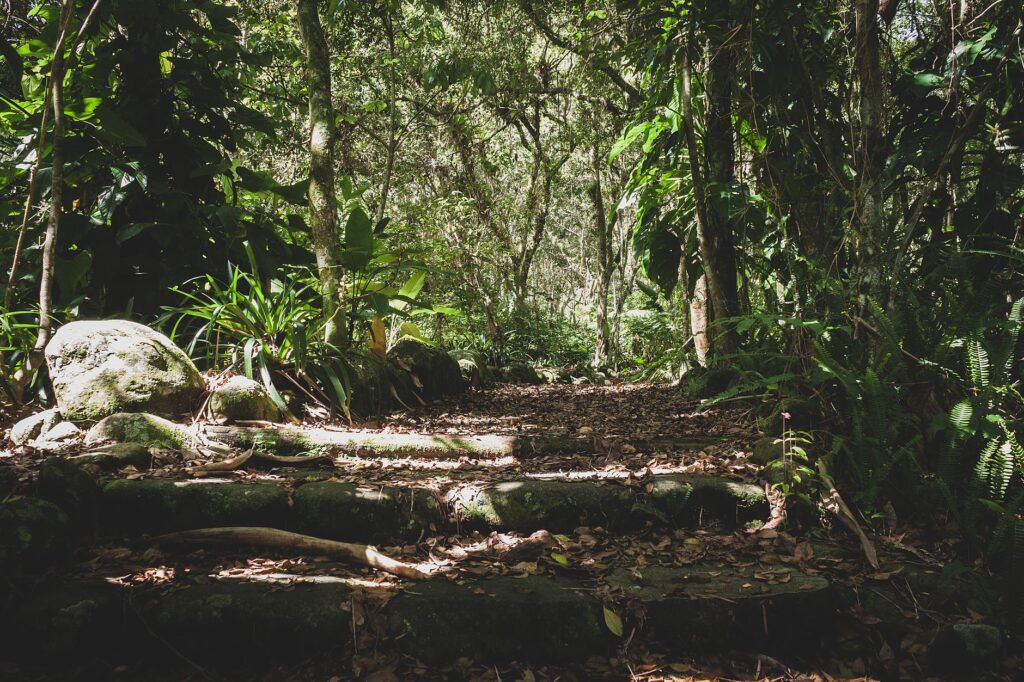
Safety and health tips: Rapid ascent from the base to three thousand meters may induce mild altitude sickness symptoms (dizziness or fatigue). Paced walking at the summit, staying hydrated, and purchasing walking sticks at lower stations are advised. Non-slip footwear is mandatory due to persistent moisture on stone steps.
The Whispering Wind at the Golden Summit
When the day’s final funicular descends loaded with pilgrims and travelers toward the base, Mount Emei reclaims its ancestral silence. Fog reclaims the ancient fir trees and the golden roofs of the Samantabhadra temple, erasing the traces of the high technology that by day challenged the verticality of the abyss. In that fleeting evening truce, the mountain reveals its true nature: a sanctuary where millennia-old stone and modern engineering coexist in a fragile, perfect balance.
Observing dusk from the Golden Summit, with the distant echo of monastic bells merging with alpine winds, synthesizes the ultimate purpose of this journey into southwestern China. Transport infrastructures are not mere mechanical conduits to move masses, but invisible bridges bringing human wonder closer to the unreachable, allowing Sichuan’s remote beauty to continue beating in every traveler’s heart.