
In the heart of Central Europe, where classical music rhythms and the golden strokes of the Viennese Secession form part of everyday DNA, creativity has found a channel as ephemeral as it is memorable: the plate. Austria is not only the territory that nurtured geniuses such as Wolfgang Amadeus Mozart and Gustav Klimt; it is also a laboratory where culinary tradition and artistic avant-garde hybridize, blurring the boundaries between contemplating a masterpiece and devouring it. This phenomenon, driven by visionary confectioners, artisanal chocolatiers, and contemporary chefs, redefines how travelers approach the country’s history.
Far from being a mere commercial gimmick, the initiative to merge aesthetic legacy with gastronomy responds to a need to understand culture synesthetically. When the palate becomes the vehicle of artistic memory, the great aesthetic movements of the past cease to be static pieces guarded behind museum glass cases and integrate into the life cycle of whoever savors them. This report explores the depths of this current in Vienna and Salzburg, examining how local workshops transform musical scores and canvases into bites of high historical and technical precision.
The Musical Score Converted into Sweets: The Mozart Myth
The link between classical music and Salzburg’s confectionery is unbreakable. Wolfgang Amadeus Mozart, born in Salzburg in 1756, is the gravitational axis around much of the region’s tourist and cultural economy spins. However, beyond the ubiquitous Mozartkugel—the celebrated sphere of pistachio marzipan, praline, and dark chocolate coating created in 1890 by confectioner Paul Fürst—there is constant research by local pastry chefs to translate the harmonic complexity of his symphonies into edible textures.
In the traditional workshops still operating in Salzburg’s historic center, the creation of these sweets continues to demand almost mathematical rigor. Each ingredient fulfills the function of a note on a staff: the fatty sweetness of the praline provides the harmonic background, while the bitterness of the chocolate introduces the necessary counterpoint to prevent cloying. This is not a simple pop tribute, but a rigorous recreation of Enlightenment tastes adapted to the contemporary palate through cocoa refining techniques that guarantee a perfect melt in the mouth.
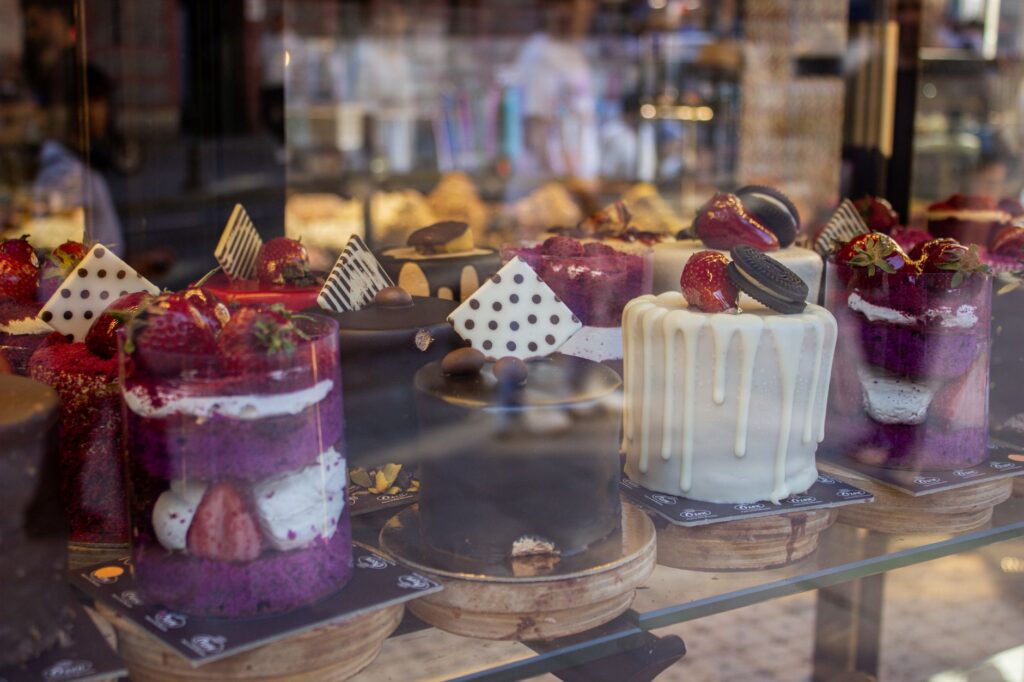
Mozart’s music is not only heard in concert halls; in Salzburg, it is broken down into notes of cocoa and pistachio to be understood by all senses.
Culinary historians recall that the composer himself was a confessed enthusiast of refined sweets and Burgundy wine, a sybaritic facet rarely captured by conventional academic biographies. When tasting these creations, the contemporary traveler establishes an invisible bridge with 18th-century Vienna and Salzburg, understanding that musical genius also fed on the most everyday and sophisticated sensory pleasures of its bourgeois and aristocratic environment.
Klimt’s Gold and the Palette of the Viennese Secession
If Salzburg sounds like chocolate and marzipan, Vienna shines with golden glimmers. The work of Gustav Klimt and the artists gathered around the Viennese Secession has found in contemporary Viennese pastry a three-dimensional canvas where fin-de-siècle aesthetics take on new meaning. Edible gold leaf, rigorous geometries, and stylized floral motifs characteristic of paintings like ‘The Kiss’ are replicated today on surfaces of chocolate ganache, vanilla sponges, and apricot jams from the Wachau region.
This dialogue between fine arts and pastry does not arise by spontaneous generation. During the turn of the century from the 19th to the 20th, Viennese cafes were the intellectual epicenter where painters, architects, musicians, and writers exchanged manifestos and dialectical recipes. Today, the heirs of that bohemian tradition translate Johannes Itten’s color theories and Egon Schiele’s sinuous lines into refrigerated display cases that look like galleries of ephemeral art.
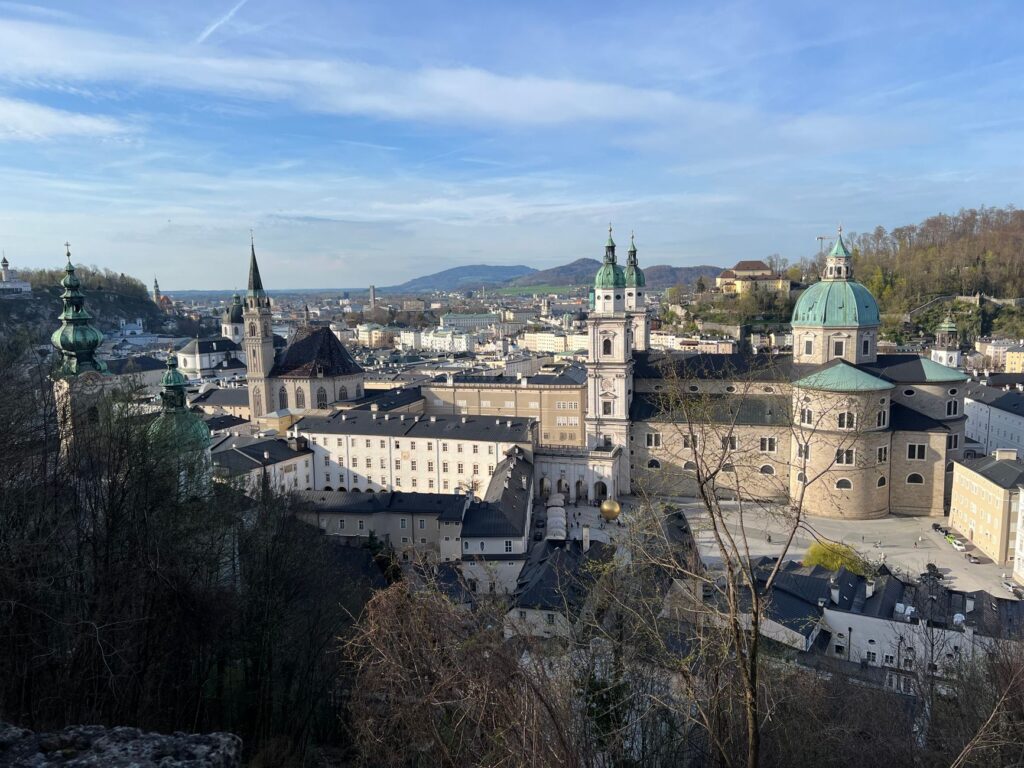
The technical challenge facing current pastry chefs lies in maintaining the visual integrity of the work without sacrificing gustatory harmony. Applying gold leaf to a reinterpreted Sacher torte or structuring a layered cake mimicking the Byzantine mosaics that fascinated Klimt in Ravenna requires both a plastic surgeon and a master chocolatier. The result is a product that forces the diner to pause, observe, and reflect on the authorship and perishability of art before taking the first bite.
Edible Architecture: From Historicism to Modernism
The influence of urban and architectural design on Austrian gastronomy is another of the most fascinating avenues of this movement. Vienna stands out for its Ringstrasse, a monumental showcase of historicist buildings where neo-Renaissance, neo-Baroque, and neo-Gothic styles coexist. The metropolis’s pastry chefs have learned to read these monumental facades and translate them into volumes of puff pastry, light creams, and blown caramel structures emulating miniature columns, capitals, and domes.
This exercise in architectural mimesis reaches heights of high gastronomic engineering. In workshops working closely with the Museum of Applied Arts in Vienna (MAK), pastry chefs study the original blueprints of Otto Wagner and Josef Hoffmann to understand how functionalism and geometric ornamentation can be applied to dry pastry and petits fours. Each stamped cookie featuring motifs from the Wagner-Schule is an exercise in historical outreach paying homage to the pioneers of modern design.
Unlike traditional pastry, focused on caloric heft and domestic comfort, this architectural branch seeks visual lightness and millimetric precision. Right angles, simulated metal profiles with tempered dark chocolate, and absolute symmetry turn each dessert into an urban miniature paying tribute to the urban transformation that modernized Vienna in the late 19th century.
Literature and Coffee: The Cenacles of Flavor
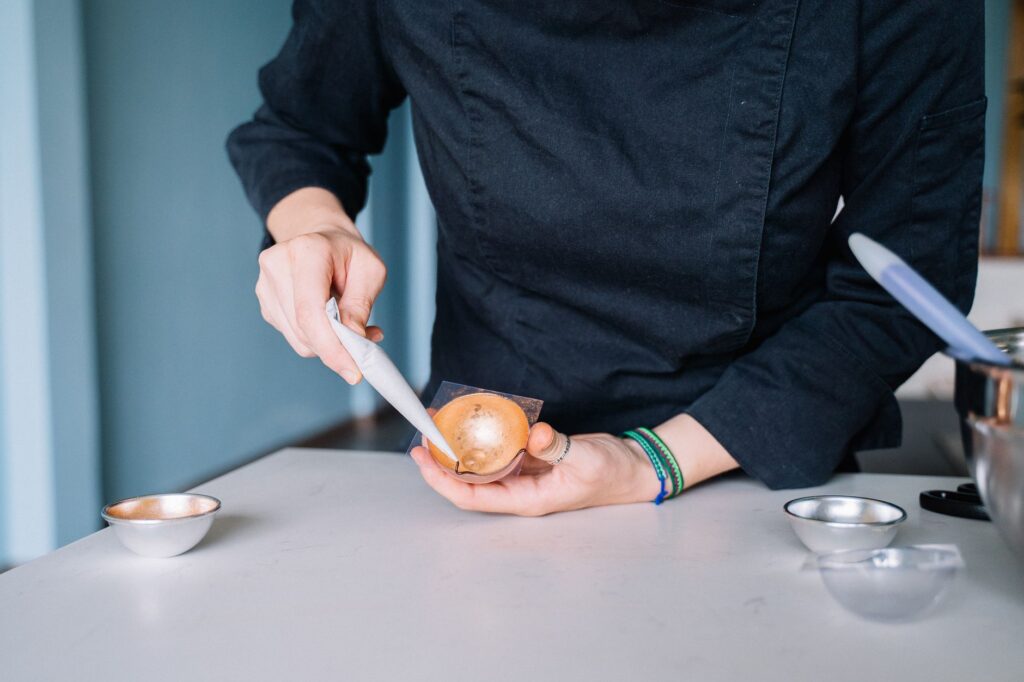
No approach to Austria’s culinary culture would be complete without mentioning the irreplaceable role of the Viennese coffee house, recognized as Intangible Cultural Heritage by UNESCO. Far from being a simple establishment dispensing hot drinks, the historic cafe has historically functioned as the literary workshop where authors like Arthur Schnitzler, Stefan Zweig, or Hugo von Hofmannsthal wrote some of the brightest pages of Central European literature.
In these sanctuaries of suspended time, the coffee menu—ranging from the classic Melange to the Fiaker or the Einspänner—is accompanied by a literary narrative linking each infusion with an era and an author. The waiters, attired in traditional black waistcoats, act as guardians of a collective memory where the aroma of roasted beans blends with political debate and poetic creation.
Sitting at a mahogany table in a Viennese cafe is reading an open chapter of Europe’s intellectual history, where caffeine and ink always marched in unison.
Contemporary Austrian literature continues to find its natural refuge in these spaces. Young playwrights and novelists continue writing their works amidst the hum of espresso machines and the constant murmur of regulars, proving that the symbiosis between physical space, beverage, and the written word remains as vibrant as a century ago.
Performing Arts and Haute Cuisine: The Theatrical Banquet
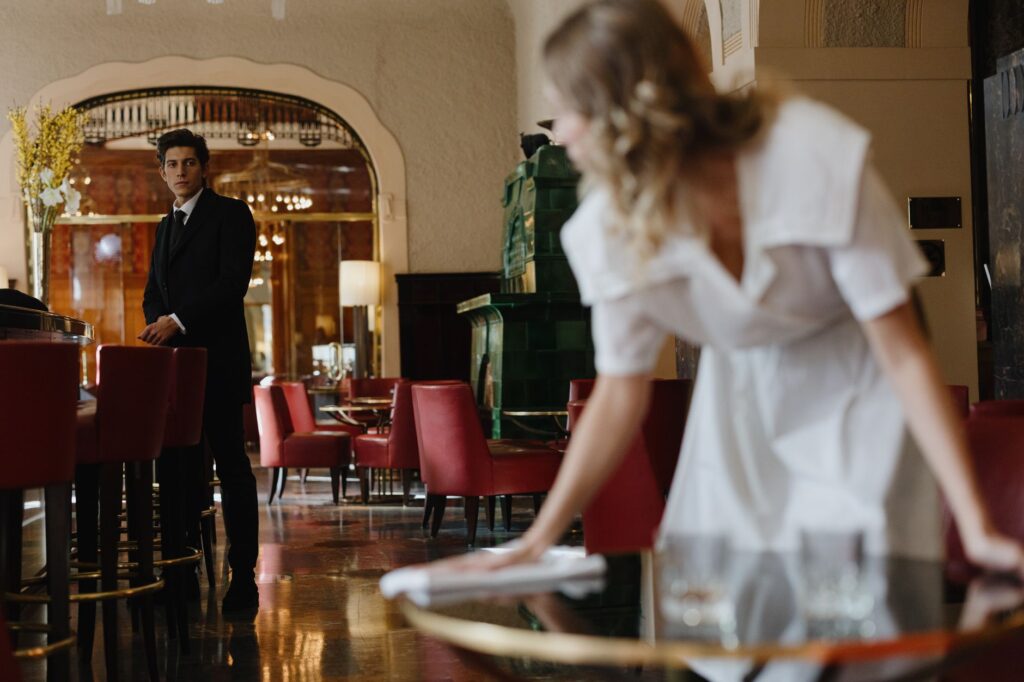
If painting and music dominate the sweet realm, the performing arts—led by opera and theater—have inspired a parallel current in the savory haute cuisine of the Salzburg Summer Festival and the Viennese lyric season. The country’s most audacious chefs design tasting menus conceived literally as multi-act dramatic works, where ingredients enter and exit the plate following strict culinary dramaturgy.
In these theatrical banquets, the diner ceases to be a passive spectator to become the protagonist of a staging where room lighting shifts in sync with courses, aromas are released via synchronized diffusers, and table service is executed with choreography worthy of ballet companies. This current demonstrates that gastronomy in Austria has transcended mere nutrition to establish itself as a total scenic language.
- Creation of menus structured in three acts, mimicking classical Aristotelian dramatic structure.
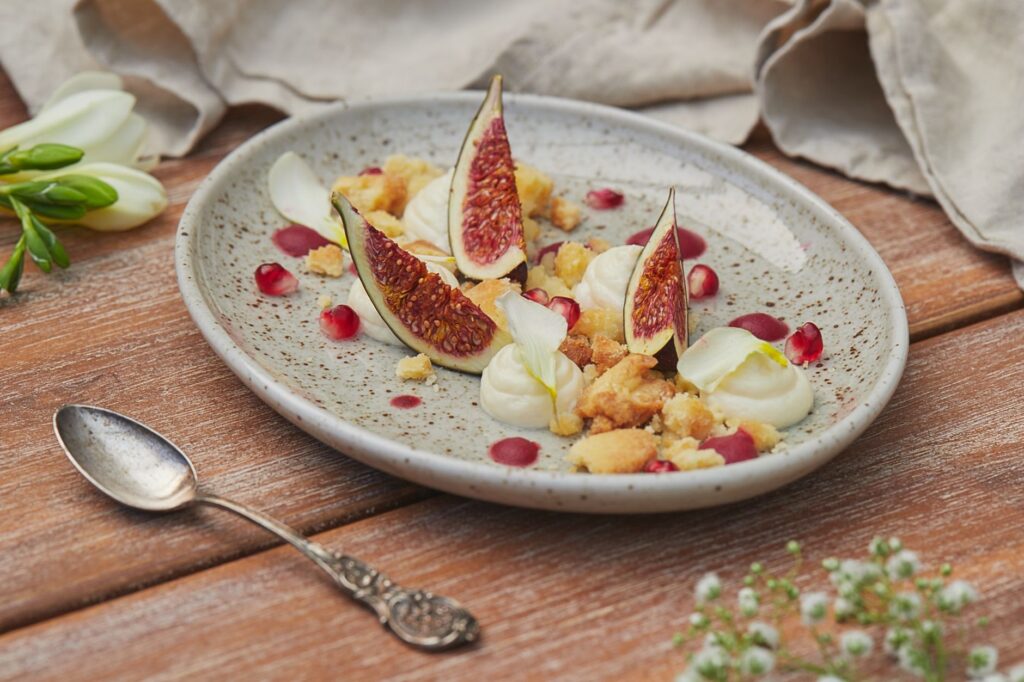
- Use of exclusive designer tableware crafted by local ceramists in tribute to historic stagings at the Vienna State Opera.
- Incorporation of sound elements at the table, allowing the diner to listen to acoustic landscapes of the Viennese woods while tasting alpine game.
- Direct collaboration between playwrights and Michelin-starred chefs to conceptualize each dish’s seasonal narrative.
This integration of the performing arts into the gastronomic experience places Austria at the forefront of European cultural tourism, attracting travelers seeking complex intellectual stimuli beyond conventional monumental routes.
Practical guide
For travelers interested in exploring this intersection of art and gastronomy in Austria, planning the itinerary with criteria of cultural sustainability and respect for local rhythms is essential.
- How to get there: Main air and rail connections operate through the international airports of Vienna (VIE) and Salzburg (SZG), both excellently connected to urban centers via high-frequency trains.
- Best time to visit: Spring months (April to June) and autumn (September to November) offer ideal weather and lower crowds in historic workshops and museums.
- Essential reservations: Designer pastry workshops and museum-linked gastronomic experiences require booking weeks in advance due to strictly limited capacity.
- Cafe etiquette: Traditional Viennese cafes value calm; customers are never rushed, so enjoying reading and contemplation without haste is highly recommended.
Sensory Epilogue: The Last Bite of Memory
At the end of the journey, when suitcases are zipped and retinas retain baroque domes and Klimt-esque golds, the certainty remains that art in Austria is not merely archived in art history textbooks nor contemplated with academic distance. It is metabolized. The experience of consuming a sweet conceived as a score or a dish designed as a theatrical scene leaves an indelible mnemonic imprint on the traveler.
This capacity to fuse the ephemeral nature of flavor with the eternity of cultural heritage makes this Central European destination a unique territory. Because ultimately, as the great creators who cemented their legend demonstrated, the highest beauty is that which dares to dissolve into the senses to become an indissoluble part of whoever experiences it.
Source: El Viajero in EL PAÍS (https://elpais.com/elviajero/2026-09-17/eatartists-cuando-se-come-el-arte-y-la-cultura-se-saborea.html)