
Origins and Planning Within the Natural Rhone Corridor
Since antiquity, the Rhone Valley has served as the primary artery connecting northern Europe with the coasts of the Mediterranean Sea. When nineteenth-century French engineers conceived the railway line to unify Paris, Lyon, and the Mediterranean (PLM), they confronted a territory defined by duality: an alluvial corridor seemingly docile yet besieged by violent river floods and the fury of the Mistral wind. The planning of this route marked a milestone in the history of European civil engineering, demanding absolute mastery of the terrain to establish a pathway capable of supporting heavy freight loads and passenger convoys at speeds unprecedented for the era.
Period chronicles detail how brigades of laborers carved trenches into limestone cliffs and erected monumental embankments to protect the tracks from seasonal flooding of the river. The topography offered no uniform surface; rather, it necessitated sweeping curves that respected the river meanders without sacrificing the linearity required to maintain steam locomotive traction. Every kilometer of track laid between Vienne and Valence represented a major logistical challenge, requiring the transport of materials via bridle paths and river barges before the railway itself could begin supplying ongoing construction sites.
Architecture of Century-Old Bridges and Viaducts
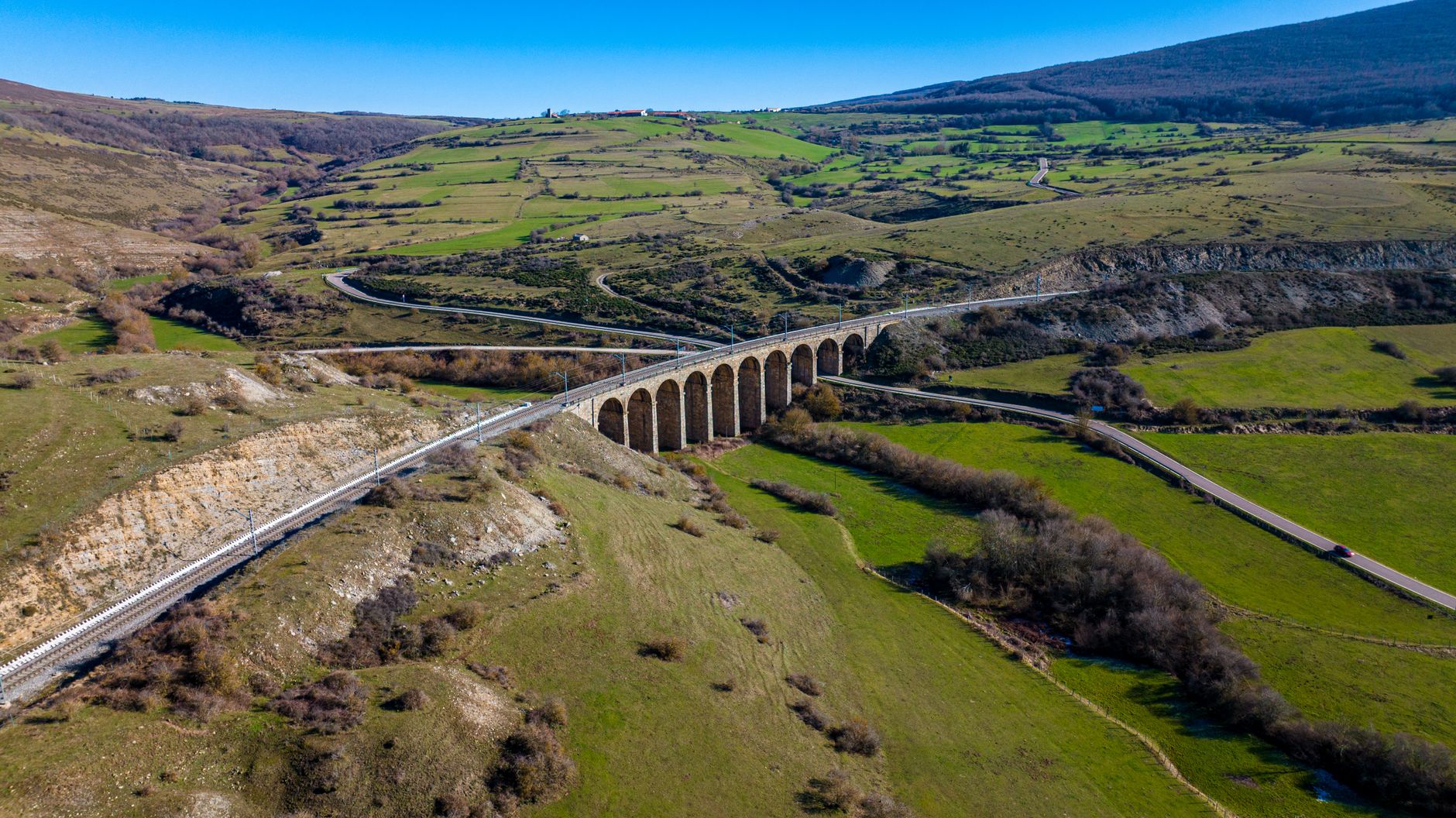
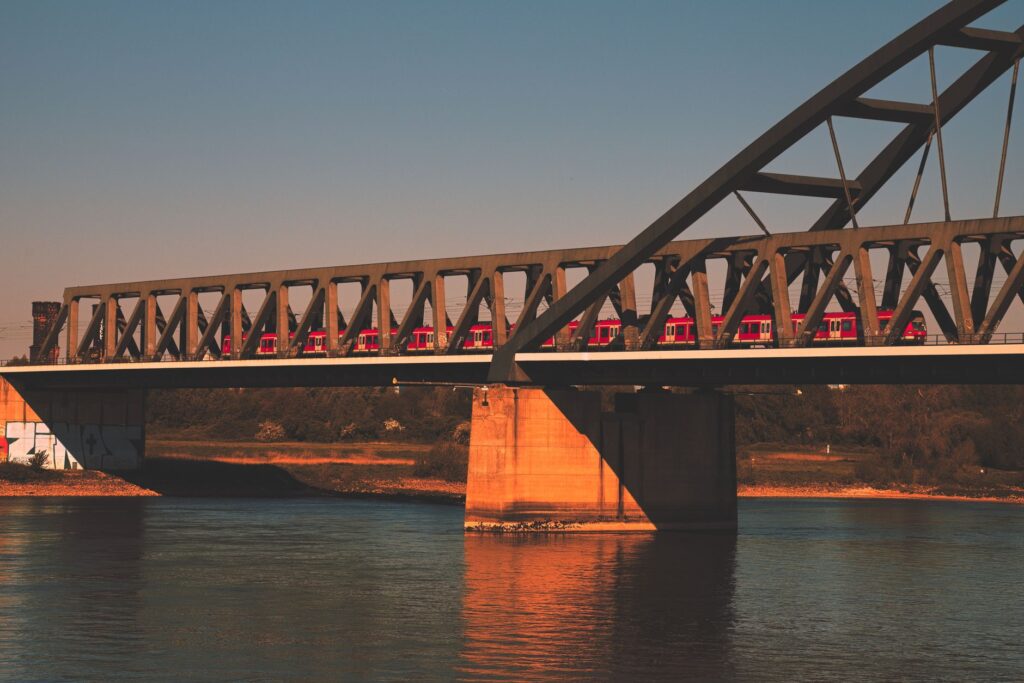
One of the most remarkable aspects of the railway layout through the Rhone Valley is its exceptional architectural heritage, dominated by ashlar viaducts and metal bridges defying the river’s flow. Engineers designed structures capable of withstanding both the dynamic weight of convoys and the hydrodynamic pressure of sudden floods originating from the Alps and the Massif Central. The use of semicircular arches crafted from local stone guaranteed secular durability, while the large metal spans incorporated later reflected the evolution toward advanced industrial metallurgy.
These engineering monuments are not mere historical vestiges, but active components of the current rail network. Their upkeep demands specialized techniques combining heritage restoration with structural modernization, allowing high-speed trains and heavy freight convoys to circulate daily over foundations laid more than one hundred and fifty years ago. The harmonious integration of these stone masses into the landscape of vineyards and riverside hills constitutes an outstanding testament to how human infrastructure can converse with a natural environment of great ecological and agricultural value.

The Mistral Challenge and Infrastructure Stability
Railway operations in the Rhone corridor are conditioned by an unrelenting meteorological factor: the Mistral wind. This cold, violent wind descending from the north, channeled by the valley’s own depression, can reach hurricane speeds and compromise the stability of lightweight trains and overhead electrification systems. To mitigate this risk, engineers projected windbreak screens in the most exposed sections and developed strict operational protocols regulating convoy speeds when gusts exceed established safety thresholds.
Beyond wind pressure, the foundations of the railway track endure constant erosion caused by variations in the flow rate of the Rhone River. Modern management of this infrastructure includes real-time geotechnical monitoring systems that detect any displacement in embankments or bridge piers. This combination of cutting-edge technology and preventative surveillance guarantees the continuity of one of the European continent’s busiest commercial and passenger routes, minimizing disruptions on a vital line for transnational trade.
Freight Logistics and Port Connectivity
Beyond passenger transport, the Rhone Valley railway plays an irreplaceable role in Western Europe’s freight logistics, serving as the umbilical cord between Mediterranean ports—especially the Marseille-Fos port complex—and the industrial centers of northern France and Central Europe. This multimodal line allows the fluid transit of containers, raw materials, and manufactured goods, easing highway congestion and significantly reducing the carbon footprint of cargo transport compared to heavy reliance on trucks.
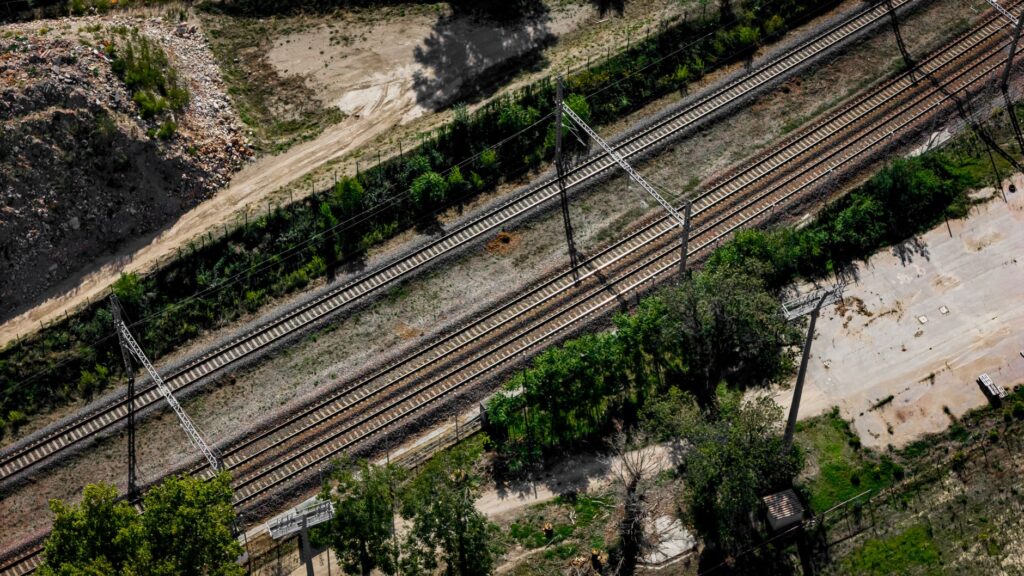
The integration of freight terminals along the valley—such as those in Avignon and Lyon—has been optimized through the automation of classification processes and increased cargo capacity per convoy. Railway logistics experts emphasize that the efficiency of this corridor lies in its ability to coordinate freight train schedules with the flows of container ships docking on the Mediterranean coast, establishing a perfectly synchronized supply chain operating twenty-four hours a day throughout the year.
The Rhone Valley demonstrates that the true backbone of a civilization relies not solely on its modern highways, but on the silent sturdiness of its century-old railways.
Electrification and the High-Speed Era
The modernization of the Rhone corridor brought a radical technological leap with the arrival of electrification in the mid-twentieth century and, subsequently, the inauguration of the high-speed rail line (LGV Rhône-Alpes) in the 1990s. This process did not entail the abandonment of the historic route, but rather its specialization and relief. While high-speed trains circulate along dedicated tracks designed to minimize travel time between Paris, Lyon, and the French Riviera, the valley’s classical line continues to absorb a fundamental share of regional traffic and heavy freight.
This coexistence between two generations of railway infrastructure illustrates the complexity of regional planning in France. The mingling of modern pendulum convoys with commuter services and cargo trains required a comprehensive overhaul of signaling, implementing advanced European Train Control Systems (ETCS) that optimize passing intervals and maximize safety. The result is a hybrid corridor where the tradition of nineteenth-century engineering coexists with the most advanced standards of twenty-first-century digitalized mobility.
Socioeconomic Impact on Riverside Communities
The constant presence of the railway has definitively shaped the demography and economy of towns situated along the banks of the Rhone. Historic cities like Valence, Avignon, Arles, and Orange grew under the shelter of the train station, which acted as the primary engine for commercial exchange and labor mobility. The arrival of the railway shattered the secular isolation of these wine-growing and agricultural communities, allowing their perishable products to reach major northern urban markets with freshness in a matter of hours.
Today, the stations in these cities have transformed into urban integration hubs fostering sustainable mobility. Local administrations have invested in the redevelopment of railway surroundings to create multimodal interchanges where city buses, public bicycle networks, and regional trains converge. This approach not only revitalizes historic centers, but reinforces the sense of belonging among a population that views the train as an undisputed symbol of territorial identity and external openness.
Practical guide
Planning a journey along the Rhone Valley railway corridor requires understanding key historical sites and available transport options for the contemporary traveler.
How to get there: The optimal starting point is Lyon-Part-Dieu or Lyon-Perrache station, both excellently connected to the national and international high-speed rail network.

Best time to visit: Spring (April to June) and autumn (September to November) offer moderate temperatures ideal for combining train journeys with cultural and wine-tasting visits.
Tickets and reservations: It is advisable to purchase regional tickets (TER) in advance via official SNCF platforms or utilize European rail passes if multiple stops are planned.
Recommended stops: Valence to admire classical railway architecture; Avignon to explore its medieval heritage; and Arles to connect with the river’s transition toward the Camargue delta.
Accommodation: Travelers are advised to book hotels located within short walking distance of historic stations, facilitating mobility without requiring private car rentals.
Local gastronomy: The route allows tasting regional culinary specialties, from Côtes du Rhône wines to Provençal gastronomy in markets near the terminals.
Photographic tip: The best vantage points for capturing the integration of historic bridges with the river landscape are found along pedestrian paths parallel to navigation locks.
The Eternal Pulse of Water and Steel
Contemplating the passage of a railway convoy beside the imposing currents of the Rhone is witnessing a ritual repeated unchanged for generations. The river and the railway share a parallel destiny, carving a landscape where nature and human engineering merge into an indissoluble unit. In this territory furrowed by history, the metallic sound of wheels on rails is not merely the echo of a surpassed industrial feat, but the constant promise of a connected future, where speed and memory walk firmly united toward the Mediterranean horizon.