Origins and Planning in the Altiplano
The railway route that currently fascinates travelers from all over the world in northern Argentina originated under a strictly economic and geopolitical rationale. At the turn of the 20th century, the necessity to connect the mining deposits of the Puna with export ports drove visionary engineers to design a route that seemed to defy the laws of physics. The project was not pursued for leisure, but rather to integrate a region isolated by peaks exceeding four thousand meters in altitude, where the air is thin and temperatures swing relentlessly between intense daytime heat and freezing nights.
Civil engineering works represented an unprecedented milestone in South America. Teams led by national and foreign experts had to lay routes over unstable terrain, navigating deep gorges and rocky slopes without the heavy machinery of modern eras. Every single timber tie and steel rail had to be transported on mule back or via rudimentary traction systems, evidencing a monumental logistical effort that took decades to consolidate and which endures today as a testament to human tenacity against geographical hostility.
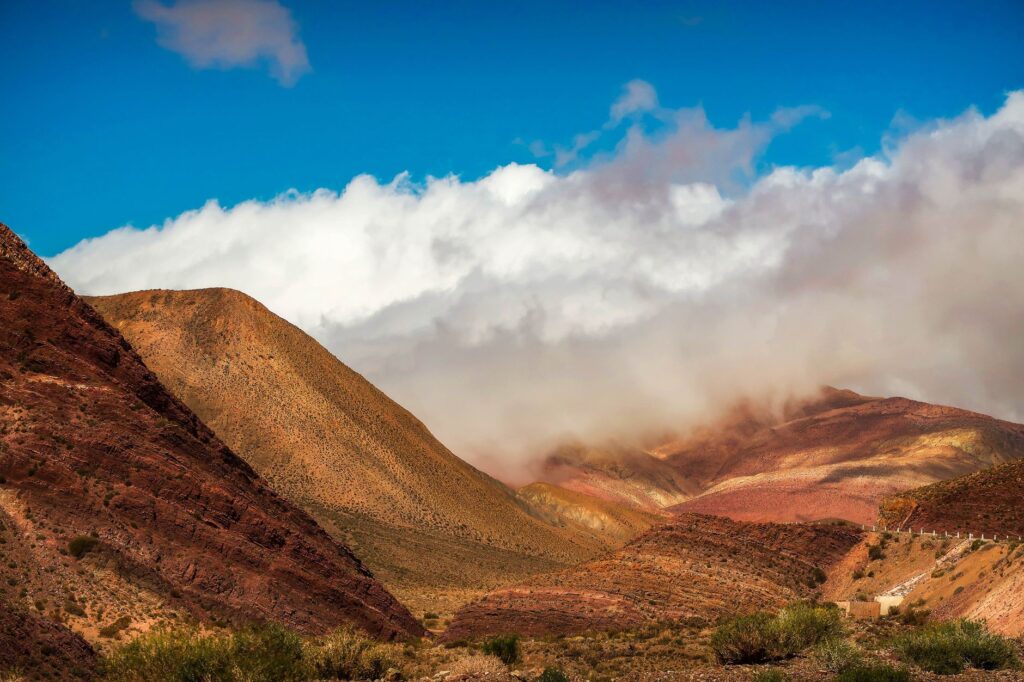
The Puna is not merely crossed; it is conquered meter by meter with the patience of stone and lungs of steel.
The Monumental Architecture of Altitude
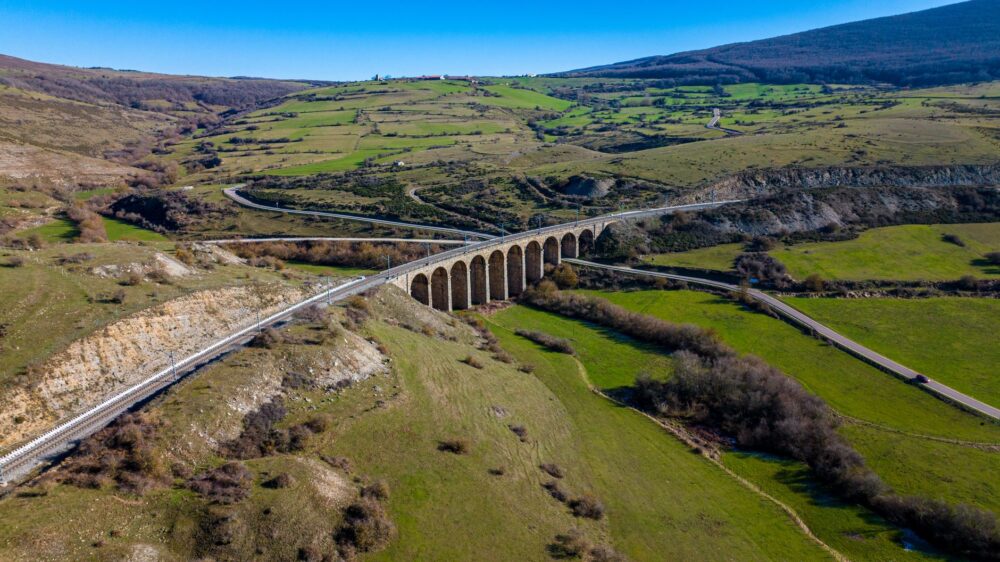
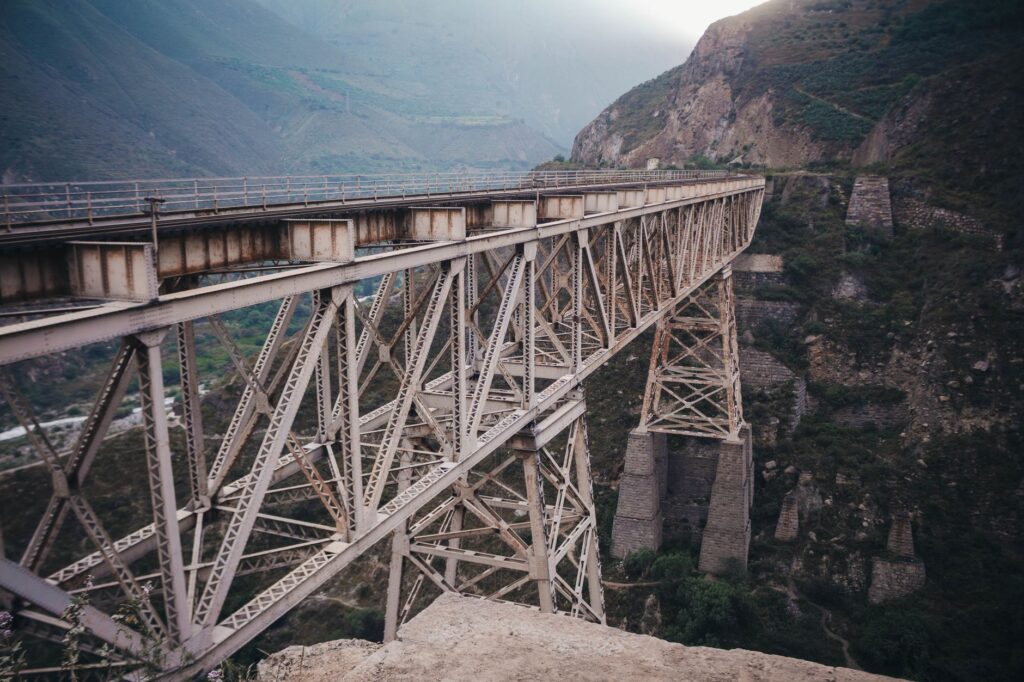
Throughout its course, the railway infrastructure deploys a repertoire of engineering masterworks that leave both experts and laymen breathless. Colossal viaducts, tunnels excavated in solid rock, and meticulous zigzags allow the train to gain elevation progressively. The famous La Polvorilla viaduct, situated at over 4,200 meters above sea level, constitutes the pinnacle of this structural design. This imposing structure of curved steel girders, suspended over a desolate canyon, allows the train to roll in perfect equilibrium against the abyss.
The technical challenges of these constructions included the precise calculation of metal thermal expansion, driven by the region’s drastic temperature variations. Engineers had to incorporate special joints and high-strength anchors to ensure the structures did not suffer structural warping. Every bridge and embankment responds to a rigorous analysis of Patagonian and Andean wind loads, demonstrating durability that, more than eighty years after its main inauguration, continues to operate with millimeter precision.
Operational Logistics and the Oxygen Challenge
Operating a railway line at such altitudes demands extraordinary safety and maintenance protocols. The drastic drop in atmospheric pressure and oxygen concentration not only affects the physical performance of passengers but also internal combustion within diesel locomotives. Workshops located at base stations perform specific fuel injection calibrations to compensate for the lack of oxygen, preventing power loss on the steepest slopes of the journey.

Likewise, the logistical supply chain for surrounding communities and the maintenance of the railway track itself relies on pinpoint coordination. Maintenance crews must face sudden snowstorms, mudslides during the summer season, and gale-force winds sweeping the high-altitude plateau. The capacity to respond to contingencies in areas devoid of cellular signal turns this corridor into a true bastion of extreme logistics engineering.
The Human Landscape and Andean Communities
Beyond iron and stone, the true pulse of this journey is marked by the local communities that have inhabited the altiplano for millennia. Atacameño and Kolla peoples have coexisted with this railway since its arrival, integrating it into their daily landscape and transforming it into a channel for cultural and commercial exchange. Intermediate stations, once bustling centers of mineral collection, now act as meeting points where local artisans offer llama-wool textiles and ancestral knowledge to travelers.

This exchange has redefined the region’s economy, transitioning from an almost exclusive dependence on mineral extraction toward a model of sustainable community tourism. Local inhabitants participate actively in the management of tourism services, guided by a profound respect for the Pachamama and acting as jealous guardians of a railway heritage they consider a fundamental part of their collective identity and historical memory.
The Tourism Metamorphosis: From Mineral to Global Traveler
With the decline of large-scale mining exploitation in the Puna, the railway faced the imminent risk of definitive abandonment. However, the vision of local administrators and tourism operators rescued the track to transform it into one of the most coveted travel experiences on the planet: the renowned Train to the Clouds. This evolution required adapting rolling stock to guarantee the comfort and safety of tourists from all corners of the world, incorporating onboard medical services and advanced climate control systems.
The transition was not without debates regarding authenticity and massification. Nevertheless, authorities have implemented strict capacity quotas and environmental control programs to protect fragile high-Andean ecosystems. Today, the journey represents a delicate balance between heritage preservation and regional economic development, proving that rail tourism can be an engine of conservation if managed with technical rigor and cultural sensitivity.
Heritage Conservation and Contemporary Challenges
Maintaining a century-old railway line in such a harsh environment demands constant investments and highly specialized personnel. Corrosion caused by high solar radiation, extreme aridity, and the salinity of certain Puna soil sections forces a continuous program of rail replacement and timber treatment. Institutions tasked with industrial heritage protection work hand in hand with modern engineers to apply restoration techniques that respect original blueprints without compromising current operational safety standards.
Furthermore, climate change introduces new variables of uncertainty regarding slope stability and summer precipitation regimes. Monitoring slopes, assessing the condition of historic bridges through laser technologies, and keeping drainage systems operational are everyday tasks invisible to the passenger, yet vital to ensuring that this iron monument continues to defy the skies of South America for generations to come.

Conserving these tracks means keeping alive the memory of those who dared to defy the limits of the earth.
Practical guide
Planning a journey along this railway corridor requires rigorous preparation due to extreme altitude and weather conditions. The essential aspects for organizing the crossing successfully are detailed below:
- How to get there: The city of Salta operates as the primary logistical hub, connected via regular flights from Buenos Aires and other regional capitals. From there, authorized operators manage overland transfers to the connecting stations.
- When to travel: The dry season, spanning from April to November, offers the clearest and most stable skies, though nighttime temperatures can drop drastically below zero. During the southern summer (December to March), seasonal rains can temporarily alter schedules.
- Altitude acclimatization: It is strongly recommended to spend at least two nights in the city of Salta and make progressive ascents before boarding the train at over 4,000 meters, minimizing the effects of altitude sickness or soroche.
- Appropriate clothing: Dressing in layers (onion system) is indispensable, including windproof thermal clothing, high-grade UV protection sunglasses, broad-spectrum sunscreen, and sturdy mountain footwear.
- Reservations and regulations: Seats are strictly limited due to environmental conservation policies. Securing tickets months in advance through official channels authorized by the provincial railway operator is necessary.
Epilogue in the High-Andean Immensity
When the last carriage stops smoothly against the infinite horizon of the Salta Puna, the silence of the high mountains reclaims its ancestral dominance. At that moment, the imposing metallic structure of the viaduct ceases to be a mere engineering work and becomes a bridge cast between human effort and the eternity of the landscape. Travelers descend with gazes altered by the immensity, understanding that the true value of this route lies not solely in the precision of its rails or the boldness of its bridges, but in the silent capacity to transform anyone who dares to look it in the face. Here, where the sky seems to touch the earth, time suspends itself and the journey acquires a profoundly human dimension, reminding us that some works were made not merely to connect points on a map, but to elevate our spirits.