At the eastern edge of the Brahmaputra delta, where the alluvial plain abruptly gives way to mist-shrouded ridges and impenetrable forests, the hills of Bangladesh wait in silence. For decades, this territory has remained outside major international tourist circuits, overshadowed by neighboring Himalayan destinations or the beaches of the Bay of Bengal. However, in the shifting map of contemporary global travel, this apparent marginalization has transformed into its most coveted asset: the last mover’s advantage.
This concept, recently analyzed by industry analysts on platforms such as traveldailynews.asia, suggests destinations waking up late to mass tourism have a unique opportunity to avoid the catastrophic errors of oversaturation, environmental degradation, and loss of cultural identity that currently stifle traditional hubs. In the Bangladeshi highlands, nature and indigenous communities stand as guardians of a fragile equilibrium, proposing an alternative where the traveler is not a passive consumer, but a respectful witness.
Topography and isolation: the genesis of an untouched refuge
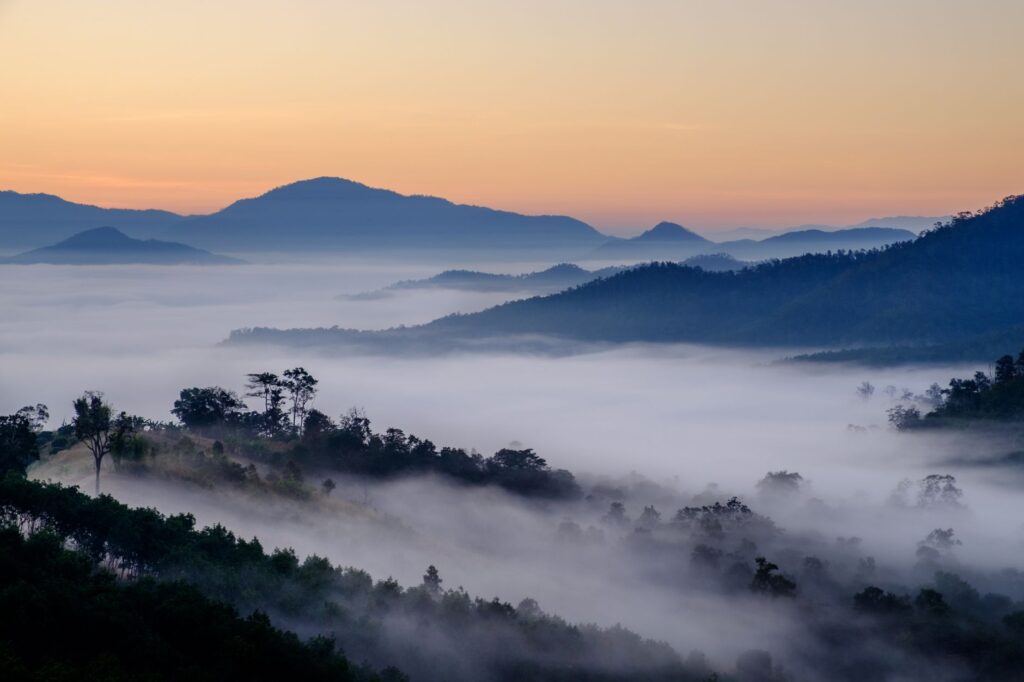
The geography of the Chittagong Hill Tracts and northeastern mountain formations defines a landscape radically different from the rest of the country. Here, rivers do not flow sluggishly through deltaic mud, but rush down limestone gorges, carving valleys where humidity feeds an almost primeval tree canopy. The historical isolation of these regions, favored by natural barriers and complex geopolitical dynamics, acted for generations as a protective shield against the demographic pressures suffering the country’s center.
This isolation preserved entire ecosystems from unchecked deforestation and intensive agriculture. Today, traversing these trails means stepping into one of the richest biodiversity corridors on the Indian subcontinent. The orography acts as a natural filter that limits mass access, ensuring every visitor crossing its thresholds does so following a conscious logistical effort—an implicit requirement that selects for travelers deeply committed to their surroundings.
Human mosaic: ethnicities and cultural sovereignty in the heights
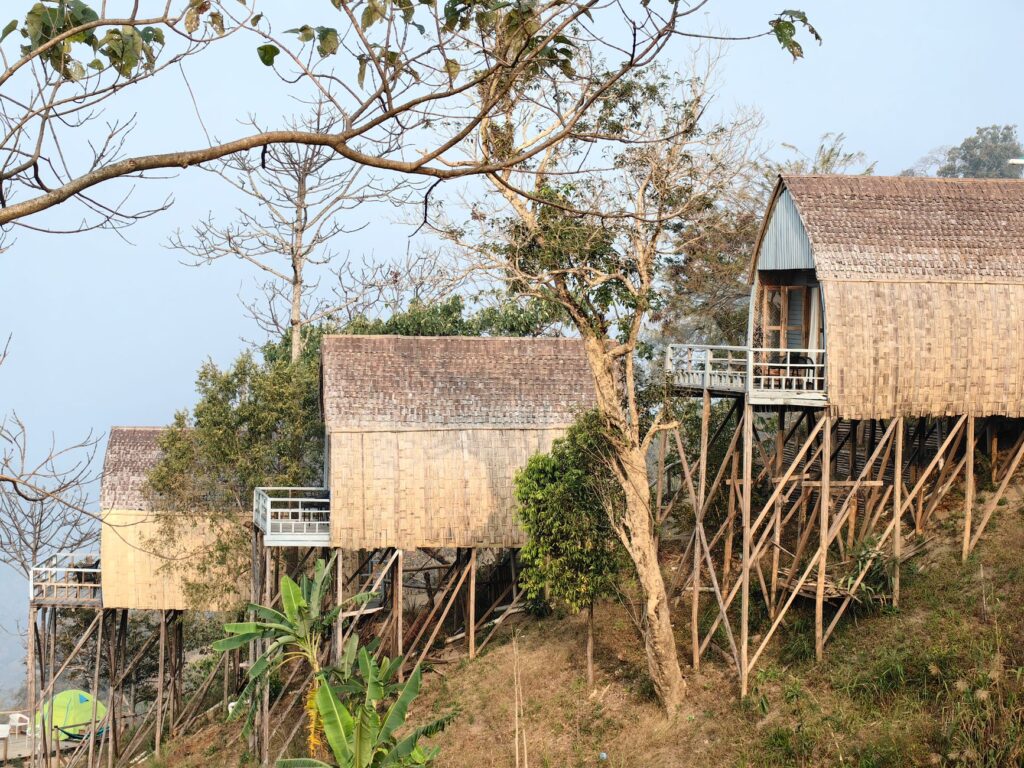
The value of the Bangladeshi mountains lies not only in their flora and fauna, but in their human fabric. Unlike the predominantly Bengali lowlands, the highlands harbor more than a dozen distinct ethnic groups, such as the Chakma, Marma, Tripura, and Mro, each with unique languages, worldviews, and traditional architecture of bamboo stilt houses.
These communities have maintained a symbiotic relationship with the forest for centuries. Their deep knowledge of local pharmacopeia, sustainable shifting cultivation techniques, and community water management represents an invaluable intangible heritage. The survival of this ancestral wisdom is the true foundation upon which any responsible ecotourism initiative in the region must be built.
Genuine ecotourism in these latitudes is not about paving access to nature, but about paving respect for those who have inhabited it since before modern maps existed.
The current challenge lies in integrating these populations into tourism governance, ensuring economic benefits flow directly back to villages rather than urban intermediaries. Community-based tourism pilot projects demonstrate that authentic immersive experiences—ranging from backstrap loom weaving workshops to guided walks with local shamans—can be offered without disrupting families’ daily lives.
Biodiversity beneath the canopy: flora and fauna waiting to be discovered
For the naturalist, the mountains of Bangladesh are a blank canvas full of discoveries. The tropical evergreen forest harbors emblematic species such as the Asian elephant, the Hoolock gibbon—the country’s only native ape—and an astonishing variety of endemic birds and butterflies finding their ideal habitat in high-altitude microclimates.
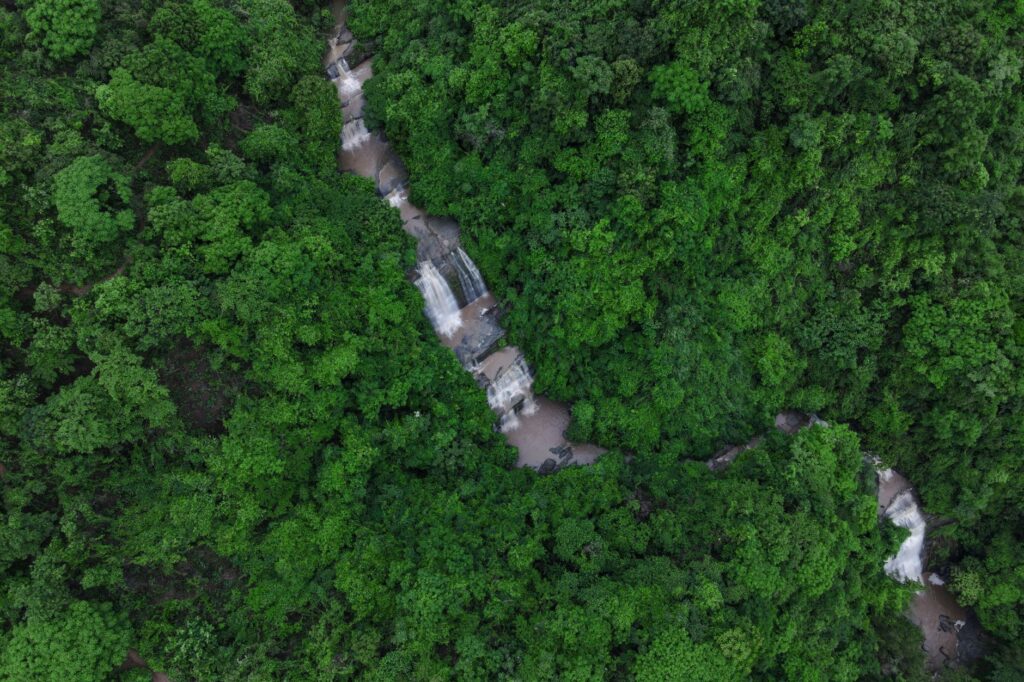
Recent botanical expeditions continue documenting orchid species and giant ferns unknown to Western science. However, conserving this biodiversity faces tangible threats from climate change and pressure on forest boundaries. Consequently, local authorities and environmental NGOs promote protected biological corridors where tourism activity is regulated through strict quotas and the absolute ban on motor vehicles in core zones.
Light infrastructure and sustainable mobility
A core pillar of the last mover’s advantage is the capacity to plan infrastructure from a low-impact perspective. Rather than four-lane highways or high-rise hotel complexes, the model envisioned for these mountains prioritizes soft mobility and vernacular architecture.
- Signposted pedestrian and equestrian trails connecting major communities without fragmenting wildlife habitats.
- Human-scale lodgings integrated into the landscape, built with local materials like bamboo, certified timber, and dry stone.
- Decentralized solar energy systems and organic waste management to prevent contamination of mountain aquifers.
- Checkpoints and information hubs managed by community rangers to guarantee explorer safety and compliance with conservation rules.
This approach not only minimizes the visitor’s carbon footprint, but generates both unskilled and skilled local employment, turning mountain dwellers into primary protectors and beneficiaries of natural resources.
Regenerative economy versus tourism extractivism
Mass tourism traditionally relies on an extractive model: it extracts resources, generates waste, saturates services, and leaves fleeting capital gains before migrating to another trendy destination. Facing this destructive inertia, the Bangladeshi highlands position themselves as a pioneering laboratory for a regenerative economy.

Every taka spent by travelers in a local market, hiring an indigenous guide, or staying in a rural lodge is designed to be reinvested in upgrading village schools, reforesting watersheds, and protecting endangered wildlife. This approach transforms travel into an act of environmental and social restoration, strengthening the destination with every visit rather than weakening it.
The art of slow pace: disconnection and wonder
Traveling to the Bangladeshi hills demands a conscious surrender to immediacy. Constant mobile coverage and strict itineraries driven by apps do not exist here. The pace is marked by sunrises over misty valleys, the slow stride of cargo caravans on foot, and long fireside conversations with village elders.
This digital and mental disconnection paradoxically constitutes the ultimate contemporary luxury. Travelers learn to observe tiny details: the low flight of a hornbill, the steady murmur of an ancient stream, or the perfect geometry of terraced fields. It is an invitation to recover the capacity for wonder and understand that truly knowing a territory requires time, silence, and humility.
Practical guide
Planning a responsible journey to the Bangladeshi highlands requires logistical rigor, cultural respect, and profound environmental awareness.
When to go
The optimal season spans the dry months from November to February, when temperatures are pleasant and monsoon rains yield. During the monsoon (June to September), secondary roads can become impassable due to landslides.
How to get there
Main access is by road from Chittagong or Sylhet after flying from Dhaka. Securing special travel permits for specific hill zones through authorized agencies or the Ministry of Home Affairs is mandatory to protect local communities.
Where to stay
Prioritize community lodges managed by indigenous cooperatives and small rural accommodations meeting strict energy efficiency and local hiring criteria.

Behavioral and sustainability rules
Strictly respect local customs, ask permission before photographing residents, leave no trace of trash, and avoid single-use plastics. Consume seasonal products and support local craftsmanship by purchasing pieces directly from creators.
Epilogue in the mist: the final heartbeat of the forest
At dusk, as the sun melts behind mountain ridges and the white mantle of mist begins devouring valleys, the highland forest reclaims its primordial voice. Distant calls of gibbons echo alongside the cracking of branches under the invisible weight of nocturnal wildlife. In that moment of absolute stillness, sitting on the wooden porch of a village where time seems suspended, one grasps the magnitude of the experiment unfolding in this corner of the world.
Protecting what remains pristine is not an exercise in nostalgia, but an act of collective survival for the future of global travel.
Bangladesh proves arriving late allows destinations to arrive better. The hills do not seek to compete with global tourism heavyweights in visitor numbers, but in the depth of the impression left on souls privileged enough to walk them. A tangible reminder that true adventure no longer consists of conquering new territories, but in learning to inhabit them with grace, respect, and silence.
Source in EN: traveldailynews.asia