
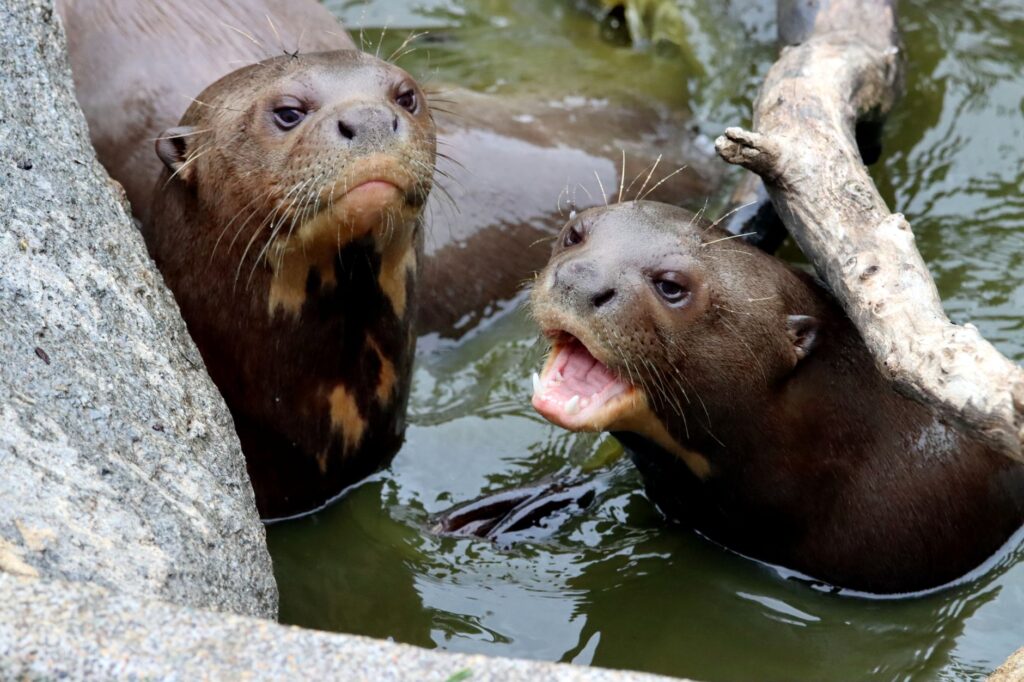
The heart of South America beats to the rhythm of a colossal hydrological pulse. Every year, summer rains in the highlands transform the Upper Paraguay River basin into a vast inland sea, a seasonal cataclysm that redraws cartography and subjects wildlife to a relentless test of adaptation. In this floodable labyrinth of slow-moving rivers, permanent lagoons, and gallery forests, lives one of the continent’s most charismatic and threatened carnivores: the giant otter, locally known as the ariranha. With a length that can exceed two meters and a weight close to thirty-four kilograms, this semiaquatic mammal is not only the world’s largest mustelid, but a top predator whose healthy presence acts as the definitive barometer of fluvial health in the most extensive tropical wetland on the planet.
Approaching the study and contemplation of Pteronura brasiliensis requires immersing oneself in a complex web of ecological dynamics where water is simultaneously refuge and frontier. Unlike their smaller and solitary relatives, giant otters live in complex, highly territorial family groups typically ranging from three to eight individuals. This social structure, dominated by an alpha breeding pair, requires flawless coordination for hunting, territory defense, and pup rearing in dens excavated into muddy riverbanks. The lead Brazilian biologist for regional conservation projects often notes that each clan operates as a synchronized machinery where vocalization—a repertoire exceeding twenty distinct calls from barks, growls, to puffs—constitutes a sophisticated communication system keeping the family united against sudden floods and terrestrial predator pressure.
The Architecture of Slow Rivers and the Riparian Home
The natural habitat of the giant otter is intrinsically linked to slow-flowing freshwater bodies known regionally as baías, corixos, and meandering rivers. These waterways provide not only the depth necessary for immersion and acrobatic swimming, but also dense riverbank vegetation that ensures soil stability and the availability of natural cavities. Site selection for establishing the communal latrine and the entrance to the subterranean lair follows millimetric safety criteria against water level fluctuations, a phenomenon that can elevate the river surface by several meters within weeks during the rainy season.
Within this aquatic landscape, Pteronura brasiliensis exerts a fundamental ecological role as a regulator of fish populations. Its diet consists almost entirely of ichthyic species, with a marked preference for medium-sized cichlids and large characids. By hunting cooperatively, clans corner schools in shallow waters, guaranteeing an efficient energy supply to maintain their high metabolic rate. This voracious consumption, far from decimating local fauna, fulfills a biological sanitation function, removing sick or weakened specimens and preventing the uncontrolled proliferation of certain species that could alter the trophic balance of interconnected lagoon complexes.
The presence of the giant otter in the rivers of the Pantanal is the most evident proof that the trophic chain still preserves its original integrity, reminding us that water conservation is, in essence, the defense of life itself.
Nevertheless, the stability of these aquatic ecosystems faces mounting pressures from human activities in the headwaters of the basins. Massive deforestation in surrounding plateaus for intensive agricultural expansion triggers a dangerous alteration in sedimentation cycles. Excess sediment washed down by runoff chokes secondary channels, drastically reducing underwater visibility—a crucial sense for the giant otter to locate prey—and destroying the spawning grounds of fish sustaining the apex predator. Added to this is the historical impact of poaching for their coveted velvety pelt, a threat that, although sharply reduced thanks to international protection regulations, has left severe demographic scars in fragmented populations.
Social Dynamics and the Clan Life Cycle
The social structure of the giant otter is one of the most fascinating aspects of its behavioral biology. Groups organize into strict yet cooperative hierarchies, where reproduction is virtually monopolized by the dominant pair. Subordinate members, typically including offspring from previous years, actively participate in rearing cubs born in the dry season. This cooperative breeding strategy markedly increases infant survival rates against natural hazards such as strong currents, unexpected floods, and occasional predation by caimans and jaguars, the only animals capable of challenging an organized adult clan.

Cub care is a communal task involving the entire family group. Following a gestation period of approximately seventy days, the alpha female gives birth in a chamber excavated into the bank. Newborns are born blind and covered in fine fur, depending entirely on the warmth and protection of their kin. Within months, adults initiate the complex teaching process of swimming and shallow-water fishing techniques. Play sessions, characterized by chases, leaps, and mock combat, not only strengthen affectionate bonds within the clan but hone the motor skills and agility necessary to survive in a highly competitive aquatic environment.
However, the dispersal of young adults represents a critical moment in their life cycle. Upon reaching sexual maturity, between two and three years of age, many individuals leave their natal territory in search of new spaces to establish their own clan or join wandering groups. During this nomadic phase, otters face severe dangers when traversing human-altered zones, crossing roads without adequate wildlife passages, or encountering artisanal and tourist fishermen who often perceive the species as direct competitors for fishery resources, igniting local conflicts that exacerbate their vulnerability.
The Impact of Climate Change and Anthropogenic Pressure
The Pantanal is crossing a historic crossroads marked by intensifying prolonged droughts and unprecedented wildfires. Alterations in precipitation regimes, linked to large-scale deforestation in the Amazon rainforest and global climate change, are weakening the wetland’s traditional hydrological pulse. During years of extreme drought, baías and corixos shrink drastically or dry up entirely, confining giant otters and their prey to small water mirrors highly vulnerable to asphyxiation from oxygen depletion and easy predation.
This contraction of available habitat triggers severe territorial tensions among neighboring clans. As living space and ichthyic biomass availability diminish, violent clashes over control of the best fishing refuges escalate, potentially resulting in direct individual mortality and general weakening of local populations. Likewise, the fragmentation of the fluvial landscape due to road construction, bridges, and small hydroelectric plants on tributary rivers disrupts ecological connectivity, preventing the natural flow of animals and genetic exchange among isolated populations.
Protecting the fluvial corridors of the Pantanal demands a cross-border effort that reconciles regional economic development with the strict preservation of watersheds.
On a toxicological level, the expansion of artisanal and industrial gold mining in upper basins represents a silent yet lethal threat. Mercury used in gold extraction infiltrates rivers and bioaccumulates along the trophic chain, reaching alarming concentrations in the tissues of large aquatic carnivores like the giant otter and caiman. Recent studies have detected elevated heavy metal levels in wild specimens, compromising their immune system, reducing reproductive success, and highlighting how environmental problems originating hundreds of kilometers away end up manifesting in the heart of protected natural sanctuaries.
Conservation Strategies and Citizen Science
Faced with this multi-threat landscape, the scientific community and non-governmental organizations have intensified conservation programs based on long-term research and community participation. Initiatives such as the giant otter monitoring project in the Brazilian Pantanal utilize advanced photographic identification technologies based on unique throat spot patterns of each individual—a natural fingerprint allowing biologists to track demography, survival, and movements of entire clans without resorting to invasive capture.
Regulated, low-impact ecotourism has established itself as a vital economic tool to demonstrate to local communities and private landowners that living wildlife is worth far more than its pelt or removal due to fishing conflicts. Specialized tour operators and trained local guides offer respectful observations from electric boats, maintaining a prudent distance that does not alter animals’ natural behavior. This model not only generates direct revenue for the regional economy but fosters a deep sense of local pride and guardianship toward wetland biodiversity.

Likewise, environmental education programs directed at rural schools and local fishermen have proven highly effective in dispelling entrenched myths regarding the destructive voracity of the giant otter. By understanding the species’ ecological role in maintaining water quality and fish abundance, riparian communities are taking a leading role in reporting illegal hunting and voluntarily protecting riverbanks where active dens are located, weaving a civil safety net around South America’s last great apex predator.
Practical guide
How to get there: The main access to the Brazilian Pantanal is through the cities of Cuiabá (to the north, via the legendary Transpantaneira highway) or Campo Grande (to the south, toward the Aquidauana and Bonito region). From these state capitals, ground transfer services in 4×4 vehicles or private bushplanes can be arranged to specialized lodges situated in the heart of the wetland.
When to visit: The dry season, running from May to October, is the optimal period for wildlife viewing, as animals concentrate around remaining water bodies. The rainy season (November to April), while offering landscapes of exuberant beauty and peak water levels, hinders land travel due to flooding.

Requirements and health: Yellow fever vaccination is recommended at least ten days prior to travel. High-efficacy insect repellent, sunscreen, breathable long-sleeve clothing, and footwear suitable for muddy terrain are essential. Prevention against dehydration and vector insect bites is paramount in the wetland’s tropical climate.
Observing rules: Always maintain a minimum distance of thirty meters from giant otter clans, especially during breeding season. The use of drones, flash photography, or bait to attract animals is strictly prohibited. Heed instructions from accredited local guides and prioritize silent navigation in non-motorized boats in sensitive areas.
The sun begins to descend over the Pantanal horizon, dyeing the water a deep copper hue that seems to fuse the sky with the lagoon’s surface. On the opposite bank, the dark contours of a giant otter family emerge briefly before vanishing into the mangrove thicket, leaving behind a trail of bubbles and the muffled echo of a warning snort. This fleeting instant, charged with intense wild force and fragile beauty, encapsulates the very essence of the great South American wetland: a liquid sanctuary where every ripple of water holds the secret of an ancient survival that today depends, more than ever, on our ability to learn to watch and protect what remains untamed.