Earth Architecture: The Endurance of Adobe in Southern Morocco
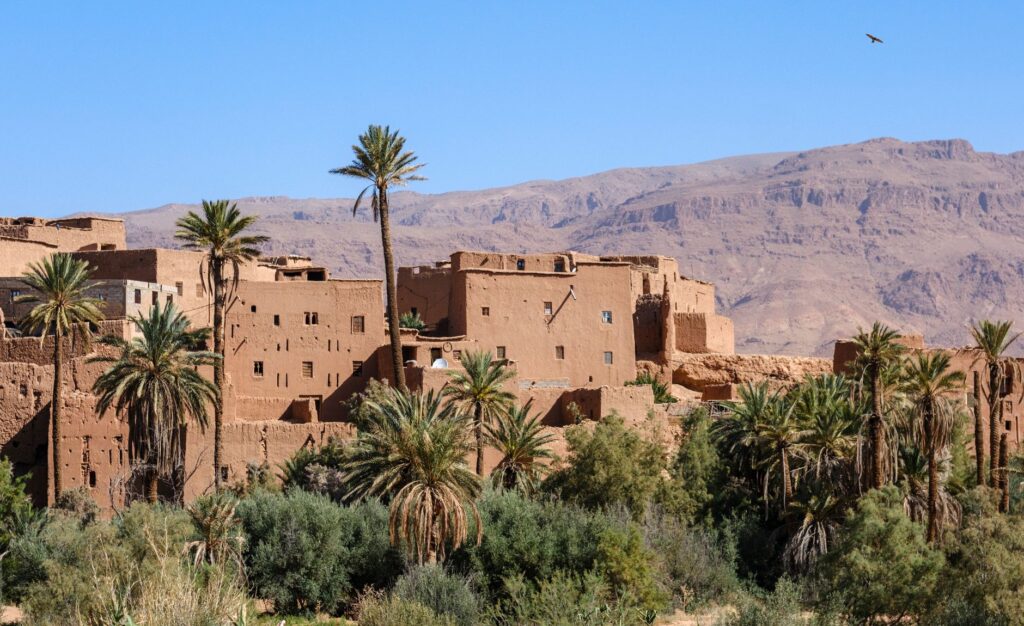
The traveler descending from the Tichka Pass toward the Moroccan desert witnesses a profound transformation of the landscape. As the Atlas Mountains give way to stony plains, the color palette shifts from cold grey stone to the deep ochre tones of raw earth. This is not merely an aesthetic choice or a passive mimicry of the geographical environment, but one of the most sophisticated building traditions on the African continent: raw earth architecture. In the oases of the Draa Valley, where the river carves a green ribbon of palm groves through extreme aridity, fortified villages known as *ksur* and imposing *kasbahs* stand as monuments to vernacular engineering. Far from being abandoned relics of the past, these settlements are currently experiencing a renaissance driven by international architects and local communities who recognize in mud an unbeatable response to the harsh desert climate.
The survival of this material and immaterial heritage rests upon the shoulders of master builders known locally as *maalemin* or master masons. These artisans possess an intuitive physics grounded in the granulometry of clay, precise water ratios, and the mechanical compaction of soil within wooden formwork. Unlike contemporary concrete, which absorbs scorching daytime heat only to radiate it during the night, raw earth acts as a natural thermal regulator. The massive thickness of adobe walls creates a thermal lag that keeps interiors cool during peak daylight hours and warm when nighttime temperatures plummet. This bioclimatic equilibrium, perfected over centuries of empirical observation, fascinates modern engineers and urban designers seeking viable alternatives to the heavy carbon footprint of industrialized construction.
Geography of Mud: The Oasis System of the Draa
The Draa Valley is far from a homogenous territory; it is a river corridor stretching over two hundred kilometers, punctuated by thousands of agricultural plots and defensive watchtowers. From Agdz to M’Hamid El Ghizlane, every kasbah tells a story of trans-Saharan trade routes, gold and spice caravans, and tribal alliances designed to protect water. Water is the most precious and scarce resource here, distributed with millimeter precision through a network of underground and surface irrigation channels known as *khetteras* and *seguias*. Earth architecture obeys this hydrological logic: settlements are never built on the fertile silt of the valley floor, but rather on the elevated, rocky edges, reserving every square meter of black soil for subsistence farming and date palms.

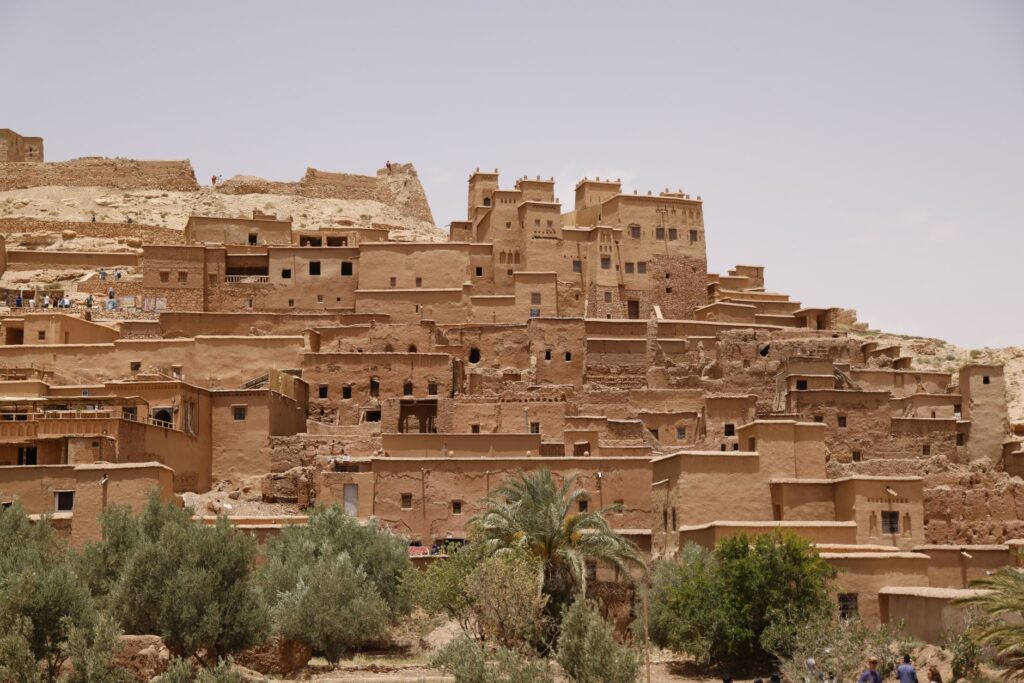
The social fabric of Draa communities has historically revolved around the communal management of habitable space. The *ksur*, conceived as inhabited fortresses, group dozens of adjoining homes that share master load-bearing walls, optimizing material resources and minimizing the surface area exposed to sand-laden winds. Interior streets are designed as narrow, covered passageways called *sabats*, which cast deep shadows and generate artificial cooling drafts. This tactical urbanism responds to the imperative of collective survival. Each family takes part in seasonal maintenance routines, especially following rare yet torrential winter rains that threaten to erode wall bases unless a fresh plaster coat of clay, chopped straw, and linseed oil is applied in time.
The Mason’s Workshop: Science and Touch in the Mix
Entering an active workshop or construction site in the Tamgroute region reveals that earth building is a discipline as demanding as fine cabinetry. The master mason inspects the surrounding terrain with the same scrutiny a winemaker applies to a vineyard. Not all soil is suitable; it requires a precise ratio of clay, silt, and coarse sand. Too much clay causes the material to shrink and crack as it dries; too much sand leaves the wall cohesive-less and prone to crumbling at a touch. The wet compression test and plasticity analysis through direct touch are inherited skills absent from any academic manual, passed down from father to son in building yards under the relentless southern sun.
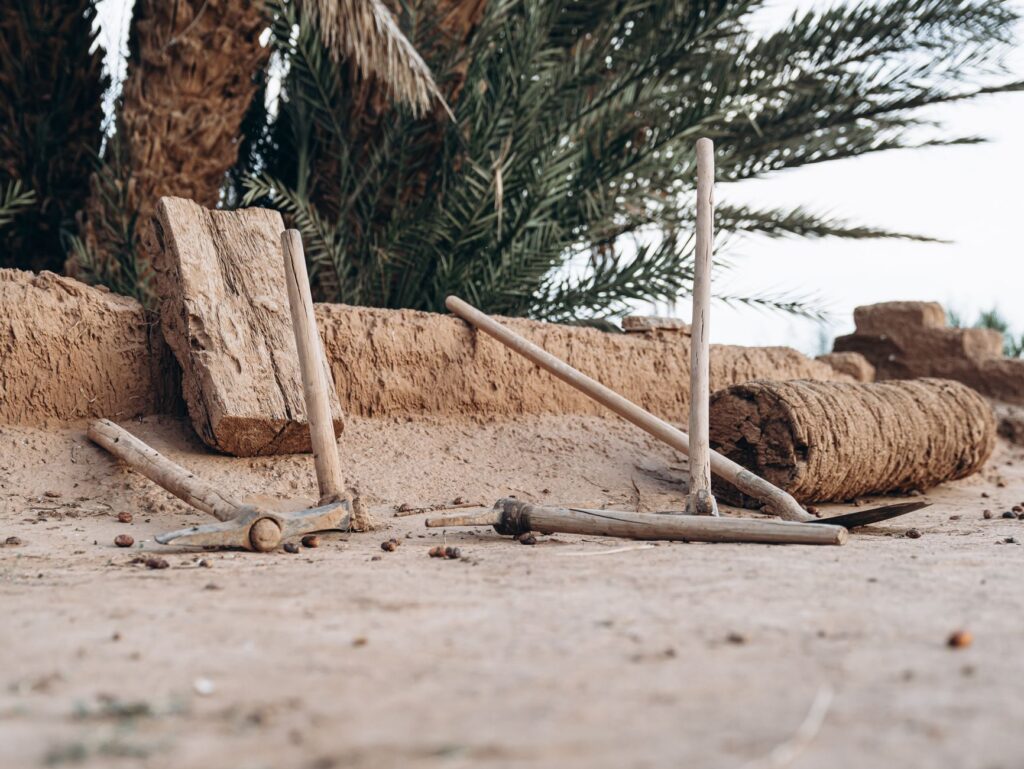
Once the soil is selected and sieved to remove stones and roots, the mixing process begins. Workers combine the aggregates with water and organic fibers, such as wheat or barley straw, which act as a natural tensile reinforcement to prevent cracking during curing. This damp mixture—termed *pisé* when compacted in formworks or molded into individual adobe bricks dried in the sun—is poured in successive lifts. Each layer is vigorously tamped down with heavy wooden rammers. The rhythm of work in traditional Moroccan construction is frequently accompanied by choral chants that set the pacing for the compaction, unifying the crew’s physical effort and ensuring uniform density across the entire perimeter of the wall.
Earth architecture is not a vestige of underdevelopment, but the pinnacle of an ecological intelligence that has dialogued with the desert for millennia without exhausting it.
The drying process is as critical as the mix itself. Rapid drying caused by direct sunlight and dry winds can ruin weeks of labor. Therefore, master builders orient construction fronts or shield newly raised walls with palm mats and subtle waterings during early curing phases. This liturgical patience clashes sharply with the urgency of the global real estate sector, but it guarantees secular durability. Kasbahs in the valley stand over four hundred years old, resisting earthquakes and sandstorms thanks to the intrinsic elasticity of the material, which absorbs minor seismic shocks without brittle collapse.
Heritage at Risk and the Urgency of Restoration
Despite its undeniable technical and aesthetic virtues, earthen heritage in Morocco faces a profound existential crisis. During the late twentieth and early twenty-first centuries, the influx of modern materials such as Portland cement, steel rebars, and hollow concrete blocks drastically altered the landscape of the oases. Mistakenly perceived by younger generations as a symbol of poverty and backwardness, adobe was massively abandoned. Families seeking to emulate the aesthetic trends of major cities like Casablanca or Marrakech demolished their ancient rammed-earth homes to erect concrete structures that, aside from clashing visually with the environment, are thermally uninhabitable without energy-hungry air conditioning systems.
This massive substitution has not only impoverished the cultural landscape but also triggered severe structural issues. Cement is impermeable and rigid, preventing historic walls from breathing and releasing natural ground moisture. Consequently, the foundations of many kasbahs and ksur have begun to crumble from within due to salt accumulation and capillary dampness. In response to this heritage emergency, various non-governmental organizations, universities, and cultural ministries have launched cataloging and technical training initiatives. Architects specializing in vernacular restoration work hand in hand with village elders to demonstrate that raw earth can be combined with contemporary seismic-resistant reinforcements, such as jute meshes or natural hydraulic lime injections, ensuring safety without sacrificing material authenticity.
Contemporary Design: When Mud Becomes Avant-Garde
Far from the circuits of strict heritage restoration, a new generation of Moroccan and international architects is reinterpreting the potential of adobe from a contemporary and sustainable design perspective. In cities and oases alike, cultural centers, boutique hotels, and eco-resorts are being projected using hybrid technologies of stabilized rammed earth. These works demonstrate that earth architecture is fully compatible with minimalist lines, expansive glazing, and advanced energy efficiency. By incorporating ecological stabilizers such as low proportions of lime or natural resins, rammed-earth walls achieve mechanical strengths comparable to reinforced concrete, opening an infinite array of formal possibilities for the twenty-first century.
This aesthetic renaissance also responds to growing demand from a more conscious and discerning international traveler seeking authentic, environmentally harmonious experiences. Visitors no longer value ostentatious luxury based on excessive resource consumption, but rather the silent sophistication of a cool space built from local materials and designed with bioclimatic principles. In new architectural projects across the Draa Valley, the interplay of light and shadow across textured clay surfaces becomes the primary visual protagonist. The rugged wall texture, bearing the marks of formwork and minor manual irregularities, provides a tactile dimension that polished concrete can never replicate.
Practical guide
How to get there
The natural starting point for exploring the earth architecture of the Draa Valley is the city of Ouarzazate, connected by regular flights from Casablanca and Marrakech or accessible by road via the Tichka Pass (N9). From Ouarzazate, national route N9 descends toward Agdz, the northern threshold of the valley, continuing onward to Zagora and M’Hamid.
Best time to visit
Spring (March to May) and autumn (September to November) offer the most favorable weather conditions, featuring mild daytime temperatures and cool nights. Summer should be avoided due to extreme temperatures regularly exceeding forty-five degrees Celsius in the lowlands.

Recommended accommodation
Staying in traditionally restored kasbahs, such as Kasbah Azul in Tamgroute or various community-run guesthouses in the Agdz ksur, is highly recommended. These establishments offer an immersive experience while reinvesting a portion of their revenues into maintaining local architectural heritage.
Technical and cultural etiquette
When exploring inhabited ksur, it is essential to ask permission before photographing residents or entering private spaces. Visitors are advised to wear comfortable shoes with flexible soles to avoid damaging traditional irrigation channels (*seguias*) and to respect local authority guidelines in structures undergoing active restoration.
Epilogue: Footprints in the Desert and Future Memory
When the sun dips behind the rocky crests of the Anti-Atlas, the Draa Valley assumes a coppery hue that fuses built earth with the surrounding geography into a single chromatic stroke. In that moment of absolute silence, as the desert breeze caresses centuries-old adobe walls, one realizes this architecture is not a static fossil, but a living organism in constant dialogue with time. The master builders currently mixing clay, straw, and water in Tamgroute’s courtyards are not looking backward with nostalgia; they are writing, with hands stained in mud, the only possible manifesto for a future where construction respects the limits of the earth.