
The Geography of Cold and the Need to Unite the Unreachable
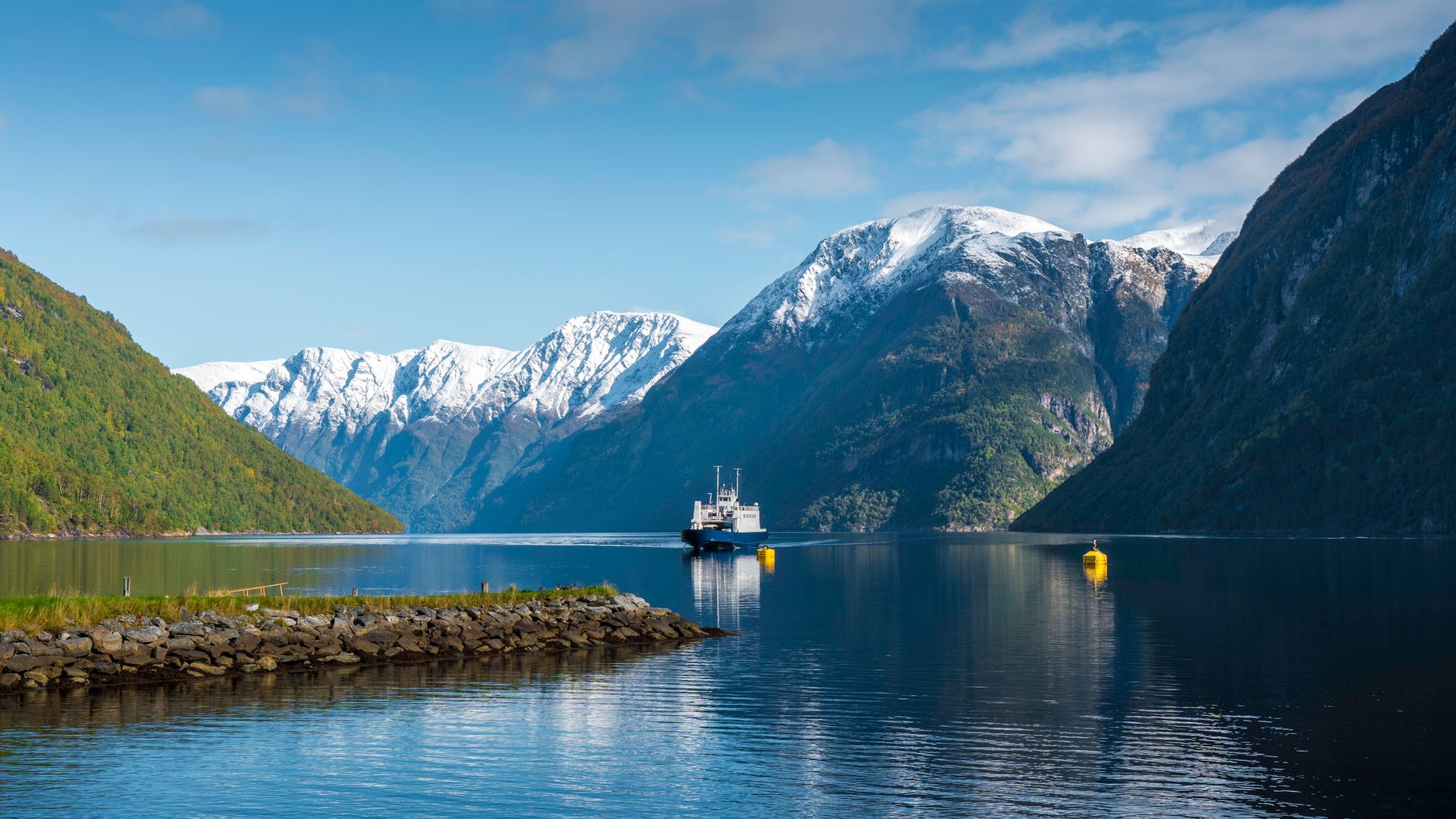
Northern Norway is far more than a territory of silent postcards and dancing auroras; it is a landscape where geography has historically dictated the rules of survival and isolation. Hemmed in by black granite ramparts and the relentless push of the Norwegian Sea, coastal communities lived for centuries under the absolute dependence on cabotage navigation. When shipping lanes froze or fell prey to winter gales, the horizon became an impassable frontier. The imperative to conquer this labyrinth of deep fjords, hanging valleys, and blizzard-swept plateaus drove twentieth-century engineers to undertake a monumental challenge: extending railway lines beyond the Arctic Circle.
This endeavor was driven less by commercial logic than by a state-sponsored strategy of territorial cohesion, ensuring that the supply of food, raw materials, and people remained uninterrupted during the long months of polar darkness. The Ofoten line and its complementary connections represent much more than tracks of steel; they are a masterpiece of civil engineering designed to withstand extreme geological pressures, wet snow avalanches, and aggressive marine corrosion. Every kilometer of track wrested from the cliffside required rigorous calculations, dynamite deployed in permafrost zones, and a profound understanding of fjord hydraulics.
Throughout this report, we examine how railway technology and multimodal logistics have transformed life in Europe’s far north. We analyze the technical solutions implemented to bore tunnels beneath the seabed, the maintenance of infrastructure exposed to gale-force winds, and the delicate equilibrium between industrial development and the preservation of fragile boreal ecosystems.
Conquering Permafrost and Infrastructure Design
Laying railway tracks at latitudes exceeding 68 degrees north pushes the physical limits of building materials. Steel, subjected to extreme thermal oscillations dropping below minus forty degrees Celsius in winter, suffers severe contractions that demand specialized alloys and millimeter-precise expansion joints. Norwegian engineers had to pioneer techniques to stabilize rock slopes fractured by freeze-thaw cycles, a phenomenon locally known as cryofracturing. The sheer cliffs plunging into the dark fjord waters are naturally unstable, turning every winter into a high-stakes test for maintenance crews.
To shield the tracks from destructive avalanches hurtling down from the peaks, engineers constructed kilometers of reinforced concrete galleries and aerodynamic deflection structures. These civil works allow snowslides to pass harmlessly over the rail infrastructure without disrupting freight traffic or passenger services. The energy required to keep switch points and signaling systems operational during blizzards is largely drawn from local hydroelectric networks specifically adapted to withstand sudden surges.
The Arctic railway is not a static line, but a living organism requiring constant supervision and surgical adaptation to the whims of northern weather.
Another major technical hurdle lay in laying foundations across waterlogged peat bogs and marshes. Unlike the compact soils of Central Europe, Arctic soil yields beneath the immense weight of high-powered locomotives unless supported by complex subsurface drainage networks and deep-driving piles. The introduction of prestressed concrete sleepers replaced traditional timber to prevent accelerated rot caused by the constant humidity of the marine atmosphere and melting snow seepage.
High-Seas Logistics and Intermodal Integration
The transport system in Northern Norway does not operate in isolation; it depends on a seamlessly synchronized network where trains, coastal ferries, and road transport function as gears of a single mechanism. At intermodal terminals situated at the railheads, the transfer of iron ore containers, fresh fish, and general cargo is executed with split-second precision. Vessels supplying remote archipelagos, such as the Lofoten and Vesterålen islands, dock directly alongside railway platforms to enable direct transfers that minimize transit times.
This logistical fluidity is vital for the export-driven fishing industry. Salmon and cod harvested in the icy waters of the Barents Sea must reach European markets in under forty-eight hours to preserve optimal freshness. The Arctic railway offers a reliable land-based alternative to maritime routes frequently paralyzed by open-sea gales during winter. Refrigerated freight cars are equipped with advanced telemetry systems that allow real-time internal temperature monitoring from control centers in Narvik and Bodø.

Coordinating schedules between heavy mineral freight trains and passenger services bound by strict punctuality rules requires highly sophisticated rail management. Traffic controllers operate under a centralized traffic control system supervising thousands of kilometers of single-track lines with dynamic passing loops, where a second of delay at a crossing can trigger a ripple effect across the entire regional network.
Steel Architecture: Bridges and Tunnels Across Salty Abysses
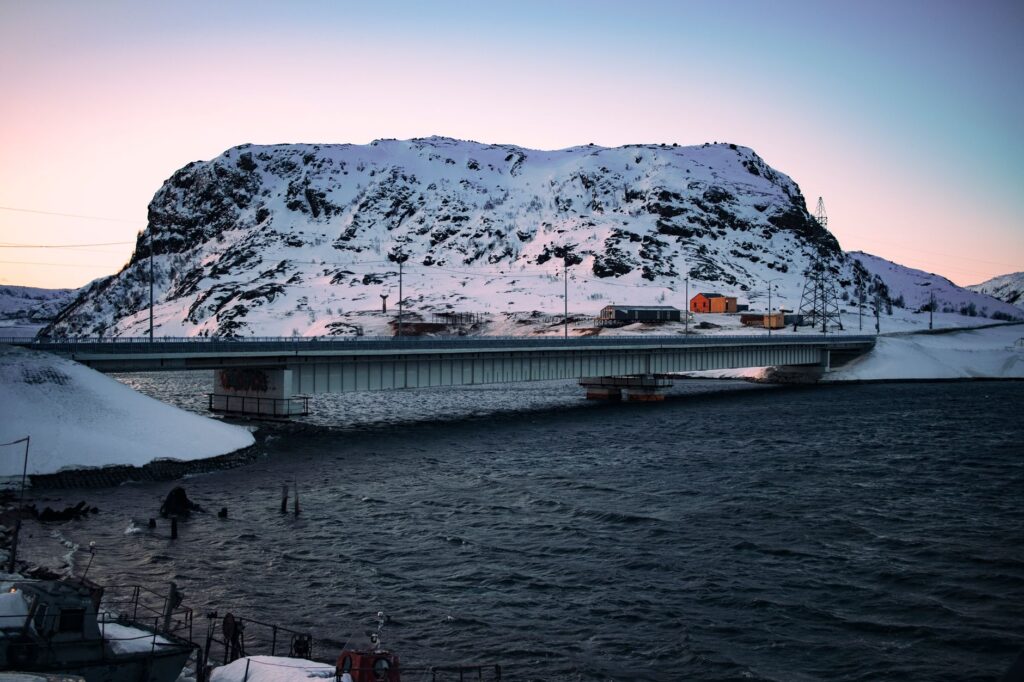
The orography of Northern Norway is an uninterrupted sequence of geographical barriers. To overcome them, engineers deployed a bold combination of long-span suspension bridges and tunnels bored deep beneath the seabed. The Hålogaland Bridge, located near Narvik, exemplifies how modern architecture integrates into the landscape without disrupting marine currents or obstructing large cargo ships. Its aerodynamic design is engineered to withstand hurricane-force winds without structural torsion that could compromise the safety of vehicles and pedestrians crossing it.
Beneath the surface, the rail and road network plunges deep into the earth via subsea tunnels descending dozens of meters below sea level. These subterranean engineering feats require massive ventilation systems to evacuate exhaust fumes and humidity accumulation, alongside continuous pumping devices preventing ocean saltwater from flooding galleries through geological fault lines. Low-energy LED lighting and high-visibility reflective panels guide train drivers through environments of absolute darkness.
Maintaining these subsea and high-mountain structures involves heavy financial costs for the Norwegian state, yet it is fully justified by their strategic value. The disruption of a single transport artery can paralyze entire municipal economies and isolate referral hospitals, making infrastructure investment a matter of national sovereignty and security.
The Human Pulse: Communities Between Ice and Track
Behind every engineering milestone lie stories of human resilience. The communities of Northern Norway, from tiny fishing settlements to industrial mining hubs, have forged their identities around the daily rhythm of the train’s arrival and departure. For many residents of these remote valleys, the railway is not merely transport; it is the umbilical cord connecting them to the rest of the country during polar night months when the sun never crosses the horizon.
Railway stations act as makeshift social hubs where locals take shelter from the Arctic wind while awaiting the convoy. Here, news is exchanged, parcels from Oslo are collected, and community efforts to clear snow-blocked accesses are organized. New generations of railway workers, children and grandchildren of those who built the original tracks with picks and shovels, now combine the oral traditions of the trade with the operation of cutting-edge computer systems and satellite diagnostics.
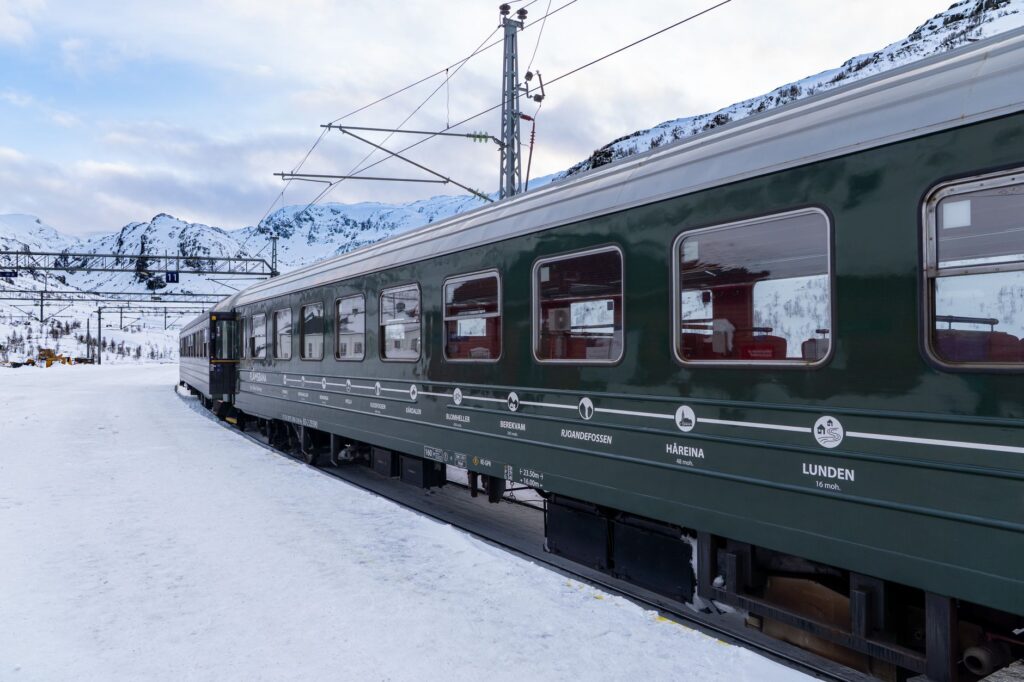
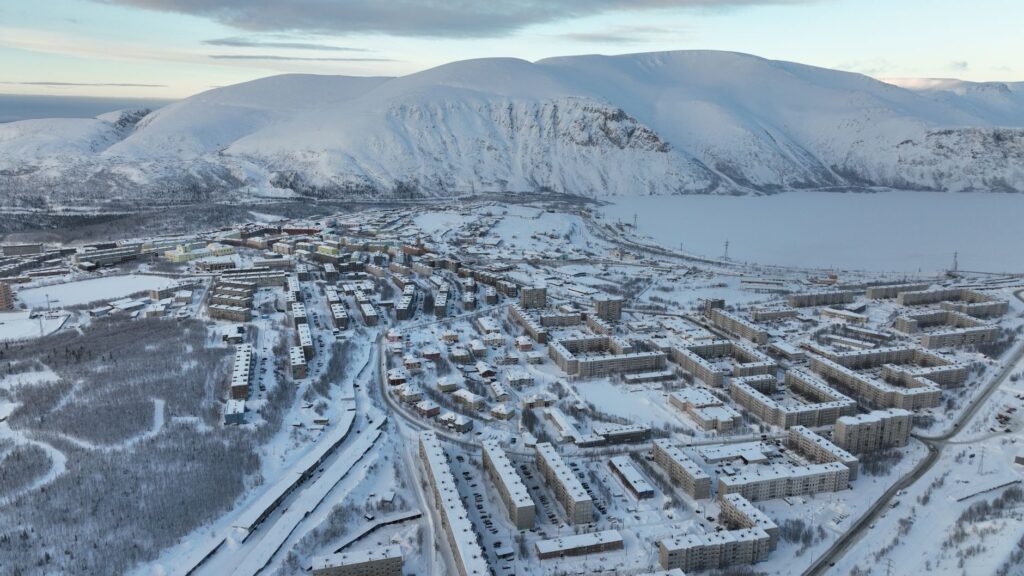
Despite technological progress, life in the north still demands profound respect for nature. Unpredictable storms continue to dictate daily routines, forcing residents to maintain well-stocked pantries and resilient mindsets. The constant presence of the train, cutting its metallic silhouette against the pristine white of the mountains, stands as an enduring symbol of human perseverance against the vastness of the Arctic landscape.
Sustainability and the Future of Arctic Transport
In recent decades, debates over the development of Northern Norway have focused on balancing industrial expansion with environmental conservation. The full electrification of the regional rail network has sharply reduced carbon emissions, making the train the region’s greenest transport option. However, rising freight traffic and new trade routes opened by partial Arctic ice-melt raise new questions about the carrying capacity of local ecosystems.

Environmental protection groups closely monitor the noise and physical impact of infrastructure on reindeer migratory routes, which regularly cross railway lines during seasonal movements between interior pastures and the coast. To mitigate this disruption, elevated wildlife crossings and acoustic warning systems have been installed to alert animals to approaching trains. Furthermore, environmental impact assessments preceding any track expansion have grown increasingly stringent, demanding the restoration of habitats damaged during construction.
The future of transport in this region hinges on comprehensive network digitalization and the potential construction of new cross-border rail links connecting the port of Narvik with Sweden and Finland, consolidating a vital logistical corridor for Northern Europe. This project, though geopolitically and financially complex, promises to redefine the Arctic’s role in twenty-first-century global commerce.
Practical guide
How to get there: The primary rail access to Northern Norway is via the Ofoten Line (Ofotbanen), linking the port city of Narvik to the Swedish rail network and onwards to Stockholm. To reach Bodø, the northern terminal of Norway’s national network, travelers use the Nordland Line from Trondheim. Both routes offer daily air connections from Oslo-Gardermoen Airport to regional airports at Harstad/Narvik (Evenes) and Bodø.
When to visit: The choice of season depends strictly on the purpose of the journey. Winter months (December to March) offer spectacular snowscapes and opportunities to view the Northern Lights, though accompanied by risks of rail delays due to snowstorms. The Arctic summer (June to August), characterized by the midnight sun phenomenon, guarantees better weather conditions for hiking and continuous daylight fjord exploration.
Logistics and tickets: Long-distance train tickets in Norway should be booked in advance via the national carrier Vy or SJ Norge, particularly during the peak summer season. Multimodal passes combining rail journeys with coastal ferries operated by Hurtigruten or Havila Kystruten are recommended to optimize travel times between islands and fjords.
Recommended equipment: Arctic weather is unpredictable even in summer. Layered thermal clothing, high-quality windproof and waterproof jackets, non-slip footwear for icy surfaces, and accessories such as wool hats, gloves, and UV-protected sunglasses to prevent snow blindness are essential.
White Silence and Iron Memory
When the last convoy of the day slowly crosses the fjord bridge and dims its lights in the distance, Northern Norway reclaims its ancestral silence. The vastness of the dark mountains and the white blanket of snow seem to erase every trace of human activity, reminding us of the fragility of our presence in these extreme latitudes. Yet beneath the surface and along the steel tracks defying the abyss, a monumental work of engineering and collective will continues to beat.
This territory, where sea and mountain wage eternal battle, finds in the railway its purest form of dignity and endurance. It is not merely a matter of connecting points on a geographical map, but of weaving an invisible web of safety, commerce, and human life that firmly defies the laws of the Arctic winter.