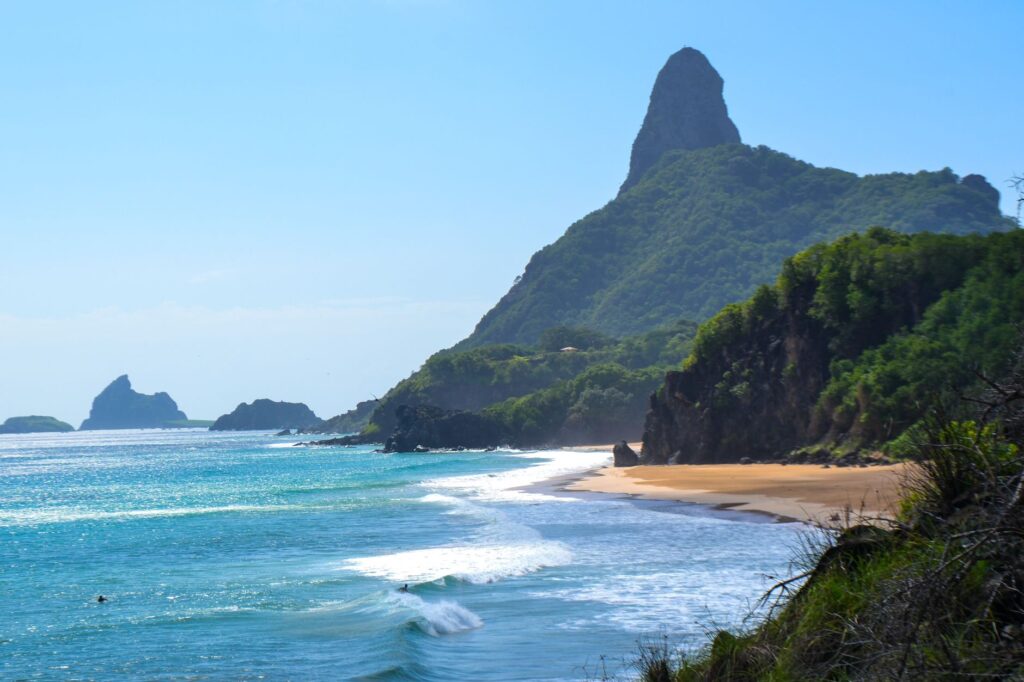
More than three hundred and fifty kilometers off the northeastern coast of Brazil, the Fernando de Noronha archipelago rises from the Atlantic as a natural volcanic stronghold. This geographical isolation has not only preserved one of the richest marine ecosystems on the planet, but has also turned its transport system into a logistical engineering feat of extreme precision. In this protected territory, where every visitor pays an environmental conservation fee upon arrival, mobility is not merely a matter of getting around, but a delicate balance between tourist pressure and the fragility of an environment declared a UNESCO World Heritage Site.
Access to this oceanic outpost relies entirely on a minute yet vital intermodal network, where commercial flights from Recife and Natal share prominence with restricted maritime routes. The territory’s topography, characterized by basalt cliffs and a single paved main road known as the BR-363, relentlessly dictates internal transit. Analyzing the daily pulse of Noronha means understanding how regional airlines operate narrow-body aircraft under strict weight regulations, and how high-speed catamarans brave ocean swells when South Atlantic weather turns inclement.
The Geography of Isolation and the Most Monitored Runway in the Northeast
The primary gateway to the archipelago is the Fernando de Noronha Airport, an infrastructure whose history is intricately linked to military strategy and the evolution of Brazilian commercial aviation. For decades, the limited length of its runway prevented large-scale jetliners from landing, forcing airlines to operate with specialized turboprops. This technical restriction, far from being an insurmountable obstacle, has functioned as a natural filter for passenger and cargo capacity, limiting the daily flow of tourists to prevent the collapse of the island’s water and energy resources.
Aviation operations in Noronha are subject to rigorous meteorological surveillance. The trade winds sweeping the tropical Atlantic generate severe wind shear turbulence near the runway threshold, forcing flight captains to perform highly demanding instrumental approaches. Likewise, takeoff weight restrictions are a constant due to the scarcity of aviation fuel available on the archipelago, often requiring technical stops on the mainland for fully booked aircraft. This logistical vulnerability turns Noronha’s airspace into a hyperconnected yet fragile system.
The Maritime Pulse: Cargo Delivery and the Catamaran Odyssey
If the airplane represents the fast track for the traveler, the sea constitutes the true umbilical cord sustaining the archipelago’s daily life. The Santo Antônio pier is the sole safe docking point for cargo vessels supplying the local population with food, construction materials, and medical supplies. Unloading containers at this pier, exposed to open swells, is a hazardous maneuver requiring experienced captains and cranes operated with millimetric precision, especially during the southern winter months when northern swells strike the coast fiercely.
In passenger transport, commercial maritime connections have undergone profound regulatory transformations. High-speed catamaran services operating from the mainland or between smaller islands have had to adapt to stringent port authority inspections. These crossings, which can take several hours depending on sea states, demand constant monitoring of atmospheric pressure and ocean currents by the crews. The temporary suspension of these routes due to sudden storms demonstrates the absolute supremacy of nature over human planning in this insular environment.
The Terrestrial Backbone: Limits of the BR-363 and Internal Mobility
Once on solid ground, Fernando de Noronha’s road network defies any convention of urban or regional mobility. Stretching just over seven kilometers, the BR-363 holds the title of Brazil’s shortest federal highway. This irregular asphalt route, flanked by native vegetation and secondary dirt tracks locally known as chãos, supports the transit of rental buggies, public service pickup trucks, and school buses connecting the island’s sparse population clusters.
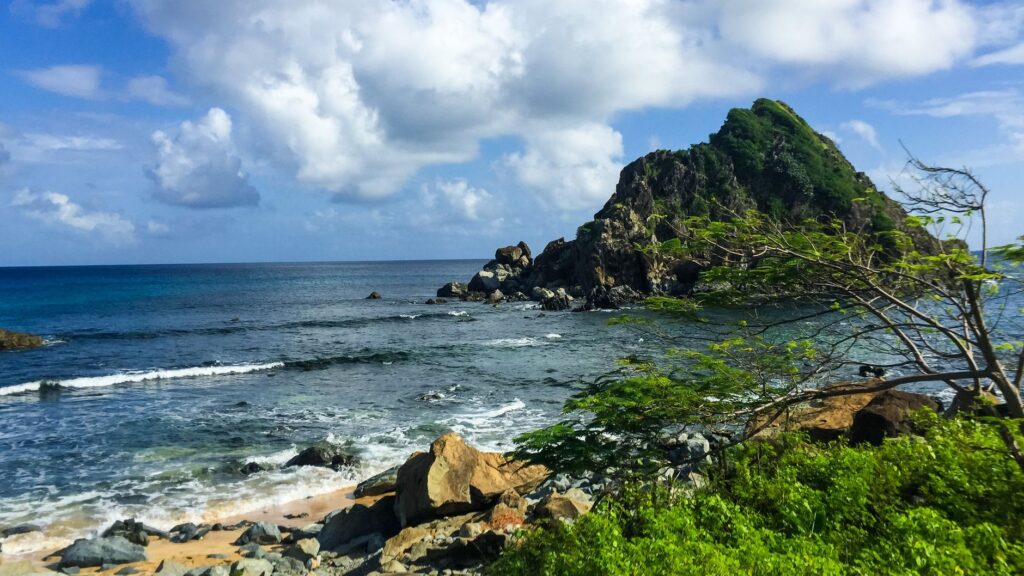
The massive use of rental off-road vehicles has been the subject of intense environmental debates by authorities at the Chico Mendes Institute for Biodiversity Conservation (ICMBio). To mitigate the impact on local fauna and soil erosion, strict regulations have been implemented regarding fleet maintenance and speed limits. Walking and cycling, supported by a network of marked trails, are actively encouraged as low-impact alternatives to access iconic beaches like Baía do Sancho or Baía dos Porcos.
Managing Carrying Capacity: When Tourism Pressures Infrastructure
The true challenge of Fernando de Noronha’s transport system does not lie solely in vehicle technology or infrastructure resilience, but in the sustainable management of human carrying capacity. Every airplane seat and catamaran berth is strictly correlated with the collection of the Environmental Preservation Fee (TPA), a daily levy that increases progressively to discourage prolonged stays and regulate the massive influx of temporary visitors.

This symbiosis between fiscal policy and logistical connectivity constitutes a pioneering model of tourism management in Latin America. Transport agencies and airlines operate under the direct supervision of environmental protection bodies, which can mandate reductions in flight frequencies or the temporary closure of landing points if ecological impact studies detect saturation on hiking trails or diving sites. Thus, mobility across the archipelago becomes a continuous exercise of containment and respect for the physical limits of the territory.
The Impact of Climate Change on Ocean and Air Routes
In recent years, global climate variability has begun to disrupt traditional weather patterns that once guaranteed the predictability of transport routes to Fernando de Noronha. Rising sea surface temperatures in the tropical Atlantic have fostered the formation of anomalous swell events with greater frequency and intensity, testing the structural resilience of the Santo Antônio pier and complicating cargo vessel docking maneuvers.
Similarly, crosswinds at the local airport have become more erratic, causing unforeseen diversions and operational delays for airlines connecting the archipelago to the mainland. These challenges compel airport authorities and logistics operators to invest in state-of-the-art meteorological forecasting systems and rethink the redundancy of their supply chains. The survival of the insular socioeconomic model depends directly on its ability to anticipate the instability of an increasingly unpredictable ocean.
Practical guide
Planning a trip to the Fernando de Noronha archipelago demands logistical rigor far exceeding that of any conventional tourist destination in Brazil.
- Approach flights: Air routes operate primarily from the international airports of Recife (REC) and Natal (NAT). Booking tickets months in advance is essential due to strict seating limits per aircraft.
- Environmental fees: Payment of the Environmental Preservation Fee (TPA) can be handled online prior to travel to streamline procedures at the insular airport terminal.
- Internal mobility: Renting buggies is the most widespread system, but it requires a valid driver’s license and cautious driving due to the condition of the main BR-363 road and secondary tracks.
- Public transport: A regular bus line runs along the main highway connecting major points of interest and beaches, serving as an economical and lower-impact alternative.
- Supplies and luggage: Due to strict weight limitations on regional flights, travelers are advised to pack light and check baggage policies for each partnering airline.
Emotional epilogue: the final sunset over the morro dos dois irmãos
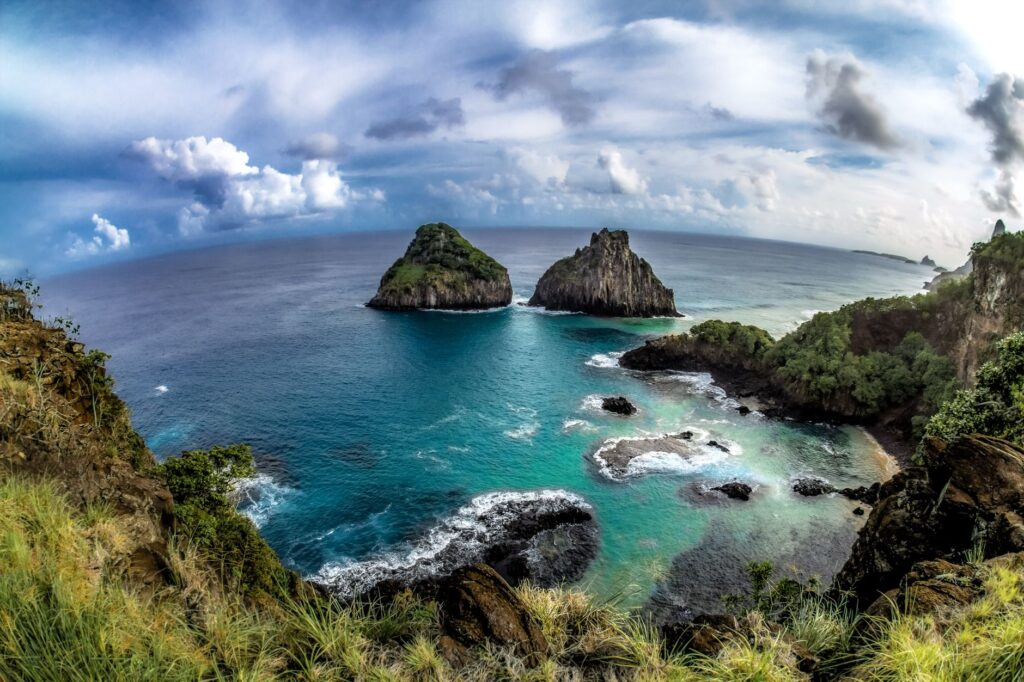
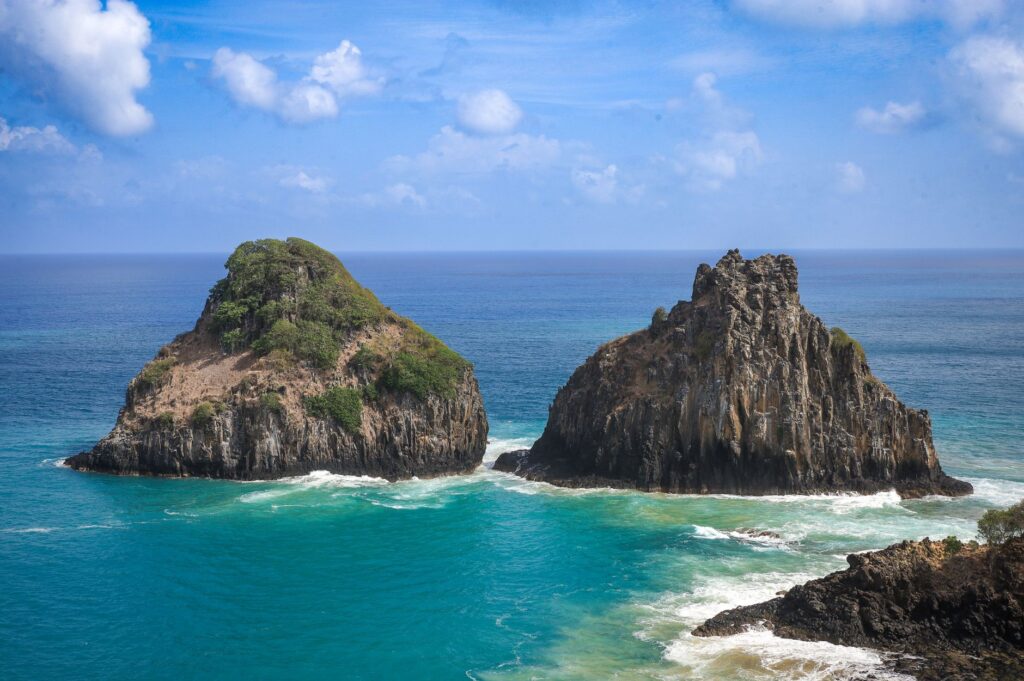
When the last commercial flight ascends into the twilight sky of Recife and the bustle of visitors fades on beaches silenced by the receding tide, Fernando de Noronha reclaims its true essence as an Atlantic sanctuary. From the basalt stone viewpoints crowning the cliffs, the twin silhouette of the Morro dos Dois Irmãos carves itself against a horizon where sky and sea fuse their hues into a canvas of deep purples and ochres. In that instant of absolute stillness, the complex machinery of planes, boats, and roads sustaining life in this insular outpost falls silent, reminding us that the true marvel of journeying here lies not in the speed of the transit, but in the almost reverent privilege of having been admitted, if only for a few days, into the most intimate and fragile heartbeat of the ocean.