The tropical lowlands of northeastern Australia shelter one of the oldest and most imposing forest ecosystems on Earth: the Daintree Rainforest. Within this intricate matrix of dense canopy, giant ferns, and buttressed roots sinking into waterlogged soils, a living relic of the dinosaur era survives: the southern cassowary. This large flightless bird, with its unmistakable silhouette and a head crowned by a bony casque, represents much more than an icon of Australian biodiversity; it acts as the silent architect of its entire habitat, an engineering force whose presence dictates the health and complex architecture of the humid tropical jungle.
Understanding the biology and current status of this species requires delving into the delicate balances of an ecosystem that has remained virtually unchanged for millions of years. Far from folklore and sensationalist tropes about defensive aggression, the cassowary is an elusive, highly specialized creature deeply tied to the seasonal fruiting network of the forest. Analyzing its demographics, fragmented biological corridors, and scientific preservation efforts allows us to paint a faithful portrait of the challenges endemic fauna face against human pressure at the very edge of the tropics.
Evolutionary Origins and Adaptive Morphology of the Southern Cassowary
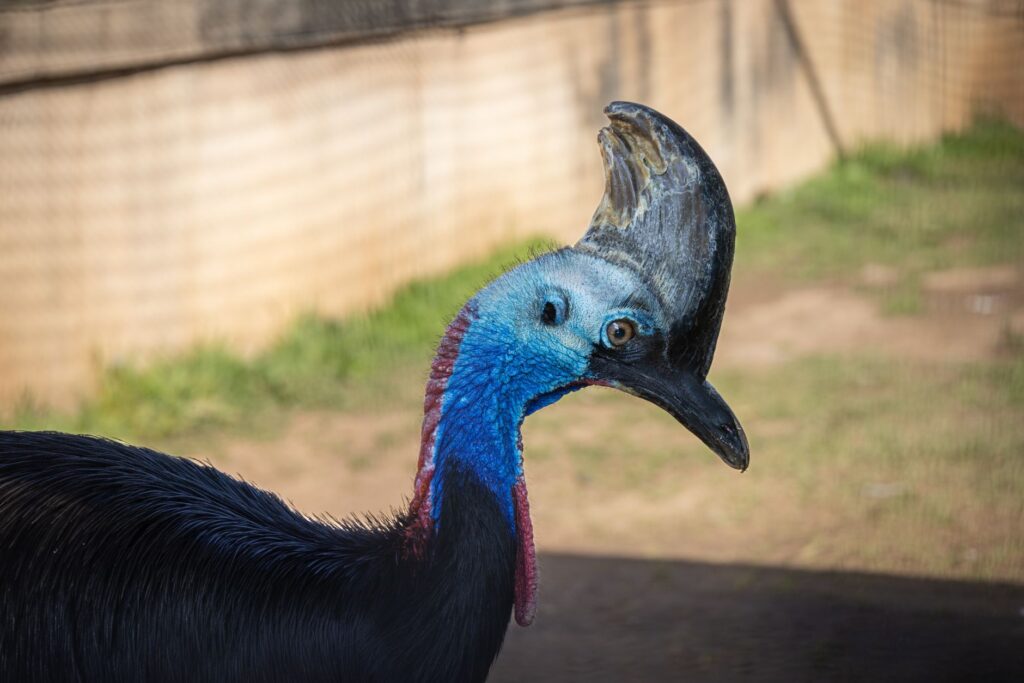
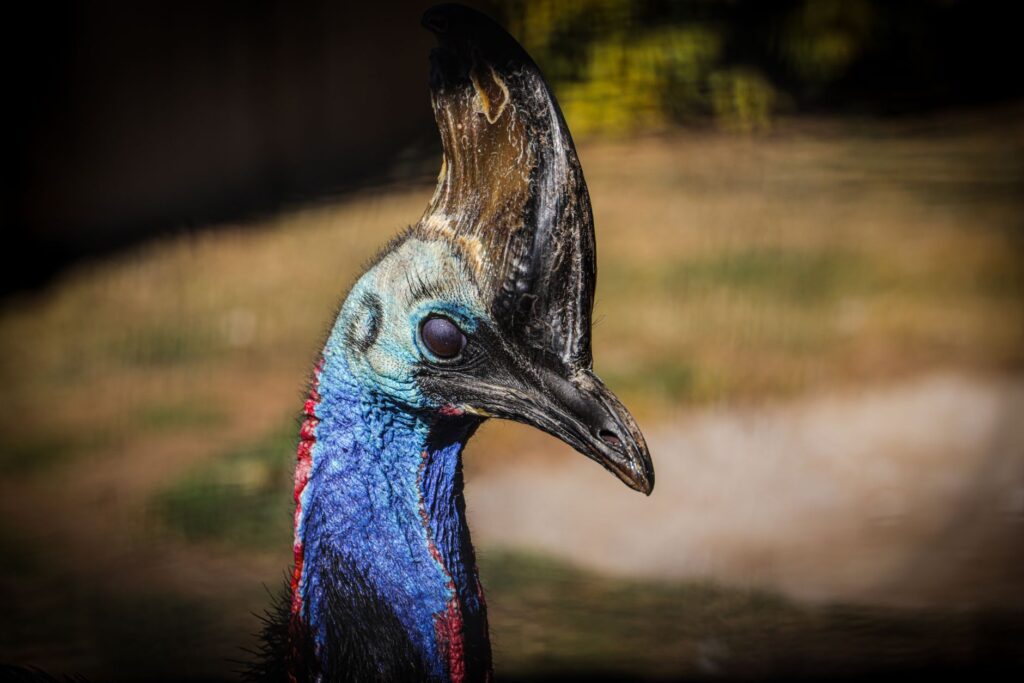
The southern cassowary (*Casuarius casuarius*) belongs to the ratite order, an ancient group of flightless birds that includes the emu, ostrich, and rhea, whose origins trace back to the Gondwana supercontinent. Its anatomy reflects precise adaptations to life in the dense understory: a compact body covered in bristle-like black plumage that allows it to push through thorny vines without injury, and robust legs equipped with sharp claws, among which the inner claw stands out for its length and defensive power.

The most distinctive feature of its morphology is the keratinous casque situated atop its head. For decades, this bony appendage has been the subject of scientific debate. Recent research suggests it functions both as a protective element against falling branches and fruit during high-speed movement and as an acoustic resonator for emitting low-frequency vocalizations—inaudible to the human ear yet capable of traveling vast distances through the thick vegetal mattress of the forest.
The Invisible Engine of the Jungle: Fruiting Ecology and Seed Dispersal
The ecological role of the southern cassowary transcends its mere physical existence; it is the sole species in the Daintree ecosystem capable of consuming and dispersing large seeds exceeding five centimeters in diameter. At least seventy-seven tropical plant species rely exclusively on this bird for the germination and distribution of their fruits. Ingested seeds pass through the cassowary’s digestive system and are expelled intact kilometers away, accompanied by a natural fertilizer that promotes their growth.
This symbiotic relationship turns the cassowary into a cornerstone of forest biodiversity. If the cassowary were to disappear from a region, the vegetal structure of the jungle would be irreversibly altered. Trees such as the Queensland walnut (*Endiandra palmerstonii*) or various endemic palms would see their dispersal capacity reduced to very limited zones around the parent tree, increasing local competition and diminishing the genetic diversity of flora across generations.
Habitat and Fragmentation: Threatened Ecological Corridors
The historical habitat of the southern cassowary extended along the coastal strip and interior lowlands of northern Queensland. However, agricultural expansion, scattered urbanization, and road infrastructure have fragmented its territory into isolated patches. The Daintree forests, though largely protected by the national park of the same name and designated as a World Heritage site, face constant boundary pressures from real estate development.

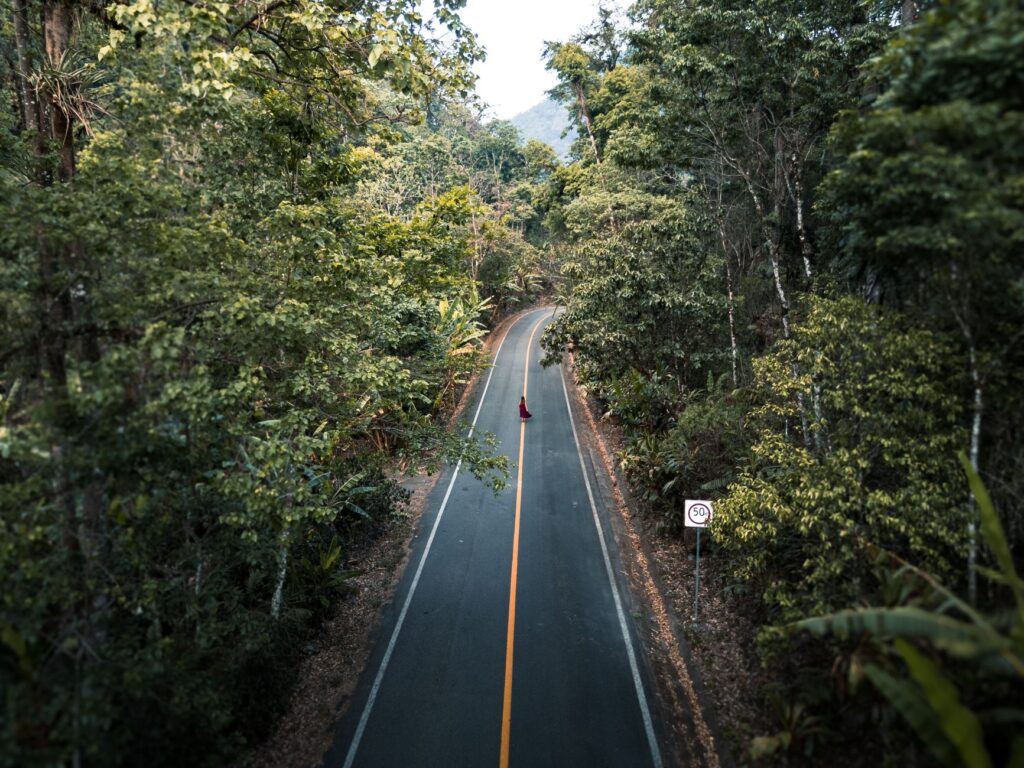
The loss of landscape continuity forces cassowaries to cross paved roads in search of food or mates, turning vehicle collisions into a primary cause of non-natural mortality for the species. Furthermore, fragmentation hinders genetic exchange between isolated populations, increasing the risks associated with inbreeding. Conservation organizations and local scientists collaborate closely on restoring green corridors through the reforestation of degraded lands and the installation of restrictive road signage.
Anthropogenic Threats: Road Collisions, Introduced Predators, and Food Loss
Beyond territorial fragmentation, the southern cassowary faces direct threats from human activity and invasive species. Feral and domestic dogs represent a lethal danger, particularly for juveniles and chicks raised on the ground. Canine attacks disrupt reproductive cycles and significantly reduce the survival rate of new generations.
Another critical factor is the alteration of their natural diet. The proximity of human settlements tempts cassowaries to consume inappropriate foods or garbage, modifying their natural behavior and drawing them dangerously close to heavy traffic zones. Public awareness campaigns and strict bans on feeding wildlife have proven indispensable tools in mitigating this issue, though enforcing regulations requires constant vigilance from environmental authorities.
The Reproductive Cycle: Paternal Investment in the Understory
The reproductive biology of the cassowary offers fascinating patterns that defy typical avian norms. During the breeding season, which generally aligns with peak fruit availability following seasonal rains, dominant females mate with multiple males and deposit large clutches of dark green eggs in nests built with leaves on the forest floor.
Once laying is complete, the female leaves the territory in search of other males, delegating incubation and rearing entirely to the chosen male. For approximately fifty days, the male remains on the nest with little to no food, incubating the eggs and protecting them from potential predators. After hatching, the chicks—distinguished by a striking brown and cream striped pattern providing perfect camouflage—accompany the father for about nine months, learning to identify edible fruits and navigate the dangers of the territory.
Conservation Strategies and the Role of Rescue Centers
Given the species’ vulnerability, conservation strategies in Queensland combine field scientific research, radio-telemetry monitoring, and the direct action of specialized wildlife hospitals. Institutions like the Cairns Turtle Rehabilitation Centre and specific local bird sanctuaries play a crucial role in recovering injured, orphaned, or vehicle-hit specimens.
Rehabilitation protocols aim to ensure rescued cassowaries retain their wild behavior and do not habituate to human contact—an essential requirement for their subsequent reintroduction into the natural habitat. Simultaneously, environmental education programs targeting local communities and international visitors foster respectful coexistence, emphasizing that the survival of this iconic species depends on strictly protecting the last vestiges of virgin jungle in Australia.
Practical guide
How to get there: The primary gateway to the Daintree region is the city of Cairns, located in tropical North Queensland. From Cairns, access is achieved via an approximately two-hour drive north along the Captain Cook Highway, crossing the Daintree River via the traditional cable ferry.
When to visit: The optimal period spans the dry season, from May to October. During these months, rainfall decreases significantly, temperatures are milder, and secondary regional roads offer ideal conditions for driving and hiking.
Where to observe wildlife respectfully: Cassowary sightings must always be conducted from a prudent distance without disrupting their routines. Locations such as Daintree National Park, Mossman Gorge, and authorized trails around Cape Tribulation offer legitimate opportunities to observe the rainforest in its purest state.
Safety rules and conduct: Never offer food to cassowaries; this practice alters their natural behavior and exposes them to road accidents. In the event of a close encounter, remain calm, back away slowly, and avoid blocking their escape route or approaching adults accompanied by chicks.
Recommended equipment: Water-resistant trekking footwear, lightweight breathable long-sleeve clothing for protection against insects and humidity, biodegradable insect repellent, and high-quality binoculars for wildlife viewing in the dense canopy are essential.
Emotional Epilogue on the Threshold of Eternal Green
There is a precise moment, at dusk, when marine mist descends upon the treetops in Daintree and golden light filters in vertical beams down to the forest floor, where the jungle recovers its primordial pulse. In that dense silence, interrupted only by the steady drip of humidity and the hum of insects, walking the trail is an acceptance of a truce with time. The sudden crackle of dry leaves beneath powerful claws does not generate fear, but a profound reverence for a silent survivor that has witnessed the birth and disappearance of geological eras. The cassowary, standing tall among prehistoric ferns, embodies the living memory of an indomitable continent; its sober and distant gaze reminds the traveler that sanctuaries exist where nature still dictates its own rules, demanding from us only the silence and respect of knowing how to watch without interfering.