
The Andes mountain range has historically represented one of the most formidable geographical barriers to overland transport development in the Americas. For centuries, crossing this imposing natural wall was restricted to bridle paths traversed by muleteers and expeditionaries who defied extreme altitudes, gale-force winds, and relentless snowstorms. However, in the late nineteenth century, the technical ambition of engineers and British and South American capitalists shaped a project that seemed to defy the laws of physics: the Trans-Andean Railway, a monumental undertaking designed to link the Atlantic and Pacific oceans through a narrow-gauge rail line ascending into the very heart of the cordillera.
This report examines the genesis, technical deployment, logistical operation, and legacy of one of the most daring railway feats in the Southern Hemisphere. Throughout this journey, we will analyze how the combination of extreme gradients, Abt-system rack railways, and harsh weather conditions demanded unprecedented engineering solutions, transforming this corridor into the backbone of international trade and communication before commercial aviation and paved highways permanently altered the region’s geopolitics.
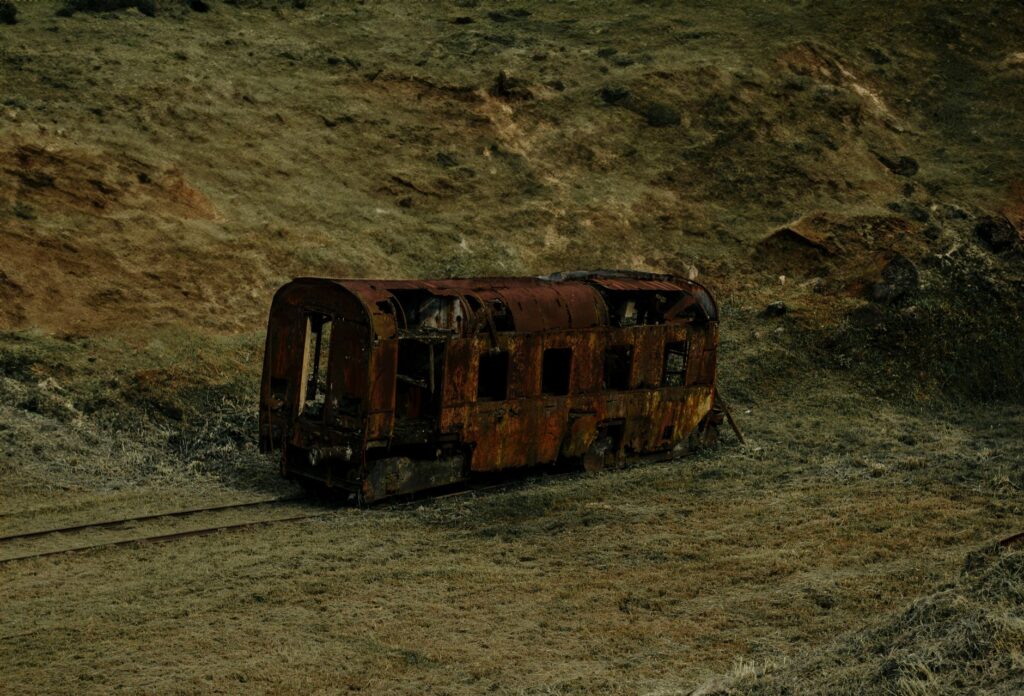
The Genesis of a Bi-Oceanic Dream: Politics and Continental Vision
The idea of laying rails across the Andes mountain range arose not merely as a financial speculation exercise, but as an inescapable strategic necessity for the republics of Argentina and Chile. Around 1870, international trade depended on navigation around Cape Horn, a long, costly, and extremely hazardous maritime route. Chilean brothers Juan and Clark initially proposed a layout connecting Valparaíso with Buenos Aires via a transcontinental railway, a project that required decades of diplomatic negotiations, government concessions, and the overcoming of deep geopolitical distrust between both nations.
The challenge was substantial. Preliminary studies demonstrated that a conventional single-adhesion line would be utterly useless due to the nearly vertical gradients presented by the Mendoza River canyon on the eastern slope and the Aconcagua River valley on the western. The legal and economic solution finally materialized through specific concession laws that guaranteed state subsidies and long-term exploitation rights, attracting British investors who saw in the Andes a new frontier for the expansion of Victorian engineering applied to extreme terrain.

Relentless Orography and the Abt Rack System
Overcoming an altitude difference exceeding 3,000 meters in just a few kilometers required the adoption of cutting-edge technologies for the era. While traditional steam traction was used on sections with lower gradients, in areas where the inclination exceeded 2.5 percent, engineers implemented the Swiss rack system invented by Roman Abt. This mechanism consisted of one or two toothed bars placed in the center of the track, into which cogwheels coupled to the drive cylinders of special locomotives meshed, allowing convoys to climb gradients of up to 8 percent.
The construction of civil infrastructure in these sectors demanded a titanic human effort. Masons, engineers, and laborers from Europe and various parts of South America worked in absolute isolation, enduring sub-zero temperatures, snowstorms, and the dreaded altitude sickness known locally as puna. Every steel sleeper, every ton of rails, and every piece of heavy machinery had to be transported on muleback or via improvised carts before the tracks themselves could be utilized for supplying the construction works.
Summit Tunnels and the Conquest of La Cumbre Pass
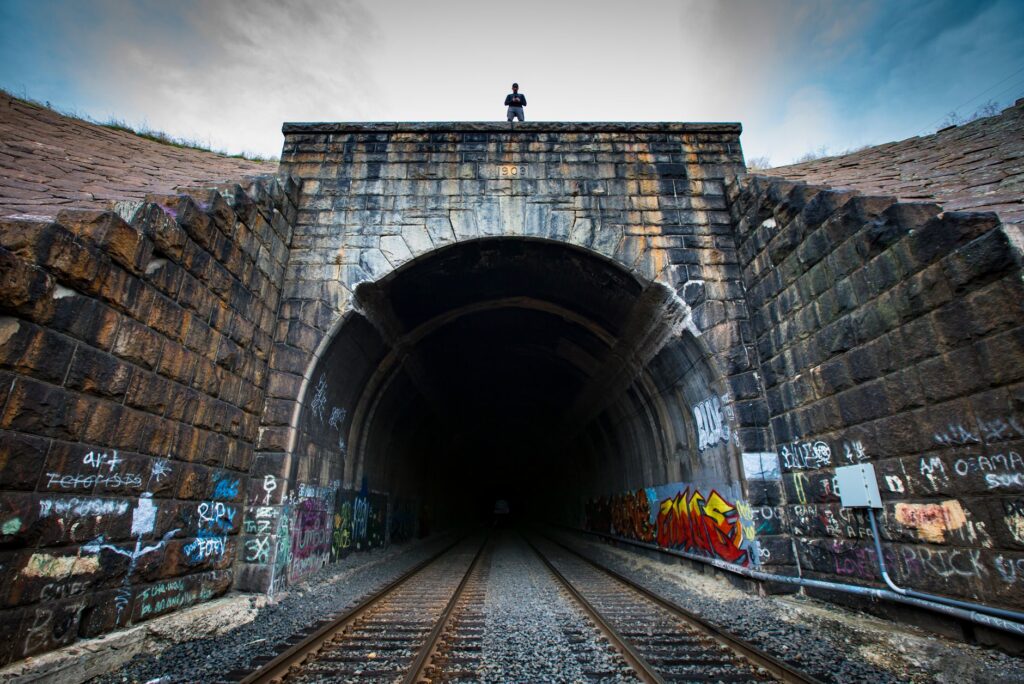
The culminating point of the railway layout was located at the international summit tunnel, bored at 3,186 meters above sea level, spanning over three kilometers and crossing precisely beneath the international border between Chile and Argentina. The execution of this subterranean gallery constituted a masterpiece of topography and manual drilling using rudimentary explosives, where teams advancing from both sides of the cordillera managed to meet with millimeter precision, a technical milestone widely celebrated in the international press of the era.
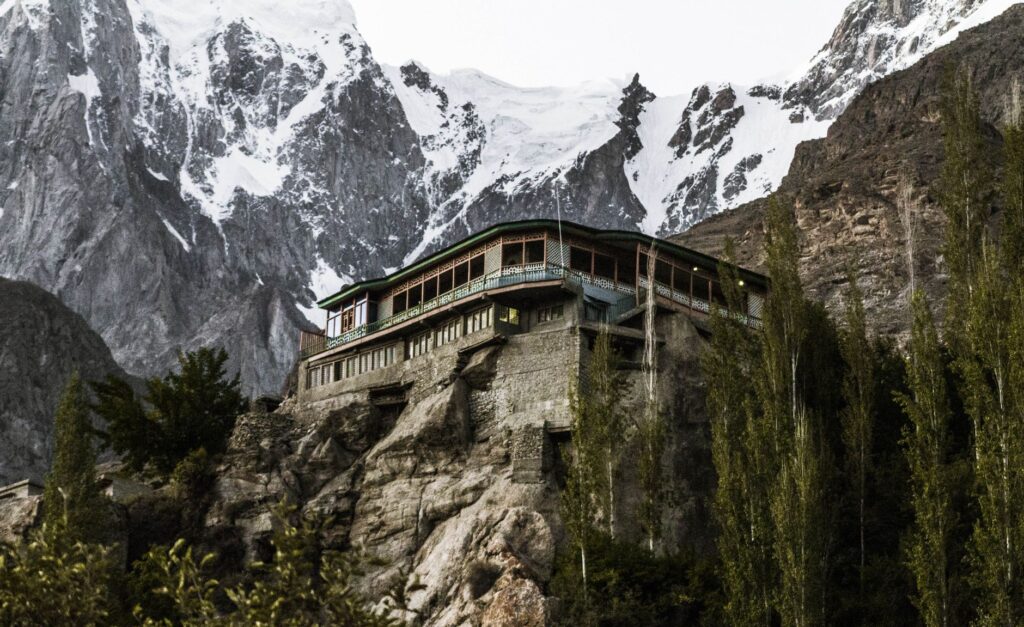
Inside this tunnel, the track featured a special section combining power supply and ventilation systems to prevent the accumulation of smoke and coal gas from asphyxiating train drivers and passengers. High-altitude stations such as Las Cuevas on the Argentine side and Caracoles on the Chilean side operated as complex logistical microclimates equipped with staff housing, coal depots, emergency repair workshops, and telegraph communication systems that allowed precise coordination of train crossings on a single-track corridor.
Post-War Logistics and the Decline Before Motorized Modernity
During the early decades of the twentieth century, the Trans-Andean Railway operated as a vital link for the transport of distinguished passengers, postal mail, livestock, and perishable goods between both countries. However, operations faced constant interruptions caused by snow avalanches, rockfalls, and the severity of Andean winters, which forced lines to close for entire weeks. Despite continuous maintenance efforts and the later incorporation of higher-power diesel-electric locomotives, operating costs began to outweigh economic benefits.
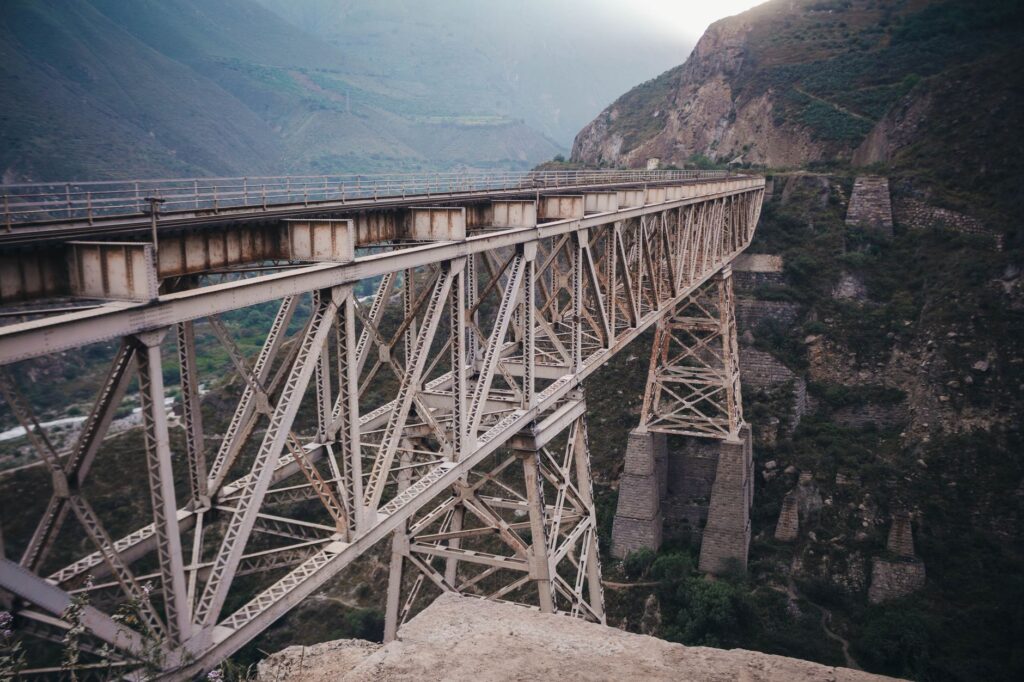
The mountain does not negotiate its laws; it demands absolute submission or punishes error with isolation and the destruction of infrastructure.
The definitive blow to the railway system came from the development of high-altitude commercial aviation and, above all, the construction of paved roads for freight and passenger motor transport, such as the nearby Los Libertadores International Pass. By the late 1970s, regular passenger service was permanently suspended, and track sections, bridges, and stations were abandoned to natural elements, becoming an industrial cemetery of incalculable historical value.
Railway Architecture and Industrial Heritage in High Altitudes
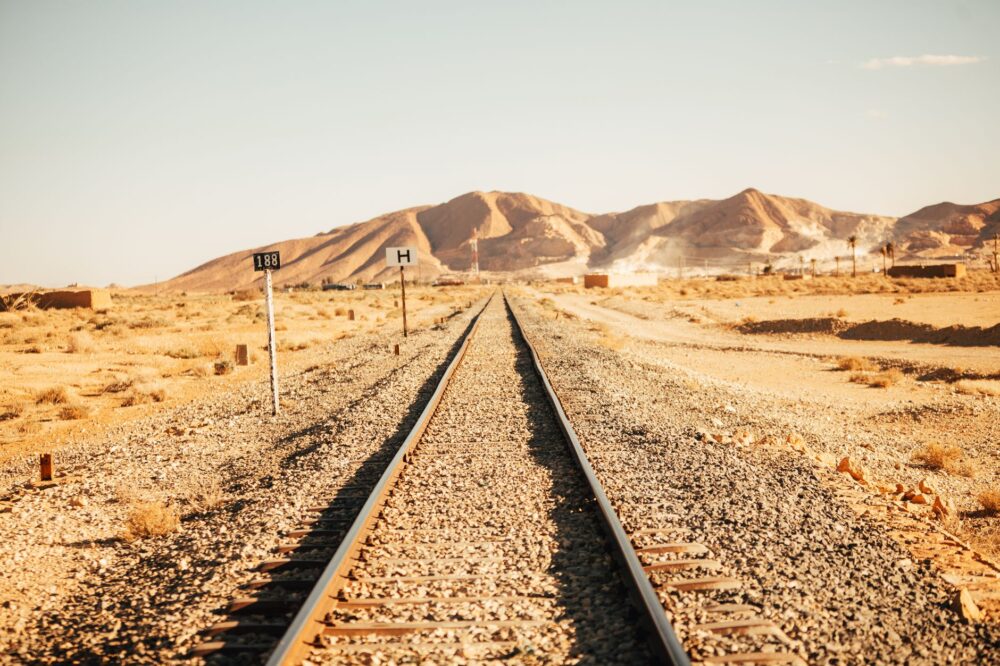
Today, the vestiges of the Trans-Andean Railway attract researchers, industrial archaeologists, and railway heritage enthusiasts who travel along the remnants of the layout via National Route 7 in Argentina and Route 60 in Chile. Ghost stations such as Puente del Inca, Punta de Vacas, and Río Blanco preserve ashlar stone masonry walls, gabled roofs, and iron foundations that once hosted the bustle of international commerce.
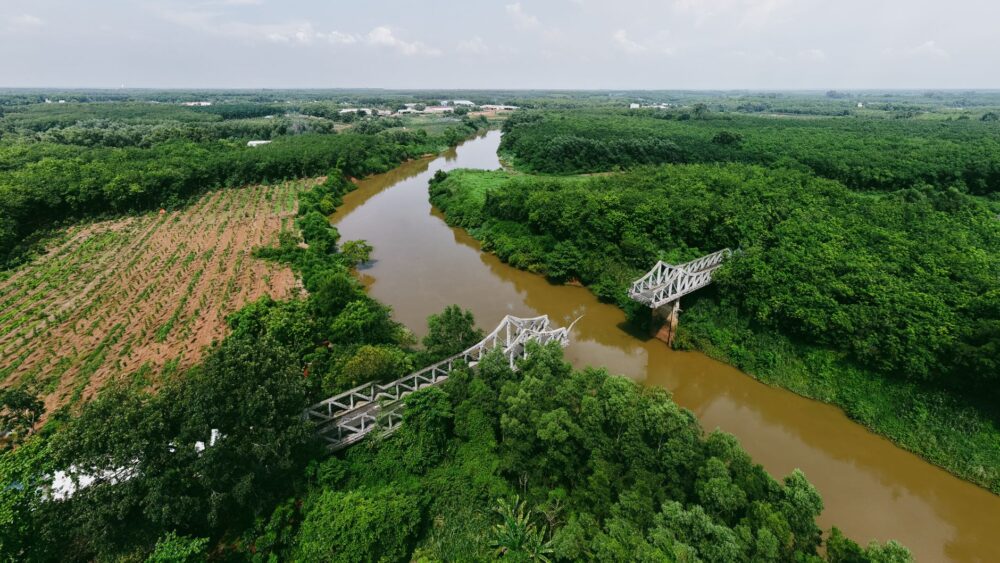
Metal lattice bridges crossing dizzying canyons over meltwater rivers remain firm, defying time and corrosion, while rack-rail sections protrude through gravel like industrial sculptures reminding visitors of the boldness of a generation of engineers who refused to accept the limits geography sought to impose on regional integration.
Practical guide
- How to get there: Access to the main vestiges of the Trans-Andean Railway is achieved by road via National Route 7 (from Mendoza, Argentina) or Route CH-60 (from Los Andes, Chile), both paved international highways that remain passable during summer months.
- Best time to visit: Between November and March, when weather conditions are milder and most of the high cordillera is free of accumulated snow, allowing safe trekking along ancient tunnels and railway embankments.
- Access requirements: Much of the railway infrastructure is located in high-mountain zones (above 2,500 meters), requiring prior acclimatization, technical warm clothing, and sturdy footwear suitable for rocky terrain.
- Strategic accommodation: The towns of Uspallata and Potrerillos on the Argentine side, as well as San Esteban and Los Andes on the Chilean side, offer the closest hotel infrastructure and services to plan day excursions.
The Echo of Rails Beneath Glacial Silence
The Andean wind that currently lashes the rusted remains of railway cars and abandoned stations of the Trans-Andean Railway seems to narrate the story of an era when human will and technique challenged the limits of nature. Although trains no longer cross the snowy summits, the indelible footprint of this great engineering work remains etched in living rock, reminding every traveler that true connectivity is not merely a matter of speed, but the enduring testimony of the endeavor to unite worlds separated by the immensity of the earth.