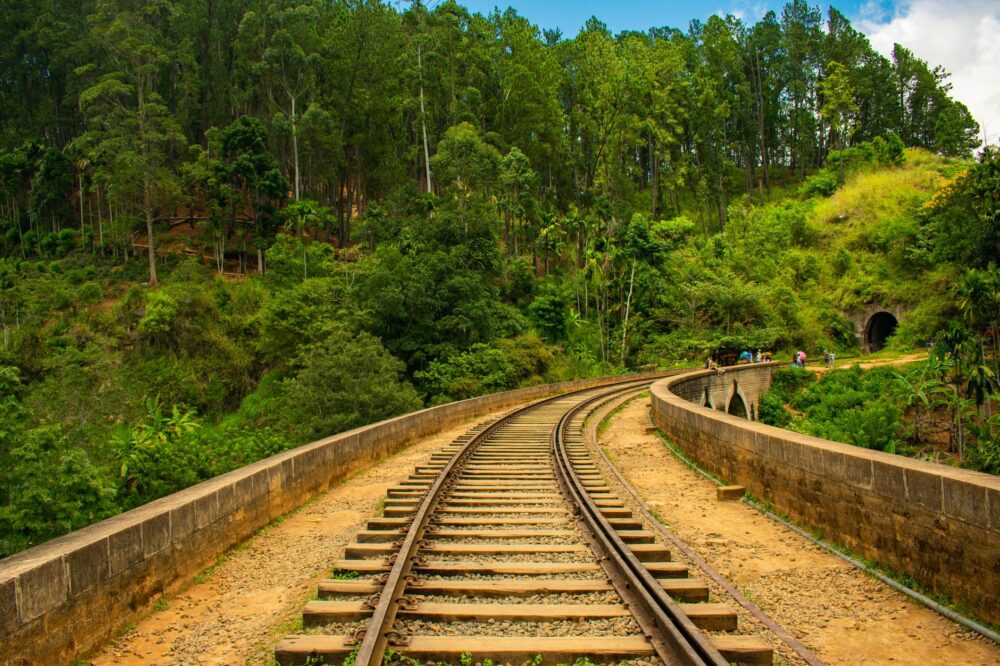
Crossing Vietnam from north to south is not merely an exercise in geographical displacement; it is a profound immersion into the anatomy of a nation that has learned to weld its fractures through steel. The Reunification Express, officially known as the North-South Line, stretches across 1,726 kilometers of single track, tracing a sinuous line that links the administrative capital, Hanoi, with the economic engine of the south, Ho Chi Minh City. This infrastructure is not only a feat of railway logistics in tropical conditions but the physical symbol of a country that, after decades of partition and bloody conflict, decided its first great work of peace would be to restore the umbilical cord connecting the Red River Delta with the Mekong Delta.
From a technical perspective, the layout is a lesson in orographic adaptation. Originally built during the French colonial administration and completed in 1936, the railway utilizes a 1,000 mm meter gauge. This engineering decision, while limiting maximum speeds compared to the international standard gauge, allowed for swifter construction through dense mangroves, humid jungles, and the rugged mountain passes of the Annamite Range. Today, the full journey of approximately 33 to 36 hours offers a social and economic radiography of contemporary Vietnam, where Soviet-designed carriages coexist with digitized management systems and a renewed ambition for high-speed rail.
The Legacy of the North-South Line: A Century of Steel and Resilience
The genesis of this railway dates back to the late 19th century under the mandate of Governor-General Paul Doumer. His vision was ambitious: to connect French possessions in Indochina through a network that would facilitate resource extraction and territorial control. However, Vietnam’s geography proved to be a formidable adversary. Engineers of the era had to contend with a monsoonal climate that devoured embankments and malaria that decimated labor brigades. The completion of the line in 1936 was hailed as a milestone of modern engineering, but peace would be short-lived.
During World War II and, more critically, during the Vietnam War, the railway became a primary strategic target. Systematic bombings destroyed vital bridges and tore up kilometers of rails. Logistics at the time transformed into an act of resistance: Vietnamese railway workers repaired at night what had been destroyed during the day, using makeshift engineering techniques to maintain the flow of supplies. Following the fall of Saigon in 1975, the unified government prioritized the total rehabilitation of the line. In just 20 months, thousands of workers rebuilt 1,334 bridges and 27 tunnels, allowing the first complete train to travel the distance between the two metropolises on December 31, 1976. It was at this moment that it received the popular name Reunification Express.

«The railway does not only transport goods and people; it carries the memory of a country that refused to remain divided by geography or ideology.»
This post-war reconstruction effort laid the foundations for modern logistics in Southeast Asia. The ability to mobilize construction materials in a war-torn country demonstrated an organizational resilience that is reflected today in the efficiency of Vietnam Railways (VNR) operations. Despite the technological limitations of a single track, the scheduling of crossings at intermediate stations is a ballet of chronometric precision that allows for the uninterrupted transit of passenger and heavy freight trains.
Engineering Between Rice Paddies and Mountains: The Hai Van Pass Challenge
If there is a point where railway engineering reaches its aesthetic and technical climax, it is the Hai Van Pass, or the «Pass of the Clouds.» Situated between the cities of Hue and Da Nang, this section forces the train to meander along the cliffs of the Annamite Range, rising above the South China Sea. Here, logistics become vertical. The original engineers had to design a series of tunnels and arched bridges that could withstand saline erosion and constant landslides triggered by torrential rains.
The Hai Van Pass is the natural climatic divider of Vietnam, separating the subtropical north from the tropical south. For the railway, this implies differentiated maintenance challenges. While in the north the tracks must resist thermal variations affecting steel expansion, in the south, the main enemy is seasonal flooding. Managing these contingencies requires constant infrastructure surveillance, with maintenance teams stationed at strategic points along the mountain range to ensure the country’s vital artery is never blocked.

From a traveler’s perspective, this section is the visual heart of the journey. The train reduces its speed to about 30 km/h, allowing one to observe the jungle plunging toward pristine beaches inaccessible by road. It is here that the symbiosis between machine and environment is understood: the Reunification Express does not dominate the landscape but integrates into it, following the contour lines with an elegance that modern concrete viaducts often ignore.
The Logistics of Life on Board: Sociology of the Compartment
The internal functioning of a train traveling 1,700 kilometers requires service logistics comparable to those of a small moving city. Each Reunification Express train features different classes, from wooden seats (increasingly rare) to air-conditioned soft-sleeper compartments. Catering management is a fascinating aspect of Vietnamese rail culture. Instead of a static dining car, food carts roam the aisles offering hot pho bo, rice with pork, and filtered coffee with condensed milk.
Life on the train is a lesson in social etiquette. Four-berth compartments become spaces for cultural exchange where local families share exotic fruits with international travelers. It is a microcosm of Vietnamese hospitality, where the language barrier is broken by the gesture of offering a cup of green tea. Rest logistics are meticulously organized: onboard staff change bed linens with military efficiency at major stops, ensuring the standard of comfort is maintained throughout the 30-hour journey.
In addition to passenger transport, the railway serves a critical function in small package distribution. At every station, from grand terminals to rural halts, one observes a frenzy of loading and unloading cardboard boxes, wicker baskets, and medical supplies. This capillary logistics allows remote communities to access products from urban centers, consolidating the train as the true engine of domestic trade.

Stations with History: Hanoi and Saigon as Magnetic Poles
The two main terminals of the Reunification Express are living monuments to Vietnam’s urban history. Hanoi Station (Ga Hà Nội), with its modernist central facade rebuilt after the 1972 bombings, is located in the heart of the Hoan Kiem district. It is a station that breathes the solemnity of the capital, where the train whistle blends with the roar of motorcycles. The organization of departures is an orderly process, reflecting the administrative discipline of the north.
At the opposite end, Saigon Station (Ga Sài Gòn) in Ho Minh City represents the overflowing energy of the south. Although located slightly away from the historic center, its activity is frantic 24 hours a day. Here, railway logistics face the challenge of intermodality: connecting thousands of passengers arriving from the north with the urban transport network of a metropolis of 9 million people. Intermediate stations, such as those in Hue, Da Nang, and Nha Trang, act as cultural nodes, each with architecture reflecting the era in which it was built, from French colonial style to socialist functionalism.
«Arriving at Saigon Station at dawn is to witness the awakening of an economic giant that never forgets its railway roots.»
Between these major stops, the train passes through smaller stations that seem frozen in time. There, the station master still uses colored flags to authorize passage, and street vendors offer local specialties that vary every 100 kilometers. This geography of flavor is an intrinsic part of the logistical experience: the train moves not just bodies, but culinary traditions that remain alive thanks to rail connectivity.

The Future of High Speed: The Vietnamese Shinkansen Project
Despite its historical and symbolic value, the current Reunification Express faces the physical limits of its infrastructure. The single track and meter gauge prevent trains from exceeding average speeds of 50-60 km/h. Faced with the explosive growth of the Vietnamese economy, the government has launched an ambitious plan to build a new high-speed line running parallel to the current one. This project, inspired by the Japanese Shinkansen, would reduce travel time between Hanoi and Ho Chi Minh City to less than six hours.
The engineering of this new project poses monumental challenges: the construction of hundreds of kilometers of viaducts to avoid flooding and the drilling of large-section tunnels in the central mountain range. However, there is a national debate regarding the preservation of the old line. The intention is for the current Reunification Express to be maintained for freight transport and for contemplative tourism that values slow travel. The coexistence of high speed and the traditional train will mark the next phase of transport logistics in Vietnam.
This transition toward modernity is not without nostalgia. For many Vietnamese, the slowness of the current train is a virtue—a suspended space of time that allows for reflection on the country’s progress. Investment in railway infrastructure is seen not only as an economic necessity but as a matter of sovereignty and territorial cohesion in a nation whose elongated geography has always posed a challenge for central governance.
Practical Guide
For those wishing to undertake this journey, logistical planning is essential. Tickets can be purchased through the official Vietnam Railways website or at station ticket offices. It is highly recommended to book at least a week in advance, especially for soft sleeper compartments, which are the first to sell out. There are four main types of trains: the SE (Express), which are faster and more modern, and the TN, which make more stops and use older rolling stock.

- Recommended Route: Although the direct journey is 34 hours, it is ideal to divide the trip into stages, stopping in Ninh Binh, Hue, Da Nang, and Nha Trang.
- Baggage: There are no strict weight restrictions, but space in compartments is limited. A medium-sized backpack or suitcase that fits under the lower bunk is recommended.
- Food: While the train offers meals, it is advisable to bring bottled water and snacks. At major stations, stops usually last between 10 and 20 minutes, enough time to buy local food on the platforms.
- Connectivity: Onboard Wi-Fi is unstable, especially in mountainous areas. It is recommended to purchase a local SIM card with sufficient mobile data.
- Best Time: February to April is the ideal period, avoiding the typhoon season (September-November) which can cause delays or cancellations in the central section.
It is important to remember that the train is a public transport medium heavily used by the local population. Maintaining respectful behavior, avoiding excessive noise in compartments at night, and following the instructions of the onboard staff will ensure a smooth and enriching experience.
The Final Whistle: A Journey to the Soul of Indochina
As the train approaches its final destination and the lights of the Ho Chi Minh City suburbs begin to flicker in the darkness, a sense of shared achievement is felt. The Reunification Express is not just a means of transport; it is a testament to the human will to rebuild and connect. In every clatter of the track, the echo of a complex history is heard—of engineering that defied nature and logistics that fed a nation in its lowest hours.
The journey ends, but the image of rice paddies bathed in sunset light and the silhouette of the Annamite mountains remain on the retina. It is an emotional photograph capturing the essence of a Vietnam that looks to the future without forgetting the tracks that brought it here. In a world dominated by the immediacy of the airplane, this train reminds us that the true value of travel lies in the understanding of the territory crossed, inch by inch, over steel rails that smell of history and hope.