
Before the first ray of sunlight fractures the mist over the Popocatépetl volcano, the waters of the Xochimilco canals are already stirred by the oars of cargo barges. In this corner of southern Mexico City, the chinampa technique—artificial islands created by the Aztecs over seven hundred years ago—continues to produce vegetable miracles atop a bed of fertile mud and ahuejote tree roots. It is here, in the silence of the lacustrine zone, that the most sophisticated and ancient supply chain in the Americas begins: an umbilical cord linking ancestral silt to the linen tablecloths of the historic center.
The final destination for this morning harvest is the Mercado de San Juan Pugibet, a cathedral of produce that has transcended its function as a mere food supply hub to become the laboratory of Mexican culinary identity. In its aisles, the aroma of high-altitude coffee blends with the earthy fragrance of quelites and the pungent perfume of chicatana ants. This report unravels the vital connection between the world’s most sustainable agricultural system and a market that, far from being a simple point of sale, acts as the guardian of a gustatory memory that refuses to fade in the era of food industrialization.
The Heritage of Water: The Miracle of the Chinampas
To understand the magnitude of what is offered at the San Juan Market, one must first navigate the water mirrors of Xochimilco. The chinampa is not just a plot of land; it is a masterpiece of hydraulic engineering that allowed the great Tenochtitlan to flourish. Today, farmers like those from the Yolcan cooperative rescue these lands from oblivion, cultivating varieties of vegetables that know no pesticides and drink from an ecosystem that is a UNESCO World Heritage site. The soil, enriched by organic sediments for centuries, grants radishes, lettuces, and beets an intensity of flavor that seems rescued from another era.

The relationship between the chinampero (farmer) and the market is a dance of precise timing. Vegetables harvested at five in the morning reach the stalls of San Juan before nine, still covered in the valley’s dew. This extreme freshness is what attracts the city’s most discerning palates. The chinampa system is, in essence, the precursor to the farm-to-table movement, a practice that in Mexico is not a trend, but a cultural resistance against the urban sprawl threatening to devour the last vestiges of the lake.
The Architecture of Taste: From Convent to Gourmet Temple
The building housing the San Juan Pugibet Market has a history as dense as the stews prepared inside. Located on what was once part of the San Juan de la Penitencia convent, the space has mutated from a spiritual refuge to an epicenter of luxury trade. Unlike other popular markets in the capital, San Juan is distinguished by a sobriety that yields all protagonism to the product. Its high ceilings and labyrinthine layout invite leisurely exploration, where every turn reveals a surprise: from aged French cheeses to game meats that look like they were plucked from a zoology manual.
The market is divided into sections that function as micro-universes. The fruit and vegetable zone is a display of color that defies any photographic filter. Here, Manila mangoes coexist with electric pink pitahayas and black sapotes whose pulp resembles chocolate mousse. The vendors, many of them third or fourth generation at the same stall, possess encyclopedic knowledge of seasons and origins, acting as curators of an edible exhibition that changes with the rainfall calendar.

“San Juan Market is not a place to buy food; it is a place to learn how to eat. Here, the ingredient rules and the chef merely obeys its nature.”
The City’s Herbarium: Quelites, Flowers, and Roots
One of San Juan’s greatest treasures is its offering of edible botany. Quelites, a Nahuatl term encompassing various wild herbs, are the foundation of the Mesoamerican diet and here regain their noble status. Pápalo, purslane, huauzontle, and hoja santa are stacked in vibrant bundles. These plants, often considered weeds by intensive agriculture, are actually nutritional and aromatic powerhouses that define the flavor profile of central Mexican cuisine. Cooking with quelites is engaging in a direct conversation with the valley’s landscape.
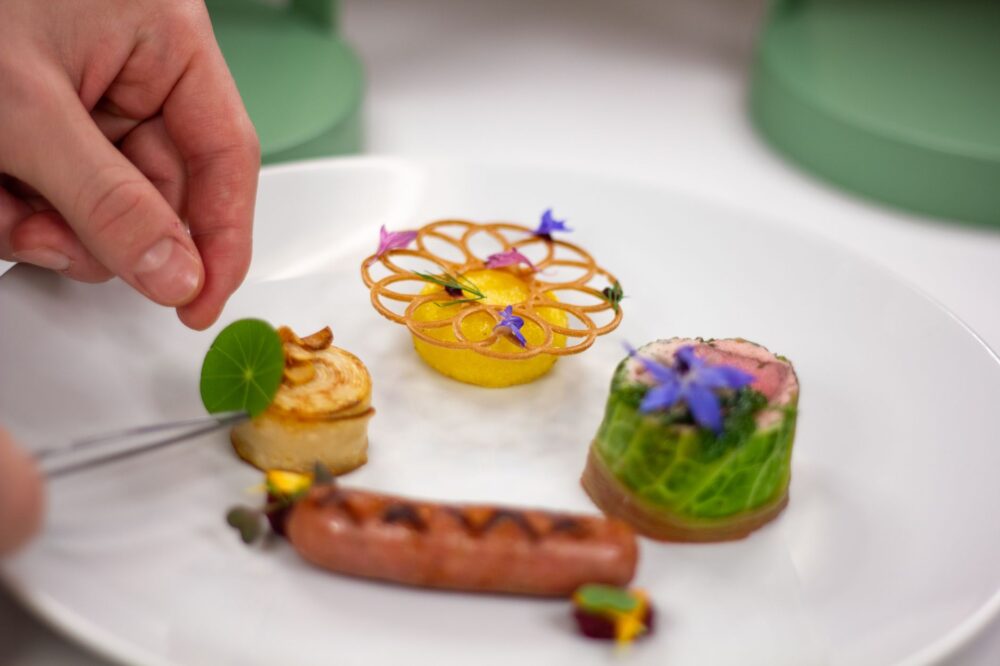
In addition to herbs, the market is famous for its edible flowers. The bright orange squash blossom is a staple, but at San Juan, one also finds orange blossoms, dahlias, and pansies that end up garnishing the plates of Michelin-starred restaurants in Polanco and Roma. This constant flow of biodiversity from the chinampa to the market ensures that traditional harvesting techniques remain economically viable for the rural communities surrounding the metropolis.
The Archaeology of Flavor: The Universe of Insects
If there is one thing that defines the unique character of San Juan, it is its entomophagy section. For the unsuspecting visitor, encountering baskets full of chapulines (grasshoppers), escamoles (ant larvae), and chinicuiles (maguey worms) can be striking. However, for Mexican gastronomy, these are the «diamonds of the earth.» Escamoles, known as Mexican caviar for their creamy texture and delicate flavor, are harvested in the arid zones near the valley and find their main commercial showcase in San Juan.
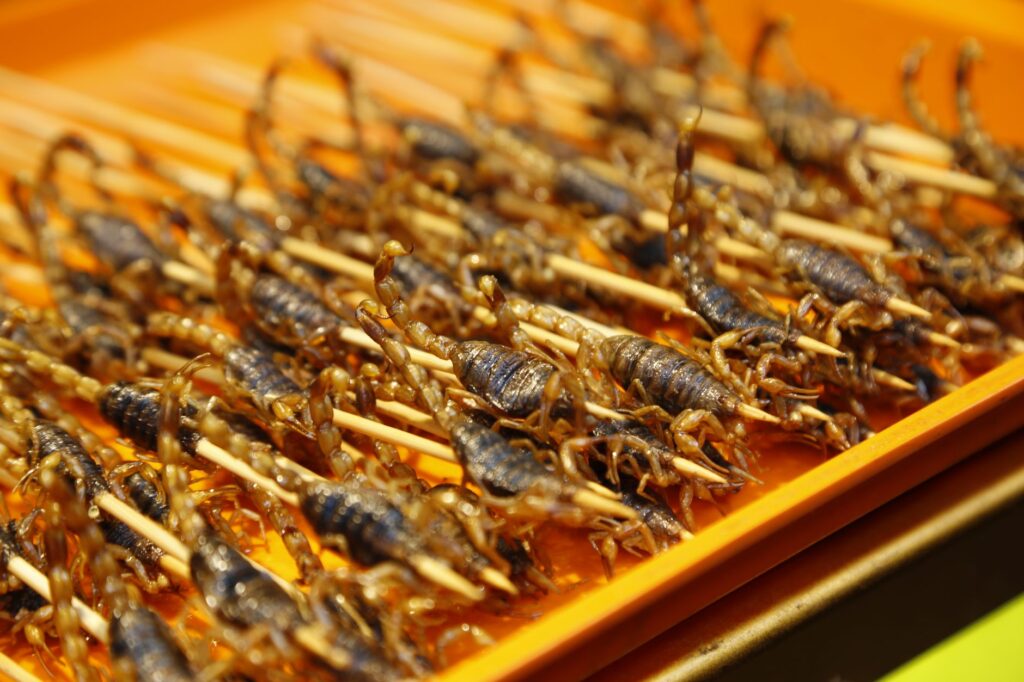
- Chapulines: Grasshoppers toasted with salt, lime, and chili, an ancient protein-rich snack.
- Escamoles: Ant larvae collected beneath maguey roots, a seasonal delicacy.
- Chicatanas: Flying ants from Oaxaca that provide a smoky, earthy flavor to sauces.
- Ahuautle: The eggs of an aquatic insect, dubbed the caviar of the Aztecs, nearly extinct and highly valued.
Consuming insects in San Juan is not a tourist attraction, but an act of historical continuity. Vendors patiently explain how to clean the worms or how to integrate the ants into a stone-ground salsa. In these stalls, a taxonomic knowledge is preserved that dates back to pre-Hispanic codices, where the diet was not limited to what was cultivated but took advantage of every protein resource the environment offered.
The Bridge Between Earth and Table: The Voice of the Chefs
Every morning, it is common to cross paths in the aisles of San Juan with Mexico’s most influential chefs. Figures who have brought Mexican cuisine to international lists come here in search of that specific chili or a variety of corn found nowhere else. The market functions as an extension of their kitchens. The trust between supplier and cook is such that many ingredients are reserved before the market even opens to the general public. This symbiosis has allowed forgotten products to return to high-end dining tables.
“The chinampa gives us life and the market gives us a voice; without this link, Mexico City’s gastronomy would lose its soul and its truth.”
This collaboration has driven projects to rescue the genetic heritage of heirloom seeds. In the stalls of San Juan, one can find corn cobs of impossible colors: deep blues, blood reds, and creamy yellows. By purchasing these products, chefs and consumers are financing the preservation of corn diversity, the pillar of Mesoamerican civilization. The market thus becomes a trench against the homogenization of taste.
The Pantry of the Impossible: Exotic Meats and Distant Treasures
Beyond the pre-Hispanic, San Juan is famous for its exotic meats and imported goods. It is the only place in the city where one can purchase wild boar, venison, ostrich, or even crocodile meat, always under strict sustainable use regulations. This facet of the market was born from the need to supply European and Asian immigrant communities who settled in the city center during the 20th century, seeking flavors that reminded them of home.
The charcuterie and cheese shops are mandatory stops. At stalls like “La Gota de Oro” or “Las Tapas de San Juan,” a ritual experience is offered: a glass of red wine or artisanal mezcal accompanied by a board of cheeses and cold cuts. It is a moment of pause in the market’s hustle, where customers can taste what they are about to buy. This Mexican-style tapas culture has turned the market into a gastronomic leisure destination in its own right, attracting a new generation of foodies seeking authenticity.

Practical Guide
To visit the San Juan Pugibet Market and understand its connection with Xochimilco, it is advisable to follow certain guidelines to ensure a respectful and enriching experience. The market is located at Ernesto Pugibet Street No. 21, in the Historic Center, and is open daily from 7:00 AM to 5:00 PM, although the peak activity occurs before noon.
- Transportation: The easiest way to arrive is by Metro, getting off at Salto del Agua station (Lines 1 and 8). From there, it is a mere five-minute walk.
- Xochimilco Tour: If you wish to visit the production chinampas, it is recommended to contact organizations like Yolcan or Arca Tierra, which organize educational visits and breakfasts in the Cuemanco canal area, away from traditional tourist routes.
- Tasting: Do not leave without trying the specialty coffee at the entrance stalls and the artisanal cheeses in the central shops. Many stalls offer free samples to help you decide.
- Sustainability: Bring your own cloth bags or reusable containers. The market is making efforts to reduce single-use plastics in line with its philosophy of environmental respect.
- Photography: Merchants are generally friendly, but always ask for permission before photographing their stalls or themselves, especially in the meat and delicate product sections.
The Last Ember: The Memory of Fire
At the end of the day, when the stalls begin to be covered with tarps and the floor is washed with soap and water, a sense of gratitude lingers in the air. The San Juan Market and the chinampas of Xochimilco are not museum pieces, but living organisms that breathe at the rhythm of a city that never sleeps. In every handmade tortilla made with chinampa corn and in every bite of a stew seasoned with herbs from San Juan, a history of resistance is consumed. It is the victory of the small, the artisanal, and the human over mass production.
The true magic occurs at that moment when a humble ingredient, born from the mud of a millenary canal, is transformed into a work of art on a plate. That transition, that liturgy of flavor, is what keeps Mexico City as one of the most vibrant gastronomic capitals in the world. As long as there are hands that sow in the chinampa and voices that cry out in San Juan, the secret of obsidian and mud will continue to feed the soul of a people who know that their future is written in the roots of their past.