
The creative pulse of a nation devoted to produce
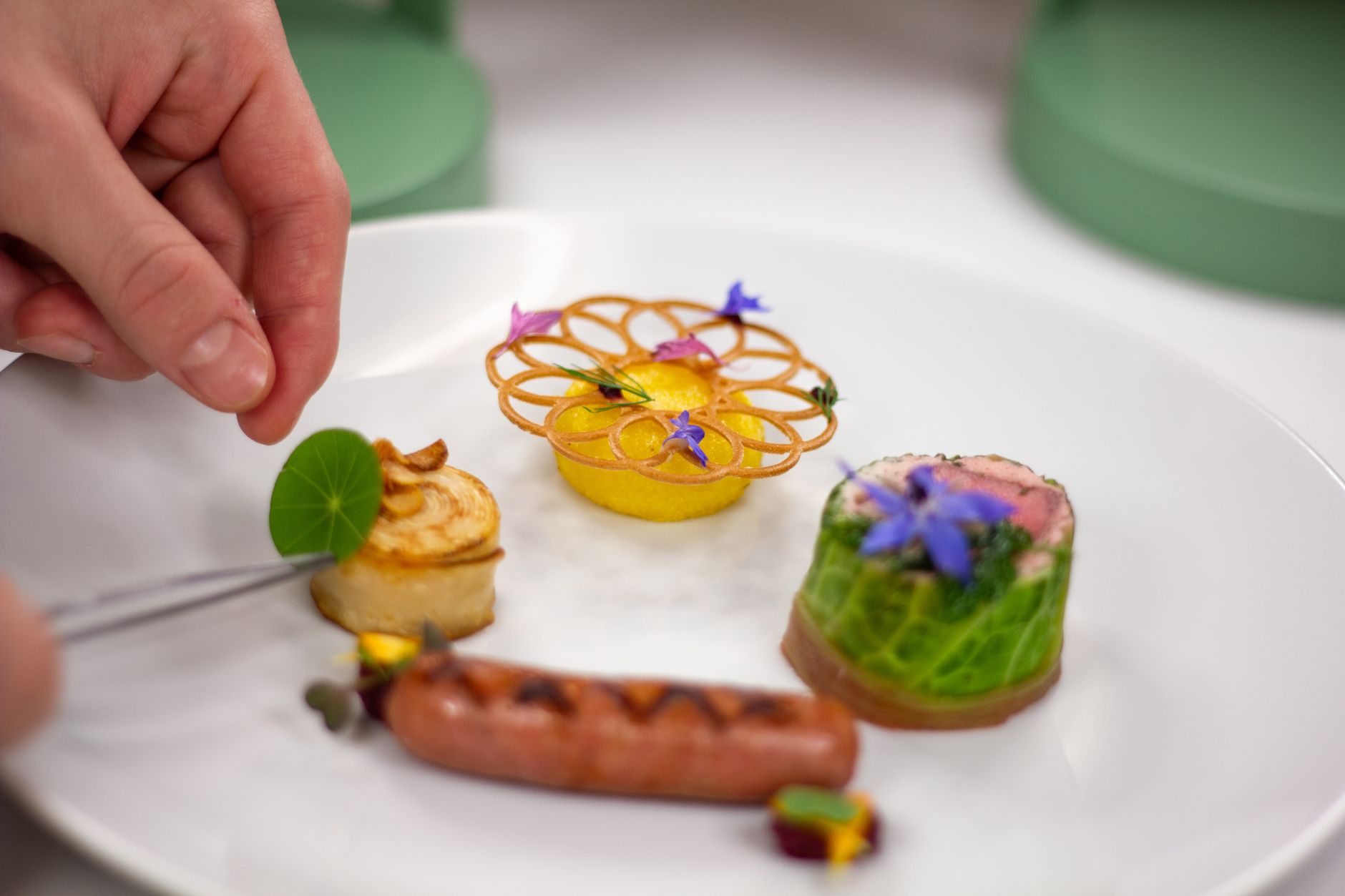
Contemporary haute cuisine rarely arises from loud disruption; in Northern Europe, it is forged in the silence of shifting tides, the patience of fermentation, and an absolute respect for the territory. When the influential publication Falstaff released the official list of the twelve nominees for Denmark’s coveted Dish of the Year award for 2026, the international gastronomic community did not look for theatrical shocks, but rather for the confirmation of maturity. Far from the fireworks of the first Nordic revolution, Denmark’s culinary panorama today demonstrates a fierce introspection, where every single bite encapsulates a manifesto on real sustainability, hyper-local sourcing, and the recovery of nearly erased agricultural memories.
This report examines the invisible map traced by these twelve finalist creations. Through urban kitchens and rural bakehouses, Danish chefs interrogate the diner on the origin of what they consume, elevating humble ingredients—from forgotten seaweeds in remote fjords to winter root vegetables grown in sandy soils—to the category of high artistic expression. These are not merely awardable recipes, but symptoms of an era where luxury is defined by traceability, ecological ethics, and rigorous technique applied to wild and cultivated produce alike.
The sovereignty of the sea: the swell as pantry
The Danish coastline, beaten by inclement winds and shaped by the confluence of cold currents, exerts a magnetic fascination over the country’s culinary vanguard. Among this year’s nominees, proposals rooted in the sea do not seek to showcase noble fish simply for their pedigree, but rather reinterpret secondary species and integrate marine botany. Chefs employ umami-rich seaweeds, hand-harvested sea urchins from deep waters, and crustaceans that have barely traveled a few kilometers from fish markets to the cutting board.
In these preparations, marine seasonality dictates terms with absolute authority. A dish based on the daily catch in the Kattegat strait can shift its flavor profile within hours depending on water temperature or tidal shifts. Human intervention is reduced to the bare minimum: precise cold aging, light smoking over local fruitwood, or an emulsion crafted from the fish’s own whey. This minimalist approach does not hide the raw material; it strips it bare and exposes it with an elegant rawness that challenges palates accustomed to the masks of classical cooking.
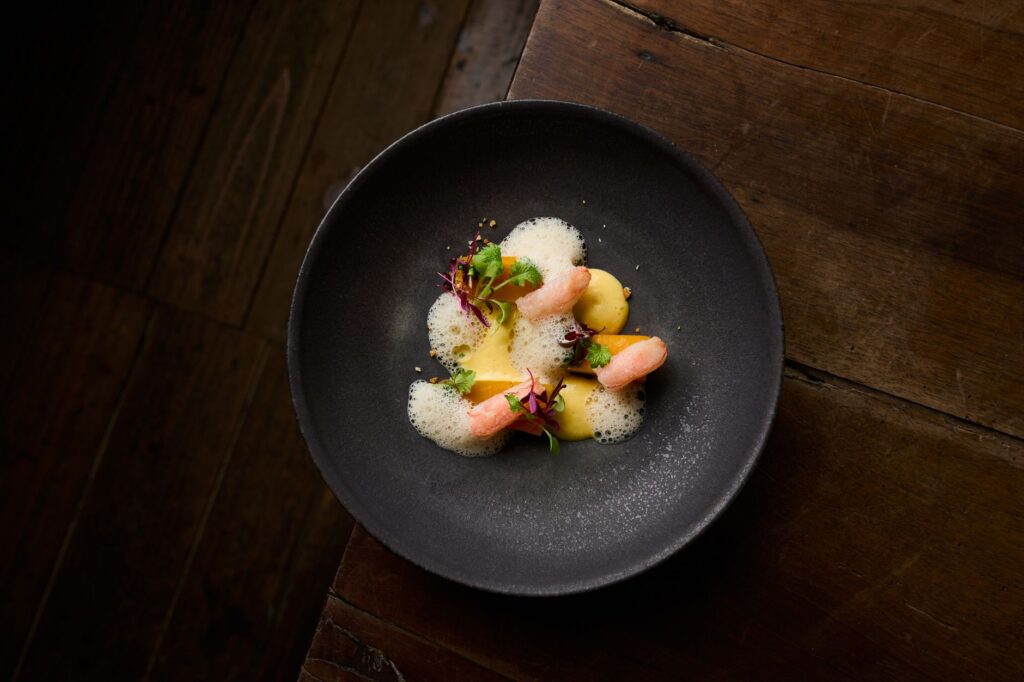
Contemporary Danish cuisine has understood that the greatest possible luxury in the 21st century is not artificial scarcity, but the unaltered truth of a clean and respected marine environment.
The treatment of mollusks and bivalves deserves special mention within this category. By revaluing species capable of filtering and purifying coastal waters, participating restaurants not only offer a complex organoleptic experience—marked by deep iodine and mineral notes—but actively participate in an urgent ecological discourse. Each seafood dish is, in essence, a living map of the health of Scandinavian seas.
The silent revolution of soil and root
If the sea provides saline drama, the Danish soil offers a earthy, patient, and deeply reflective counterpart. Root crops—winter turnips, parsnips, heirloom beetroots, and coastal-grown potatoes—occupy a central place in several of the 2026 finalist proposals. Far from acting merely as side dishes, these ingredients assume an absolute protagonist role thanks to prolonged cooking techniques, open-fire roasting, and lactic fermentation processes that unlock an unexpected natural sweetness.
The paradox of the Danish climate, featuring long winters and luminous summers, forces cooks to master the art of preservation. The pantries of nominated restaurants buzz with jars of subtle pickles, native legume pastes fermented for months, and reductions of vegetable juices that mimic the density of traditional meat stocks without employing a single animal protein. This plant-based dimension proves that haute cuisine can dispense with meaty opulence without losing an ounce of tactile and gustatory complexity.
The mastery of fermentation establishes itself as the technical thread uniting these terrestrial proposals, extracting acidic and toasted nuances that surprise even the most experienced gourmet. The earth ceases to be a climatic obstacle and becomes an inexhaustible source of subtle nuances.
Architecture of flavor: invisible technique and Scandinavian precision
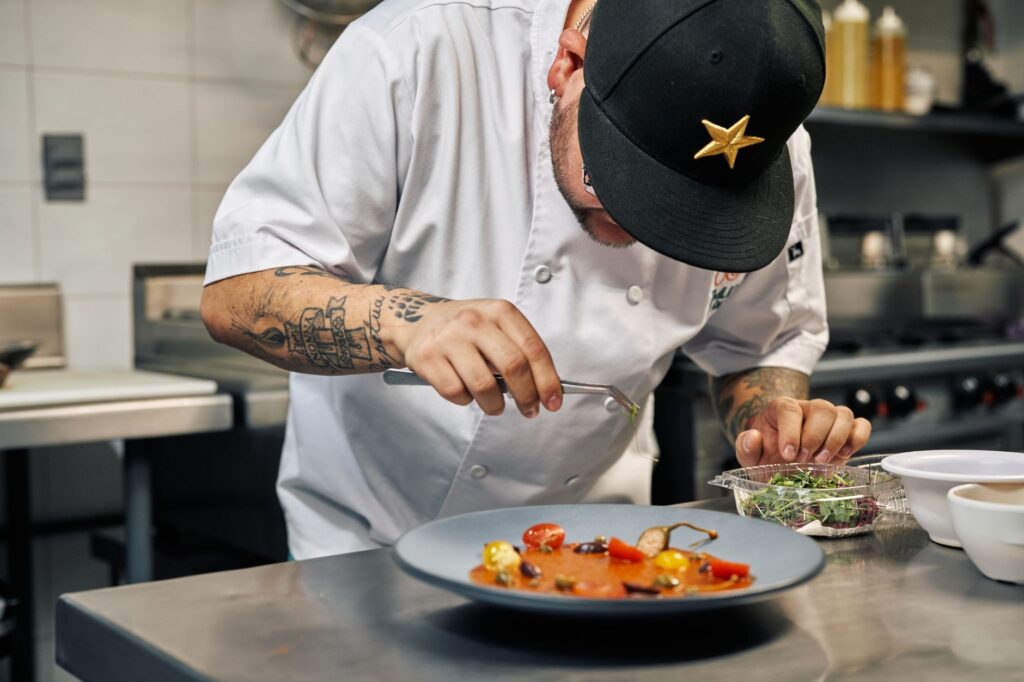
Behind the apparent aesthetic simplicity characterizing the finalist dishes lies a first-class deployment of culinary engineering. Haute cuisine in Denmark has evolved from technical exhibitionism toward a sobriety where complexity is measured by the invisibility of processes. A broth may require three days of clarification and concentration, yet on the plate, it appears with the crystal clarity of rainwater and an aromatic intensity that disorients the senses.

This architectural discipline extends to texture design. The contrast between the crunchy dehydration of a root vegetable and the velvety silkiness of a cream emulsified with wild herb oils is calculated down to the millimeter. Chefs collaborate closely with horticulturists, marine biologists, and local ceramicists so that container and content converse in the same aesthetic language. Each dish is an exercise in equilibrium where no element is superfluous or lacking in function.
Rigorous application of ancestral fermentation techniques adapted to modern laboratories.
Direct collaboration with small agricultural producers to rescue endangered seeds.
Energy optimization in slow-cooking processes to minimize carbon footprint.
Design of exclusive artisanal tableware that enhances the ergonomics of the bite.
This obsession with precision does not seek the cold perfection of a machine, but rather the warmth of the handmade. The natural imperfection of agricultural or wild produce is respected and integrated as part of the visual and gustatory narrative of the dish.
Cultural memory and the rescue of the historical pantry
One of the most stimulating aspects of the twelve nominees for the 2026 award is their deep connection to Danish culinary anthropology. Several finalist dishes reinterpret recipes from traditional peasant and maritime cuisine, those which the fast-paced rhythm of industrial modernization had relegated to oblivion. Chefs act here as true archaeologists of taste, rescuing centuries-old recipe books, forgotten curing methods, and historical spice combinations that arrived at Danish ports through medieval maritime trade.
This recovery is not a sterile exercise in nostalgia, but a necessity for identity in a globalized world. By reinterpreting a traditional game stew or a monastic-inspired fish pie with contemporary lightness and rigor, restaurants demonstrate that tradition and vanguard are not opposing forces, but natural allies. The diner experiences a temporal journey that stimulates both collective gustatory memory and intellectual curiosity.
True culinary innovation does not consist in inventing exotic flavors, but in making the everyday and the historical feel extraordinary once again.
The use of wild aromatics foraged in deciduous forests—such as ramsons, tender beech leaves, or rowan berries—reinforces this connection with the Danish cultural landscape, reminding us that the surrounding nature has always been the primary pantry of its inhabitants.
Practical guide
For travelers and gastronomy enthusiasts wishing to closely explore this culinary phenomenon and understand the keys to current Danish vanguard, the following planning points are recommended:
How to get there: Copenhagen Airport (CPH) operates as the country’s main international hub, offering excellent rail connections to the primary gastronomic regions of Jutland and Funen.
When to visit: The spring months (May to June) and early autumn (September and October) offer the best balance between wild land-forage seasons and stable tidal conditions for seafood.
Reservations and access: Restaurants associated with these finalist dishes typically require reservations several months in advance. It is advisable to consult official lists published by Falstaff and local websites to secure a table.
Sustainable mobility: The DSB train network and bicycle use in urban settings are the most efficient and environmentally friendly options for moving between different culinary enclaves.
Sensory epilogue: the triumph of radical simplicity
At the end of this journey through the twelve nominated dishes, the great lesson offered by Danish gastronomy for 2026 is the apotheosis of clarity. In a world saturated with artifice and excess, the cuisine of this northern corner of Europe chooses to strip away the superfluous to retain the pure essence of the ingredient. There are no shouts in the finalist dishes; there is a chamber melody tuned with millimeter precision, where every note resonates with the crystalline sharpness of a winter morning in the North Sea.
Sitting at the table in Denmark today means participating in an honest dialogue between human beings and their natural environment. The twelve Dish of the Year finalists are not mere contenders in a popularity contest; they are temporary custodians of a culinary culture that has understood the future of cooking does not lie in conquering the impossible, but in the deep and radical celebration of what is near.
Source: Falstaff (Denmark’s 12 Nominees for the 2026 Dish of the Year Awards)