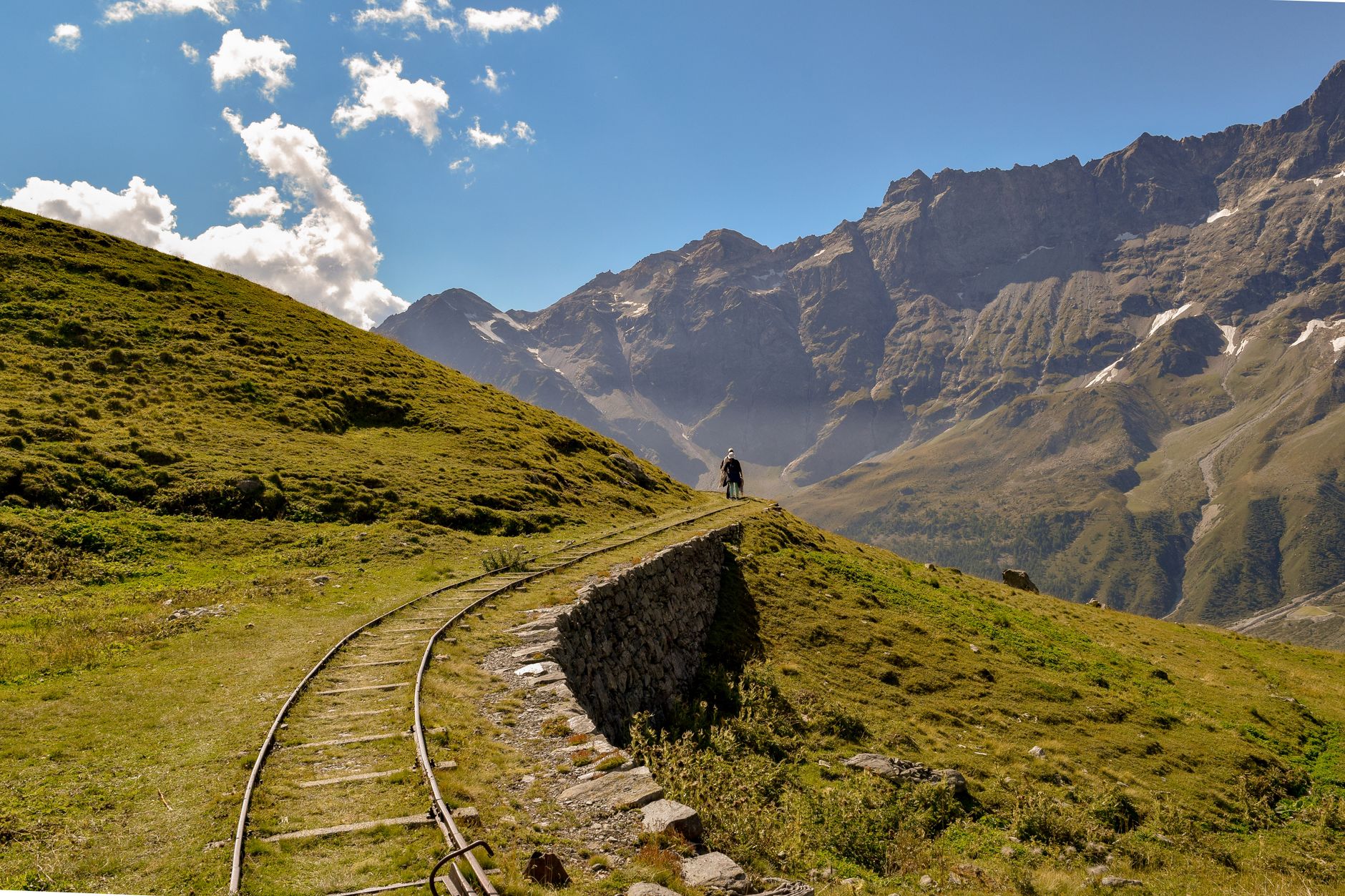

The metallic clatter over the switch points at Barcelona-Sants station marks the beginning of a transformation in how European territory is experienced. Far from the sterile environment of airports, the platform acts as the prologue to a narrative where time recovers its human dimension. The collaboration between railway operators has consolidated a seamless corridor linking the Iberian Peninsula with the deep pulse of Gaul. This is not merely about shortening distances, but about rediscovering the modulation of the landscape through panoramic windows that act as moving screens, projecting terraced vineyards, limestone massifs, and river meanders.
This immersion into the French high-speed rail network makes it possible to structure a long-haul journey without the fatigue of asphalt or the suffocation of mass security checks. The railway line, heir to nineteenth-century industrial ambition yet adapted to current millennium engineering, vertebrated an itinerary that defies the dictatorship of low-cost flights. Upon stepping off the train on French soil, the traveler is not a passenger in transit, but a guest entering cities through their grand front door: the historic heart of their monumental stations.
The Southern Gateway: Perpignan and Mediterranean Transition
The first contact with the French rail network usually occurs after crossing the Pyrenees, where Perpignan welcomes the traveler with its Catalan air and Mediterranean imprint. The local station, defined by Salvador Dalí as the true center of the world after contemplating its eclectic architecture, synthesizes the border character of a region marked by secular exchange. Here, the daily rhythm is paced by the murmur of terrace cafes beneath shade-giving plane trees and the persistence of a linguistic and cultural identity that survives with pride.
Strolling through the Saint-Jean neighborhood reveals architecture of exposed brick and wrought iron balconies where time seems to dilate. Local markets display an amalgam of products where the seafood of the Gulf of Lion dialogues with mountain cured meats. The railway line meanders northward from here, skirting the rocky coastline of the Vermilion Coast, where vineyards plunge in impossible terraces toward the dark blue waters of the sea.
From Narbonne’s Roman Roots to Carcassonne’s Gothic Silhouette
A few kilometers inland, Narbonne emerges as a stratigraphic archive of Mediterranean history. As the ancient capital of Gallic Narbonensis, the city preserves the layout of the Via Domitia beneath its streets. The Robine Canal, declared a UNESCO World Heritage site, divides an urban fabric where the stalls of the covered Les Halles market offer a masterclass in Occitan pantry traditions.

The train does not shorten space; it fills it with content, returning to the traveler the capacity to inhabit the landscape as it unfolds before their eyes.
Following the railway line westward, the stony silhouette of Carcassonne rises over the Aude valley as an unaltered postcard of the Middle Ages. Although mass tourism tends to concentrate within its fortified citadel, the lower town offers a more composed and authentic perspective of Occitan life, where traditional cafes and artisan workshops preserve the daily pulse far from the major summer routes.
Toulouse: The Pink Capital and Aeronautical Ingenuity
The rail axis leads inexorably toward Toulouse, known as the Ville Rose due to the warm tone of the Roman brick used in its Renaissance mansions and medieval convents. The city of the Garonne combines exceptional historical heritage with the technological vanguard of Europe’s aerospace industry.
The Basilica of Saint-Sernin, a masterpiece of Romanesque architecture and a fundamental stop on the Way of St. James, contrasts with the research complexes of the Cité de l’Espace. In Toulouse, high-speed rail connects Occitan tradition with the challenges of the twenty-first century, offering a vibrant urban scene where university students and engineers share lively riverbanks at dusk.
The Amphitheater of the Rhône: Montpellier and Nîmes
The eastward journey plunges the traveler into historical Provence and Languedoc. Montpellier stands out for its contemporary architectural audacity, where neighborhoods designed by internationally renowned architects coexist with a pedestrian historic center of medieval alleyways and seventeenth-century private palazzos.

Nearby, Nîmes proudly preserves the most impressive testimonies of the Roman presence on Gallic soil. Its perfectly preserved Arena and the Maison Carrée attest to the monumentality of a civilization that transformed southern France into an extension of Rome itself. The train acts here as the perfect thread connecting remote eras with an urban modernity deeply conscious of its patrimonial legacy.
Avignon and Papal Splendor by the River
The fortified profile of Avignon dominates the Rhône valley from the battlements of its Palace of the Popes, the largest Gothic building in Western Europe. The city evokes the years when Western Christendom had its spiritual epicenter in these Provençal lands. The famous bridge of Avignon, cut off halfway across the river, continues to evoke medieval songs and legends.
Wandering through its cobbled lanes is stepping into a constant theatrical stage, especially during its performing arts festival. The medieval walls, which entirely enclose the old town, protect shaded squares where Côtes du Rhône wine is paired with raw milk cheeses and Provençal herbs.
Aix-en-Provence and Cézanne’s Light
Moving into the Provençal interior, Aix-en-Provence greets visitors with the sober elegance of its monumental fountains and chestnut-lined avenues. The birthplace and refuge of Paul Cézanne, the city preserves intact the bourgeois atmosphere that inspired canvases now hanging in the world’s most important museums.
The painter’s studio, kept just as he left it in 1906, and the trails ascending toward the imposing Sainte-Victoire mountain offer insight into the artist’s obsession with capturing the changing light of the south. The terraces of the Cours Mirabeau serve as the ideal observatory to contemplate the leisurely pace of local bourgeoisie keeping the region’s literary and artistic traditions alive.

Lyon: The Gastronomic and Fluvial Capital
The northward ascent along the Rhône corridor leads inevitably to Lyon, the metropolis where two of France’s most important rivers converge and whose culinary tradition is a global benchmark. Traditional bouchons, taverns with a family atmosphere, serve hearty specialties based on local charcuterie and Beaujolais wines.
The Vieux Lyon district, with its characteristic traboules—secret passageways crossing the interior courtyards of Renaissance buildings—reveals a unique defensive and commercial urbanism. From the Fourvière hill, home to the Basilica of Notre-Dame and Roman theaters, visitors look down upon an urban landscape where industrial modernity and imperial past coexist in perfect harmony.
Paris Region: The Metropolitan Finale
The rail journey culminates in the Paris Region, where high-speed trains deposit travelers right in the heart of the capital or in peripheral imperial enclaves like Versailles or Fontainebleau. Arriving by train at stations such as Paris-Gare de Lyon or Montparnasse avoids the isolation of peripheral airports, placing visitors immediately before the monumentality of the Seine, Haussmann boulevards, and the inexhaustible cultural offer of museums and theaters.
This final stretch of the itinerary demonstrates the efficiency of a transport system capable of articulating dense metropolises with rural territories and medium-sized cities under the same umbrella of sustainability and comfort.
Practical Guide
How to get there: High-speed connections between Barcelona, Madrid, and various French cities are operated in a coordinated manner through international services that allow direct links to the SNCF network without border transfers.
Ticket planning: It is advisable to purchase tickets in advance through official advance sales channels of Viajes El Corte Inglés or associated rail platforms to access promotional rates and secure seats during high season.
Pass types: For complex itineraries including more than four destinations in the country, consider acquiring European or regional rail passes offering date flexibility and cumulative discounts.
Luggage on board: Unlike air travel, high-speed trains do not apply strict limits on suitcase weight, though traveling with manageable bags is recommended to facilitate placement in shared carriage racks.
Connectivity and services: Most trains feature free Wi-Fi, power sockets at each seat, and an on-board cafeteria, turning travel hours into useful reading or resting time.

Rail gastronomy: Passengers are permitted to bring their own food and drink, ideal for tasting local products purchased at traditional markets in each stopover before boarding.
Best time to travel: Spring months (May to June) and autumn (September and October) offer mild temperatures, fewer tourist crowds, and optimal light to enjoy the moving landscape.
The Horizon on the Rails
The train journey through Gallic territory transcends mere tourist logistics to become a form of resistance against contemporary haste. As lavender fields, century-old vineyards, and medieval fortresses glide silently past the glass, travelers realize that true contemporary luxury lies not in the speed with which a destination is reached, but in the quality of the journey and the depth with which the surroundings are absorbed. The railway thus consolidates itself as an invisible yet firm bridge between cultures, landscapes, and times that continue to dialogue along the steel tracks.
Source in EN: La Vanguardia