
The Dawn Watch and the Dockside Loaders
Morning in Santander does not begin with the roar of urban traffic, but with the low, rhythmic murmur of inshore fishing boats docking at the piers of Maliaño and the city harbor. It is the hour when night’s chill still clings to the fish markets and the steam of human breath hangs in the crisp air of the Cantabrian coast. In this twilight of salt spray and shadowed hulls, fishermen unload wooden crates where wild sea bass, silver whitebait, and rock spider crabs still twitch. This daily ritual is the indispensable prelude to what, a few hours later, will burst into vibrant life at the monumental heart of the city: the Central Market of Santander.
Housed within an iron-and-glass structure that echoes the industrial architectural traditions of the early 20th century, this municipal food hall is far more than a commercial hub. It functions as a living organism, an ethnographic archive where the memory of northern Spain’s fishing ports is preserved through the precise gestures of wholesalers, stallholders, and local shoppers. Every morning, the doors of this temple of fresh produce swing open to welcome a precise choreography repeated generation after generation, sustaining the gastronomic identity of an entire region.
Iron Architecture and the Sanctuary of Produce
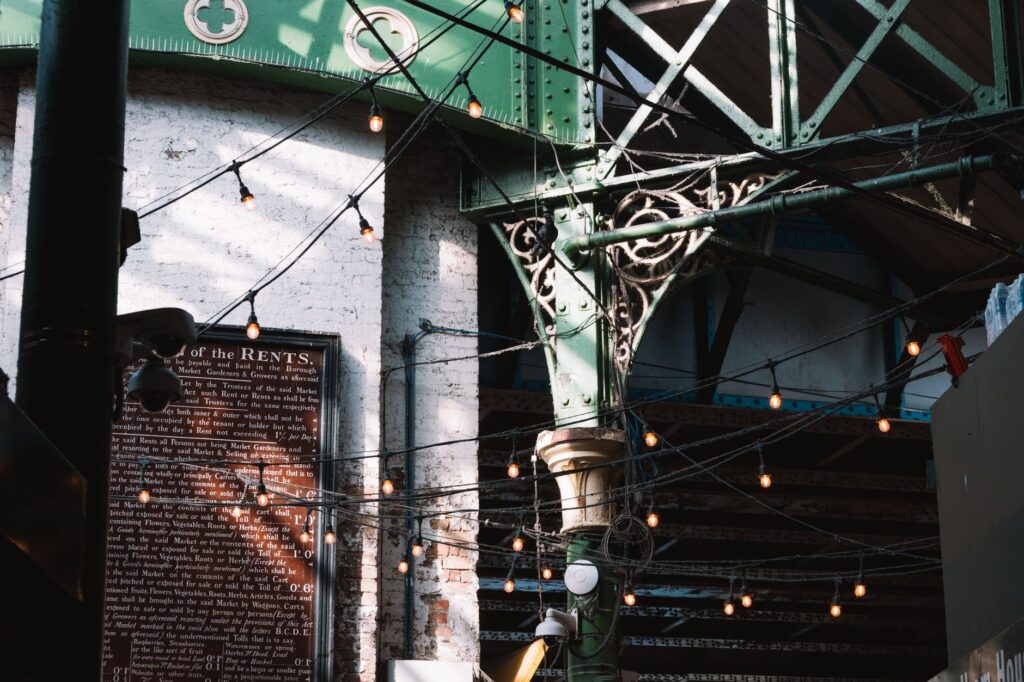
The Central Market building, popularly known as the Plaza de la Esperanza, stands as a masterpiece of civil architecture in the Cantabrian capital. Its open-plan layout, supported by cast-iron columns that allow natural overhead light to flood the interior, ensures absolute visibility across all stalls. Far from the sterile uniformity of modern retail spaces, this venue maintains a vibrant atmosphere where the briny aroma of fresh seafood blends smoothly with the earthy perfume of mountain cheeses from the Pas valleys and crisp greens from local gardens.
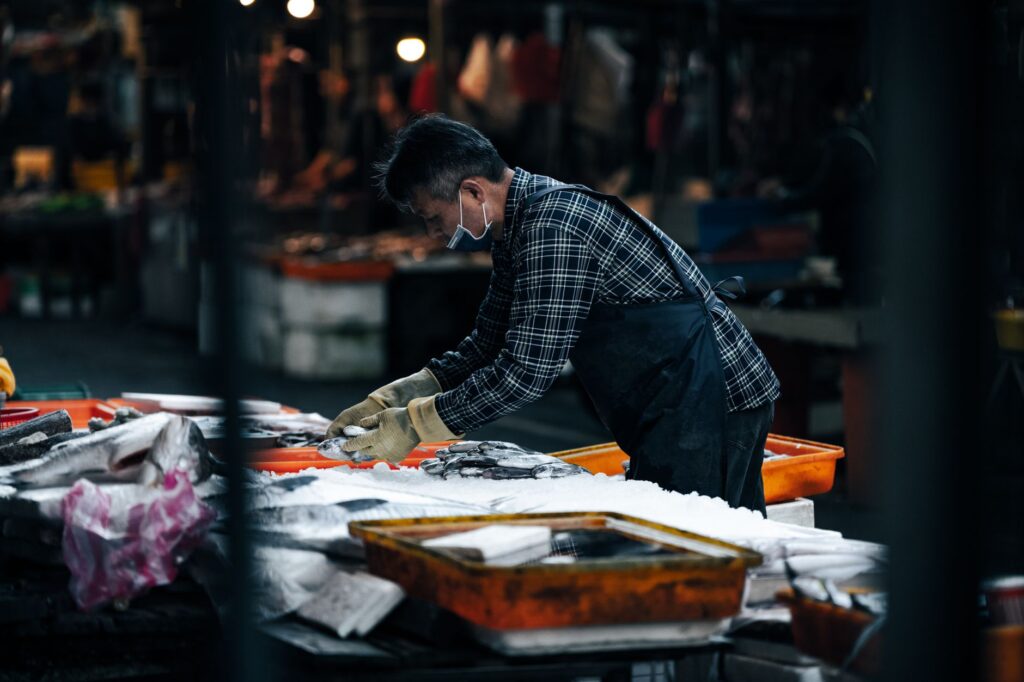
Wandering down its aisles is an exercise in sensory cartography, where every corridor serves a distinct culinary vocation. On the ground floor, dominated by constant humidity and the silvery sheen of scaled fish, vendors compete in a display of natural aesthetics. Here, rabas—the iconic deep-fried squid strips of Santander cuisine—find their raw material before reaching the fryers of Puerto Chico’s taverns. Fishmongers wield knives with surgical dexterity, cleaning hake and deep-water monkfish under the watchful eye of shoppers who demand traceability and origin without compromise.
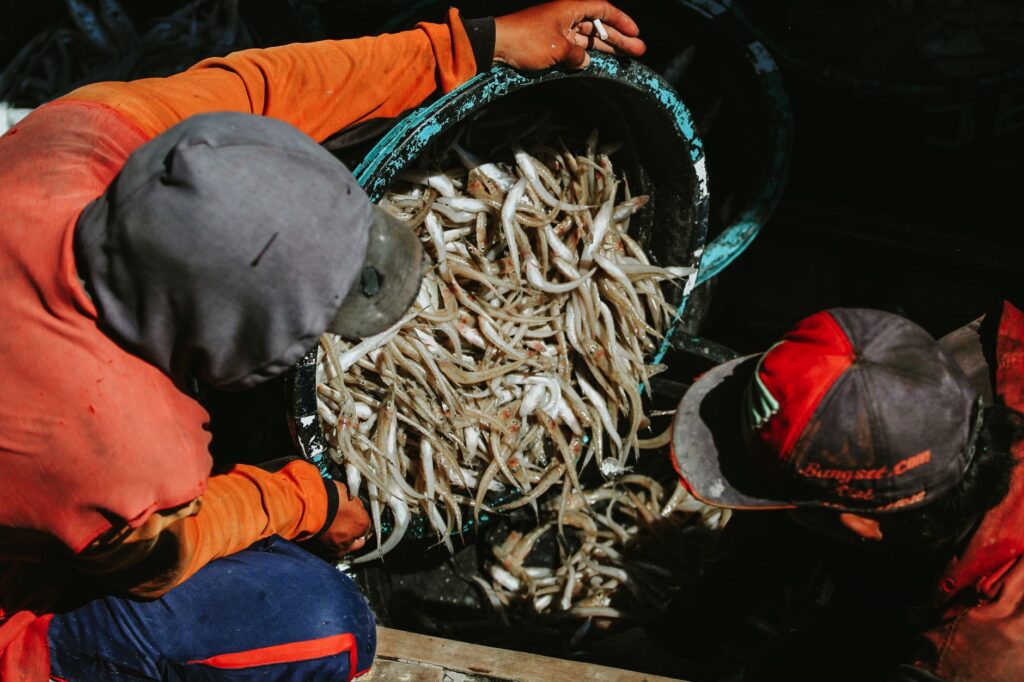
The market is not merely a place to acquire sustenance; it is the mirror in which a community recognizes itself through the flavors that have nurtured it for centuries.
The Interior Pantry: Valleys, Meadows, and Cheesemongers
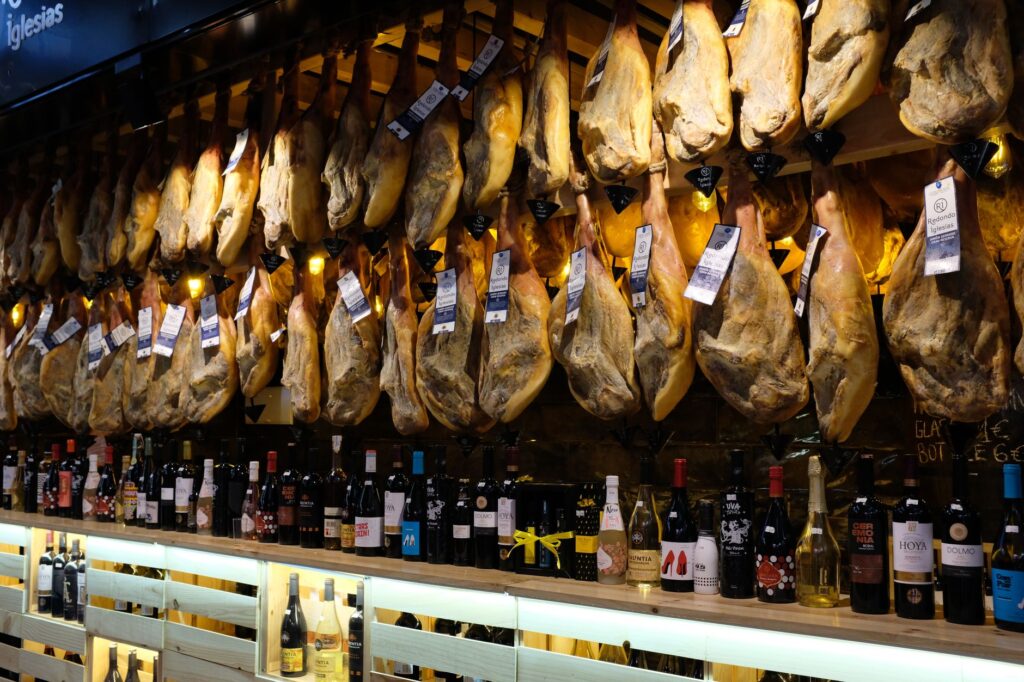
While the Cantabrian Sea stamps its character on the market’s seafood offerings, Cantabria’s rugged interior provides the perfect counterpoint with its rolling green hills and livestock traditions. In the stalls dedicated to cured meats and dairy, protected designation-of-origin cheeses—such as Quesucos de Liébana or creamy Nata de Cantabria—occupy a place of honor. These products are the result of herds grazing on steep mountain slopes, feeding on high-altitude pastures that impart unmistakable herbal notes to the milk.
The vendors behind these counters act as true curators of culinary memory. They explain the exact maturation point of a Picón de Bejes-Tresviso blue cheese, an artisanal cave-aged wedge whose intensity challenges uninitiated palates. Alongside them, wild boar and venison charcuterie from the forested interior remind visitors that Cantabria’s larder is a territory of extreme contrasts, where marine breezes coexist with the deep shade of ancient beech woods and rushing trout rivers.
Fluvial Gardens and the Rhythms of the Land
On the opposite side of the fish and meat stalls, the market’s fruit and vegetable section introduces a seasonal dimension to the local diet. Here, produce is selected not for its artificial availability year-round, but for its strict adherence to the agricultural calendar. Farm-grown white beans, heirloom tomatoes tasting of damp earth, and coastal artichokes dictate the tempo of domestic kitchens and high-end restaurants across the region.
This direct link between grower and consumer guarantees a level of freshness difficult to replicate within globalized supply chains. Many of the farmers who man these outer stalls take visible pride in the origin of their harvests, gathered from small family plots in Cartes, Gama, or Torrelavega. In these fertile patches, water from the Saja and Pas rivers nourishes nutrient-dense soils, yielding vegetables of modest size yet exceptional flavor concentration.
The Human Pulse: Stallholders, Runners, and Vanishing Trades
Beyond the merchandise itself, the true heritage of Santander’s Central Market resides in the people who inhabit it. Behind every counter lie personal histories tied to generational continuity. Children and grandchildren of the original founders now run the stalls with unwavering dedication, while adapting to the modern demands of contemporary shoppers. These are artisanal trades requiring eternal pre-dawn starts, encyclopedic product knowledge, and immense patience in human relations.
Aisles are also traversed by traditional figures like delivery runners and professional procurers for local hospitality venues. Chefs and head waiters from the city’s most emblematic eateries arrive each morning to forge pacts of trust with wholesalers. It is a relationship rooted in complicity and mutual respect, where the finest catch of sea bass or the most sought-after shellfish is reserved without written contracts, backed solely by decades of commercial collaboration.
Translating the Market to the Plate
The influence of the Central Market extends far beyond its physical walls, rippling outward into the urban fabric of Santander. There is no culinary trail worth its salt in the city that does not begin, in one way or another, within these halls. Neighborhood taverns and seaside bars build their daily menus around what the market dictated that very morning. If the sea has been rough and whitebait is scarce, the blackboard changes; if the estuary has yielded stellar catches of young eels or spider crabs, a culinary celebration is guaranteed.
This direct reliance on natural rhythms grants Santander’s gastronomy a radical honesty. Here, the flavor of the ingredient is never masked by unnecessary artifice; the cooking is clean, direct, and profoundly respectful of the raw material. Hake in green sauce, crispy squid rings fried in clean oil, or marmitako tuna stew prepared with the freshest bluefish of the day are declarations of intent that find their absolute zero kilometer within the market.
Dining in Santander is an act of communion with the landscape; every bite encapsulates the salt of the Cantabrian Sea, the dampness of the valleys, and the labor of those who tend them.
Practical guide
How to get there: The Central Market of Santander is located in the historic heart of the city at Plaza de la Esperanza. It is easily accessible on foot from any downtown location and well-served by municipal bus routes (TUS).
Recommended hours: The market is open Monday through Saturday from 08:00 to 14:00. The period of peak activity and anthropological bustle occurs between 09:00 and 11:30 in the morning.
Shopping tips: To secure the finest fresh fish and seafood, visitors are advised to arrive during the early morning hours. It is always wise to ask vendors about seasonal catch and rely on their preparation advice.
Recommended accommodation: For an immersive experience in the city’s urban and maritime life, boutique hotels and historic apartments near Alameda de Oviedo and Paseo de Pereda offer an unbeatable location.
Surrounding gastronomy: Surrounding the market building and along adjacent streets like Calle Burgos, numerous traditional establishments offer tapas featuring local produce, freshly fried squid, and regional wines.
The Epilogue of Salt and Twilight
As activity inside the market winds down toward midday and vendors pack away their final crates of ice, Santander’s pace shifts to a slower cadence. On the outer docks, the waters of the bay reflect the fading light of a sun softened by Atlantic clouds, while gulls trace silent circles above moored vessels. In that moment of transition, the city seems to catch its breath, knowing the cycle will inexorably repeat itself the following morning. The Central Market never truly sleeps; it rests within the collective memory of its people, guarding the secret of an unbreakable bond between man, stone, and sea.