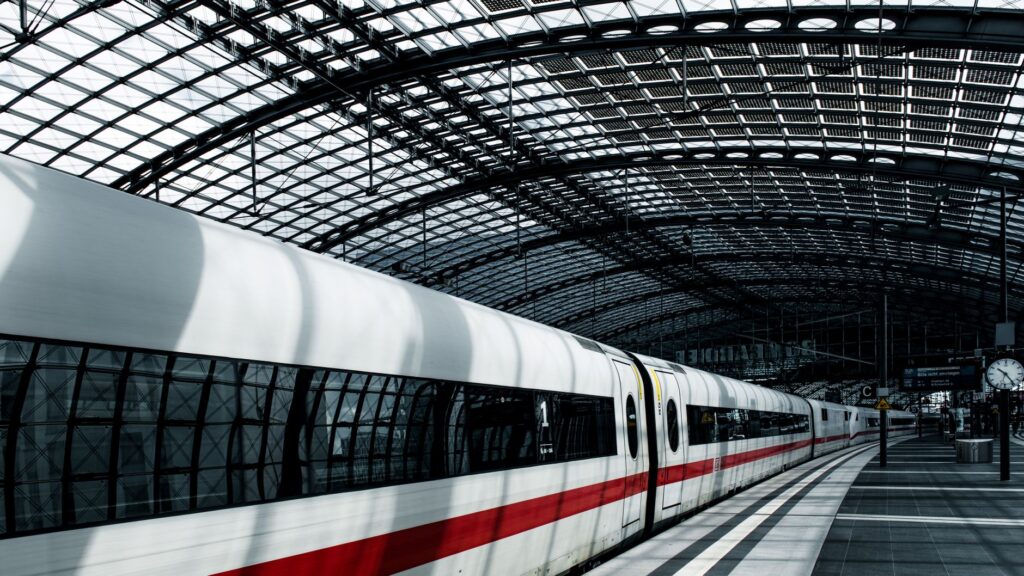
Under the steel and glass vault of Vienna Central Station, time seems to stretch as the clock strikes eight in the evening. It is not the electric urgency of commuter trains or the fleeting passage of high-speed convoys that dictates the platform’s pulse, but the steady presence of a blue giant. The Nightjet, the flagship of the Austrian Federal Railways (ÖBB), waits with its cabin lights glowing, promising something that commercial aviation forgot decades ago: that the journey is not a mere formality, but a poetic transition. The return of night trains to Europe is not an exercise in sterile nostalgia, but a technical, political, and emotional response to a 21st century desperately seeking to decelerate.
This resurgence, dubbed by experts as the «Greta effect» or the consolidation of flight-shame, has forced railway operators to dust off blueprints and redesign a logistics network that was considered dead in 2016, when Deutsche Bahn abandoned its night routes due to lack of profitability. Today, the European map is being rewoven by night, linking Paris with Berlin, Brussels with Prague, and Zurich with Rome, transforming the act of sleeping into a geographical displacement of a thousand kilometers. In this report, we delve into the heart of this new rail era, where German engineering meets Viennese comfort to rescue the romance of crossing borders in one’s dreams.
Reclaiming Sleep on the Rails
The story of the night train’s resurrection has an unexpected protagonist: Austria’s ÖBB. While the rest of Europe looked to the skies, the Austrians decided to buy the rolling stock that others were discarding, convinced that the future of continental transport lay in sustainability and the efficient use of time. Today, that gamble has materialized in the new generation of Nightjet trains, designed by Siemens, which represent a quantum leap in the passenger experience. We are no longer talking about the noisy old bunks of the 1970s, but individual design capsules, private showers, and soundproofing that allows one to hear the silence of the Alps while crossing them at a hundred kilometers per hour.
The technical challenge of operating a night train is immense. Unlike a flight that crosses airspace with minimal bureaucratic friction, a train traveling from Vienna to Paris must contend with four different signaling systems, three different overhead line voltages, and a schedule coordination that must fit into narrow nighttime track maintenance windows. It is a choreography of precision where every minute counts, yet the passenger only perceives the gentle swaying of the sleeper car. The European rail infrastructure, though fragmented, is undergoing a harmonization forced by the demand of a traveler who prefers waking up with a coffee and a croissant facing the Eiffel Tower rather than in the aseptic terminal of a peripheral airport.
«The night train does not compete with the plane in speed, but in dignity; it is the recovery of personal space in a world that wants us packaged.»
The configuration of these new convoys prioritizes privacy. The mini-cabins for solo travelers are the answer to the experience economy: a compact yet ergonomic space where lighting control, luggage storage, and digital connectivity are seamlessly integrated. For families or groups, traditional compartments have been refined with sound-absorbing textiles and individual climate control systems. It is, in essence, a three-star hotel that moves across the continent while its guests rest.

Geography of the Twilight: Crossing Borders Without a Passport
Traveling by night alters the perception of territory. When the train leaves the city lights and enters the plains of Central Europe or Alpine gorges, the landscape becomes an abstraction of shadows and reflections. The journey between Zurich and Hamburg, for instance, is a display of engineering that traverses Germany’s industrial heart while the passengers sleep. This ability to connect urban centers without the need for transfers to remote airports is the great competitive advantage of the railway. You depart from the center of one city and arrive in the heart of another, eliminating the dead hours of security checks and boarding gate waits.
The renaissance is not limited to state-owned routes. Private operators like European Sleeper have entered the fray, connecting Brussels and Amsterdam with Berlin and Prague, reclaiming routes that had disappeared from the official map. This competition is injecting dynamism into a sector that previously suffered from stagnation. The introduction of onboard gastronomic menus, improved bedding, and the personalized attention of carriage stewards—a figure that seemed extinct—restore the journey’s character as an initiatory rite. Border crossings, once marked by customs rigor, are now an invisible line only noticed by the change of language in the public address announcements at dawn.

The Human Factor: Life Aboard the Express
Behind the machinery and schedules, the night train is a vibrant human ecosystem. Train managers and cabin attendants are the guardians of this microclimate. Their work goes far beyond checking tickets; they are the ones who prepare the beds, serve breakfast, and manage coexistence in a confined space. On a Nightjet, the attendant knows the passengers’ names and their preferences for morning coffee. This human scale is what builds traveler loyalty. There is a silent camaraderie among those who share a carriage corridor at two in the morning, a recognition of belonging to a lineage of travelers who value the pause.
The user profile has changed drastically. If the night train was once the refuge of the student with an Interrail pass or the budget-conscious traveler, today’s Deluxe cabins are occupied by executives avoiding the stress of the first flight of the day and by couples seeking a unique experience. Sustainability is the ideological engine, but comfort is the ultimate argument. Traveling without leaving a carbon footprint has become a symbol of intellectual and ethical status. It is not just about arriving, but how you arrive: rested, showered, and with the feeling of having gained a day on the calendar.
«Crossing a continent in dreams is the last frontier of individual freedom in the age of hyper-connectivity.»
The breakfast logistics are, perhaps, the pinnacle of the experience. About 45 minutes before arrival, the attendant knocks gently on the door. The tray arrives with fresh rolls, cheese, cold cuts, and jam. It is a ritual that marks the end of the nighttime limbo and the return to urban reality. Seeing the spires of Cologne Cathedral or the canals of Amsterdam appear from your bed is an aesthetic privilege that no other form of transport can match. It is the triumph of the window over the screen.
Challenges and the Future Map
Despite the enthusiasm, the path is not free of obstacles. The main problem is the shortage of rolling stock. Building a sleeper car is significantly more expensive than a conventional seating carriage, and fire safety standards in European tunnels are extremely strict. Furthermore, track priority is often given to freight trains during the night, which sometimes leads to unexpected delays. The lack of a single booking platform for all of Europe remains a traveler’s nightmare, often requiring navigation through three different websites to complete a transcontinental journey.
However, expansion plans are ambitious. France has announced the recovery of its radial routes from Paris to the south and east. Italy is boosting its Intercity Notte to connect the industrial north with the Mediterranean south. The EuroNight project seeks to standardize quality among different national operators so that a journey from Stockholm to Berlin is as seamless as a domestic one. The key to success lies in interoperability: that locomotives and staff can cross borders as easily as data does on the network.

Practical Guide
- Early Booking: Night trains have limited capacity, especially in private cabins. It is recommended to book at least 3 to 4 months in advance to secure ÖBB’s ‘Sparschiene’ (saver) fares.
- Accommodation Types: Choose ‘Sleeper car’ for a real bed, private sink, and full breakfast. ‘Couchette’ is more economical and shared, ideal for groups. ‘Mini-cabins’ are perfect for solo travelers seeking privacy at a low cost.
- Luggage: Unlike planes, there are no charges for heavy suitcases, but cabin space is finite. Opt for medium-sized bags that fit under the bunk or in overhead compartments.
- Connectivity: Although new trains have Wi-Fi, the signal is often unstable in mountainous areas or tunnels. Download your maps and documents before departure.
- Star Routes: The Vienna-Paris Nightjet, the Zurich-Rome, and the new Brussels-Prague European Sleeper are the most recommended options for their balance of route and comfort.
- Dining: While breakfast is served, it is advisable to bring a light dinner and water, as not all trains have a full dining car available throughout the night.
The Last Light in the Carriage
When the train finally comes to a halt at its destination and the inertia of movement fades, a strange sense of gratitude remains. The night train traveler does not arrive at a city; they emerge within it. They have crossed linguistic, climatic, and geographical borders without the trauma of airport decompression. The renaissance of this mode of transport is, ultimately, a victory of memory over oblivion, a reminder that Europe is a continuous fabric of rails and dreams that refuses to be just a set of points on a radar.
Stepping onto the platform, with the trace of the swaying still in one’s body, one looks back and sees the blue giant preparing for its next rest. In that moment, it is understood that the night train is not just transport, but a mobile refuge, a time capsule that allows us to inhabit the transition. In a world that pushes us toward immediacy, sleeping on the rails remains the most elegant and human act of rebellion we have left.