
The horizon of western Granada is not a gentle line; it is a jagged profile of crags and stone silhouettes that seem to emerge from the earth itself. Here, where the Nasrid Kingdom of Granada fought its final battles before the definitive collapse in 1492, the landscape continues to narrate a chronicle of sieges, pacts, and constant vigilance. This is not just a journey through history, but an immersion into a geography where every watchtower was, in its time, the final bastion between two worlds watching each other with deep suspicion.
Traveling through Montefrío, Moclín, and Íllora means decoding the map of a living frontier. In this corner of Andalusia, tourism drifts away from the crowds, seeking refuge in the silence of castles and the authenticity of villages that, far from being mere stage sets, maintain a deep, telluric connection with their medieval past.
The Stone Sentinel: Montefrío and its Church Over the Abyss
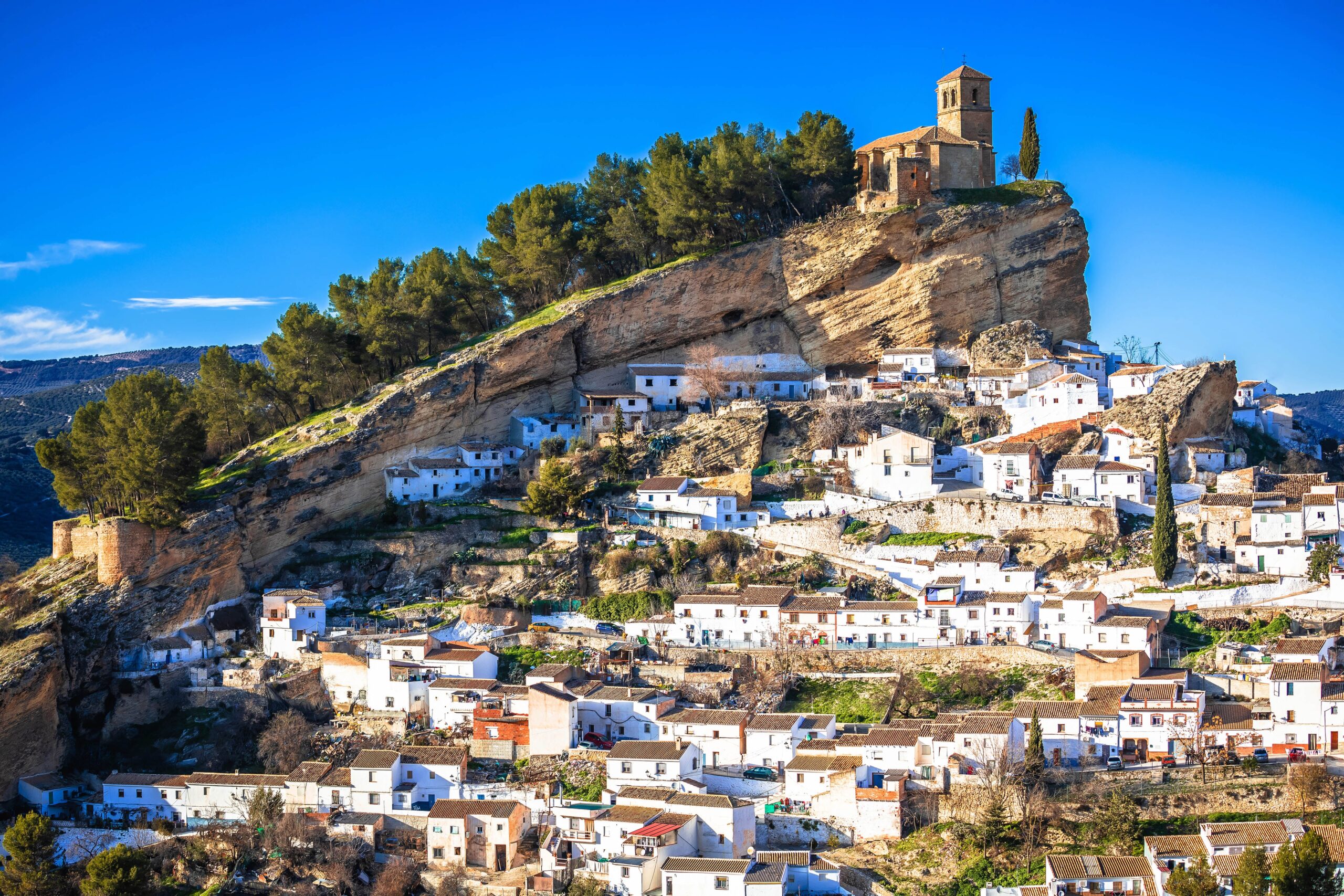
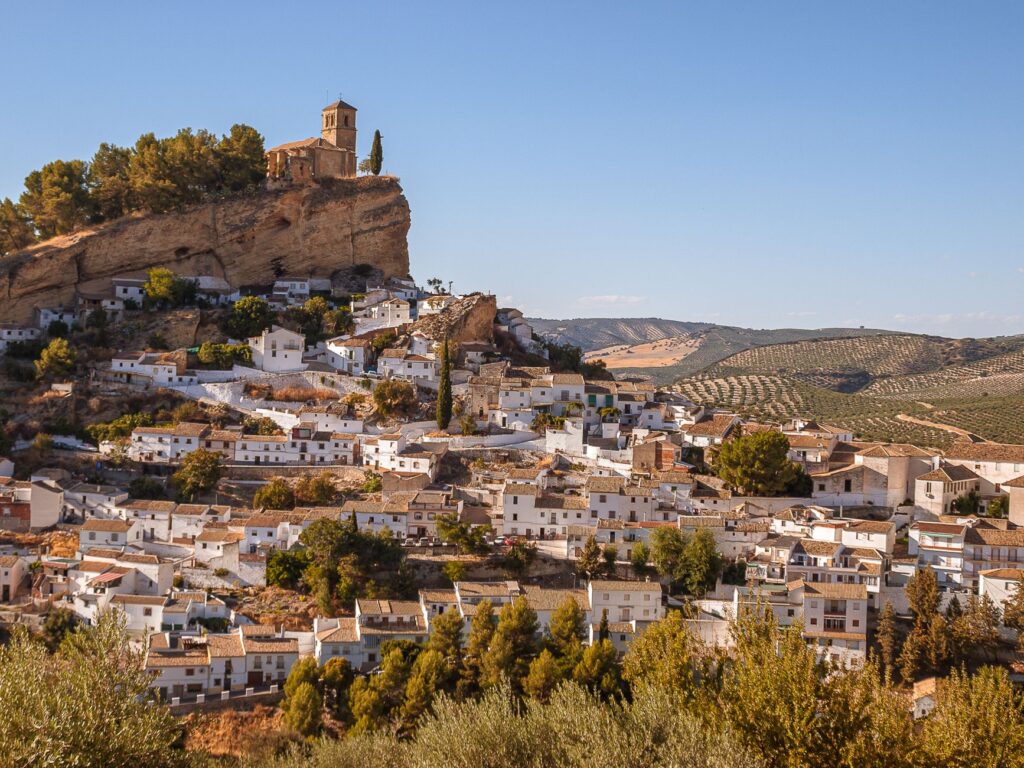
Montefrío reveals itself to the traveler as a revelation. Its skyline, dominated by the imposing crag upon which the Church of the Villa—an ancient Nasrid fortress converted after the conquest—sits, is one of the most iconic images in the province. National Geographic once included it among the villages with the best views in the world, but beyond the postcard image, what captivates is the sheer sense of verticality.
As you ascend toward the castle, you traverse steep streets that preserve the winding layout of the Arab medina. It is an exercise in imagination to walk through these narrow alleys where the stone of the walls seems to whisper tales of local governors and spies. The fortress did not just protect the access to the Nasrid capital; it served as a strategic control point for trade and the defense of the fertile farmlands that surrounded it.
Moclín, the Key to Defense
If Montefrío was the watchtower, Moclín was the shield. Situated in a privileged position overlooking the Velillos River valley, this municipality preserves one of the best-preserved fortifications on the frontier. The castle of Moclín, with its double-walled enclosure, witnessed numerous skirmishes between Castilian troops and the Granadan hosts. The hardness of its rock and the steepness of its slopes made this enclave a tough nut to crack for any invading army.
The frontier was not a static line, but a zone of friction where culture and war intertwined in a constant dance of survival.
The historic center of Moclín, with its whitewashed houses and cozy squares, invites a necessary pause. There is no rush here; time seems to stand still under the shadow of the walls. It is highly recommended to hike the Gollizno route, which allows one to observe the scale of the defensive engineering from the bottom of the canyon, contrasting human fragility with the vastness of nature.
Íllora and the Echoes of Kings
Íllora, known in its time as ‘Little Granada’ for its beauty and strategic importance, closes this historic triangle. Its castle, perched on a rocky hill, was one of the key pieces on Boabdil’s chessboard. The Catholic Monarchs, aware of its relevance, dedicated great efforts to its conquest, knowing that without Íllora, the fall of the capital was only a matter of time.
Today, the municipality offers a heritage that extends beyond its castle. Its squares and the layout of its lower neighborhoods preserve the essence of rural Andalusian life, where the products of the land, especially olive oil, remain the engine of an economy rooted in the same agricultural tradition that existed six centuries ago.

The Language of the Watchtowers
The defensive system of this frontier was not limited to castles. An intricate network of watchtowers, located at strategic points, allowed for instant visual communication using smoke signals during the day and bonfires at night. These towers, many of them now in ruins or partially restored, are the silent witnesses of constant vigilance.
Communication was vital for the kingdom’s survival. A sighting of Christian troops in the distance activated a chain of alerts that reached the Alhambra in a matter of minutes. This sophisticated surveillance system underscores the military intelligence of the Nasrids, who knew how to leverage the terrain to compensate for their numerical inferiority against Castilian armies.
Life on the Frontier: Beyond the Conflict
Although history speaks to us of wars, daily life on this frontier was far more complex. There were periods of truce where trade and cultural exchange were fluid. Christians and Muslims traded, shared technical knowledge in agriculture, and occasionally established neighborly relations that transcended the orders of kings.
This legacy of coexistence, though fractured by conflicts, left an indelible mark on architecture, gastronomy, and the way of understanding public space. The villages in this area are today the result of that overlapping of cultures which, far from canceling each other out, mutually enriched one another in a silent dialogue that we can still perceive today.
Nature as a Bastion
The landscape of western Granada is a monument in itself. The rugged orography, the gorges, and the fertile plains did not only define military strategy but also the identity of its inhabitants. Hiking through these lands allows one to understand why the Nasrids chose these places to establish their defenses. The routes connecting the castles offer panoramic views where the sky seems to merge with the earth in an immense embrace.
The traveler who only looks for history in this territory will find much more: they will find an untamed nature that still preserves the memory of the centuries.
It is a landscape of contrasts, where the green of the olive groves is interrupted by the gray of limestone and the ochre of farmland. It is an environment that demands respect and rewards the hiker with the peace of a setting that seems alien to the noise of modernity.
The Gastronomic Legacy of the Frontier
One cannot understand the history of a place without tasting its cuisine. In Montefrío, Moclín, and Íllora, gastronomy is a reflection of its past. Spoon dishes, game meats, and sweets made with almonds and honey have a flavor that harkens back to the Andalusian tradition. Extra virgin olive oil, produced in local mills, is the common thread of the entire culinary offering.
Tasting a traditional dish in a local tavern is a way to connect with history. Many of these dishes have survived the centuries, maintaining cooking techniques and ingredient combinations that were common on the tables of the frontier’s ancient inhabitants.

Practical guide
How to get there: The best way to explore this area is by private or rental car, departing from Granada city (approximately 45-50 minutes each way). The local road network connects the three municipalities fluidly.
When to go: Spring and autumn are the ideal seasons. Summer can be extremely hot, making hiking around the castles difficult. In winter, the air is freezing, but the landscape takes on a melancholic beauty.
Accommodation: It is recommended to choose rural houses or small boutique hotels in the historic centers. Availability is limited, so booking in advance is advised, especially on weekends.
What to visit: The Church of the Villa in Montefrío, the Castle of Moclín, and the watchtowers dotting the landscape are essential. The tourist office in each municipality provides detailed maps of hiking trails and guided tours of the monuments.

Gastronomy: Do not miss trying the ‘relleno de carnaval’ in Montefrío or the local game meats. Local olive oil makes an excellent souvenir.
Final tip: Wear comfortable footwear and carry water, especially if you plan to hike up to the fortresses. The incline is significant and the terrain can be uneven.
The last Nasrid frontier is not a place to pass through quickly. It is a territory that demands time, curiosity, and an attentive gaze. At the end of the day, when the sun sets behind the watchtowers and silence reclaims the walls, one understands that the true wealth of this corner of Granada lies not only in its stones, but in the ability of its villages to keep alive the memory of a time that, however distant, continues to define who we are.
Source: El País – El Viajero