
In the vastness of the South Pacific, where geographical coordinates seem to dissolve into an infinite horizon of cobalt blue, the Cook Islands represent a logistical challenge of the highest order. This archipelago, composed of fifteen islands scattered across an oceanic surface area equivalent to Western Europe, depends on an intermodal transport network that is as precarious as it is vital. The supply of consumer goods, fuel, and construction materials is not merely a commercial matter, but a daily exercise in survival and sovereignty in one of the most remote corners of the planet.
Connectivity in this territory does not follow the rules of continental logistics. Here, infrastructure adapts to coral geography, where the Rarotonga airstrip acts as the central lung of the system, while the outer islands, known as the ‘Pa Enua’, depend on a fragile balance between deep-sea navigation and small aircraft that connect atolls with only a few hundred inhabitants. Analyzing this system means understanding how oceanic isolation shapes contemporary transport engineering and management.
The Aerial Backbone: The Role of Rarotonga International Airport
Rarotonga International Airport is not just a gateway for tourism; it is the main artery that oxygenates the archipelago’s economy. Managing a hub in the middle of the ocean demands pinpoint precision. The runway, which stretches across a narrow strip of land, supports long-haul flights connecting these islands to Auckland, Sydney, and Honolulu. Engineering here is an exercise in containment: maintaining asphalt against constant salt corrosion and managing air traffic in a space where there are no nearby alternate airports requires world-class infrastructure and safety protocols.

Air cargo logistics are equally complex. Given that local production is limited, much of the fresh produce and critical medical supplies arrive by air. Cold storage capacity at the airport and integration with local customs are the bottlenecks that define the system’s efficiency. Any disruption in this flow, whether due to adverse weather or technical issues with aircraft, immediately translates into noticeable shortages on the shelves of Avarua’s shops.
Coastal and Maritime Logistics: The Invisible Thread of the Pacific
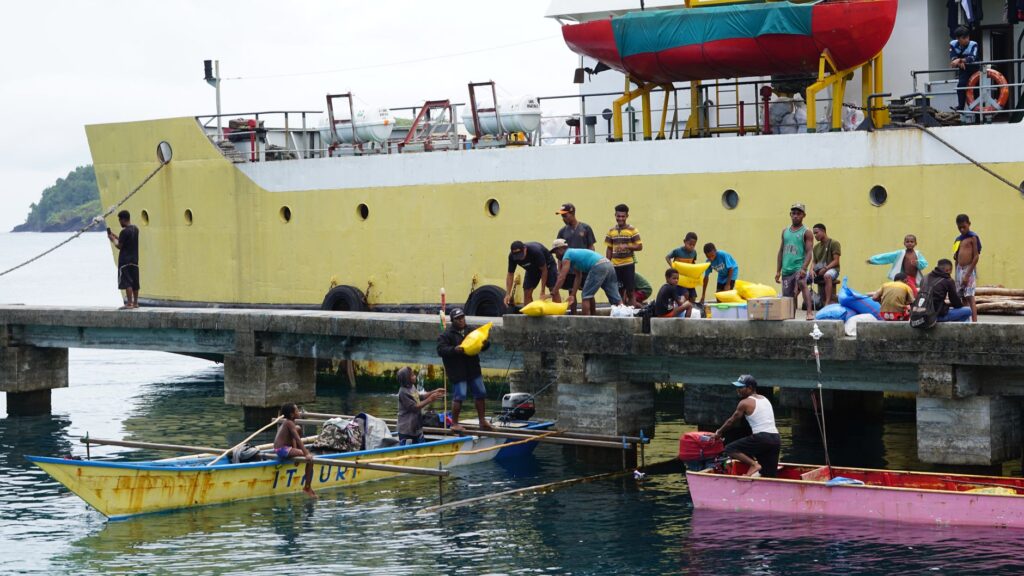
While the plane connects, the ship sustains. Maritime logistics in the Cook Islands are a legacy of ancient Polynesian navigation routes, modernized by the need to transport heavy cargo. The cargo ships operating between Rarotonga and the northern islands, such as Penrhyn or Manihiki, are the true heroes of the system. These vessels not only transport containers but act as floating transfer stations, managing the delivery of supplies to atolls where there are no deep-water docks.
Unloading goods in the outer islands often involves a transshipment operation on small-draft lighters, a process that depends entirely on the state of the tide and the expertise of local captains. This ‘last mile’ logistics is one of the most critical points of the oceanic infrastructure. The lack of protected ports in many of these atolls limits the size of ships that can provide service, which exponentially increases transport costs and necessitates rigorous seasonal planning to avoid cyclone seasons.
Transport is not merely an infrastructure; it is the connective tissue that prevents physical distance from becoming a cultural and economic rupture for the archipelago’s most remote communities.
The Resilience of Outer Island Airstrips
Beyond Rarotonga, the archipelago has a network of airfields scattered across the outer islands. Many of these runways are made of gravel or compacted coral, which requires constant maintenance engineering. The operability of these airfields is fundamental for medical evacuations and the transport of public officials, serving as the only path for rapid access when ships take days to make the crossing. Managing these strips is an example of how limited resources are prioritized to maintain operational safety.
Technology has allowed for improved navigation on these routes, reducing reliance on visual sightlines. However, fuel management remains the Achilles’ heel. Transporting aviation kerosene to islands where there is no refining capacity or large storage tanks is a challenge that requires a perfectly synchronized supply chain. The sustainability of this model is under constant review, seeking alternatives that integrate renewable energy to power airport facilities.
Intermodal Synergies: The Challenge of Integration
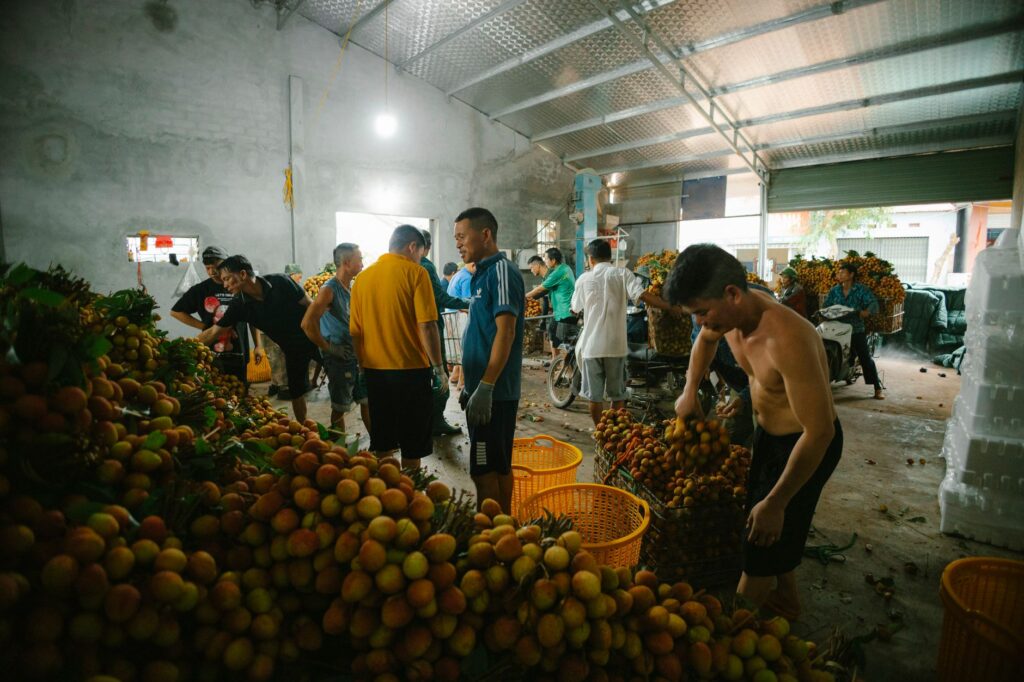
The true efficiency of transport in the Cook Islands lies in the ability to integrate air with maritime modes. In Rarotonga, cargo management systems allow merchandise arriving on large cargo planes to be rapidly processed and transferred to coastal ships or local distribution trucks. This intermodality is a closed ecosystem that requires constant communication between port operators, airport authorities, and shipping companies.
The digitization of customs processes has been a key step in optimizing this chain. By reducing waiting times at docks and runways, the risk of spoilage for perishable goods is minimized. Even so, geography still imposes its limits. The remoteness of the northern islands means that integration is always partial, and logistical success depends more on human resilience and the ability to improvise than on pure automation.
At the heart of oceanic logistics lies not the machine, but the human capacity to anticipate the uncertainty of the climate and turn precariousness into an orderly and predictable system.
Economic Impact and Food Sovereignty
The cost of transport is the determining factor in the final price of any product in the Cook Islands. Dependence on imports makes the transport system an implicit tax on consumption. Therefore, the government has focused efforts on improving the efficiency of maritime routes to reduce logistics costs. Cargo consolidation and investment in more efficient vessels are strategies that seek to ease the burden on households, allowing economic development to reach the outer islands more equitably.

Furthermore, there is a clear connection between transport infrastructure and food sovereignty. By improving connectivity, local communities can market their products, such as tuna or black pearls, in international markets, balancing the trade deficit. Transport infrastructure, therefore, not only brings products inward but is the necessary vehicle to project the local economy outward, integrating the Cook Islands into the global market.
Future Challenges: Climate Change and Sustainability
The great question for the Cook Islands’ transport infrastructure is climate change. Rising sea levels and the increased frequency of extreme weather events threaten the integrity of runways and docks, which sit just a few meters above sea level. Civil engineering is responding with adaptation solutions, elevating structures and reinforcing protective seawalls. Resilience is not an option; it is a design imperative.
The transition toward greener transport is also a priority. Projects are being explored to electrify the cargo vehicle fleet in Rarotonga, and the feasibility of support ships with hybrid propulsion is being studied. Although the road is long, the ambition of a sustainable transport system that protects the fragile oceanic ecosystem is the new horizon for the archipelago.

Practical guide
For those wishing to understand the logistics of the Cook Islands from a professional or travel perspective, it is essential to consider the intermodal nature of the archipelago. Planning must be exhaustive, as connections between outer islands do not operate with the frequency of major hubs. It is advisable to consult with the national airline, Air Rarotonga, for internal flights, and to verify cargo ship dates with local port authorities if you plan to transport specialized equipment. The currency is the Cook Islands dollar (pegged to the New Zealand dollar), and carrying cash is vital for transactions on smaller islands where banking infrastructure is non-existent. The optimal season for logistics and travel is between May and October, avoiding the months of highest cyclone risk.
Operational resilience in this system is based on patience and flexibility. Do not attempt to impose continental rhythms on a geography that dictates its own pace. Safety is the absolute priority, and transport protocols are followed with strict rigor. If your purpose is technical study or research, contact the Cook Islands Civil Aviation Authority before your arrival to obtain the necessary permits for access to critical facilities.
In the last light of the afternoon, when daily flights have ceased and Avarua harbor sinks into silence, the true scale of this archipelago is felt. A small cargo ship is silhouetted against the horizon, a tiny speck in the vastness of the Pacific, carrying the sustenance of a community that has learned to live in harmony with distance. It is a scene that summarizes the essence of island life: a constant commitment to movement, an unwavering faith in the arrival of the next supply, and the serene beauty of a territory that, despite its isolation, beats with the strength of an interconnected and vital system.