Traveling through the plate in Poland is not a simple exercise in tourist complacency, but a deep immersion into the strata of a history marked by resilience, geopolitical crossroads, and a profound connection to the land. Contemporary Polish cooking engages in a permanent dialogue with its rural past and the influences of neighboring empires, shaping a narrative where every ingredient holds the memory of boreal forests, rushing rivers, and the fertile valleys of the Vistula.
This report examines Polish gastronomy not as a mere accumulation of seasonal calories, but as a living system of cultural transmission. Through transport routes, local markets, and traditional bakeries, we will discover how the Polish table reflects the character of a country that has learned to reinvent itself without relinquishing its deepest roots.
The Geography of the Plate: The Territory That Dictates the Recipe Book
Polish territory, bounded by the Baltic Sea to the north and the Carpathians to the south, imposes a radical seasonality that has historically conditioned conservation and cooking methods. For centuries, long winters forced the perfection of techniques such as fermentation, smoking, and curing, giving rise to intense flavor profiles that define the country’s haute cuisine today.
The endless forests covering much of the territory have historically provided an inexhaustible wild pantry. Mushrooms gathered in autumn and forest berries are not mere accompaniments, but absolute protagonists in soups and stews that comfort body and spirit against climatic harshness.
The Pantry of the Baltic and Inland Lakes
The coastal strip and the Mazurian lake district introduce a rich fishing tradition to the Polish table. Herring, trout, and zander are fundamental pillars demonstrating how fresh and salt water nourish the country’s culinary diversity far beyond red meats and tubers.
In the markets of Gdańsk and Szczecin, local fishermen continue to sell cold-smoked catches according to artisanal methods passed down through generations. This mastery in fish processing reveals a maritime facet frequently overshadowed by the fame of hearty interior dishes.
The Universe of Filled Doughs: Beyond the Pierogi
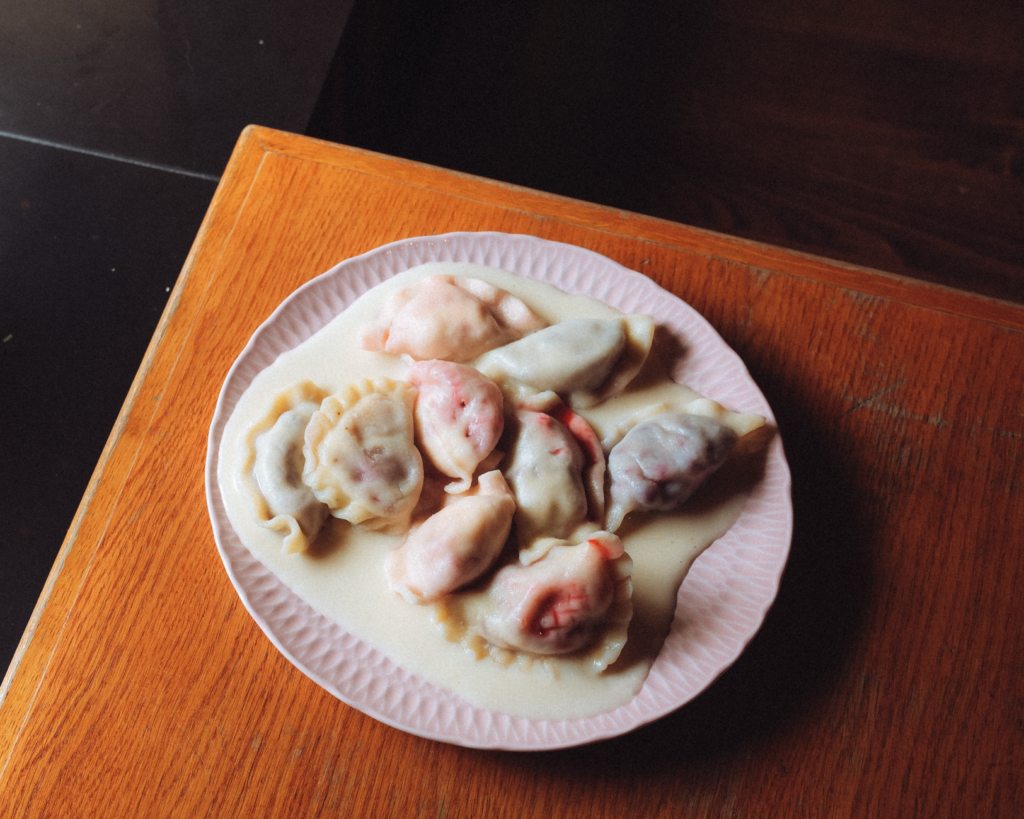
It is impossible to address Polish gastronomy without pausing at pierogi, those emblematic semicircular dumplings whose origins date back to the Middle Ages. Far from being a homogeneous dish, each region and family jealously guards its own proportions and fillings, ranging from classic cottage cheese with potato to sophisticated combinations of game meat and wild mushrooms.
The crafting of these doughs requires considerable technical skill to achieve an ethereal texture that withstands boiling without losing consistency. The moment raw dough is plunged into boiling water and emerges floating marks an almost sacred domestic ritual in Polish homes.
Polish cuisine is an edible archive where recipes function as maps of cultural resistance against historical adversity.
Beyond pierogi, the culinary landscape is enriched by variants such as uszka, tiny ears of dough destined to float in clear beetroot broths during Christmas celebrations, once again demonstrating the geometric precision of this savory pastry.
The Cult of Fermentation: Soups That Tell Time
Lactic fermentation is one of the great invisible heritages of Polish culinary tradition. Żurek, a soup made from fermented rye flour, encapsulates this philosophy of resourcefulness and microbial transformation. Traditionally served inside a hollowed-out loaf of bread, this dense, acidic, and spicy broth seasoned with garlic and marjoram is living testimony to peasant inventiveness.

Meanwhile, barszcz czerwony, the iconic clear fermented beetroot soup, exemplifies the elegance of Polish broths. Its intense ruby color and balance between natural acidity and earthy sweetness demonstrate that popular Polish cooking possesses unquestionable aesthetic sophistication.
Sauerkraut and Pickles on the Daily Table
Brined cucumbers (ogórki kiszone) and fermented cabbage (kapusta kiszona) do not merely accompany meats; they act as digestive regulators and essential sources of vitamins during months of extreme cold. Polish mastery in vegetable fermentation rivals any Central European tradition.
In villages, every household maintains its own pickling barrel flavored with dill, horseradish leaves, and garlic, ensuring that each batch possesses unique nuances directly linked to the microflora of the immediate surroundings.
The Forest Route: Game, Mushrooms, and the Wild Spirit
The dense forests of Białowieża and the southern mountain ranges harbor fauna and flora that nourish the most exclusive seasonal cuisine. Wild boar, deer, and roe deer are prepared with juniper, wine, and berry marinades, achieving deep, wild flavor profiles that connect directly with the diet of ancient Polish kings and monks.
During the mushroom season, forests become the stage for mass foraging where entire families search for coveted porcini (boletus edulis) and saffron milk caps. These fungi are dried, pickled in vinegar, or transformed into velvety sauces crowning meats and poultry.

The Architecture of Hospitality: The Ceremonial Banquet
Hospitality in Poland has architectural dimensions. A traditional Polish banquet is structured as a succession of dishes designed to prolong conversation and human encounter. Roasted meats, especially St. Martin’s goose and pork with a crispy crust, occupy a central place in these celebrations.
Artisanal charcuterie, from smoked kabanos to wiejska sausage, reflects an ancient butchery industry where beech and hardwood smoke confers unmistakable aromas that distinguish every local butcher.
Bread as a Symbol of Concord
Sourdough bread made with pure rye is much more than a staple food; it constitutes a symbol of welcome and mutual respect. At traditional weddings and celebrations, parents greet newlyweds with bread and salt, invoking prosperity and protection against scarcity.
Urban and rural bakeries maintain stone ovens where slow baking generates toasted crusts and dense crumbs capable of staying fresh for weeks without artificial additives.
Sweet Memory: Conventual and Urban Pastry
Polish pastry reveals cross-influences between Austro-Hungarian tradition, Ashkenazi Jewish heritage, and conventual mastery. Makowiec, a brioche dough roll filled with a dense paste of poppy seeds, raisins, and walnuts, is the undisputed king of Christmas festivities.

Meanwhile, sernik—the traditional Polish cheesecake—is distinguished by using a very dense fresh curd cheese (twaróg) instead of industrial cream cheese, providing a grainy texture and unmistakable dairy character that sets it apart from Western versions.
Polish pastry does not seek cloying sweetness, but rather aromatic balance among spices, dried fruits, and fermented doughs.
One cannot overlook pączki, that fried bun generously filled with rosehip or plum jam, whose consumption spikes on Fat Thursday preceding Lent, mobilizing entire cities in search of the best artisanal fry.
Practical guide
Planning a gastronomic trip through Poland requires understanding its seasonal rhythms and the logistical distribution of its markets. Below are the fundamental keys to exploring the country through the palate.
Best time to visit: Autumn for mushroom and game season; spring and summer for open-air markets and fresh produce.
Essential markets: Stary Kleparz market in Kraków and Hala Mirowska in Warsaw offer a direct view of local producers.

Recommended transport: The rail network (PKP Intercity) efficiently connects major gastronomic cities such as Poznań, Wrocław, Kraków, and Gdańsk.
Table etiquette: It is customary to wait for the host to say ‘Smacznego’ before beginning to eat and to keep hands visible on the table.
The Pulse of the Present: Vanguard on Ancestral Foundations
Over the past decade, a new generation of Polish chefs has decided to rescue forgotten recipe books from historical archives to reinterpret them under contemporary prisms. Far from abandoning tradition, these creators research native vegetable varieties, rescue local livestock breeds, and perfect ancestral fermentation techniques.
This culinary renewal movement places Warsaw, Poznań, and Kraków on the international gastronomic map, demonstrating that Poland’s culinary identity is not a museum fossil, but a living matter in constant evolution that rewards the curious traveler with memorable surprises at every turn.
Source in EN: Vivir Viajando con Inteligencia Viajera (https://inteligenciaviajera.com/comida-tipica-de-polonia/)