The Westfjords Ferry Pulse: Remote Navigation and Atlantic Isolation in Iceland
A rigorous exploration of the maritime route connecting Iceland’s rugged northwestern frontier, examining coastal ferry logistics, human endurance against polar weather, and ocean-sculpted geology.
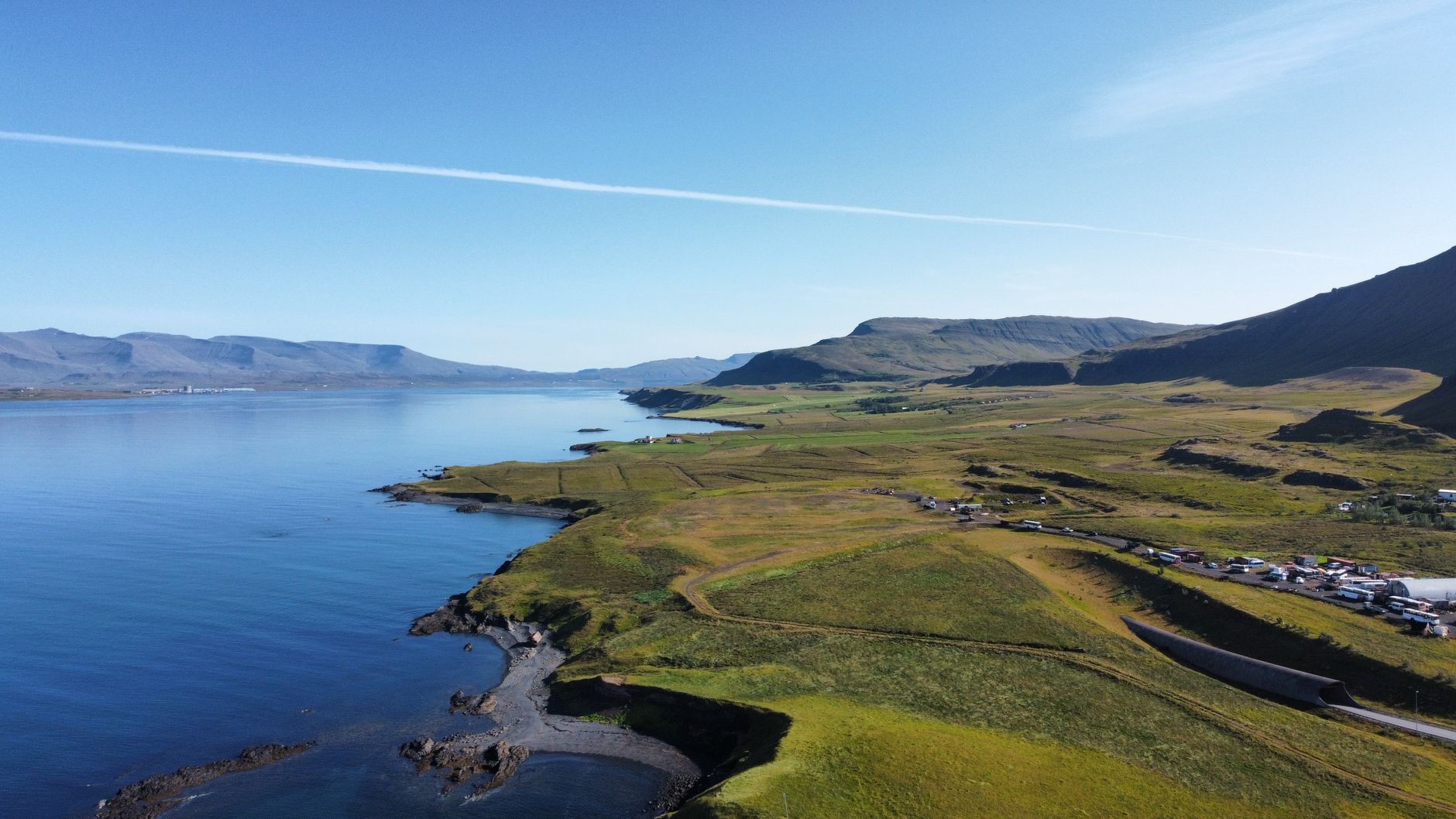
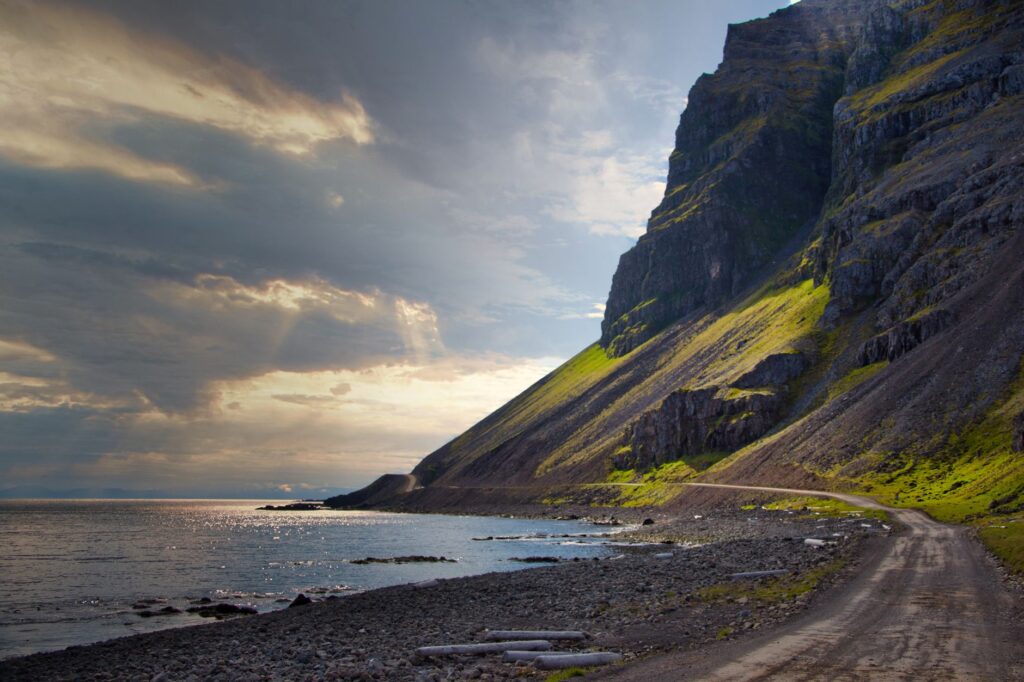
In Iceland’s northwestern extremity, where basalt plateaus plunge vertically into a leaden sea, the coastline ceases to be a terrestrial boundary and becomes an aquatic labyrinth. Here, the Vestfirðir, or Westfjords, represent one of Europe’s most geographically isolated regions, a territory where gravel roads suspended over abyssal drops become impassable during the winter months. In this context of geological isolation, human mobility depends exclusively on a network of coastal ferries defying North Atlantic currents. This report examines the technical operations, history, and profound social transformation driven by these regular navigation routes in one of the planet’s most indomitable geographies.
The history of navigation in the Westfjords is inextricably linked to the survival of tiny fishing communities that, for centuries, communicated with the rest of the island solely by sea or via grueling treks across snow-whipped mountain passes. Today, vessels like the Baldur, which regularly crosses the wide expanse of Breiðafjörður between Stykkishólmur and Brjánslækur, act as floating umbilical cords. This is not merely a passenger and vehicle transport service, but the primary artery guaranteeing the supply of fuel, fresh provisions, and technical assistance to municipalities that would otherwise remain completely disconnected from the mainland.
Naval Engineering Against Atlantic Severity
Operating a ferry fleet in sub-arctic waters demands extraordinary naval engineering specifications. Hulls must be reinforced to withstand the impact of floating glacial ice blocks and the relentless marine corrosion driven by constant saline winds. Captains steering these vessels confront a rapidly shifting meteorological theater, where absolute calms can transform into hurricane-force gales within minutes. Reduced visibility from dense fog banks and horizontal snowstorms turn every crossing into a meticulous exercise in instrument navigation and deep empirical knowledge of local bathymetry.
The sea in the fjords is not an obstacle to overcome, but the only possible path; a space where modern technology kneels before the unappealable tyranny of polar weather.
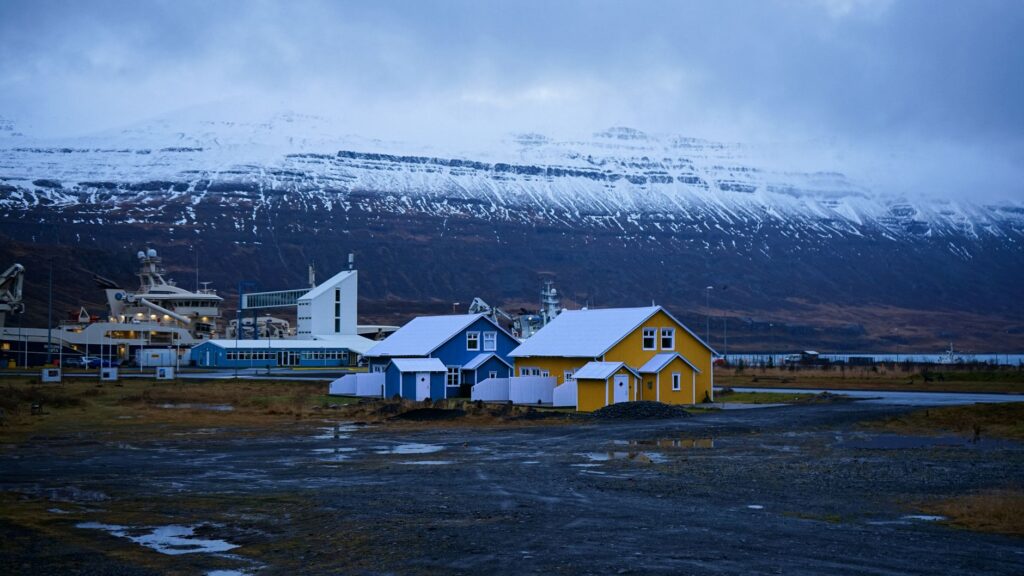
Port infrastructure at boarding terminals likewise reflects this constant struggle against the elements. Reinforced concrete piers with hydraulic tide-compensation systems allow ferry ramps to dock with millimeter precision despite extreme sea-level oscillations. The automation of maritime communications, integrated with high-orbit satellite networks, ensures that ships maintain uninterrupted contact with control centers in Reykjavik, optimizing routes to skirt the worst atmospheric pressure fronts descending from the ice cap.
Geology Sculpted by Ice and Time
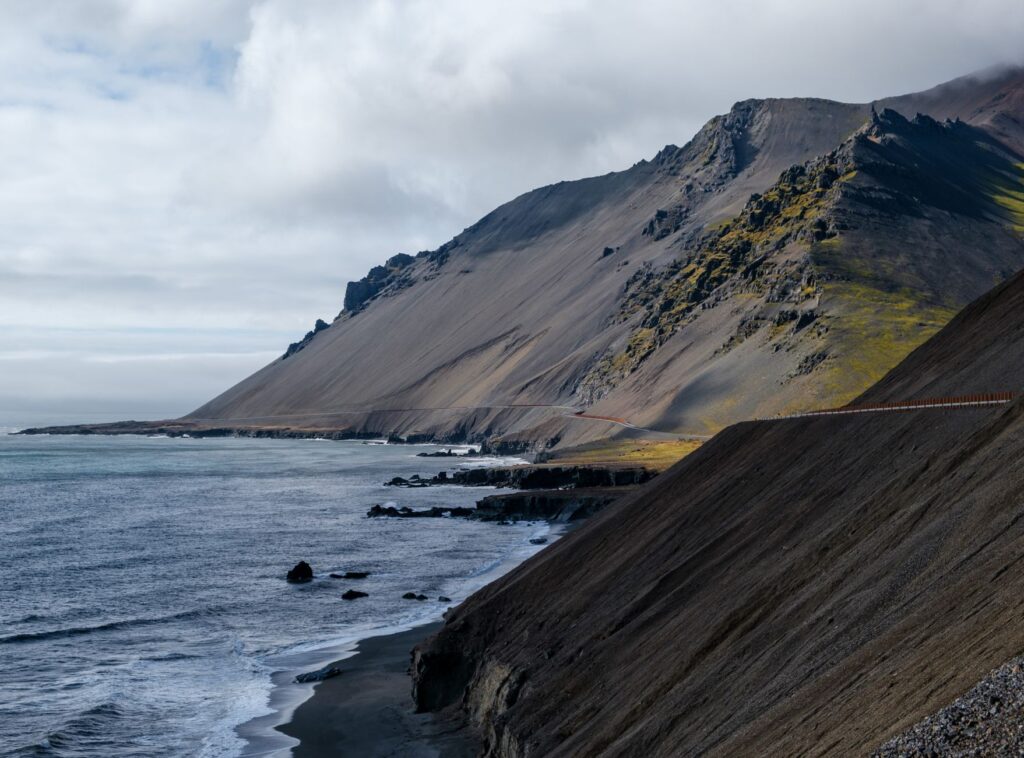
From the deck of a ferry cutting across Arnarfjörður fjord, the perspective of solid ground assumes an overwhelming monumentality. Cliff faces display, in perfectly defined horizontal strata, millions of years of volcanic history. Successive layers of dark basalt lava alternate with thin veins of reddish sediments and lignite, silent witnesses to eras when the Icelandic climate was subtropical before global cooling and quaternary glaciations carved these deep valleys.
This abrupt topography radically limits the development of terrestrial infrastructure. Constructing a road circling each of the countless inlets and headlands of the western coast would require unfeasible economic investment and devastating environmental impact on fragile arctic moss ecosystems. Consequently, maritime transport stands as the ecologically and economically viable alternative, minimizing the human footprint on a landscape preserving its pristine roughness. Passengers traversing these waters are not merely moving from point to point, but passing through a living geological museum.
Life On Board and the Economy of Small Harbors
Aboard the ferries, the atmosphere blends logistical functionality with the quiet camaraderie typical of northern European maritime communities. In the main lounges, paneled in light wood to counteract the exterior gloom, locals, truck drivers, and naturalists share tables while observing the fleeting passage of Atlantic puffins and, occasionally, the imposing silhouette of a humpback whale. This temporary coexistence synthesizes the egalitarian character of routes where everyone depends on the same crew and the same weather forecast.
On land, the ferry’s arrival dictates the daily rhythm of port towns. In harbors like Patreksfjörður or Flatey, offloading cargo mobilizes the bulk of the local active population. The regional economy, traditionally reliant on the salted cod industry, has diversified its fabric thanks to responsible expedition tourism. Travelers arriving by sea bring crucial economic revenue to small family guesthouses, literary cafés, and craft workshops that, without this seasonal and winter connectivity, could not survive.
The Insular Phenomenon of Flatey and Temporal Pause
One of the most unique stops on the Breiðafjörður maritime route is Flatey Island, a flat, tree-less islet that during the 19th and early 20th centuries functioned as the most important cultural and commercial hub in the western region. Today, the island is virtually uninhabited during cold months, but recovers intense community life in summer thanks to owners of restored historical homes and ferry passengers stepping off to walk its dirt paths.
Stopping at Flatey aboard the ferry entails a radical exercise in deceleration. With a general ban on motor vehicles on the island, time seems to have halted among the pastel-colored wooden houses flanking the old library, Iceland’s oldest. This maritime stopover allows travelers to grasp the magnitude of insular isolation and the incalculable value of heritage preservation in a territory subjected to constant Atlantic wind erosion.
Logistical Challenges Amid Climate Change
Maritime transport in the Westfjords faces unprecedented challenges stemming from shifting global climate patterns. While arctic warming generally reduces severe sea-ice presence in some areas, it also increases the frequency of violent Atlantic storms and extreme precipitation, multiplying the risk of rockfalls over coastal roads and escalating absolute reliance on ferries.
The fragility of communications in the deep north proves that technological development must remain subordinate to rigorous respect for natural and marine cycles.
Icelandic transport authorities and private operators are currently investing in fleet modernization toward low-emission hybrid and electric propulsion systems, balancing the vital need for connectivity with international environmental commitments. Offshore energy transition remains complex due to extreme low temperatures reducing battery efficiency, compelling the design of specific technical solutions for sub-arctic navigation.
Practical guide
Planning a journey through the Westfjords ferries demands rigor, flexibility, and deep familiarity with local conditions. Below are the essential operational keys for executing this route safely and efficiently:
Route planning and reservations: Main lines, such as the Stykkishólmur to Brjánslækur crossing operated by Seatours (Baldur), require advance vehicle reservations during summer months (June to August). Car spaces are strictly limited.
Weather flexibility: Ferry schedules are subject to sudden modifications or cancellations due to gale-force winds or ocean swells. Checking road and sea status on the official website Road.is and ferry operator boards before initiating any travel toward ports is mandatory.
On-board equipment and amenities: Vessels feature basic cafeterias, Wi-Fi connections, and indoor observation areas. Dressing in windproof and waterproof layers is strongly advised even in summer, as outdoor deck navigation exposes travelers to very cold polar breezes.
Complementary terrestrial connectivity: Upon disembarking in the Westfjords, secondary roads (two- or three-digit route numbers) are typically loose gravel. Having an appropriate vehicle (ideally four-wheel drive) is essential, alongside extreme caution regarding livestock roaming freely on roadways.
Respect for the insular environment: At stops like Flatey, motor vehicle traffic for visitors is prohibited. All generated waste must be re-embarked, and nesting areas for protected seabirds during summer months must be strictly respected.
Silence and Memory on the Marine Horizon
When the ferry’s silhouette pulls away from the docks and ventures into the gray immensity of the ocean, the predominant sensation is one of profound respect for the vastness of the territory. The Westfjords do not offer the comforts of conventional tourism; they demand attention, patience, and a capacity for awe before the rawness of a landscape in perpetual transformation. In this frontier where water and rock sustain a fragile and tenacious human presence, daily navigation is not merely a public service, but a testament to perseverance against the immensity of the natural world.
ATLAS LUME · BEFORE YOU GO
A story that continues at the destination
DocumentsCheck visas, health requirements and document validity with official sources.
BookingsConfirm the final price, taxes and conditions directly with the provider.
Responsible travelRespect local communities, heritage and ecosystems.