


Introduction to the Great Andean Enterprise
The mountainous folds of South America preserve the remnants of one of the most daring engineering feats in modern history: the Trans-Andean Railway. Conceived to link the Pacific and Atlantic oceans across one of the most formidable natural barriers on the planet, this route represented the technical conquest of snow-capped peaks, vertiginous chasms, and extreme weather conditions. For decades, the railway not only coordinated the transport of passengers and freight between Chile and Argentina, but also shaped a corridor of unprecedented cultural and commercial exchange in the Southern Cone.
The gestation of this project was by no means free of institutional and financial skepticism. Engineers and promoters had to contend with the hostility of the cordillera, where avalanches, hurricane-force winds, and the scarcity of oxygen constantly threatened the feasibility of the work. Nevertheless, the persistence of British and local capital made it possible to materialize a layout that defied geographic logic, proving that railway engineering could conquer even the most inaccessible domains of the Andes range.
Origins and Vision of an Impossible Route
The idea of connecting the railway networks of Chile and Argentina began to be debated intensely in the second half of the nineteenth century. While both countries consolidated their respective sovereignties and expanded their internal networks toward productive zones, the cordillera stood as an impassable wall that forced travelers to undertake journeys on mule back across mountain passes at altitudes exceeding three thousand meters. Delays, weather hazards, and the high cost of freight transport demanded a definitive structural solution.

Chilean brothers Juan and Mateo Clark pioneered the definitive route, securing government concessions in the late 1870s. Their technical proposal involved abandoning the idea of a low-level base tunnel—infeasible due to the economic cost of the era—and opting for a high-altitude solution combining conventional adhesion with rack-and-pinion systems on steeper gradients. Following a process delayed by economic crises and complex diplomatic negotiations, construction formally began in the early years of the twentieth century.
Rack-and-Pinion Engineering and Topographical Challenges
Overcoming gradients exceeding eight percent in high-mountain terrain required the implementation of the Abt rack-and-pinion system, a Swiss technology that allowed locomotives to engage their toothed wheels with a central bar fixed between the rails. This innovation prevented trains from slipping on the steepest ramps, allowing them to ascend safely toward the heart of the cordillera. Every kilometer of track represented a titanic challenge for workers, who had to labor in conditions of absolute isolation and endure sub-zero temperatures during harsh Andean winters.
The route combined British-designed metal bridges, capable of withstanding the thrust of snowmelt torrents, and numerous tunnels excavated directly into solid rock using dynamite and pickaxes. In sections most exposed to avalanches, sturdy masonry and concrete sheds were built to protect the track and rolling stock. These structures, which can still be seen standing today along the Aconcagua River valley and near the Uspallata pass, bear witness to the robust construction standards of an era that prioritized durability and material strength.

The Summit Tunnel and Cross-Border Articulation
The culminating milestone of the infrastructure was situated at the summit international tunnel, bored at more than three thousand two hundred meters above sea level. This underground gallery, slightly over three kilometers in length, marked the exact border between Chile and Argentina, allowing convoys to cross from one country to the other in a matter of minutes. Excavating this tunnel from both ends demanded millimeter-topographical precision, achieving a perfect breakthrough amidst highly complex geological conditions and constant water seepage.
On either side of the border, stations such as Las Cuevas on the Argentine side and Juncal on the Chilean side functioned as high-altitude logistics hubs. These enclaves handled locomotive switching, water and coal replenishment, and immigration and customs controls. Passenger traffic ranged from diplomats and business figures to migrant workers and adventurers drawn by the majesty of the mountain landscape, making the Trans-Andean a vital artery for South American integration.
The cordillera was not merely a physical obstacle to be overcome, but a definitive test of the limits of nineteenth-century engineering applied to American geography.
Decline, Closure, and the Weight of Geopolitics
Despite its strategic importance, the Trans-Andean Railway began facing severe operational difficulties from the mid-twentieth century onward. The obsolescence of rolling stock, high maintenance costs of the rack railway under harsh climatic conditions, and the growing competition from road transport undermined its economic viability. Recurrent service interruptions caused by avalanches and heavy snowfalls reduced the reliability of a corridor that demanded punctuality and operational continuity.

The definitive blow to the line occurred in the 1980s, when various economic and political factors in both countries precipitated the final cessation of railway operations. Track sections were progressively abandoned, mechanical workshops closed their doors, and nature began to reclaim the space occupied by the infrastructure. Emblematic stations, once bustling centers of human activity, fell into silence and decay, transformed into mute monuments of a golden age of regional connectivity.
Industrial Heritage and Railway Memory
Today, the vestiges of the Trans-Andean Railway evoke profound interest among historians, architects, and travelers specializing in heritage tourism. Exploring the remnants of stations, viaduct bridges, and abandoned tunnels offers a sense of the sheer scale of this collective endeavor. Various cultural and academic initiatives promote cataloging, protecting, and valorizing this architectural legacy, considering it an irreplaceable testimony to industrial archaeology in Latin America.
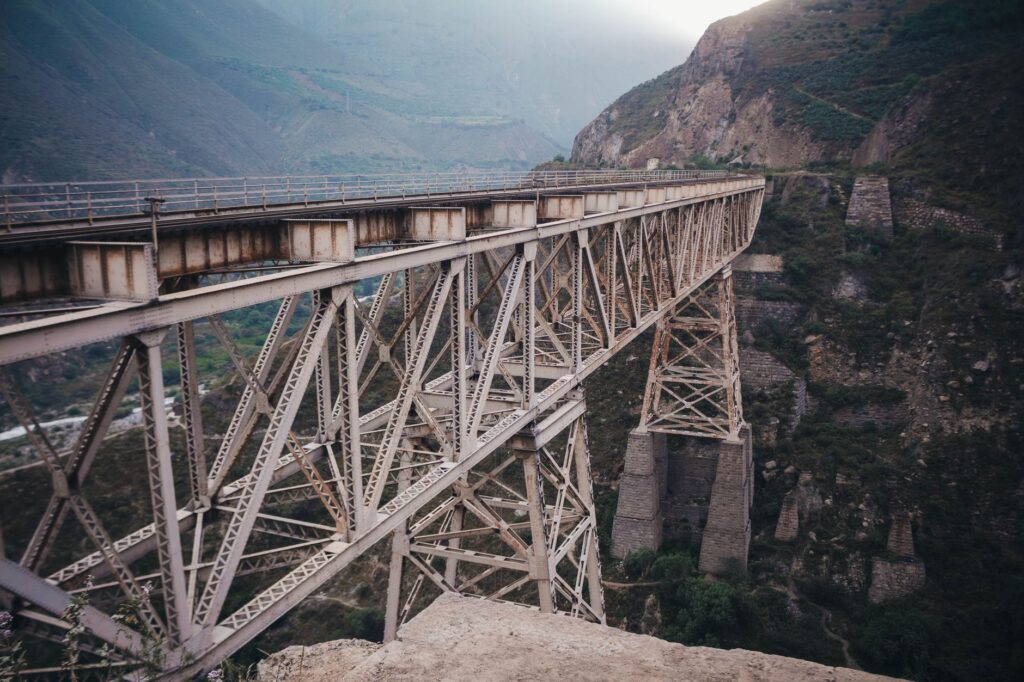
Conserving these sites is not without challenges, given their geographic remoteness and the harshness of the natural environment. However, recognition of their heritage value has raised awareness regarding the need to preserve historic buildings, sidelined locomotives, and track sections that still resist the passage of time. This railway heritage constitutes an open window for understanding how human tenacity succeeded in weaving communication networks across the most hostile settings of the continent.
Practical guide
How to get there: Access to the main vestiges of the Trans-Andean Railway is by road via National Route 7 in Argentina (from Mendoza toward the international pass) and Route 60 in Chile (from Los Andes toward Portillo). Four-wheel-drive vehicles are strongly recommended, especially outside the summer months.
Best time to visit: The period between November and March offers the most stable weather conditions, with lower snowfall risk and open mountain passes. During winter, high-mountain storms can unexpectedly disrupt vehicular traffic.

Accommodation and services: The towns of Uspallata and Puente del Inca on the Argentine side, as well as San Esteban and Los Andes on the Chilean side, concentrate lodging, fuel, and basic services. In high-mountain areas, tourist infrastructure remains extremely limited.
Safety recommendations: High geographical altitude (exceeding 3,000 meters at multiple points along the route) can induce altitude sickness. Constant hydration, avoiding heavy meals on the first day, and wearing appropriate technical clothing for sharp temperature shifts between sun and shade are essential.
The Echo of Rails at the Summit
Contemplating the remnants of the railway line as it winds alongside the Mendoza River or enters the dark tunnels of the cordillera evokes a profound sense of introspection. The current silence of the high mountains contrasts sharply with the metallic roar of locomotives that once defied gravity. In this dialogue between geological grandeur and fragile industrial footprint, the traveler realizes that pathways forged by human effort endure far beyond their commercial utility, transforming into landmarks of collective memory that continue to inspire awe and respect for the landscape.


