
The Day Cellular Film Let Through the Creative Backstage
There is an entire generation that grew up with the physical wear and tear of remote controls, pressing the pause button over and over to freeze the silhouette of Ariel, Simba, or the Beast on the static screen of a tube television. Back then, in the dim light of domestic living rooms, simulated celluloid turned into a sheet of tracing paper. That early childhood obsession with deciphering the secret of proportions was nothing more than an early symptom of a universal fascination: the mystery behind how a simple graphite stroke acquires a pulse, a voice, and an identity of its own. For decades, Orlando theme parks offered approximations to this universe, but almost always behind the protective glass of display cases or on guided tours where the visitor acted as a mere passive spectator.
That changed radically with the initiative that transforms the inner workings of Disney’s Hollywood Studios. The reopening of a space entirely dedicated to the craft of animation breaks the barrier between passive contemplation and artistic praxis. We are not looking at an exhibition of cinematic props or a state-of-the-art special effects attraction; this is an active workshop where the scent of freshly sharpened pencils, heavy-weight paper, and the beam of light from lightboxes reclaim the prominence they held during the golden age of traditional feature films. The initiative responds to a silent yet persistent demand among cultural travelers: to move past the rapid consumption of visual stimuli and connect with the artisanal processes that sustain the contemporary entertainment industry.

The Geography of Pencil and Paper in the Heart of Florida
Strategically located within the Hollywood Studios complex, the redesigned space pays structural homage to the historic studios in Burbank, California. Upon crossing the threshold, the architecture abandons the flashy artifices of other areas of the park to adopt the functional sobriety of a mid-20th-century design studio. The walls display informational panels featuring original rough drafts, model sheets, and rotation tests documenting the technical evolution from black and white to digital color. There are no giant screens competing for the visitor’s attention; the respectful silence of a drawing room abruptly interrupts the usual bustle of the vacation complex.
Visitor flow has been meticulously redesigned to avoid crowding and preserve an atmosphere of intense focus. Small groups of enthusiasts access rows of drawing desks equipped with professional tools identical to those used by the company’s own artists. The spatial arrangement fosters a visual pedagogy where error is not penalized, but rather celebrated as a natural part of the learning curve. Each station features adjustable overhead lighting and ergonomic supports, allowing both children and adults to experience the exact ergonomics of a professional animator while observing the architectural details of the vaulted ceiling that mimics the old West Coast animation studios.

From Static Line to Fluid Movement: The Masterclass
The core of the experience lies in sessions led by in-house artists, who guide participants step-by-step through the construction of a classic character using basic geometric techniques. For approximately thirty minutes, the instructor breaks down lines of action, reference circles, and tension points on the central chalkboard to give dynamism to iconic figures like Mickey Mouse, Donald Duck, or Stitch. Instruction is not limited to copying strokes from memory; the anatomical rationale behind every curve is explained, teaching fundamental concepts such as anticipation, exaggeration, and visual weight.
As the graphite advances across the bond paper, the environment transforms into a collective exercise in active meditation. Participants discover that the magic of animation does not lie in sophisticated software, but in the human capacity to translate the observation of real movement into a series of sequential drawings. Corrections are personalized and discreet; instructors walk the room offering suggestions on pencil pressure or the fluidity of contour lines. At the end of the session, each attendee takes home not only a drawing signed by their own effort, but a renewed understanding of the technical rigor behind every second of cinematic projection.
Technology at the Service of Artisanal Tradition
Although the heart of the experience is profoundly analog, the space integrates state-of-the-art digital tools to illustrate how the craft has evolved in the 21st century. A specific section of the studio allows visitors to scan their paper drawings to see them instantly come to life on interactive screens simulating the timeline of a professional animation software. This fluid transition between physical and digital mediums demonstrates that current technology seeks not to replace the pencil, but to amplify its expressive possibilities, allowing creators to experiment with color, shadow, and depth without losing the organic essence of the original stroke.

The curators of the experience wanted to emphasize that digitalization in the industry is not a blank slate, but a natural evolution. Interactive displays show direct comparisons between traditional model sheets and the three-dimensional wireframes used in more recent feature films. This educational approach enables the public to understand that a good digital animator must first master the fundamentals of charcoal drawing and classical perspective. The proposal successfully balances nostalgia for the past with curiosity toward the tools of the future, offering a balanced perspective on the current state of visual arts applied to cinema.
The true secret of animation is not the machine that projects the image, but the human hand that dares to hesitate before drawing the first line on blank paper.
The Living Archive: Heritage and Memory on Display
Beyond the drawing desks, the studio functions as a continuously moving museum archive. Carefully climate-controlled display cases house original celluloid pieces hand-painted during the production of classics like Pinocchio or Dumbo, offering visitors a rare opportunity to examine up close the imperfections and texture of gouache paint on acetate. These historical treasures come directly from the official archives of Walt Disney Animation Studios and rotate periodically to ensure the conservation of photosensitive materials.
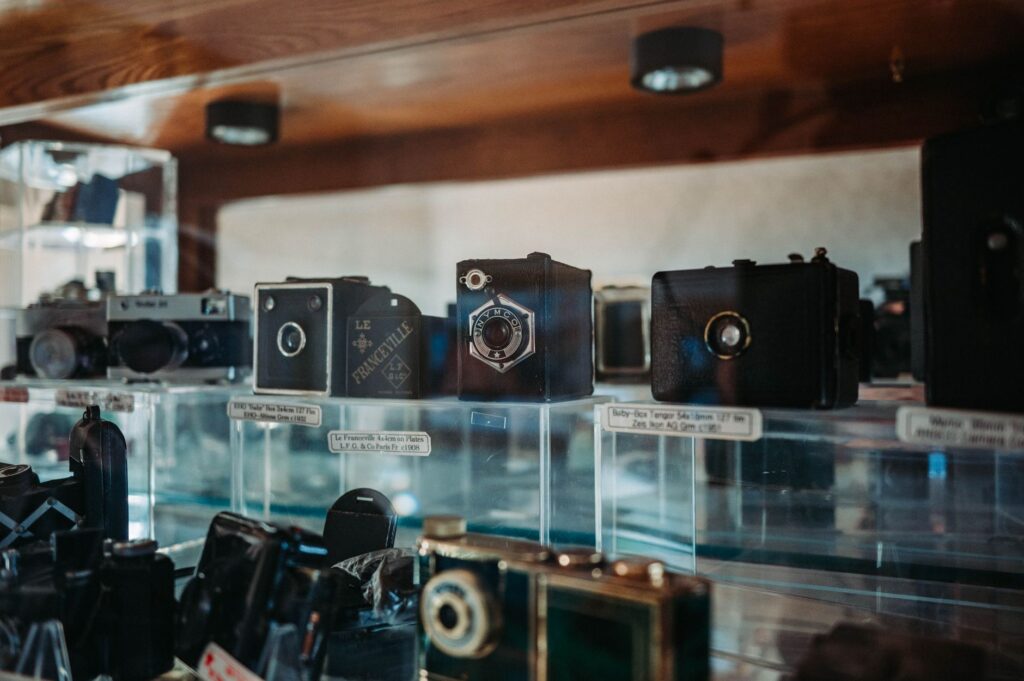
The curation of these pieces includes margin notes made by original directors, registration marks, and color corrections that reveal the technical complexities of filmmaking prior to the computer era. Visitors can observe original magnifying glasses and measuring tools used by the camera and paint departments in the past century. This historical journey contextualizes the practical workshop, reminding attendees that they are standing on the shoulders of giants who transformed industrial drawing into one of the most influential forms of popular art in modernity.
Practical guide
How to get there: The space is located inside Disney’s Hollywood Studios, accessible via the complex’s internal transportation system (buses, Friendship boats, and the Disney Skyliner gondola system from various partner hotels).
Hours and access: The studio opens simultaneously with the park (typically at 9:00 AM) and closes one hour before the complex’s general closing time. No additional paid reservation is required, but checking the official My Disney Experience app for drawing class availability is strongly recommended due to high demand.
Visitor recommendations: Arriving early in the morning is advised to secure a spot in the day’s most popular workshops. Drawing materials are provided entirely by the venue, so carrying your own tools is unnecessary. The space features air conditioning and ergonomic seating, and is fully accessible for visitors with reduced mobility.

The Echo of Graphite in the Traveler’s Memory
At dusk, when the lights of Hollywood Studios begin to flicker and the massive flow of visitors heads toward the fireworks shows, the atmosphere inside the animation studio regains its characteristic calm. The drawing desks are left clean, awaiting the following day, but in the pockets and backpacks of hundreds of travelers something far more valuable than any gift shop souvenir is carried away: a crumpled piece of paper with the crooked line of a character in gestation. That imperfect stroke, executed with the help of a professional artist and one’s own will to learn, seals an intimate connection between the anonymous spectator and the vast legacy of cinematic history.
This experience demonstrates that cultural tourism in theme parks can transcend superficial entertainment when it is committed to passing on knowledge and valuing creative trades. At the end of the tour, the visitor understands that the true magic of animation does not lie in the optical illusion of the big screen, but in the infinite patience of the human being facing blank paper—a tangible reminder that creativity remains a deeply personal territory accessible to anyone willing to pick up a pencil and dare to draw.