The Persistence of the Stroke in the Heart of Tokyo
In Tokyo’s Asakusa district, just steps away from the constant bustle of Sensō-ji Temple, time seems governed by the unhurried rhythm of drying washi paper. Here, in small workshops where mountain cherry wood is stacked in meticulously organized shelves, one of Japan’s most refined artistic disciplines survives: traditional woodblock printing, locally known as ukiyo-e. Far from being a mere museum piece or a tourist souvenir, this practice is currently undergoing a profound renaissance driven by a new generation of creators who reinterpret ancestral techniques without compromising the technical rigor of the past.
The process demands a flawless symbiosis among three historical figures who rarely worked together in the same physical space, yet today collaborate within tight urban studios: the publisher, the carver, and the printer. This division of labor, consolidated during the Edo period, guaranteed an unmatched quality of execution that enabled mass production of prints for popular consumption. Today, however, the few workshops keeping the flame of this craft alive often undertake all three creative phases themselves, turning each print into a manifesto of material resistance against digital hegemony and automated industrial reproduction.
The Raw Material: The Living Soul of Mountain Cherry
The first secret of Japanese woodblock printing lies in the choice of wood. Unlike the boxwood or maple boards commonly used in the West, Japanese masters exclusively employ wild mountain cherry wood, known as yamazakura. This timber possesses a distinct density and hardness that allow for lines of extreme fineness without the support splintering under the pressure of gouges. The trunks must be air-dried for a minimum of five years, protected from direct sunlight and extreme drafts, to ensure the grain stabilizes completely and does not warp during successive printing passes.
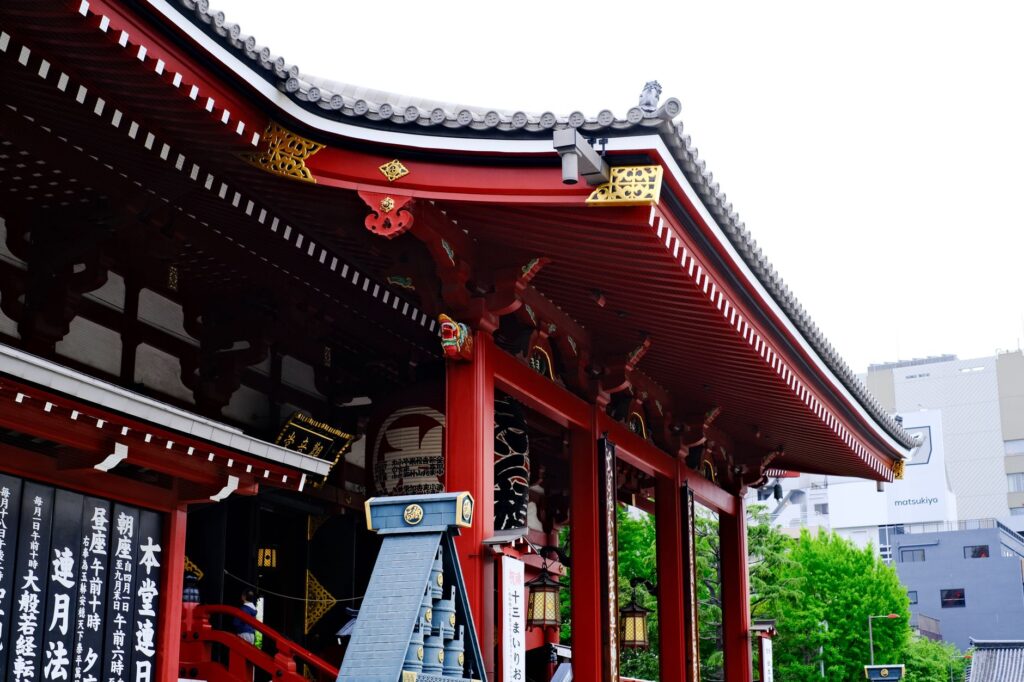
Once cured, the wood is cut across the grain, yielding millimeter-flat boards that are subsequently polished with mineral powders and dried horsetail leaves. This natural abrasive treatment leaves a surface so smooth to the touch that it resembles porcelain, perfectly prepared to receive the ink stroke.
The wood is not an inert support upon which to print; it is a living organism that absorbs the workshop’s humidity and responds with docility or resistance to the artisan’s pulse.
This organic relationship between hand and matter constitutes the philosophical core of a craft where error, once carved into the plank, is irreversible.
The Art of the Gouge: Master Carving
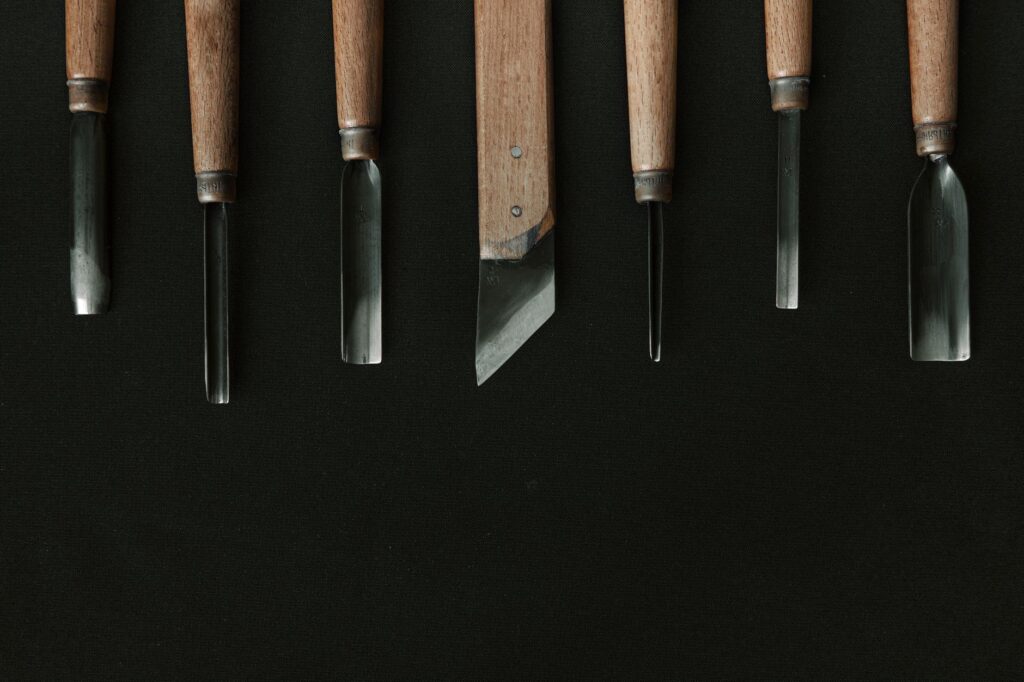
The carver’s work, or horishi, requires visual acuity and motor precision that can only be achieved after decades of apprenticeship. Seated before low tables with the cherry board firmly secured by wooden wedges, artisans employ a set of hand-forged steel gouges with extraordinarily varied shapes: from flat blades for clearing negative space to V-shaped and U-shaped tools for defining figure contours and the finest strands of hair.
The technical challenge lies in preserving the master line, known as omogaki. When the carver extracts the surplus material surrounding a line barely half a millimeter thick, a tremor or excess pressure destroys the original design. For this reason, workshops are strategically located on north-facing ground floors, where diffused natural light prevents annoying shadows and allows optimal visibility over the dark surface of the moistened cherry wood. In this operational silence, interrupted only by the occasional scraping of tools, the visual memory of an entire culture is preserved.
Water-Based Pigments and the Alchemy of Color
If carving provides the structure and skeleton of the print, the application of color by the printer, or surishi, grants its vital pulse. Unlike synthetic oil-based inks used in Western printing, traditional ukiyo-e exclusively employs natural mineral and vegetable pigments diluted in water, bound with a wheat starch solution known as nori. These colors—extracted from lapis lazuli, malachite, cochineal, or pine soot—possess a unique translucency that allows layers to be superimposed without losing the paper’s texture.
The printing process is carried out entirely by hand, without mechanical presses. The printer uses a padded circular tool called a baren, made from braided bamboo cord and wrapped in bamboo sheath. With this disc, the artisan applies uniform, circular pressure to the reverse side of the damp washi paper, transferring the pigment from the wood matrix into the cellulosic fibers. The surishi‘s mastery is measured by their ability to calculate paper moisture and ink viscosity with exactitude, achieving flawless color gradations called bokashi that simulate the caress of watercolor on dry paper.
Washi Paper: The Resilience of Long Fibers
No analysis of Japanese woodblock printing is complete without examining the support upon which the work materializes: handmade washi paper. Crafted from the inner fibers of shrubs such as the paper mulberry or kozo, gampi, and mitsumata, this paper is characterized by incomparable tensile and moisture strength. The long fibers, intertwined through a traditional oscillating motion in vats of crystal-clear water and vegetable mucilage, grant the paper an elastic flexibility that absorbs ink without deforming.
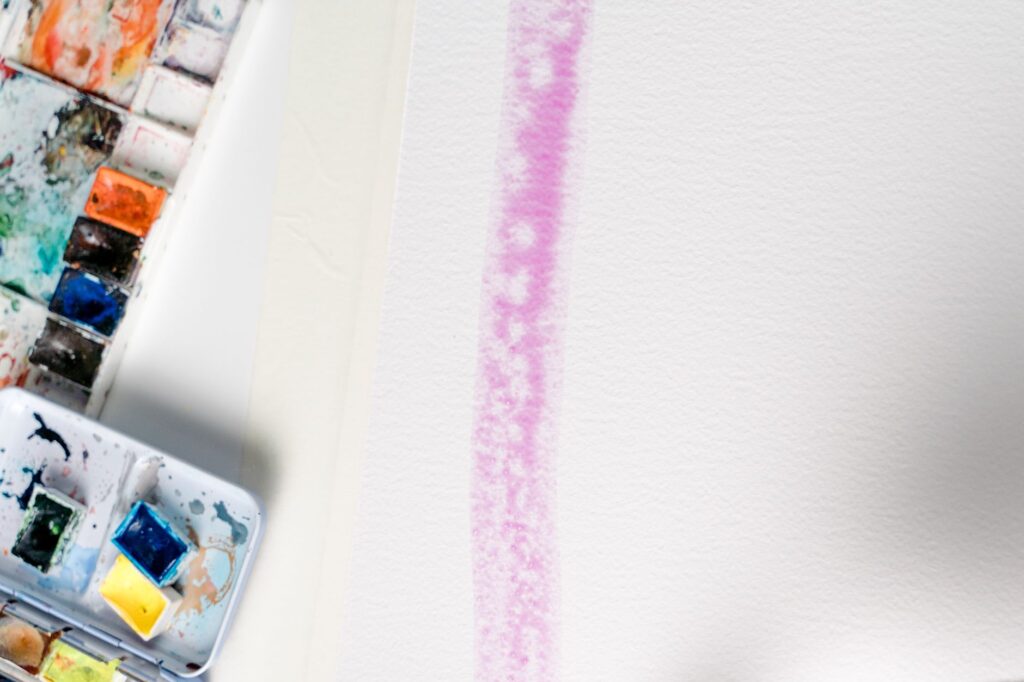
Asakusa workshops work closely with traditional papermakers from rural regions like Echizen or Mino, who continue to boil shrub bark in iron cauldrons and bleach the fibers in the winter sun. This chain of artisanal complicity ensures that each print retains an unmistakable tactile texture. Against the light, washi reveals tiny irregularities and fiber knots that remind the viewer they are standing before an unrepeatable object, created through the direct transformation of natural elements.
Contemporary Dialogue: Avant-Garde on the Margins
Far from being trapped in the historical nostalgia of kabuki actor prints and landscapes by Ando Hiroshige, Japanese woodblock printing today is a fertile laboratory for formal experimentation. Contemporary graphic designers, architects, and visual artists visit Asakusa workshops to translate abstract concepts, urban geometries, and digital narratives into the ancient language of wood and water. This hybridization has allowed near-extinct techniques to regain economic and artistic vitality.

This renewal does not imply a loss of technical rigor, but rather its expansion. Young creators work side by side with veteran horishi to incorporate once-impossible textures, minimalist architectural volumes, and desaturated color palettes that dialogue directly with 21st-century aesthetic sensibilities. The result is a body of graphic work that transcends geographic boundaries, finding collectors and galleries in Paris, New York, and Kyoto that value the material honesty of the process above digital immediacy.
Practical guide
How to get there: The Asakusa district is seamlessly connected to central Tokyo via the Ginza and Asakusa subway lines, as well as the Tobu Skytree line. From Asakusa Station, artisanal workshops are within comfortable walking distance, integrated into the neighborhood’s traditional commercial fabric.
When to visit: Spring and autumn offer the best climatic and lighting conditions for visiting Tokyo. It is advisable to avoid mid-summer months due to extreme humidity, which hinders the proper drying of washi papers and water-based inks.

Recommended workshops: The Sumida Hokusai Museum graphic dissemination center, located in the neighboring district, offers permanent and temporary exhibitions of high historical rigor. Several independent workshops in Asakusa accept scheduled visits and brief introductory sessions for researchers and design professionals by prior reservation.
Purchase and etiquette tips: If acquiring original graphic art, always request the certificate of authenticity detailing the carver, printer, and limited edition. When visiting active workshops, maintain absolute respect for the silence and concentration required by master artisans.
The Echo of Silence in the Workshop
As evening falls over Asakusa and the neon lights of the commercial streets begin to flicker, the woodblock printing workshops turn off their overhead lamps. Left on the workbenches are microscopic remnants of cherry sawdust and faint traces of indigo blue pigment upon damp wooden plates. In that moment of absolute stillness, the distance between feudal Japan and the hyperconnected present vanishes completely. The finished print, hung with wooden pins on a hemp rope to complete its final drying, is not merely a testimony of the past; it is tangible proof that beauty, when cultivated with patience and material rigor, possesses the capacity to stop time and return human beings to their truest scale.