
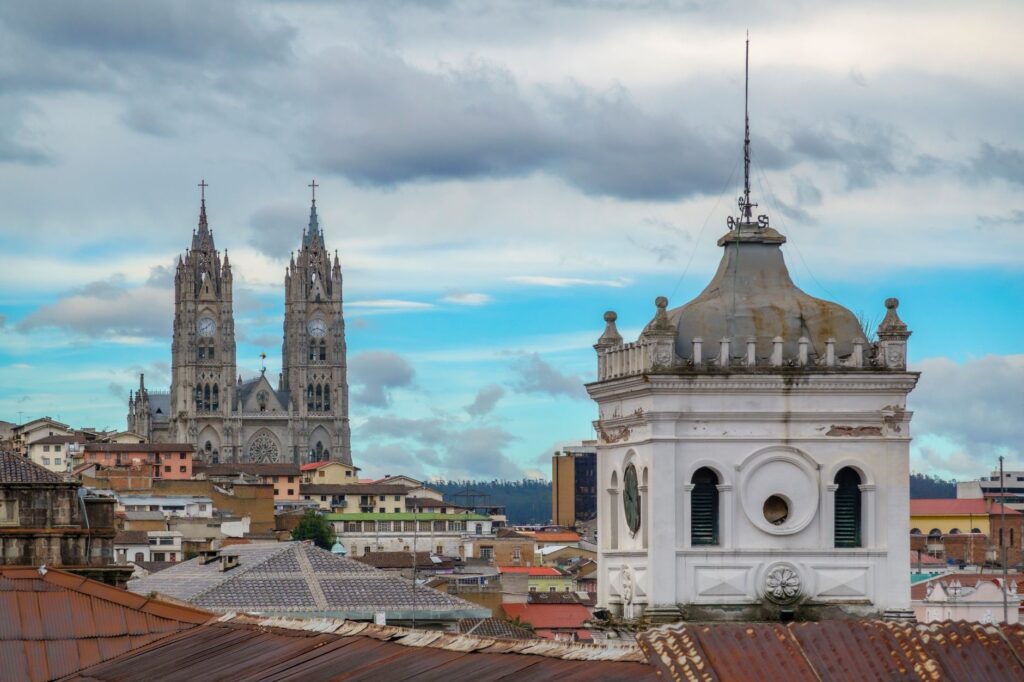
On the slopes where Pichincha volcano watches over the Andean valley, time is measured not by clock hands, but by layers of lead white, the finest strands of burnished gold leaf, and the dry crunch of cedar wood yielding to the edge of a gouge. Quito, a South American heritage jewel, treasures an artistic tradition rooted in the celebrated Quito School of the 17th and 18th centuries within its cloisters and independent workshops. Far from being a mere museum relic, this legacy is undergoing a profound revitalization driven by a new generation of artisans who hybridize historical rigor with scientific research applied to conservation.
The phenomenon responds to an urgent need for material and identity rescue against the mass industrialization of religious and decorative objects. The workshops that once supplied virgins, saints, and altarpieces to the entire Viceroyalty of Peru now operate as centers of high specialization where researchers analyze the chemical composition of animal glues, the purity of mineral pigments, and the density of native woods threatened by deforestation. This report immerses the reader in spaces where sacred art ceases to be static dogma and becomes a living testimony of manual dexterity and American aesthetic thought.
The Genesis of the Andean Workshop: Between Colonial Guild and Modern Laboratory
Crossing the threshold of a traditional workshop in Quito’s Historic Center is stepping into an ecosystem where liturgy, case-furniture carpentry, and anatomical rigor converge. Today’s master craftsmen, direct heirs of guilds founded by Franciscan and Dominican friars, maintain working rituals that remain virtually unaltered. The selection of wood is the first critical filter: Spanish cedar is prioritized for its dimensional stability and resistance to cordillera humidity, though the scarcity of mature specimens has forced explorations into sustainable alternatives like Andean walnut cultivated in community reforestation programs in the foothills of Imbabura.
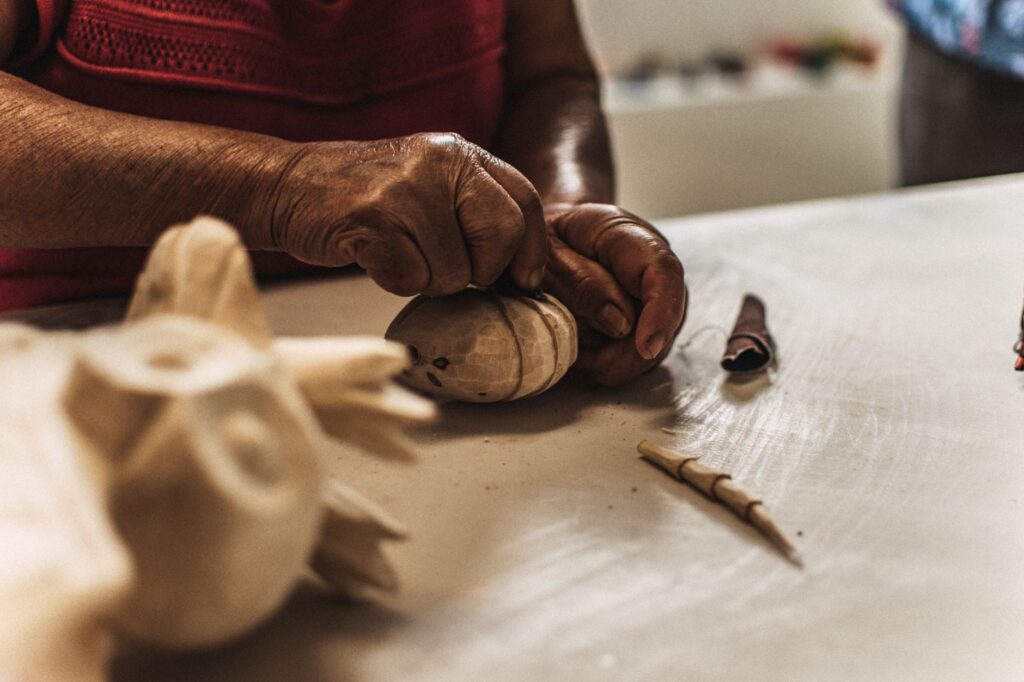
At the workbench, hand tools—half-round gouges, Japanese chisels, and adapted shoemaker’s knives—sculpt volumes that will later undergo the preparation process. Unlike contemporary European imagery, the American school developed an obsession with epidermal naturalism. El encarnado, the pictorial technique used to imitate the tone and texture of human skin, requires up to twelve superimposed layers of egg tempera and essential oils, patiently polished with pumice stone and wolf teeth to achieve a translucent finish that simulates blood circulation beneath the carved epidermis.
Wood cannot be dominated; it must be listened to. Every knot is a geological memory that demands negotiating the stroke before the gouge touches the fiber.
The Chemistry of Color: Resurrecting Historical Pigments
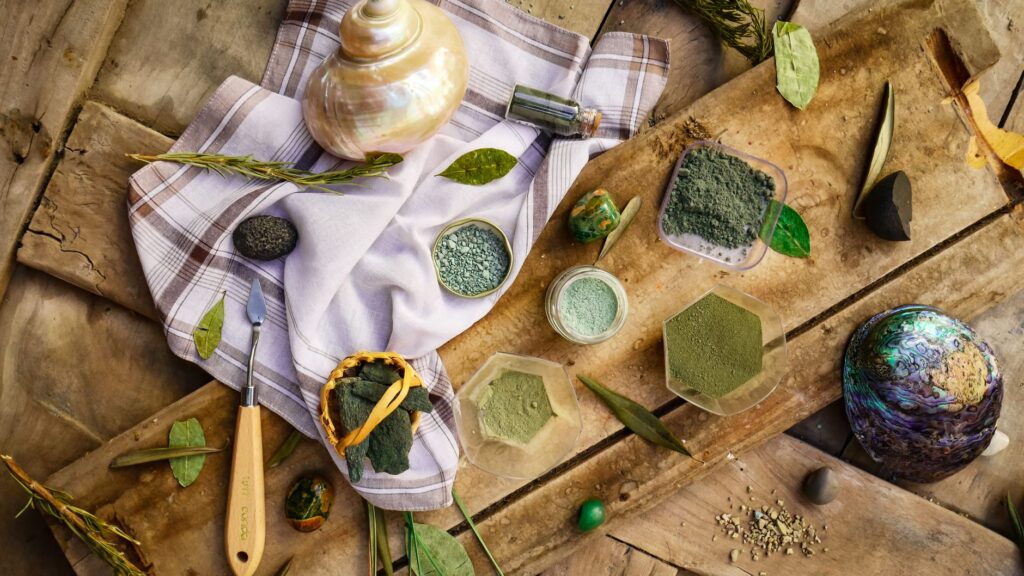
One of the most fascinating aspects of this artisanal renaissance is the recovery of alchemical formulas forgotten during the 20th century, when the market was flooded with industrial synthetic paints that irreversibly damaged ancient wood. Today, Quiteño workshops collaborate closely with university chemistry departments to isolate and reproduce pure pigments: carmine extracted from nopal cochineal, indigo cultivated in the warm valleys of Chota, and natural mercury sulfides used to achieve the intense vermilion reds of apostolic robes.
This scientific rigor does not seek archaeological petrification, but rather guarantees the durability of pieces against the rigors of Andean altitude and urban pollution. Contemporary conservators and carvers document each preparation batch using X-ray fluorescence spectrometry, an unusual bridge between Baroque mysticism and 21st-century analytics. The result is a vibrant chromatic palette that recovers the original luminosity that moved the faithful during the colonial era, free from bituminous darkening accumulated by centuries of wax smoke and soot.
The Gold of the Andes: The Complex Art of Estofado and Brocade
If carving defines structure and encarnado provides humanity, it is gilding that confers a transcendent dimension to the work. The process known as estofado—consisting of applying extremely thin gold leaves over a base of Armenian bole, then scraping away the surface paint to reveal gilded metallic motifs that simulate textile brocades—demands millimeter precision. A single error in needle pressure ruins entire days of goldsmithing work.
In the workshops of the San Blas neighborhood, master gilders beat gold using techniques inherited from Sevillian guilds, adapted to the climatic conditions of the Ecuadorian plateau. Environmental humidity, which oscillates drastically between morning and afternoon, forces artisans to modify the drying times of water- and oil-based mixtures. The mastery of the marten brush and the ability to hold one’s breath during the application of twenty-four-karat gold leaves separate the simple artisan from the consecrated master capable of executing commissions for cathedrals across the continent.
Sustainability and Traceability in Native Wood
The ethical debate surrounding the use of noble woods has radically transformed the supply chain of Quiteño workshops. For decades, the poaching of Ecuadorian cedar threatened the cloud forests of the country’s western region. Today, image-maker guilds have established strategic alliances with forestry cooperatives certified by the Forest Stewardship Council (FSC), guaranteeing that every block of wood carries a traceability passport certifying its origin from legal plantations or rescues of trees felled by natural storms.
This ecological commitment extends to recycling structural elements from demolitions of republican mansions. Century-old beams of chanul and eucalyptus are treated through thermal de-infestation and controlled dehumidification to be reused as primary supports for new sculptures or as bases for restoring historic altarpieces. Sustainability, therefore, is not merely a marketing argument, but a conditio sine qua non for the ethical survival of the trade.
Generational Handover: The Workshop School and New Apprentices
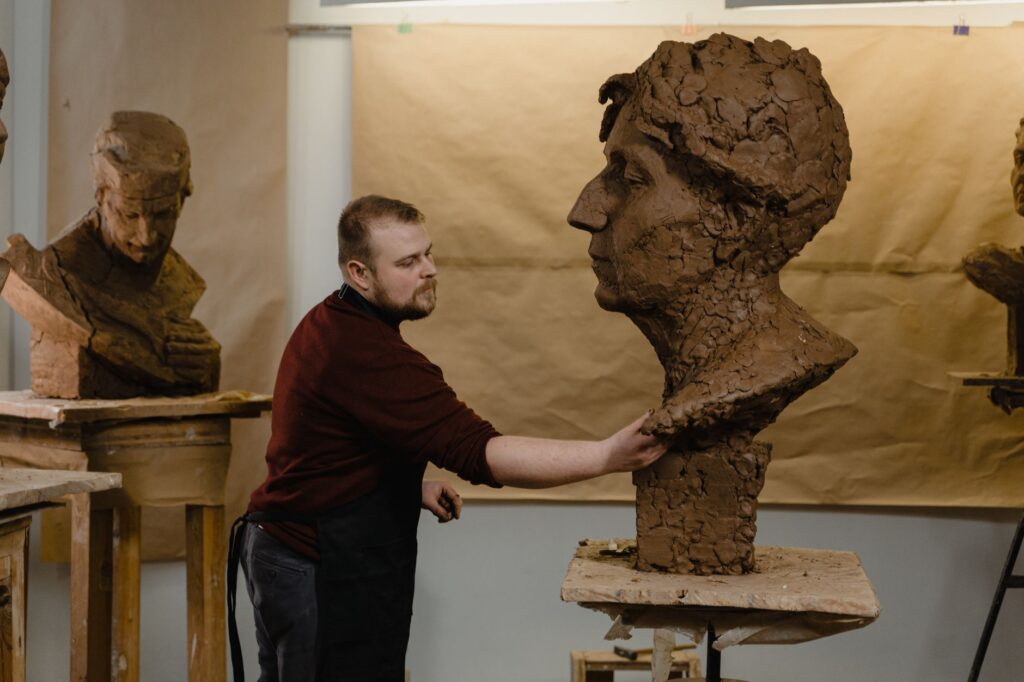
The ghost of guild extinction, which haunted Quiteño workshops during the final decades of the last century, is beginning to dissipate thanks to state and international dual technical education programs. Institutions like the Quito Workshop School, situated in a restored former convent, welcome young people from vulnerable sectors to train them for three years in artistic carpentry, carving, gilding, and preventive conservation.
Students learn not only hand tool operation, but basic notions of art history, anatomical drawing, and economic workshop management. This comprehensive approach breaks with the classist stigma that historically relegated the artisan to the category of manual laborer without critical capacity. The oral transmission of knowledge, once limited to family or patriarchal secrecy, is democratized in classrooms, allowing a new wave of female artists to lead the restoration departments of national ecclesiastical heritage today.
Restoring a colonial sculpture does not mean erasing the traces of time, but allowing the work to continue telling its story without the support collapsing.
Economic Challenges and the Global Sacred Art Market
Despite cultural fervor and technical excellence, independent workshops face a complex financial landscape. Unfair competition from industrial synthetic resin reproductions imported from Asia depresses prices in the local market, making it difficult for young artisans to make a living from their production. To counter this threat, masters have diversified their markets, directing their supply toward international collectors of sacred art, ethnographic museums, and architectural rehabilitation projects in the United States and Europe.

Likewise, bureaucracy in exporting cultural goods protected by Ecuadorian state heritage laws requires complex procedures that can take months. Workshops have had to professionalize in legal and logistical management, creating a transparent channel that certifies the lawful provenance of each piece and protects national heritage from illicit speculation, consolidating a business model based on exclusivity and documented authenticity.
Practical guide
How to get there: Mariscal Sucre International Airport (UIO) is located in Tababela, a 45-minute drive from Quito’s Historic Center. The use of airport-authorized taxis or private transport services arranged by your hotel is recommended.
When to go: The months from June to September offer more stable weather conditions, with sunny mornings ideal for exploring workshops on foot. Holy Week (March/April) allows visitors to observe processions and the liturgical use of carved pieces.
Recommended Workshop Route:
- San Blas Imaginery Workshop: Specialized in traditional encarnado and tempera polychromy (Guayaquil and Esmeraldas Streets).
- Quito Workshop School: Guided visits by appointment to observe training processes in restoration (San Agustín Convent).
- Museum of Colonial Art: Essential for understanding the historical evolution of the Quito School (Cuenca and Mejía Streets).
Recommended accommodation: Hotel Casa Gangotena, located opposite San Francisco Plaza, a benchmark for hotel sustainability and architectural restoration in the heritage heart.
Emotional Epilogue: The Pulse of Breathing Wood
When evening falls over the Historic Center and the towers of the Church of the Company of Jesus are tinged with a deep ochre, the workshops turn off their electric lights and let dusk reclaim the space. At the master image-maker’s workbench, an unfinished virgin awaits the final touch of the gouge on the curve of her shoulder. Resting the palm of one’s hand on the polished wood, one can perceive a subtle thermal vibration, the perfect illusion that inert matter has absorbed the faith, sweat, and heartbeat of entire generations who refused to let the miracle of creating life with their hands die.