The Archipelago Beaten by Northern Winds
In the northernmost reaches of Scotland, where the waters of the North Sea merge with the raging currents of the Atlantic Ocean, the Orkney archipelago stands as one of the planet’s most complex natural laboratories for energy transition and sustainable transport. Comprising some seventy islands—of which barely a score are permanently inhabited—this insular territory has historically depended on a communication network as fragile as it is vital. The topography sculpted by ancient glaciers and the persistence of extreme weather conditions have turned daily mobility into an ongoing challenge for both residents and local authorities.
For decades, the supply of goods, the transport of schoolchildren, and healthcare services relied on traditional fossil-fuel fleets. These vessels, though effective in navigating the unpredictable marine straits known locally as firths, generated a carbon footprint incompatible with the ambitious climate commitments undertaken by the Scottish devolved government. Today, however, the archipelago is undergoing a silent yet radical metamorphosis. The gradual introduction of hybrid vessels, combined with the pioneering development of green hydrogen technologies produced locally from wind surpluses, is rewriting the rules of the game in island navigation.
The Paradox of Isolation and the Need for Connectivity
Understanding the magnitude of this transformation requires examining the complex social and economic network that sustains life on remote islands like Stronsay, Westray, or Sanday. Unlike major continental urban centers, where mobility is synonymous with immediacy and multiple options, in Orkney each inter-island journey constitutes a critical link. The disruption of a single ferry route can isolate entire communities, delay the arrival of essential medical supplies, or prevent local farmers from getting their livestock and dairy products out to mainland markets.

Port authorities and local transport cooperatives have faced a complex equation for years: drastically reducing polluting emissions without compromising the frequency, safety, or cargo capacity of the fleet. Sustainability in the insular environment is not an aesthetic luxury, but a matter of economic survival. Added to this challenge is the need to integrate terrestrial travel, traditionally dependent on internal combustion private vehicles, into a coherent multimodal system that prioritizes energy efficiency from the exact moment the passenger disembarks.
Innovation on the High Seas: The Rise of Hybrid Propulsion
The turning point in this decarbonization strategy has been the modernization of docks and the launching of new ferries equipped with diesel-electric hybrid propulsion systems. These vessels not only drastically reduce heavy fuel consumption during berthing maneuvers and short-distance crossings, but also operate with significantly lower levels of underwater noise. This latter aspect, often relegated to the background, has a direct and positive impact on local marine wildlife, especially the populations of porpoises, grey seals, and diving seabirds that inhabit the channels between islands.
The naval engineers responsible for the design of these vessels have prioritized adaptability to the area’s changing currents, which can reach breakneck speeds. Thanks to high-capacity battery banks recharged through the island electrical grid—largely nourished by small-scale onshore and offshore wind farms—the ferries manage to complete entire journeys on certain stretches without burning a single drop of diesel. The sea is no longer an insurmountable barrier or an invisible dump, but the energy channel driving our collective future, notes a regional development agency memorandum.

The Promise of Green Hydrogen and Renewable Surpluses
Beyond conventional battery electrification, the Orkney archipelago has become a global benchmark in the research and application of green hydrogen. Due to the extraordinary abundance of wind and tidal resources, the islands frequently generate more electricity than their inhabitants and modest industrial fabric can consume. Instead of wasting this energy surplus or overloading the submarine cables connecting to the Scottish mainland, the European project Surf ‘n’ Turf promoted electrolysis plants capable of separating water molecules using clean energy.
This compressed green hydrogen not only feeds experimental fuel cells to supply electricity to ferries docked in Kirkwall harbor during overnight stays, but also begins to power utility vehicles and land delivery vans. Although the total transition of the heavy fleet to hydrogen is still in the industrial scaling phase, tests conducted demonstrate that local infrastructure is capable of producing, storing, and dispensing clean fuel safely in a highly corrosive and windy marine environment.
Soft Mobility and the Coastal Path Network
On firm ground, the transformation of transport relies on the concept of soft mobility and the recovery of ancient bridle paths and livestock tracks converted into greenways. The municipality has encouraged the acquisition of pedal-assist electric bicycles among permanent residents, equipping the main islands with public charging stations powered exclusively by low-power solar and wind energy. This initiative seeks to decongest the narrow paved roads connecting Neolithic settlements and agricultural holdings.
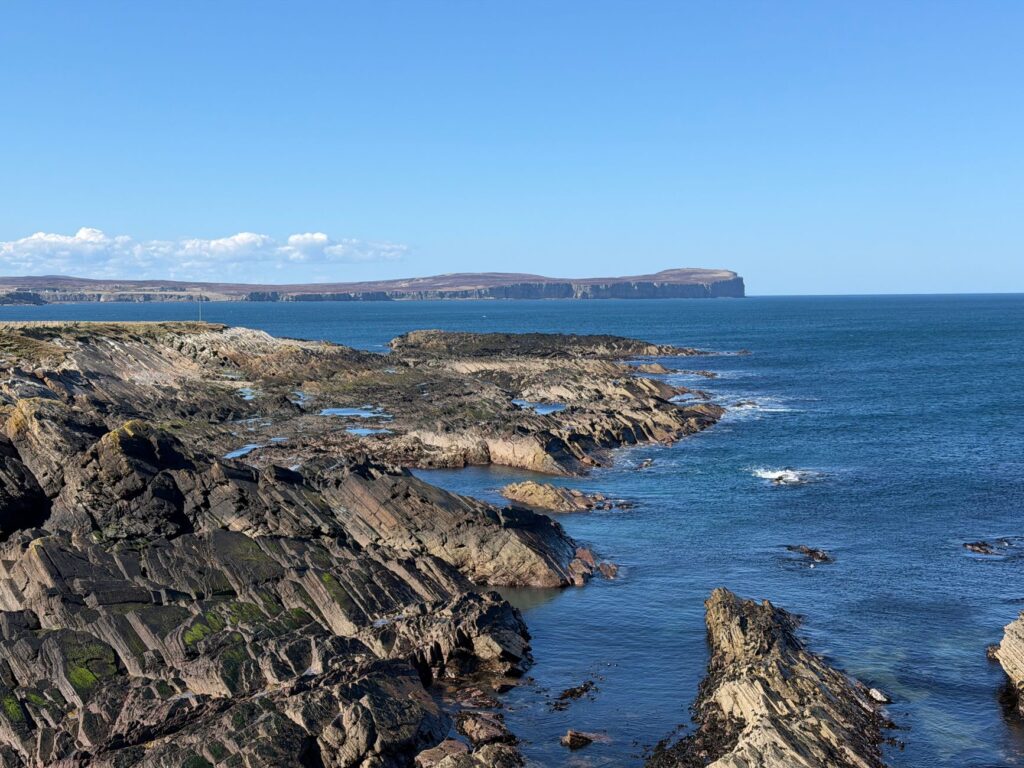
For visitors arriving aboard the ferries, local tourism guidelines strongly recommend leaving rental vehicles on the mainland or at the main terminals, opting for a leisurely exploration on foot or two wheels. The slow pace of the archipelago imposes a truce against the urgencies of modern life. Walking along the paths bordering the cliffs of Yesnaby or touring the pastures surrounding the Ring of Brodgar allows one to appreciate the landscape from a respectful perspective, minimizing erosion of the fragile peat-covered soils and reducing the carbon footprint associated with conventional tourism.
Logistical Challenges and Maintenance in Extreme Conditions
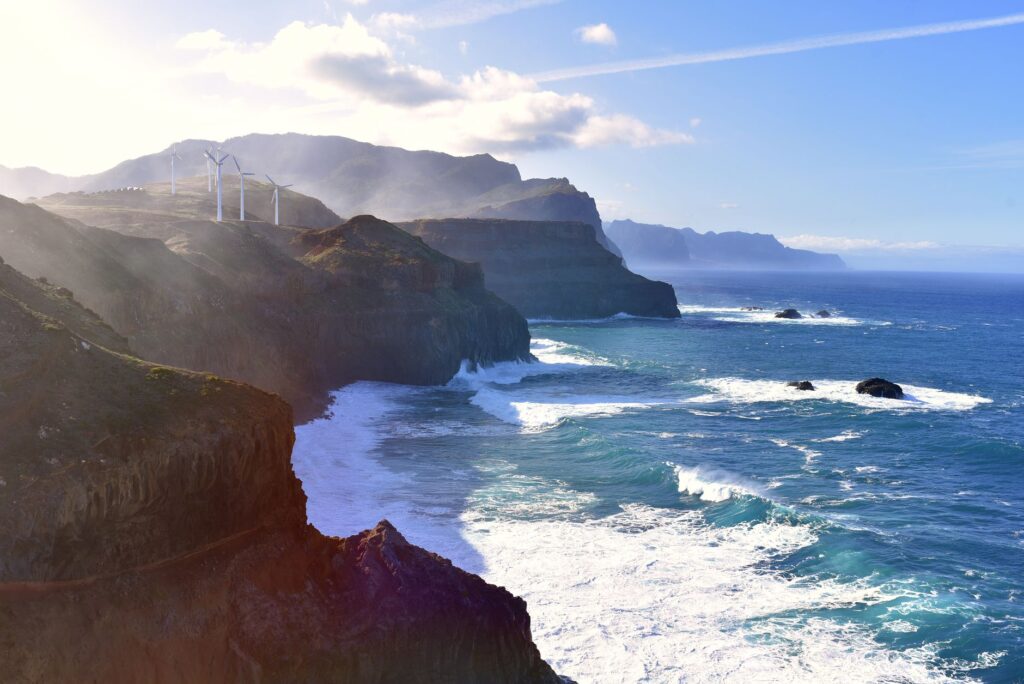
Despite technological advances, governing a low-emission transport network in a region so exposed to Atlantic storms presents countless operational difficulties. Winter storms, characterized by hurricane-force winds and waves exceeding ten meters, test the resilience of outdoor charging stations and the reliability of electronic components in the new vessels. Maintenance teams must deploy rapidly in adverse weather conditions to ensure auxiliary propulsion systems respond without failure.
Likewise, the supply chain for specific spare parts for hybrid and hydrogen systems requires meticulous planning. As cutting-edge technology implemented in peripheral insular locations, any unforeseen breakdown can take longer than desired due to reliance on specialized technicians from the Scottish mainland or Northern Europe. This vulnerability underscores the urgency of training local professionals in marine electromechanics and clean energy maintenance, consolidating skilled employment rooted in the territory itself.
Practical guide
How to get there: The main access route for vehicles and passengers is via ferries operated by NorthLink Ferries from Scrabster (near Thurso) to Stromness, or via the Gills Bay to St. Margaret’s Hope route. There are also regular scheduled flights operated by Loganair from major Scottish airports to Kirkwall Airport.
When to travel: The months between May and September offer the most stable weather conditions, longer daylight hours, and full operation of extended schedules on inter-island ferry routes. Winter, although fascinating for its dramatic landscapes and the frequent appearance of the aurora borealis, drastically reduces connections due to storms.

How to get around: For journeys between the main islands (Mainland, Hoy, Stronsay, Westray), it is recommended to use passenger and vehicle ferries managed by Orkney Ferries. For land mobility, renting electric bicycles and using local public buses (Stagecoach) constitute the most efficient and lowest environmental impact options.
Sustainability tips: Strictly follow park ranger guidelines in seabird nesting areas and protected archaeological sites. Avoid single-use plastics, as recycling capacity on the smaller islands is limited and depends on the congested hold of the cargo ferries themselves.
The Silent Echo of Millennial Stones
At dusk, when the golden light of the boreal summer bathes the stone megaliths and the dark peatlands exhale the freshness of the concluding day, the Orkney archipelago reveals its most intimate dimension. In the docks where the diesel engines of old freighters once roared, today one barely perceives the subtle hum of frequency converters and the gentle lapping of water against the hulls of hybrid ferries. This is not merely a technical victory over polluting emissions, but a profound reconciliation between human activity and the indomitable force of insular nature. Here, at the northern confines of Europe, sustainable mobility has ceased to be a promise for the future to become the invisible mortar that sustains, with respect and balance, the daily pulse of a millenary community.