
Introduction to the Rolling Myth of High-Speed Rail
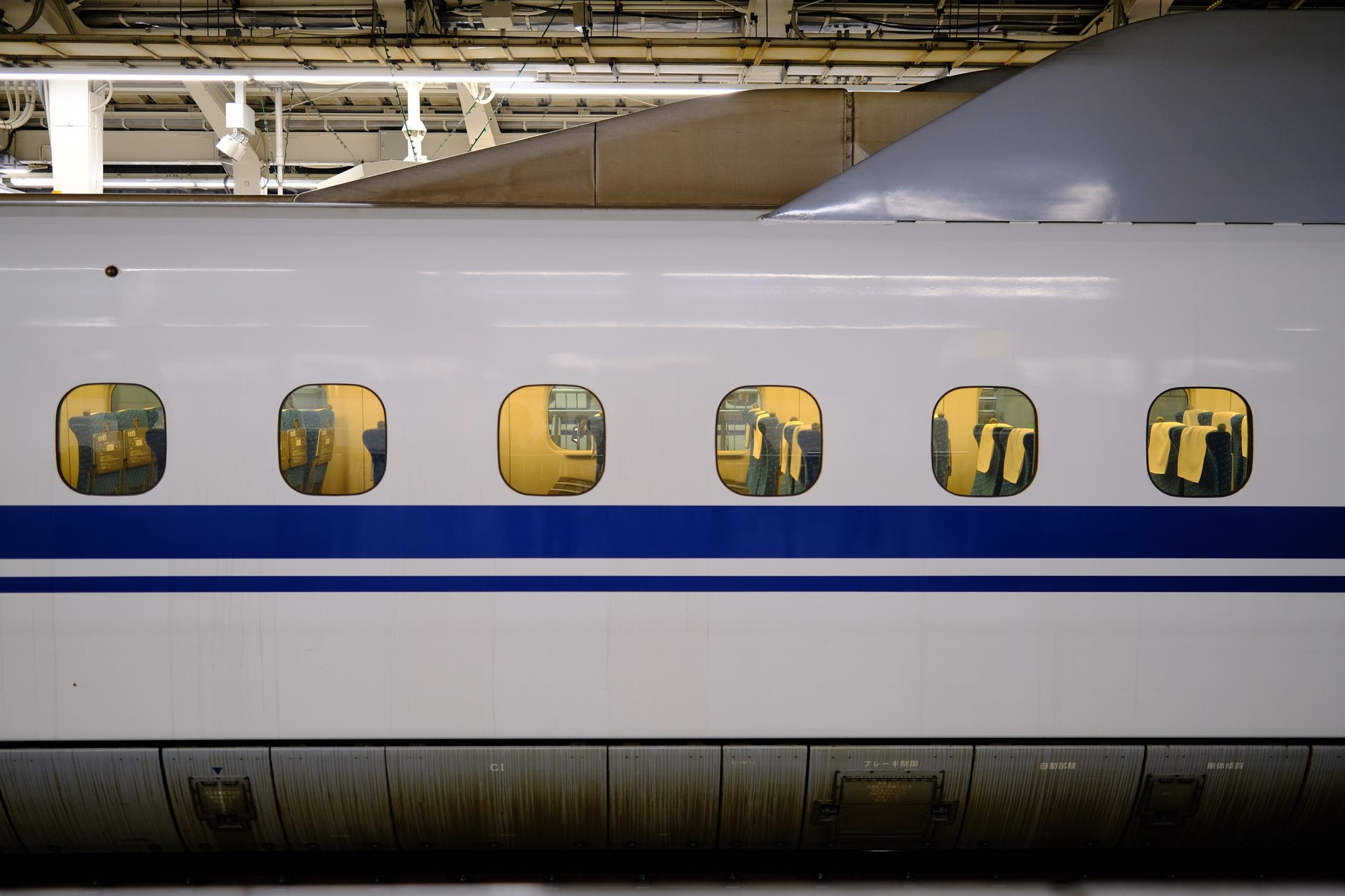
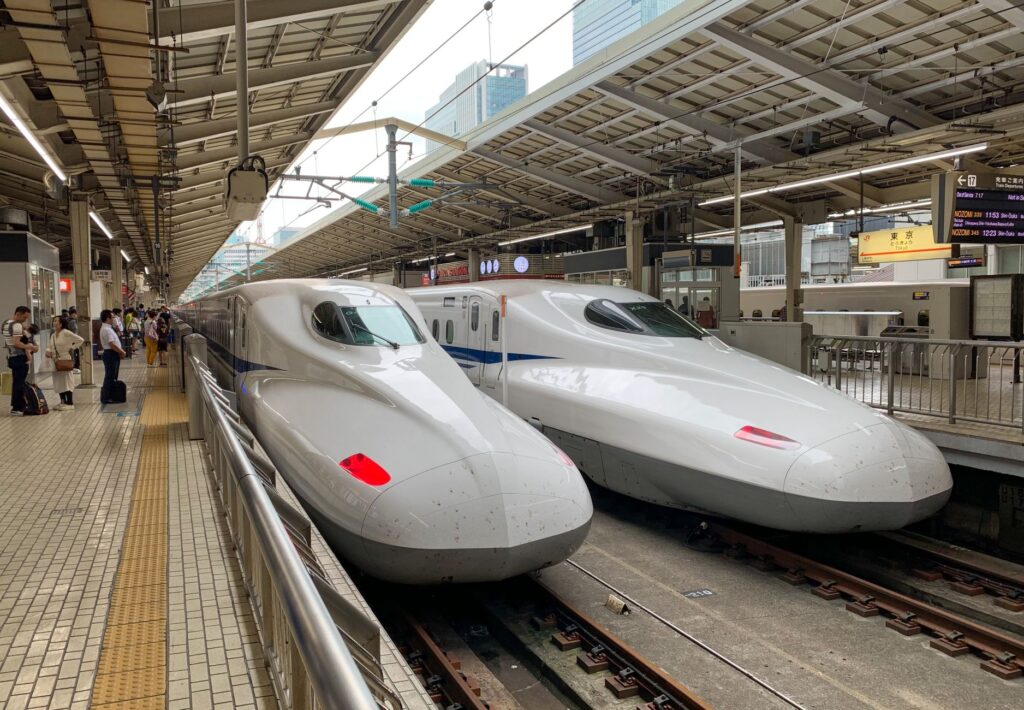
The muffled roar that precedes the arrival of a Shinkansen train at Tokyo Station is not merely the sound of technical progress; it is the punctual heartbeat of a nation that redefined the relationship between time and space. Inaugurated in 1964, just in time for the Olympic Games that opened the doors of modern Japan to the world, the Tokaido Shinkansen connected the country’s two most important metropolises, Tokyo and Osaka, across a corridor of more than five hundred kilometers that permanently transformed the human geography of the Asian archipelago. Far from being a simple means of rapid transit, this railway line became the circulatory system of the world’s third-largest economy, uniting industrial centers, agricultural valleys, and densely populated megalopolises with millimetric precision that continues to astonish engineers and travelers across the globe.
Over the decades, this corridor has transported billions of passengers without recording a single fatal accident due to derailment or collision—a safety milestone that defies the complexity of operating trains at speeds exceeding two hundred and fifty kilometers per hour in a seismically unstable territory plagued by frequent earthquakes, typhoons, and heavy winter snows. Analyzing the Tokaido Shinkansen means plunging into a masterpiece of civil engineering and logistical planning, where every bolt, every signal, and every second on the timetable is calculated to maximize efficiency without sacrificing user comfort or safety.
Historical Origins and the Challenge of the 1964 Olympic Games
The idea of constructing a high-speed rail line in Japan was born in the 1950s, at a time when the traditional narrow-gauge railway network was completely saturated and on the verge of functional collapse. Post-World War II economic growth demanded a rapid route linking the Kanto region with the Kansai region, the country’s primary industrial belt. However, the initial proposal to build a standard-gauge track was met with skepticism by Ministry of Finance bureaucrats, who considered the project an unnecessary luxury in a nation still recovering from the war’s devastation. The persistence of visionaries such as Hideo Shima, the project’s chief engineer, and Shinji Sogo, then president of the Japanese National Railways (JNR), proved fundamental in overcoming political and budgetary barriers.
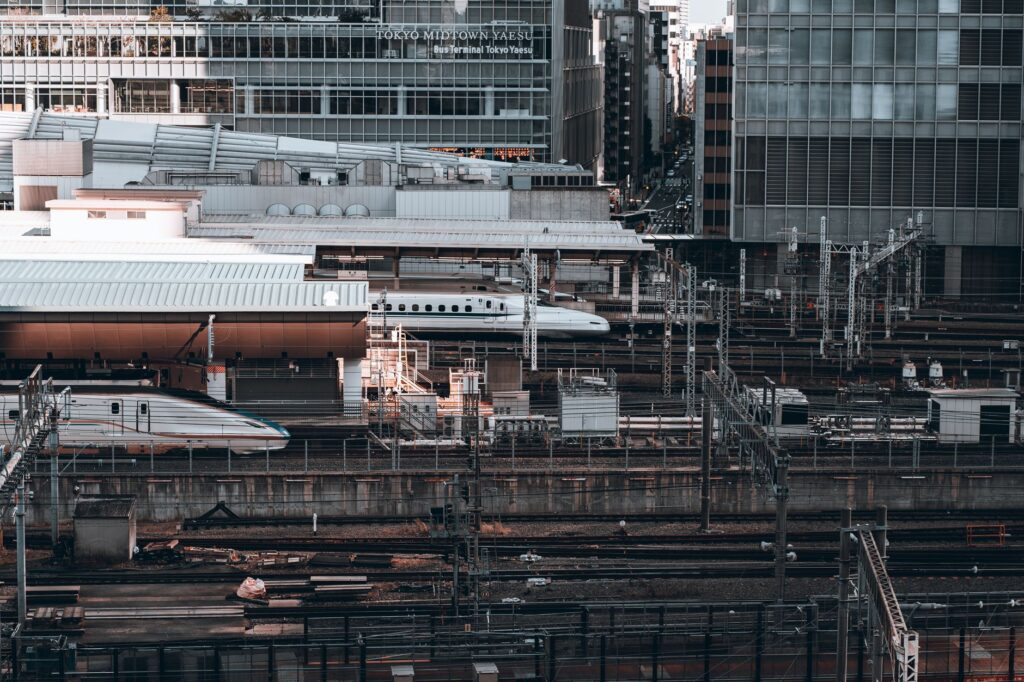
The turning point arrived when Tokyo was selected to host the 1964 Olympic Games. The global sporting event provided the political urgency and necessary funding to accelerate construction. On October 1, 1964, barely ten days before the opening ceremony of the Olympics, the first bullet train departed Tokyo Station for Osaka. The success was immediate and resounding. What began as a monumental effort to showcase the nation’s technological recovery to the world quickly evolved into an economic catalyst that spurred gross domestic product growth for the following three decades, proving that investment in high-capacity transport infrastructure is an irreplaceable engine for regional development.
Civil Engineering and Overcoming Geographical Barriers
Constructing a railway track capable of supporting heavy trains at high commercial speeds across Japan’s rugged topography required unprecedented engineering solutions for its time. Unlike European or American lines, which often meandered along natural terrain contours to save construction costs, the Tokaido Shinkansen was designed with a predominantly straight alignment. This meant engineers had to bore numerous tunnels and erect kilometer-long viaducts to span valleys and swift rivers, minimizing sharp curves that would force trains to slow down.
The system features dozens of tunnels and bridges representing notable technical milestones. The Tanna Tunnel, though partly inherited from the previous conventional line, and the subsequent Nihonzaka Tunnel are examples of how labor and heavy machinery had to confront treacherous geological conditions characterized by fractured rock and hot volcanic water seepage. Furthermore, track stability was engineered using ballast systems and high-resistance welded rails that minimize vibration and mechanical wear. Every component of the infrastructure undergoes rigorous nightly inspections via special laboratory trains, popularly known as Doctor Yellow, which traverse the tracks gathering data on catenary status and rail alignment while commercial service rests.
The Human Factor and the Culture of Millimetric Punctuality
The worldwide fame of the Shinkansen stems not only from its top speed, which approaches two hundred and eighty-five kilometers per hour in modern series, but from its legendary punctuality. In Japan, time is not a flexible concept; it is a metric of mutual respect and professionalism. The annual average delay across the entire Shinkansen network is measured in seconds, rather than minutes. If a train arrives more than a minute late, the railway company issues an official certificate that passengers can present at their workplaces to explain their tardiness, and national media outlets routinely report the incident as an extraordinary event.
Behind this surgical precision lies a combination of advanced signaling technology and ironclad labor discipline. The Automatic Train Control (ATC) system largely eliminates human error by continuously monitoring train speeds and automatically applying brakes if the established limit for each track sector is exceeded. Similarly, drivers undergo a rigorous training process involving advanced simulators and strict medical and psychological evaluations. A representative and curious aspect of this culture is the famous bowing ritual performed by cleaning crews upon entering and leaving passenger carriages, a gesture symbolizing pride in craftsmanship and the meticulous care of a shared public space.
The punctuality of the Shinkansen is not the result of chance, but the culmination of a collective obsession with technical perfection and absolute respect for the time of others.
This discipline also extends to passengers, who adopt tacit rules of coexistence on board: mobile phones must be kept on silent mode, conversations are held in low tones, and consuming food and beverages is conducted in an orderly fashion thanks to traditional bento box meals sold on platforms before departure.
Station Networks and the Impact on Urban Decentralization
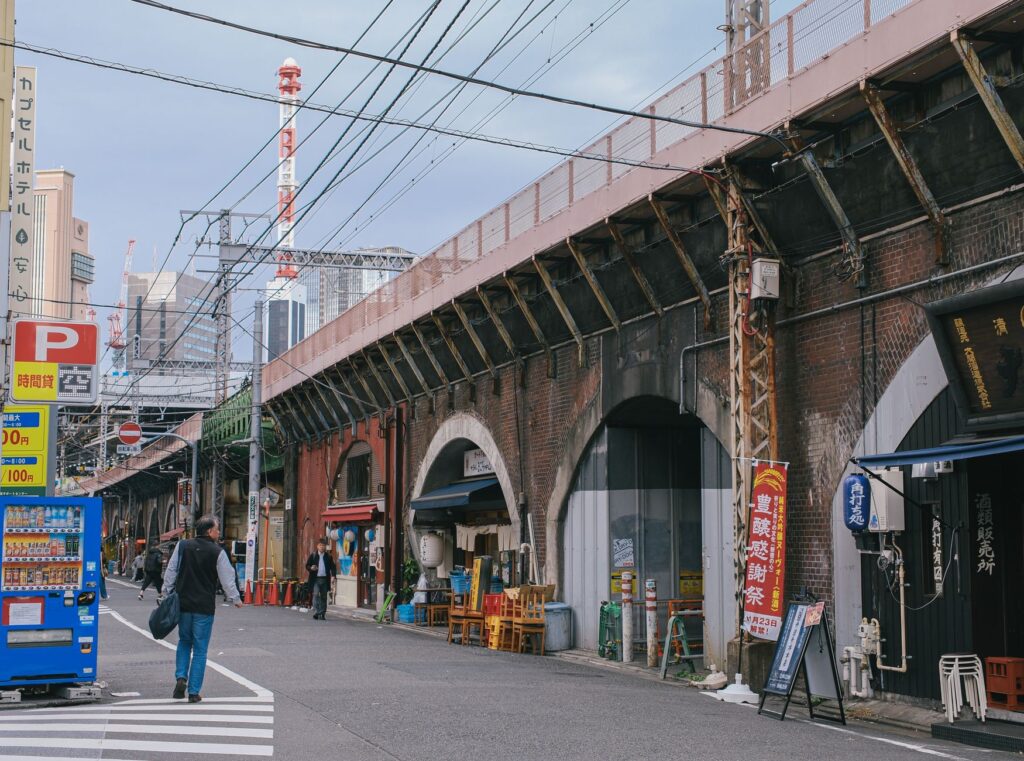
The impact of the Tokaido Shinkansen transcended the strictly railway sphere to become the primary architect of Japan’s urban modernization. Major stations along the route, such as Shin-Yokohama, Nagoya, Kyoto, and Shin-Osaka, ceased to be mere transit stops and transformed into dynamic economic and commercial hubs. Around these terminals, integrated urban complexes combining offices, high-end hotels, department stores, and convention centers have developed, maximizing the efficiency of urban land use in a country where space is exceptionally scarce.
This phenomenon of concentration and rapid connectivity allowed Japanese corporations to decentralize their operations without losing managerial cohesion. A senior executive in Tokyo can attend a morning meeting in Nagoya and be back at the main office before lunch—a level of mobility that invigorated interregional commerce and reduced the need for massive residential migration to the capital. Intermediate cities connected by the line experienced sustained demographic growth during their initial decades of operation, becoming prosperous enclaves combining historical tradition with technological modernity.
Seismic Safety and Resilience Against Natural Disasters
Japan is one of the most seismically active countries in the world, a geographical reality that has forced Shinkansen designers to develop truly pioneering early warning and risk mitigation systems. The Urgent Earthquake Detection and Alarm System (UrEDAS) is capable of detecting primary waves—faster but less destructive—of an earthquake before secondary waves arrive, which are responsible for severe structural damage on the surface.
When the system detects a major tectonic movement, it sends an automatic signal cutting power supplies and engaging emergency brakes on all trains within the affected area in a matter of milliseconds. This technology has proven effective on multiple occasions, stopping moving trains seconds before violent shaking occurs and averting catastrophic tragedies. Furthermore, viaducts and concrete pillars have been systematically reinforced over decades to withstand high-intensity earthquakes, turning the railway infrastructure into a global model of disaster resilience.
Practical Information for the Contemporary Traveler
Planning a trip on the Tokaido Shinkansen requires understanding available service categories and current regulations for international passengers. The main line is operated by Central Japan Railway Company (JR Central), while subsequent northern and western extensions belong to other Japan Railways group subsidiaries. Trains are divided into three commercial categories based on speed and number of stops:
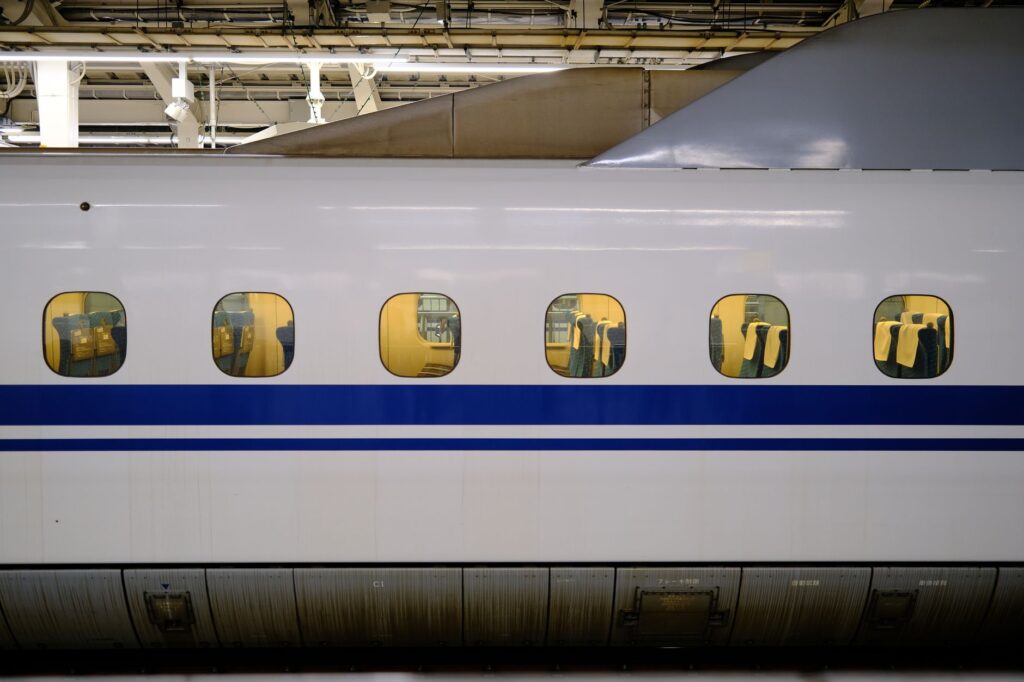
- Nozomi: The fastest and most frequent service, with a travel time between Tokyo and Osaka of approximately two hours and twenty-five minutes. It makes few intermediate stops, focusing on major stations.
- Hikari: Offers a slightly longer journey time, stopping at more intermediate stations. Ideal for visiting mid-sized cities such as Shizuoka or Hamamatsu.
- Kodama: The local service stopping at every single station along the route. Although overall speed is lower, it remains essential for short trips or connecting less populated towns.
On board, passengers can choose between standard class and the Green Car, equivalent to first class, offering wider seats, greater legroom, adjustable footrests, and a quieter overall atmosphere. In recent years, regulations for oversized luggage have changed: suitcases whose total dimensions exceed one hundred and sixty centimeters must reserve a specific seat with large luggage space at the rear of the carriage—a measure designed to expedite boarding and ensure aisle safety.
Sustainability and the Future of High-Speed Rail
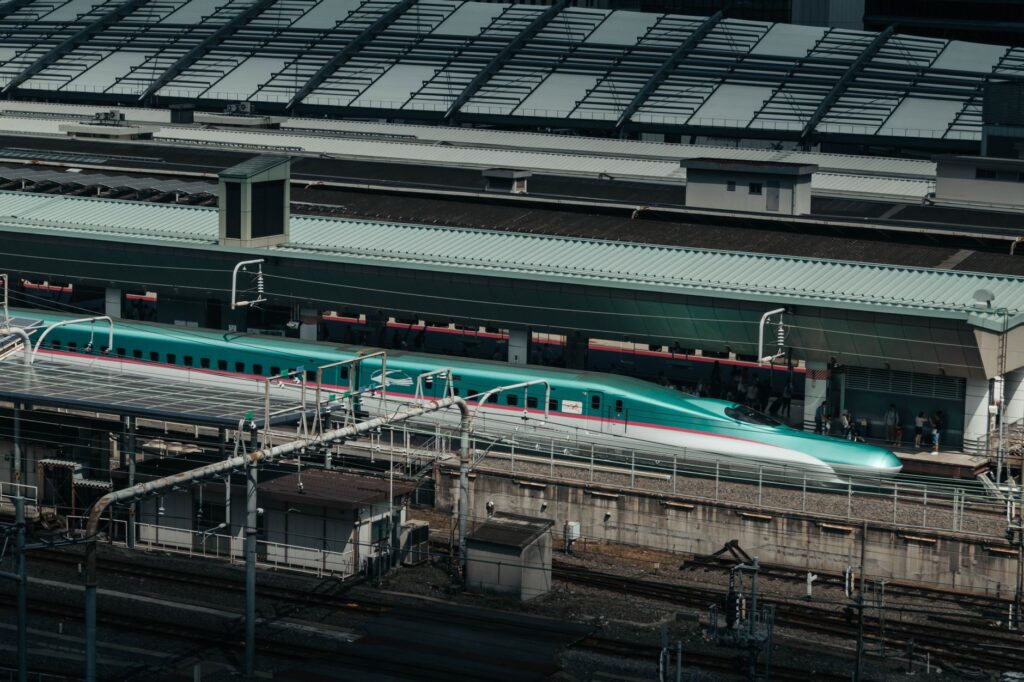
In a global context marked by climate urgency, high-speed rail transport stands out as an irreplaceable ecological alternative to short-haul aviation. The Shinkansen consumes a fraction of the energy per passenger-kilometer used by commercial aircraft and emits notably lower volumes of carbon dioxide. Newer train generations, such as the N700S series, incorporate advanced aerodynamic designs reducing wind resistance and regenerative braking systems that feed electrical energy back into the grid during deceleration.
Investing in high-speed rail networks is not merely a matter of economic efficiency, but an ethical and environmental imperative essential for the future of human mobility.
In addition to energy efficiency, ongoing research focuses on reducing environmental noise in dense residential areas crossed by tracks, redesigning pantographs connecting the train to the catenary to minimize aerodynamic humming. With future projects like the magnetic levitation Maglev line under development, Japan demonstrates that its commitment to transportation cutting-edge technology does not stop, consolidating a legacy of technical excellence continuing to set the course for the rest of the world.