
On platform three of Oslo Central Station, the morning cold smells not of combustion, but of damp spruce and tempered steel. The electric locomotives operated by the state rail carrier Vy wait in quiet alignment, devoid of vintage ostentation yet invested with a crisp, functional elegance engineered to master the Scandinavian winter. At precisely eight twenty-five, the Bergen Line—the legendary Bergensbanen—glides westwards. This is far more than an efficient link between Norway’s two primary metropolises; it is a masterclass in geomorphology, collective human resilience, and dramatic ecological transition cutting through the highest mountain plateau in Northern Europe.
Covering 471 kilometers in just under seven hours, the train connects the sheltered Oslofjord to the windswept Atlantic port of Bergen. Along its path, the convoy navigates 182 tunnels and ascends from sea level to 1,237 meters at the remote outpost of Finse. The Bergensbanen is not merely a transit corridor, but the supreme engineering feat that unified Norway’s fractured topography at the turn of the twentieth century. Prior to its official opening in 1909 by King Haakon VII, traveling between the eastern seat of government and the western trading hubs demanded either a treacherous coastal sea voyage or an exhausting, multi-day mountain traverse on horseback.
The Audacity of the Track: Human Labor on the Granite Frontier
The proposal to drive a railway through southwestern Norway’s glaciers and trackless uplands ignited fierce debate in the Storting during the late nineteenth century. Skeptics argued that perpetual winter storms would bury the tracks under meters of dense drift, destroying any infrastructure within months. Yet, led by master engineer Hans Kornelius Lysaker, thousands of itinerant laborers—known throughout Scandinavia as rallare—set out to tame what cartographers had deemed impassable.
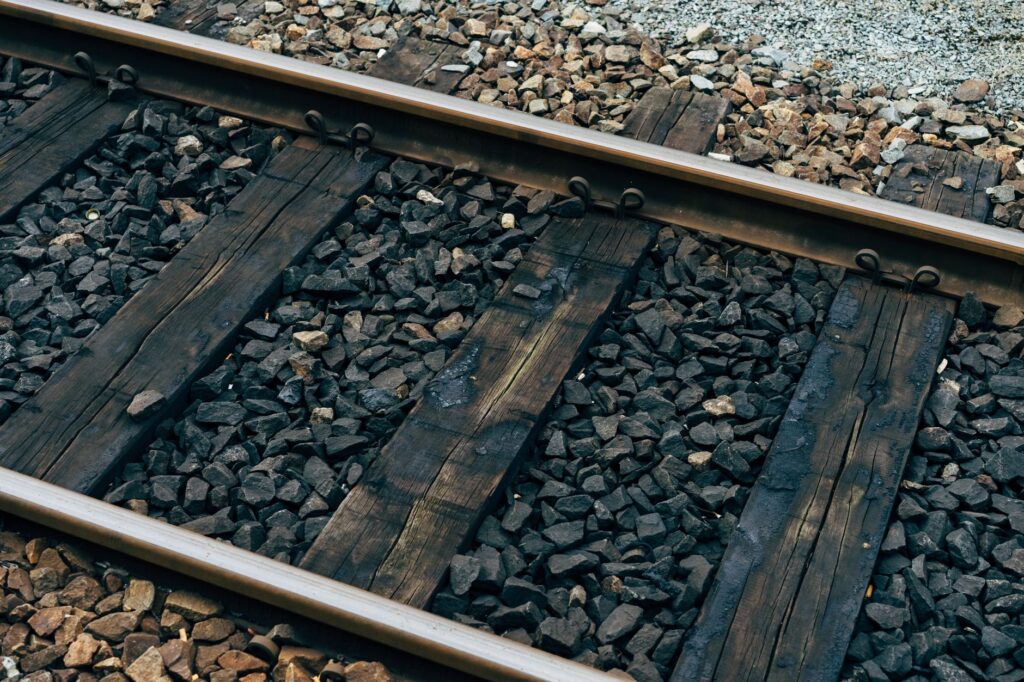
These crews endured temperatures frequently dropping below minus thirty degrees Celsius, blasting sheer granite with volatile nitroglycerine and carving out ledges with handheld chisels. During the deepest winter months, construction gangs remained stranded in crude wooden barracks anchored to bedrock, while pack horses brought provisions across uncharted passes. The completion of the Gravahalsen Tunnel, spanning more than five kilometers chiseled by hand through solid gneiss, stood as one of the great milestones of European civil engineering.
From the Lowland Forests to the Barren Vastness of Hardangervidda
Leaving behind the suburban edges of Drammen and tracing the glass-like waters of Lake Krøderen, the carriage windows frame a swiftly shifting world. The pastoral farms of Viken gradually yield to the deep coniferous forests of the Hallingdal Valley, where glacial meltwater churns through narrow gorges beneath timber farmsteads painted in traditional Falu red. As the train clears the market towns of Flå, Nesbyen, and Gol, the lush greenery begins to thin.
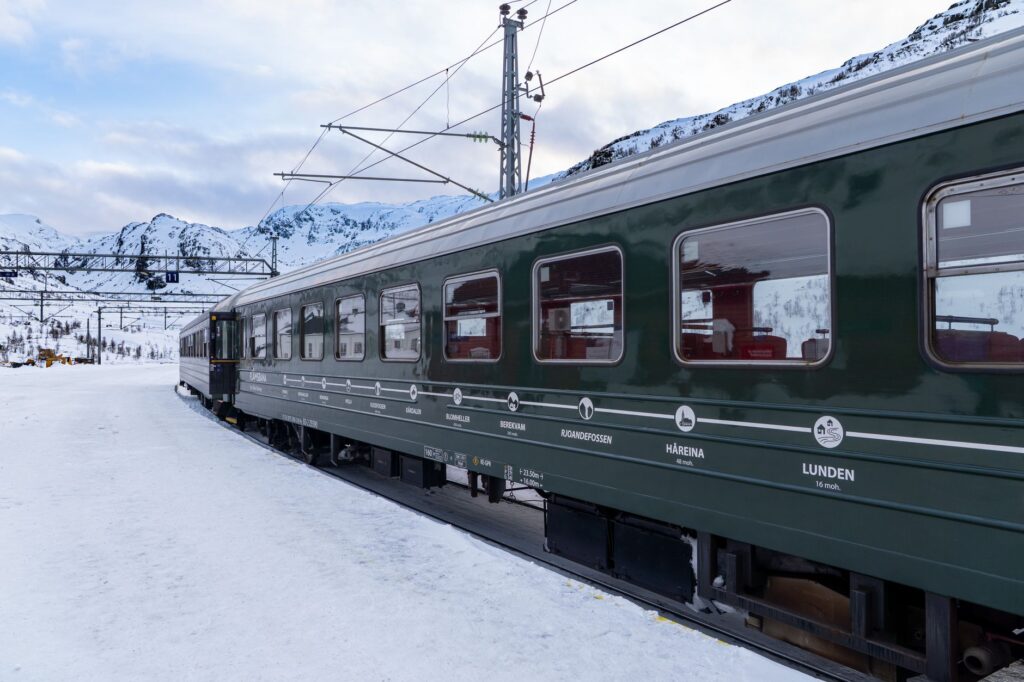
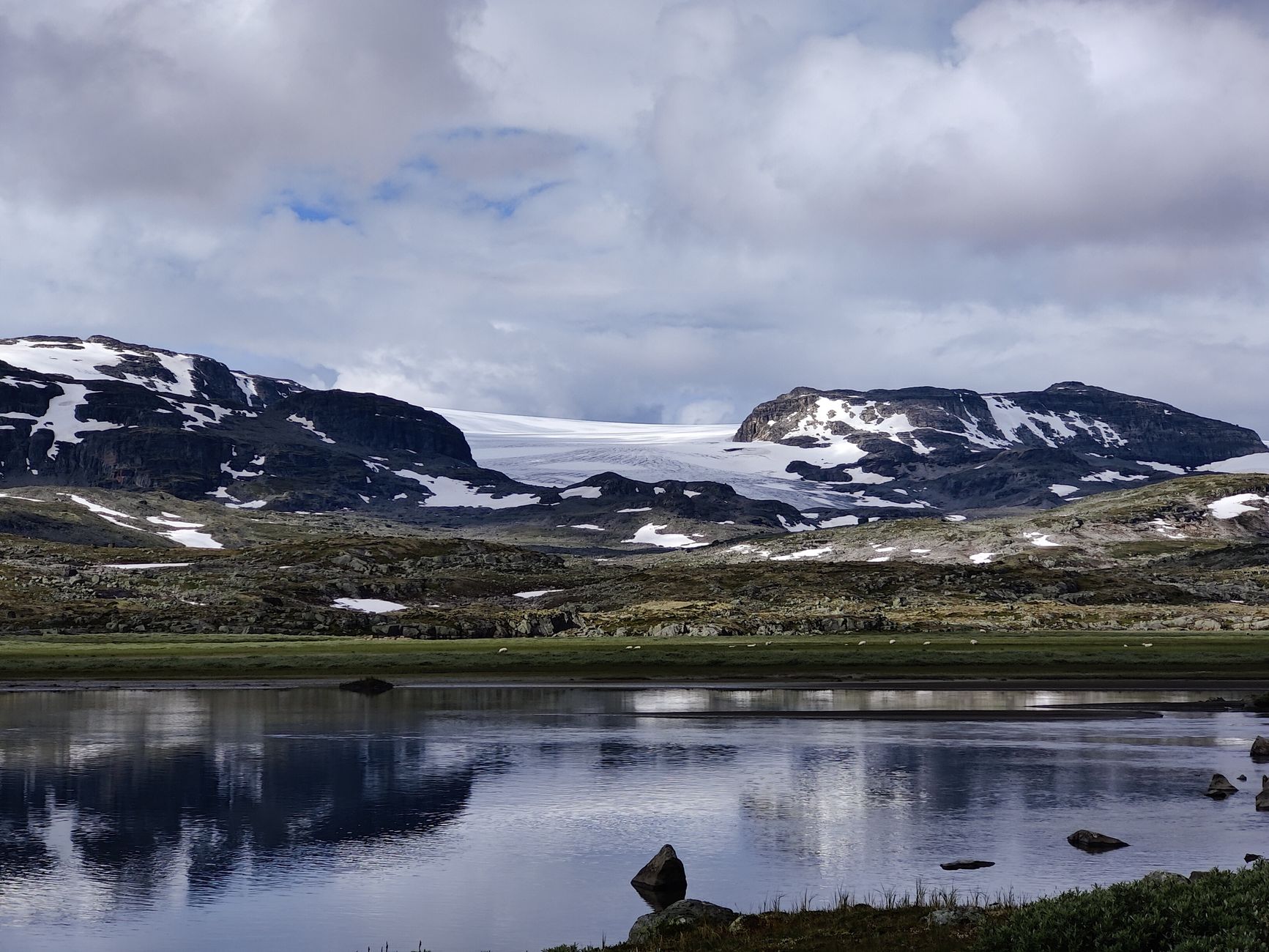
By the time the convoy pulls into Geilo, a historic center for Nordic cross-country skiing at nearly eight hundred meters altitude, the transformation is striking. Birch and pine give way to stunted alpine scrub, and soon all arboreal life ceases. The train enters the vast expanse of the Hardangervidda National Park—an eight-thousand-square-kilometer high-mountain plateau carved flat by Pleistocene ice sheets. Here, the landscape flattens into an austere expanse of semi-frozen tarns, pale lichen, and weathered rock fields that become an unbroken polar whiteout in winter.
«To cross the Finse plateau inside a warm train compartment is to witness nature’s most merciless wilderness without suffering its fury; it is the absolute triumph of human perseverance over the eternal frost.»
Finse: High-Altitude Isolation and the Polar Legacy
At kilometer 302 sits Finse, the highest railway station in Northern Europe. No public roads reach this settlement; arrival is possible solely by rail, by traversing the seasonal Rallarvegen maintenance track on a bicycle, or on touring skis across winter crust. Stepping onto the wooden platform, the mountain wind greets travelers with formidable force.
To the south looms the blue-white dome of the Hardangerjøkulen glacier, dominating the southern horizon with ancient majesty. Finse holds a storied role in polar exploration history: legendary explorers Robert Falcon Scott, Ernest Shackleton, and Fridtjof Nansen used its subarctic conditions as a rigorous proving ground before departing for the North and South Poles. Decades later, in 1979, filmmaker George Lucas chose this windswept plateau to depict the ice planet Hoth in The Empire Strikes Back, using Finse’s relentless real-life blizzards to create cinematic realism impossible on a soundstage.
The Myrdal Junction and the Sheer Drop of the Flåmsbana
Descending westward from the plateau, the main train halts at Myrdal, an isolated interchange perched precariously on a granite precipice. Here, travelers disembark to board the Flåmsbana (the Flåm Railway), celebrated as one of the steepest standard-gauge adhesion railways on earth, which drops 860 meters over a distance of just twenty kilometers down to the Aurlandsfjord, an arm of the vast Sognefjord.
Switching to the vintage green coaches of the Flåmsbana reveals an extraordinary piece of vertical engineering. To manage an 18-percent gradient without rack-and-pinion cogs, the line loops through twenty tunnels, eighteen of which were cut into spirals within the cliffs. The descent of the Flåmsbana is a sheer vertical plunge through hanging valleys where roaring cascades like Kjosfossen cast icy mist directly onto the railcars. At Kjosfossen, the train pauses briefly, allowing passengers to step out onto a spray-drenched boardwalk and feel the thunder of thousands of tons of glacial runoff.
Life on the Edges of the Sognefjord
Reaching the terminus in Flåm at the fjord floor brings an immediate sensory shift. The mild, humid maritime air supports apple orchards and lush meadows framed by near-vertical rock faces soaring a thousand meters above emerald-green water. Flåm serves as the primary embarkation point for silent electric vessels that glide through the Nærøyfjord, a UNESCO World Heritage site celebrated for its dramatic narrowing and towering fjord walls.
The Descent to Western Waters: Voss and the Rushing Rivers
Rejoining the main trunk line at Myrdal, the Bergensbanen resumes its descent toward the western seaboard through the rugged Raundal Valley. The subarctic wastes give way to steep river canyons where world-class whitewater kayakers test their limits against churning rapids. The principal stop before the coast is Voss, a lakeside town situated beside Lake Vangsvatnet that serves as the undisputed extreme-sports capital of Norway.
Voss also retains rich cultural depth, highlighted by its thirteenth-century stone church which miraculously survived World War II bombardments. The train slows along this segment, offering views of dairy farms clinging to precipitous slopes and thick stands of coastal deciduous trees that signal the approach of the maritime climate.
Arrival in Bergen: The Hanseatic Gateway
The final hour of the voyage hugs the shorelines of the Sørfjord and Veafjord, where the line weaves tightly against the tidal edge. Tunnels alternate with sudden vistas of deep sea inlets dotted with wooden fishing skiffs and scattered coastal hamlets. Entering Bergen by rail preserves the essential cadence of travel as a gradual, tactile conversion between contrasting geographic worlds.
Bergen Station, an imposing stone monument built in the National Romantic style and inaugurated in 1913, deposits travelers into a city steeped in maritime commerce. A short walk leads to Bryggen, the iconic row of gabled wooden merchant houses that once served as the North Sea outpost of the Hanseatic League, where dried cod from the Lofoten archipelago was traded for European grain and cloth for centuries.
Practical Travel Planning for the Rail Journey
To experience the Bergensbanen to its fullest potential, several logistical factors should be kept in mind when structuring the itinerary.
- Ticket Booking and Seat Selection: Tickets are released up to ninety days in advance through the national booking portal Entur or Vy.no. Forward booking is essential during summer months (June to August) and peak winter ski weekends. On daytime westbound departures from Oslo to Bergen, seats on the left side of the carriage provide optimal views through the river valleys, while the right side offers dramatic panoramas of the Finse snowfields.
- Onboard Amenities: Trains are equipped with generous luggage bays, dedicated bicycle storage (requiring reservations), and charging sockets at every seat. The onboard Vy Kafé serves quality Scandinavian filter coffee, open-faced prawn and smoked salmon sandwiches, and hot traditional fare such as hearty reindeer stew and meatballs.
- Cycling the Rallarvegen: From late July through mid-September, travelers can rent mountain bikes at Haugastøl or Finse, cycle the historic 82-kilometer maintenance path down to Flåm, drop the bicycle at the station, and return effortlessly via train.
- Night Train Alternative: For time-sensitive itineraries, Vy operates a nightly sleeper service featuring private two-berth compartments. However, opting for the night train sacrifices the visual progression of Norway’s most magnificent landscapes.
The Case for Deliberate Overland Travel
In an era dominated by rapid point-to-point aviation, crossing Norway by rail restores a vital sense of scale and geographic reverence to the travel experience. Arriving in a coastal city after witnessing the slow metamorphosis of fertile plains into frozen tundra and vertical fiordland creates an enduring comprehension of place that flying can never replicate. The Bergensbanen stands as living proof that the journey itself is the true destination.