
In the middle of the last decade, European night trains seemed destined for the scrap heap. Major national operators, squeezed by competition from low-cost airlines and the high operational costs of maintaining wagons that only generate revenue for half the day, began withdrawing their services. However, in a move that many analysts labeled financial suicide, the Austrian operator ÖBB decided not only to maintain its routes but to buy out its competitors’ rolling stock and bet on its own brand: Nightjet. Today, that decision has reshaped the continental mobility map, turning Vienna into the nerve center of a network that challenges the hegemony of asphalt and air.
This phenomenon is not merely a matter of romantic nostalgia for the Orient Express; it is a technical and logistical response to the climate crisis and airport saturation. Traveling while sleeping allows for the optimization of the traveler’s time, eliminating the need for hotel stays and early morning transfers to peripheral terminals. But behind the comfort of a bed at 140 kilometers per hour lies a puzzle of engineering, railway diplomacy, and slot management that tests European Union interoperability every single night.
The Vienna Epicenter: ÖBB’s Command Board
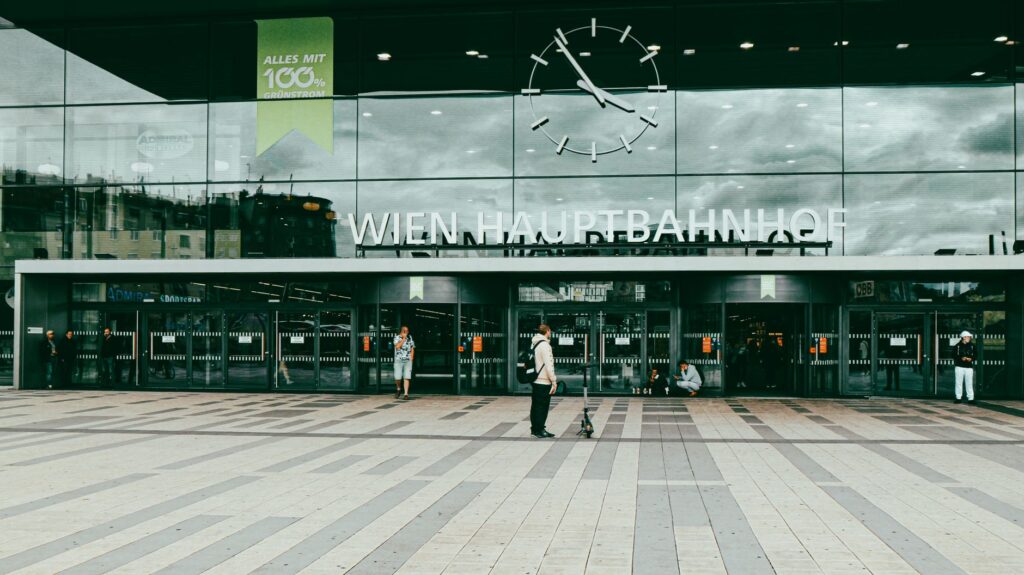
Vienna Central Station (Wien Hauptbahnhof) operates every night like a surgical choreography. Unlike daytime high-speed trains, which operate in fixed units, night trains are often modular compositions that split and combine at intermediate stations. A train departing from Vienna may carry carriages destined for Brussels and others for Paris, separating in the darkness of a German station while passengers sleep. This shunting logistics is costly and requires highly qualified personnel in rail yards that are often saturated by nighttime freight traffic.
The Austrian bet was based on a clear premise: service quality. While old sleeper cars were Cold War relics, the new generation of Nightjet trains, manufactured by Siemens, introduces unprecedented privacy concepts. The control center in Vienna monitors not only punctuality but also the status of critical comfort systems: silent climate control, power supply for mobile devices, and water tank management—a critical factor when offering private showers on the move. The efficiency of this hub has allowed Austria to export its model to neighboring countries, acting as the glue holding the European night network together.
«The night train does not compete against the airplane in top speed, but in the quality of recovered time and the dignity of the traveler’s personal space.»
The Engineering of Rest: Anatomy of the New Carriages
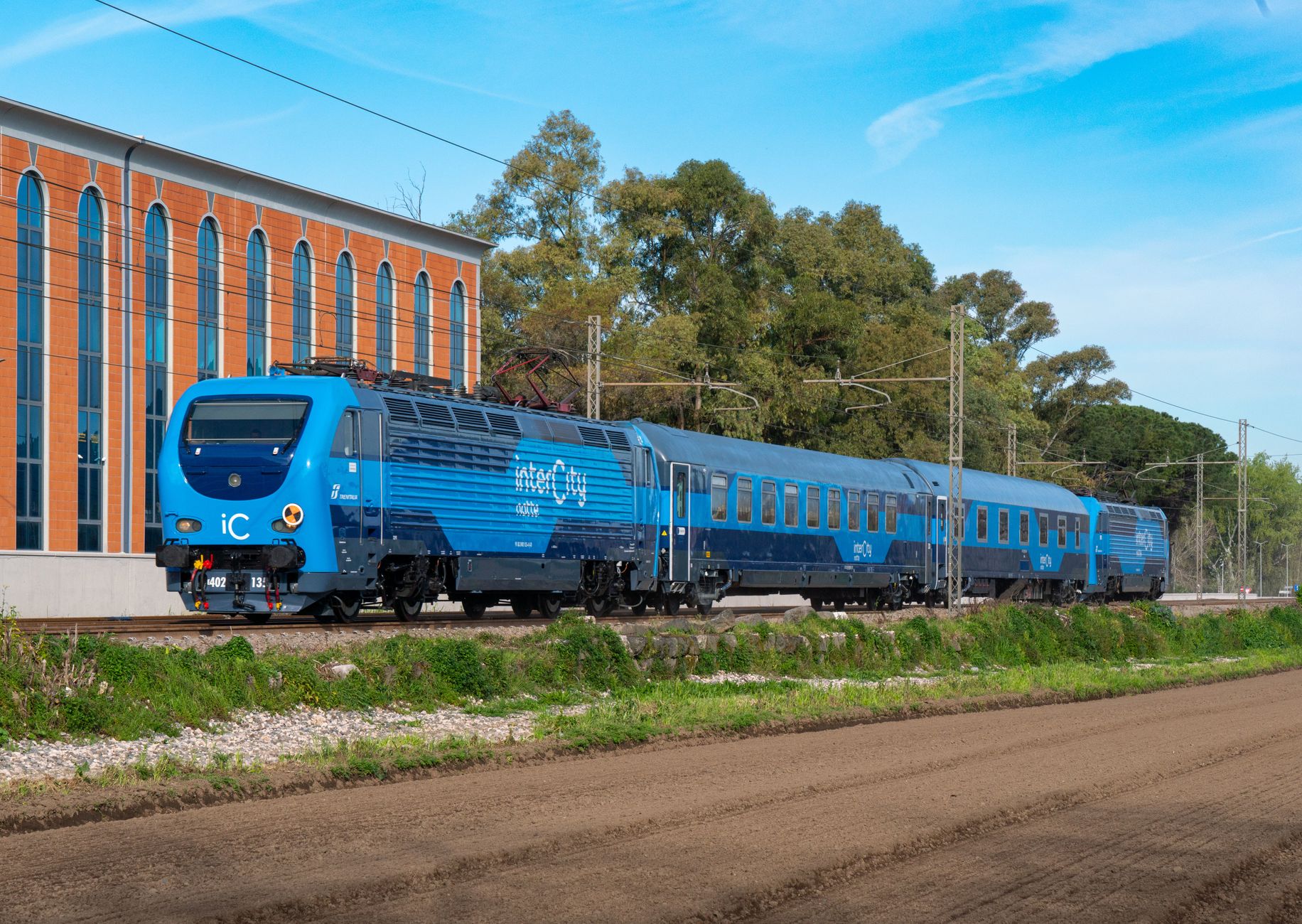
The great technological leap has arrived with the Siemens Viaggio NextGen trains. These convoys are not merely wagons with beds, but rolling hotels designed to mitigate vibrations and aerodynamic noise. One of the biggest engineering challenges in a night train is acoustic insulation. Unlike a flight, where the white noise of the engines is constant, train sounds are impulsive: passing over a switch, crossing a freight train, or regenerative braking. The new Nightjets use advanced air suspension systems and multi-layer sound absorption panels to ensure deep sleep.

The most disruptive innovation is the Mini-cabins. These are individual pods, similar to Japanese capsule hotels, designed for the solo traveler seeking privacy at a restrained price. They feature a mirror, folding table, storage for carry-on luggage, and a private window. For railway engineering, fitting these structures while maintaining crash safety standards and evacuation routes has been an industrial design challenge that lasted over five years from prototype to final certification.
Cross-Border Challenges: The Labyrinth of Technical Interoperability
Crossing a border in Europe by train is far more complex than doing so by plane. While airspace is relatively harmonized, railways suffer from historical fragmentation. There are four different voltages in European overhead lines and more than a dozen national signaling and safety systems. A Nightjet traveling from Vienna to Rome must be able to manage changes in electrical tension and communicate with Austrian, German, and Italian safety systems. Historically, this forced a locomotive change at every border, wasting precious time.
The solution has come from Vectron multi-system locomotives, capable of operating under any electrical configuration on the continent. However, the problem persists in personnel regulations. Train drivers must be certified in the language and operational rules of each country they cross. This creates a logistical dependence on local partners, explaining why many night routes operate as cooperations between ÖBB and entities like France’s SNCF or Germany’s DB. Technical bureaucracy remains the biggest hurdle for the night train to be as agile as an airline.
Competing with the Sky: The Sustainability and Time Factor
The weightiest argument for the sleeper car’s resurgence is the carbon footprint. A night train journey emits, on average, ten times less CO2 than the same journey by plane. On routes like Berlin-Zurich or Paris-Vienna, the train positions itself as the logical choice for the conscious traveler. But the railway industry knows that sustainability is not enough to convince the critical mass; temporal efficiency is needed. The concept of «useful time» is key: while a two-hour flight requires another three for transfers and security checks, the night train consumes zero hours of the passenger’s work or leisure day.
However, the train faces a structural economic disadvantage. Airplanes do not pay kerosene tax on international flights, and airspace usage fees are lower than railway infrastructure access charges. Every time a Nightjet runs on a track, it pays a toll per kilometer to the infrastructure management company. For the night network to be viable in the long term, experts point out that Europe must level the fiscal playing field, allowing rail to compete on equal terms with low-cost airlines.
«Railway infrastructure is the circulatory system of a decarbonized Europe, but it requires a political will that transcends national borders.»
Hospitality Logistics: Catering and Services at 140 km/h
Operating a hospitality service on the move presents challenges that no conventional hotel faces. Space is extremely limited, forcing just-in-time inventory management. On a Nightjet, breakfast is included for sleeper and couchette passengers. This means the crew must prepare and serve hundreds of trays in a 45-minute window before arriving at the destination station, often in narrow corridors and with the train in motion.
Water supply and waste management are other critical points. Unlike day trains, night trains have a much higher water demand due to showers and morning personal grooming. Tanks must be carefully sized not to add excessive weight that penalizes energy consumption, but ensuring that the last passenger to shower does not run out of hot water. The crew, who often work shifts of up to 24 hours, is the heart of the service, acting as ticket inspectors, stewards, and security personnel simultaneously.
Strategic Routes: From the Baltic to the Mediterranean Non-Stop
The network expands following European mobility flows. The Vienna-Paris route has been one of the great recent successes, reconnecting two cultural capitals with a daily service. Another fundamental route is the one linking Munich with Venice, a journey that crosses the Alps and offers one of the most striking visual experiences at dawn. ÖBB’s strategy has been to fill the gaps left by other operators, creating a night transit hub in Central Europe that allows for transversal connections.

The near future contemplates expansion toward the south of the Iberian Peninsula and the consolidation of routes toward Scandinavia. However, the lack of high-capacity tunnels in certain Alpine passes and weight limitations on old bridges restrict train length. A long night train is more profitable, but European stations rarely allow convoys longer than 400 meters, which limits seat supply and keeps prices at levels higher than those of long-distance buses.
Practical Guide
- Advance Booking: Nightjet services usually open sales 180 days in advance. Due to high demand and limited bed supply, it is essential to book at least two months ahead to secure ‘Sparschiene’ (promo) fares.
- Accommodation Categories: There are three basic levels. The Seating carriage (reclining seat) is the most economical but least recommended for rest. The Couchette (4 or 6-person bunks) is ideal for groups or budget travelers. The Sleeper cabin offers real beds, its own sink, and, in the Deluxe category, a private shower.
- Luggage: Unlike flying, there is no strict weight control, but cabin space is limited. It is recommended to bring a carry-on suitcase and a small backpack.
- Dining: Sleeper cars include an à la carte breakfast chosen the night before. For dinner, although there is a snack and drink service on board, it is advisable to eat before boarding or bring something light.
- Documentation: Even when traveling within the Schengen Area, it is mandatory to carry a passport or ID, as police authorities conduct random checks on cross-border night trains.
- Interrail: Interrail or Eurail pass holders can use the Nightjet by paying only the seat/bed reservation supplement, representing significant savings.
The High-Speed Night Horizon
The final challenge for the sector is speed. Currently, most night trains run on conventional tracks to avoid high tolls on high-speed lines and because, ironically, if the train were too fast, it would arrive at its destination at three in the morning. The goal is not to arrive sooner, but to arrive at a socially useful time (between 7:00 and 9:00). However, integrating night services into high-speed lines would allow for much greater distances, such as Madrid-Berlin or Rome-Amsterdam, to be covered in a single night.
The Nightjet network has proven that the market existed and that the supposed obsolescence of the sleeper car was merely a lack of business vision. As environmental awareness grows and technology improves, the night train consolidates as the symbol of a new era of travel: slower, more human, and deeply connected to the landscape sliding past the glass while the passenger rests. The architecture of rail-bound slumber is, today, the most romantic and necessary infrastructure of 21st-century Europe.