
On the southwestern tip of the Indian subcontinent, the state of Kerala unfolds a 900-kilometer network of canals, lakes, and estuaries known as the backwaters. This hydrological system, fed by 38 rivers descending from the Western Ghats toward the Arabian Sea, is not merely a geographical marvel but the epicenter of a philosophy of life where transportation and health are inextricably linked. Here, navigation is not measured in knots, but in the cadence of the tide and the pulse of nature, offering the contemporary traveler a sanctuary of radical slowness in the face of global hyper-connectivity.
The central experience of this territory is lived aboard the kettuvallam, the traditional barge that once transported tons of rice and spices and has now been reinvented as the ultimate expression of conscious wellness tourism. These vessels, constructed without a single metal nail, represent a feat of organic naval engineering. As they glide through the waters of Alappuzha or Kumarakom, the traveler does not just cross a landscape of infinite palm groves but becomes immersed in an ecosystem where time seems suspended, allowing body and mind to synchronize with the rhythm of the water.
The Engineering of the Kettuvallam: The Art of Joining Without Nails
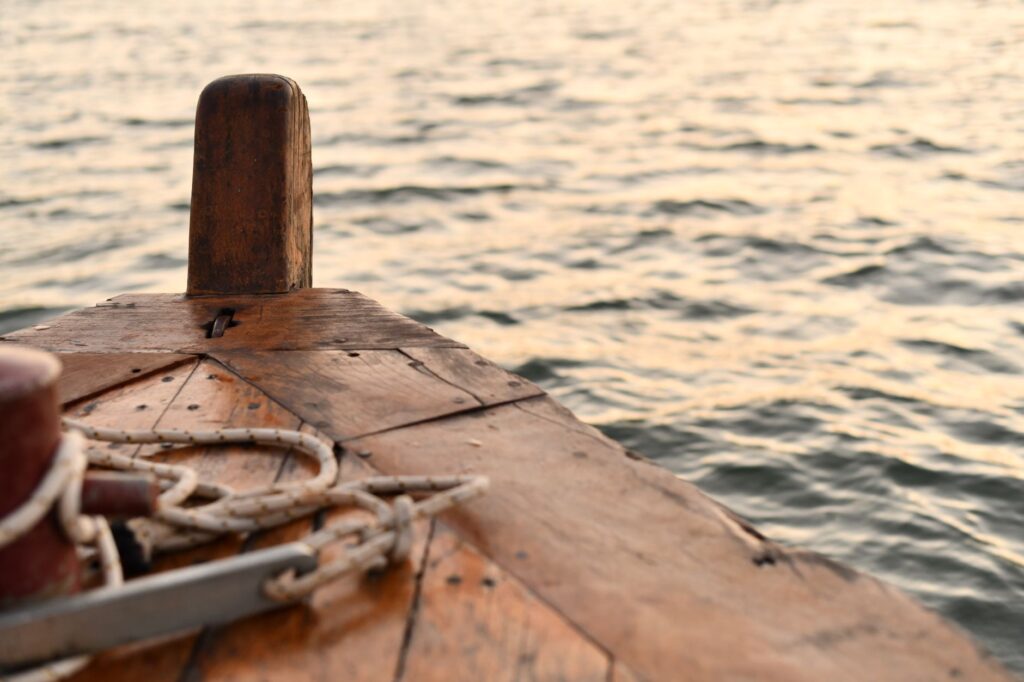
The term kettuvallam comes from the Malayalam words ‘kettu’ (tied) and ‘vallam’ (boat). This name precisely describes its construction method: planks of jackwood (Artocarpus heterophyllus) joined exclusively with coir fiber ropes and sealed with a black resin obtained from boiled cashew shells. This technique, passed down through generations, allows the structure to be flexible enough to absorb the pressure of river currents and durable enough to last for decades. The absence of metal prevents saline corrosion and ensures a natural buoyancy that adapts to the changing depths of the canals.

Originally, these barges had a cargo capacity of up to 30 tons, playing a crucial role in the economy of the Malabar Coast before the advent of modern roads. The adaptation of these structures into luxury accommodation has respected the original aesthetics, using bamboo roofs and woven palm mats that allow for constant natural ventilation. The aerodynamic design of the hull, with its raised bow and stern, facilitates navigation in shallow waters, allowing the transport to become an extension of the environment, minimizing visual and acoustic impact on the habitat of migratory birds.
«The barge does not cut through the water, it merges with it; it is a lesson in architectural humility where the material dictates the form and function surrenders to the landscape.»
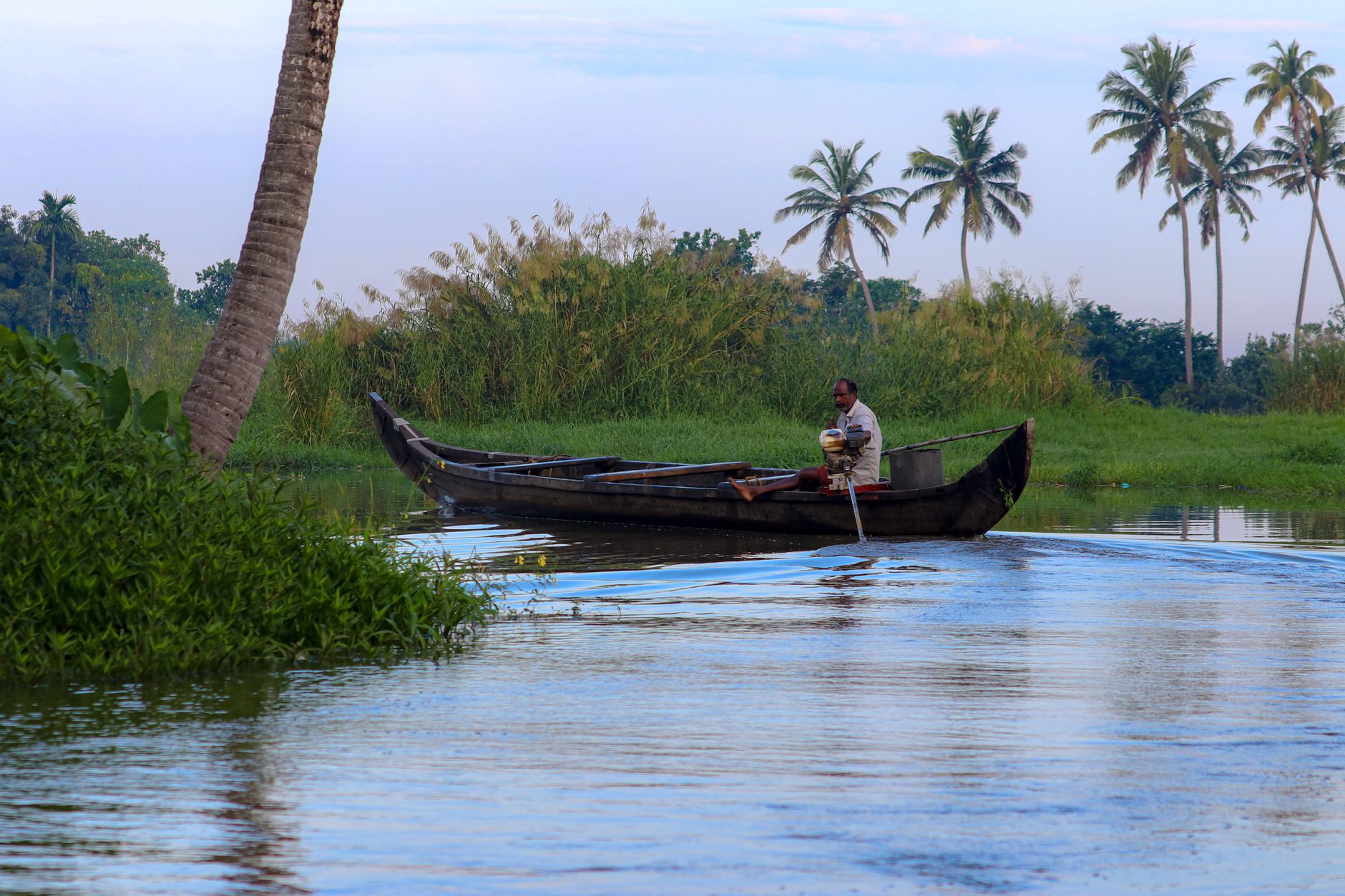
Navigating in a modern kettuvallam involves understanding the logistics of silence. The engines, when used, are soundproofed so as not to disturb local fauna, although true mastery lies in the use of long bamboo poles by the rowers in narrower areas. This method of manual propulsion is not a mere tourist attraction but a technical necessity in canals where aquatic vegetation, such as water hyacinth, could clog propellers. It is in this slow transit that the traveler begins to notice a shift in their own circadian rhythm, preparing for immersion in the region’s traditional medicine.

Ayurveda: The Science of Life in the Mirror of the Water
Kerala is globally recognized as the cradle of Ayurveda, a medical system over 5,000 years old that seeks balance between the three doshas or vital energies: Vata, Pitta, and Kapha. In the backwaters, Ayurveda is not practiced as a conventional spa treatment but as a process of deep purification (Panchakarma) that benefits directly from the humidity and temperate climate of the fluvial environment. Skin porosity increases in this tropical atmosphere, facilitating the absorption of medicinal oils made from herbs gathered on the banks of the canals themselves.
Many of the kettuvallams and boutique resorts along Lake Vembanad have resident Ayurvedic doctors who customize diets and treatments. Onboard dining is based on the principles of Sattvic cuisine: fresh, local, and seasonal ingredients that promote mental clarity and physical energy. Kerala red rice, coconut in all its forms, and spices such as turmeric and cardamom are not just seasonings but therapeutic agents that complement Abhyanga massages performed with rhythmic movements that mimic the exterior water flow.
Well-being in this context also includes the practice of yoga at dawn on the wooden deck as the mist clears from the lake. The connection with the water element is fundamental; according to Ayurvedic tradition, proximity to large bodies of fresh water helps calm the nervous system and reduce excess Pitta (fire) in the body. The gentle swaying of the boat acts as a mild sensory stimulation therapy, inducing states of deep relaxation that are difficult to achieve in noisy, static urban environments.

The Vembanad Lake Ecosystem: Biodiversity in Balance
Vembanad Lake is the largest wetland in India and the heart of the backwaters. Designated as a Ramsar site of international importance, this body of water is a sanctuary for endangered species and a critical regulator of the regional climate. During the journey, it is common to observe the white-throated kingfisher, the brahminy kite, and various species of herons finding refuge in the surrounding mangroves and paddy fields. Biodiversity here is not a backdrop but an active part of the travel experience, reminding us of the interdependence between humans and their environment.
However, this paradise faces significant challenges. Rising sea levels and plastic pollution demand extremely responsible tourism management. The best kettuvallam operators have implemented closed-loop waste management systems and use solar energy for basic power supply. By choosing transport that respects these standards, the traveler directly contributes to the conservation of the Thanneermukkom Bund, a saltwater barrier that regulates the lake’s salinity to protect rice crops located below sea level—a unique agricultural technique known as Kuttanad farming.
Wildlife observation from the water offers a privileged perspective. Unlike land-based safaris, the fluid movement of the barge does not generate vibrations that alert animals, allowing for close encounters with river otters and large schools of Pearl Spot (Etroplus suratensis), the region’s iconic fish. This visual communion with fauna reinforces the thesis of travel as an act of conscious observation, where the goal is not to reach a destination but to understand the biological complexity of the journey.
Fluvial Culture: Life on the Malabar Banks
The backwaters are a living communication route. As the kettuvallam moves into narrower canals, the daily life of local communities unfolds. Women washing clothes with ancestral techniques, children rowing small canoes to school, and farmers working in flooded rice fields offer a lesson in human adaptation. The architecture of the houses by the water, with their raised porches and red-tiled roofs, reflects a culture that has learned to live with monsoonal floods resiliently.
One of the mandatory stops on any route is a visit to the coir (coconut fiber) workshops. The coconut is the tree of life in Kerala, and every part is utilized. The process of transforming coconut husks into strong ropes is a craft that requires patience and skill. Coir is the soul of the kettuvallam, and knowing its origin gives a new dimension to the respect for the vessel in which one travels. Furthermore, interaction with local inhabitants, known for their high literacy rates and genuine hospitality, allows one to understand that well-being in Kerala is also a social phenomenon, based on community and mutual support.

«In the canals of Kerala, wealth is not measured by the speed of the engine, but by the depth of the coconut tree’s shadow and the clarity of the water we drink.»
Local commerce also moves by water. Floating shops supply groceries to isolated houses, and fishermen sell their catch of the day directly to the barge chefs. This circular economy system minimizes the need for heavy land transport and keeps alive a mercantile tradition dating back to when Phoenicians, Romans, and Arabs reached these shores in search of ‘black pepper,’ the gold of India. The traveler who participates in this exchange, buying local crafts or trying toddy (palm wine) in traditional taverns, becomes another link in this millennial history.
Practical Guide
- Best time to travel: From November to February, when the weather is dry and temperatures are pleasant (24-30°C). Avoid monsoon months (June to August) if you seek calm navigation, although it is the best time for intense Ayurvedic treatments.
- How to get there: Kochi International Airport (COK) is the main gateway. From there, Alappuzha is about two hours away by road.
- Choosing a Kettuvallam: Ensure the vessel has the ‘Green Palm’ certification from the Kerala Department of Tourism, which guarantees environmental and safety standards.
- Health and Wellness: If seeking serious Ayurvedic treatment, book a consultation with a certified doctor (BAMS) in advance so your onboard diet aligns with your treatment.
- Clothing: Light cotton clothes, easy-to-remove footwear, and biodegradable sunscreen. Modest dress is recommended when visiting local villages.
- Connectivity: Mobile signal is good in the main canals, but disconnecting is recommended to fully embrace the experience of silence.
Surrendering to the Liquid Horizon
As evening falls, when the sun hides behind the palm forests and the sky turns violet, Lake Vembanad becomes a perfect mirror. It is in this moment of absolute stillness that the true purpose of the journey to the backwaters is understood. It is not about collecting photographs of exotic landscapes, but about experiencing a decompression of the soul. The gentle lapping of the water against the kettuvallam’s hull is the only sound that persists, a liquid lullaby that reconciles us with our own biological nature.
Real well-being is not a destination reached with a massage or a diet, but a state of presence that arises when we eliminate unnecessary noise. Kerala offers the perfect stage for this surrender. Upon disembarking, the traveler carries away not just the memory of the emerald canals, but a new understanding of time and health. In a world that pushes us toward constant speed, the silence of the backwaters whispers that, sometimes, the fastest way to heal is simply to let oneself be carried by the current, trusting in the wisdom of a wooden barge and the eternal rhythm of the water.