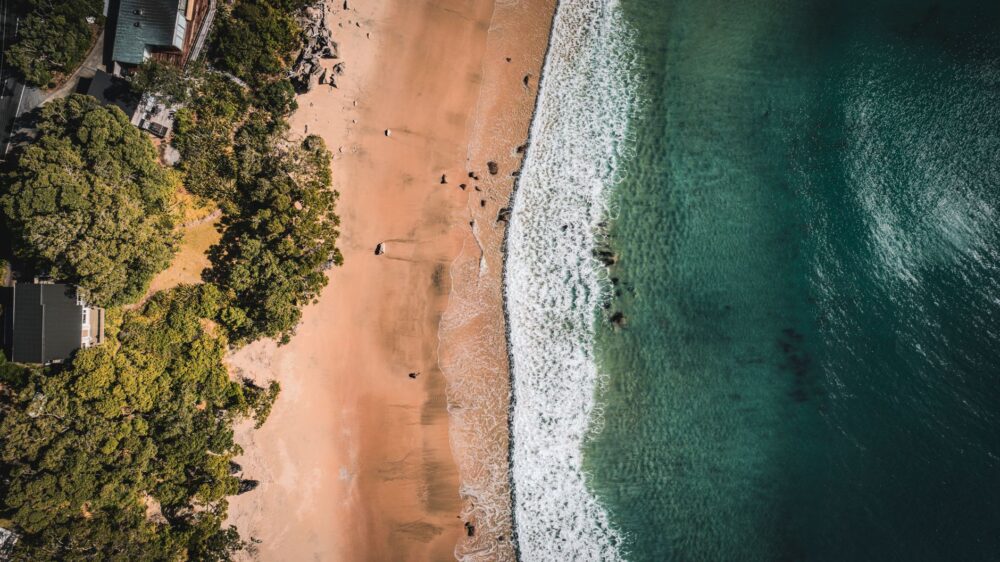
Some months demand endurance against heat or shelter against wintry rigor, but May operates as a climatic and cultural truce across much of the globe. While the northern hemisphere overflows with a late bloom that oxygenates alpine valleys and Mediterranean coasts, the planet’s southern extremity initiates a season of moderation, where summer crowds fade and local rhythms reclaim their authenticity. This report examines eighteen exceptional geographic coordinates with rigorous precision, designed not as an arbitrary list of tourist attractions, but as a catalog of seasonal opportunities for the traveler seeking depth, silence, and territorial comprehension.
Analyzing displacements during this period implies recognizing the mismatches of labor calendars and favorable meteorological windows. From the volcanic archipelagos of the Atlantic to the Central Asian steppes, passing through the historic quarters of the European continent and the natural enclaves of the Iberian Peninsula, May offers the perfect balance between hours of daylight, stable temperatures, and a still-manageable tourist density prior to the July and August collapse. We break down the keys to interpreting this constantly mutating map below.
The Iberian Peninsula in its optimal pulse: nature and heritage without stridency
Southern Europe experiences its most photogenic transformation in May. This is not merely about seeking premature sun on beaches, but about traversing the peninsular interior when the Andalusian and Extremaduran countryside still retains green tones before the arrival of summer aridity. In this context, regions such as the Sierra de Aracena or the wine-growing counties of La Rioja and Ribera del Duero offer low-intensity tourism where agricultural landscape directly dialogues with vernacular architecture.
Monumental interior cities, from Toledo to Segovia, record daytime temperatures hovering around twenty-four degrees, allowing extended walks through medieval Jewish quarters and walls without the thermal fatigue characteristic of central months. Furthermore, the local festive calendar begins to stir with deeply rooted anthropological celebrations that escape commercialized folklore.

The Alpine and Central European renaissance: diaphane lakes and clear summits
Advancing toward northern Europe in May means entering territories where the thaw sculpts monumental waterfalls and alpine meadows display their densest floral carpet. The valleys of Bavaria, the Salzburg lakes in Austria, and the pre-alpine regions of Switzerland operate under a logic of transition: mechanical ski lifts temporarily close their season and low-to-medium mountain trails open to pedestrian traffic.
In these latitudes, the flow of international visitors is minimal compared to summer, facilitating access to baroque monasteries, castle routes, and secondary railway networks operating with surgical punctuality. The atmosphere proves ideal for the traveler interested in Central European industrial and natural heritage.
Scandinavian courses: infinite light and the awakening of the fjords
The deep north begins to reclaim prominence as the midnight sun gains ground in the Arctic Circle. In Norway, western fjords like the Geirangerfjord or the Nærøyfjord present an imposing flow fed by perennial snows melting on the summits. Coastal navigation routes resume their complete frequencies.

The architecture of wood and silence in the archipelagos
The Lofoten and Vesterålen islands offer an extraordinary visual contrast in May: snowy peaks plunging precipitously into pristine blue waters, under a horizontal light lasting eighteen hours a day. Fishing communities recover their daily routines after the arctic winter, allowing a respectful approach to traditional seafaring life.
The Eastern Mediterranean: Greece and the Balkans before the massive flow
The Aegean and Adriatic coasts represent another major wager of the month. Islands like Naxos, Milos, or Crete allow travelers to explore millenary archaeological sites without summer saturation. Sea temperatures are brisk, but the climate invites hiking through gorges and ancient bridle paths connecting white villages perched on cliffs.
Meanwhile, the Dalmatian coast in Croatia and the mountainous interior of Montenegro offer a heritage alternative where the medieval walls of Kotor or Dubrovnik are enjoyed with the calm granted by clear May mornings.
The Maghreb and the Near East: oases and deserts under tolerable temperatures
For those seeking southern latitudes without facing the extreme temperatures of the Saharan summer, North Africa and the Near East present their last great window of climatic viability in May. The oases of southern Morocco, the Dadès gorges, and the adobe kasbahs maintain a dry, luminous climate that drops pleasantly at nightfall.

In Jordan, walking routes through the Dana Biosphere Reserve or the Siq canyon leading to Petra benefit from a temperate atmosphere favoring archaeological and geological exploration without the physical toll characteristic of June and July.
Central Asia and the Caucasus: opening the great mountain routes
Georgia and Armenia, at the crossroads between Europe and Asia, experience in May the awakening of their rock-hewn monasteries and wine valleys. Routes ascending toward Kazbegi in the Greater Caucasus begin to clear of snow, allowing travelers to contemplate solitary churches perched over two thousand meters in altitude.
Likewise, Silk Road enclaves in Uzbekistan, such as Samarkand and Bukhara, record warm yet dry days, ideal for admiring the ceramic filigree of their madrasas and mosques without the crowds of mass tourism.

North America: western canyons and rocky summits
Across the Atlantic, May is consecrated to the national parks of the American West. While high-mountain enclaves in Yellowstone or Glacier still retain snowy sections, the deserts of Utah and Arizona—Zion, Bryce Canyon, and Monument Valley—exhibit a vibrant chromatic palette under a permanently clear sky.
Traveling in May is an exercise in temporal strategy: getting ahead of the heat and noise to hear the true voice of the territories.
Meteorological stability allows the planning of complex hiking and camping traverses with a high safety margin, avoiding the summer storms that characterize July afternoons on the Colorado Plateau.
Southeast Asia and Oceania: refuges of the dry season
While vast zones of tropical Asia enter monsoon regimes, archipelagos such as Indonesia—particularly Bali, Lombok, and the Lesser Sunda Islands—enjoy an exceptional month. Precipitation decreases drastically, humidity moderates, and terraced rice fields find their optimal growth phase.
In the southern hemisphere, the austral autumn transforms the forests of the Lakes Region in Chile and Argentina into a mosaic of intense ochres and reds, ideal for landscape photography and final trekking traverses before the winter closure of Andean trails.

Practical guide
- Transport planning: Book medium-haul flights at least sixty days in advance to secure competitive fares with regular airlines.
- Versatile luggage: Adopt the principle of layers. Mornings in northern Europe and mountain zones require technical warm clothing, while afternoons allow lightweight linen or cotton garments.
- Rural accommodations: In Europe and North America, small charming hotels and rural houses require prior booking if they coincide with local holiday long weekends.
- Reservation management: Verify opening hours of monuments and national parks, as many implement summer hours starting mid-May.
- Connectivity and insurance: Secure travel assistance policy covering outdoor activities and mountain sports if planning high-altitude hiking.
The horizon of May is not a simple invitation to unbridled leisure, but an opportunity to calibrate the geographical and cultural time of the planet. By choosing the destination with criteria, the journey ceases to be physical displacement and becomes an act of paused knowledge, respectful of host communities and fully conscious of the natural cycles sustaining global biodiversity.
The true traveler does not seek to escape their world, but to find the mirror where the world reveals its true scale.
Faced with the vertigo of tourist immediacy, the eighteen analyzed routes demonstrate that intelligence in travel lies in choosing the precise instant. With this map in hand, the world unfolds not as a fast-consumption showcase, but as a vast archive of habitable geographies awaiting an attentive gaze.
Source in EN: Vivir Viajando con Inteligencia Viajera