

The Genesis of an Impossible Journey Between Two Oceans
At the dawn of the twentieth century, the Andes mountain range represented an almost insurmountable geopolitical and commercial barrier between the Atlantic and Pacific oceans. The transportation of passengers and freight between Santiago de Chile and Buenos Aires relied on mule trains, rudimentary carts, and high-altitude mountain trails exposed to relentless blizzards and freezing mountain passes exceeding three thousand meters in altitude. The urgent need to connect both extremities of the South American Southern Cone drove one of the most audacious civil engineering endeavors in modern history: the Transandine Railway, a titanic project that defied gravity, extreme weather, and rocky abysses to lay tracks where nature seemed to prohibit human transit.
The realization of this railway line was not a matter of chance, but the result of decades of technical and diplomatic perseverance, spearheaded by visionaries such as the Clark brothers. The construction demanded a massive mobilization of financial resources, specialized machinery, and a labor force composed of daring local workers and European immigrants who excavated tunnels with picks and shovels under conditions of extreme physiological hardship. Understanding this historical route involves examining how metric-gauge technology and mechanical traction systems made it possible to overcome formidable vertical gradients, redefining the limits of the possible in high-altitude railway connectivity.
The Rack-and-Pinion System and Overcoming Extreme Slopes
The primary technical hurdle facing engineers in the Andean cordillera was the extreme inclination of the terrain. A conventional adhesion locomotive loses traction critically on gradients exceeding four percent, slipping on steel rails due to insufficient friction. To solve this inescapable physical challenge, the Transandine Railway adopted the Abt rack-and-pinion system, a Swiss technology that introduced a third toothed rail positioned in the center of the track.
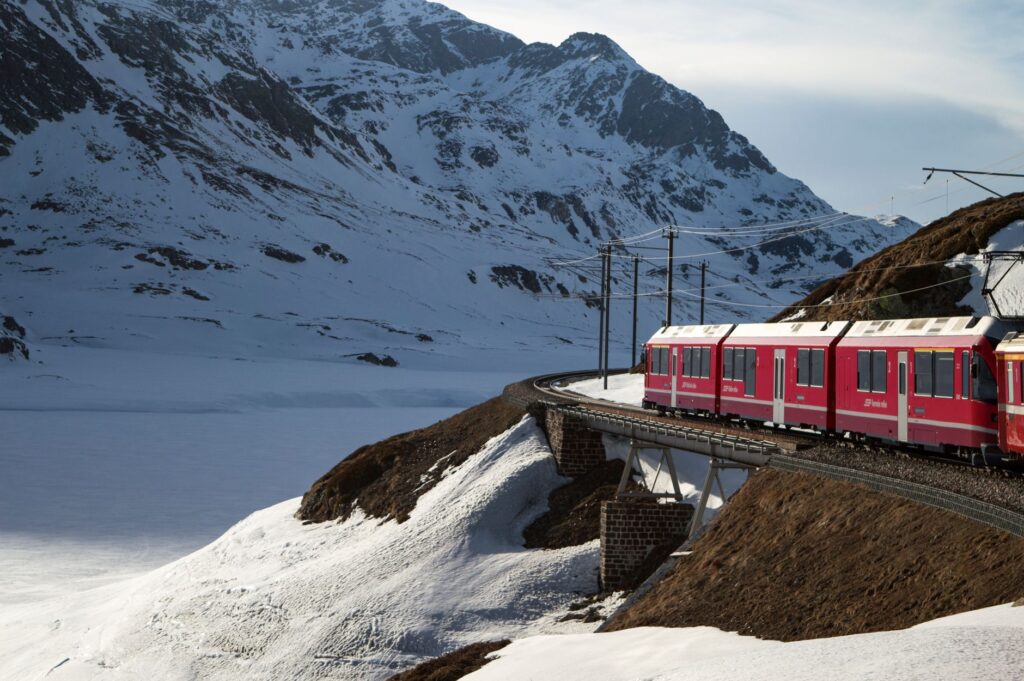
Steam and electric locomotives specially adapted for this section incorporated horizontal toothed wheels that meshed firmly into this central rail. This mechanism guaranteed the safe ascent of convoys over gradients reaching up to eight percent in the steepest sections of the route. Each kilometer of track required millimetric anchoring on living rock, reinforced masonry foundations, and metallic structures capable of resisting the onslaught of snow avalanches and rockfalls characteristic of the mountain environment.
Tunnel Architecture and the Milestone of the Border Crossing
The crowning achievement of Transandine engineering was the Summit International Tunnel, a monumental bore excavated precisely beneath the international border line between Chile and Argentina, at an altitude of 3,176 meters above sea level. With a length exceeding three kilometers, this subterranean conduit represented a triumph of topography and mathematical calculation, successfully uniting with millimetric precision the excavation teams advancing simultaneously from both sides of the cordillera.
Working inside the mountain meant contending with constant leaks of freezing water, toxic gas pockets, and sub-zero temperatures that tested the physical endurance of the workers. The infrastructure required the design of complex natural ventilation systems and stone masonry reinforcements to prevent structural collapses derived from geological pressure. Inside this tunnel, passengers experienced a dramatic atmospheric shift, leaving behind arid valleys or dizzying gorges to enter the gloom of the bedrock uniting two nations bonded by steel.

High-Altitude Stations and Operational Logistics in the Cordillera
Operating a railway line at over three thousand meters of altitude demanded flawless logistical coordination and intermediate stations equipped with maintenance workshops, coal depots, water reserves, and accommodations for technical personnel. Enclaves such as Las Cuevas on the Argentine side and Juncal or Caracoles on the Chilean side functioned as small self-sufficient communities where locomotives underwent exhaustive mechanical overhauls before tackling the sections of highest orographic risk.
The stations also fulfilled a fundamental sanitary and customs role. Passengers had to undergo immigration and medical controls under adverse weather conditions, while railway crews performed coupling maneuvers for the rack-and-pinion cars. The management of fuel and electrical supply for locomotives in isolated areas demonstrated the high operational capability of the railway companies of the era, which coordinated strict schedules despite frequent interruptions caused by snowstorms and hurricane-force winds.
The Andes mountain range ceased to be an impassable wall the day the first whistle of a rack-and-pinion locomotive echoed among the snow-capped peaks at over three thousand meters of altitude.
Socioeconomic Impact on Valley Communities
Beyond its undisputed technical feat, the Transandine Railway profoundly transformed the economy and demographics of adjacent valleys on both the Chilean and Argentine slopes. Rural communities that previously depended exclusively on transhumant pastoralism and subsistence agriculture overnight transformed into dynamic commercial nodes where minerals, agricultural products, and imported manufactured goods were stockpiled.
The arrival of the train facilitated continuous cultural exchange across the cordillera, allowing families, merchants, and academics to travel with unprecedented regularity. Local communities adapted their daily routines to the rhythm of the convoys, turning railway stations into the undisputed center of social life, local commerce, and the circulation of news originating from the continent’s major capitals.
Operational Decline and the Causes of Permanent Closure
Despite its undisputed strategic importance, the Transandine Railway faced a series of economic, logistical, and political factors that precipitated its decline by the mid-twentieth century. With the advent of modern commercial aviation and, above all, the construction and paving of National Route 7 in Argentina and Route 60 in Chile, road transport for freight and passengers began to gain an unsustainable competitive advantage in terms of schedule flexibility and maintenance costs.

Frequent railway line interruptions caused by mudslides, winter avalanches, and chronic lack of state investment for the renewal of obsolete infrastructure accelerated the collapse of the system. The high operating costs of maintaining the rack-and-pinion system and the obsolescence of the steam rolling stock sealed the fate of the line, which decreed its definitive cessation of passenger operations in the 1980s, leaving behind a monumental legacy of rails buried under snow and stations transformed into silent stone witnesses.
Today, the ruins of the Transandine attract historians, engineers, and travelers interested in industrial and adventure tourism. Exploring the remnants of metallic bridges, rock-blocked tunnels, and the vestiges of abandoned locomotives allows visitors to comprehend the magnitude of an unrepeatable human effort that demonstrated engineering’s capacity to dialogue with the planet’s most hostile geographies.
Practical Information and Planning for the Historical Traveler
For those interested in exploring the vestiges of the Transandine Railway today, it is essential to bear in mind that the line is out of service and much of its infrastructure is restricted access for safety reasons in high mountain terrain. No operational railway services exist along this historical corridor, so the journey must be conducted via road transport through authorized international mountain passes between Mendoza (Argentina) and Valparaíso (Chile).
It is recommended to plan the visit during the southern summer months, between December and March, when weather conditions are more stable and mountain passes remain open without severe snow restrictions. Travelers must carry an appropriate vehicle, technical high-mountain clothing due to extreme thermal fluctuations, and check road conditions and current customs protocols for international crossings in advance.
Exploring the vestiges of the Transandine today is an exercise in archaeological memory that pays tribute to the workers and engineers who dared to challenge the limits of the Andean cordillera.
Essential Safety and Logistical Tips
Preventive Acclimatization: Due to high elevation in sectors such as Las Cuevas or the Christ the Redeemer monument, travelers are advised to spend at least one night in lower-altitude towns such as Uspallata or Los Andes to prevent acute mountain sickness symptoms.
Up-to-Date Documentation: When traveling through border areas near historical railway milestones, ensure you always carry a valid passport, international vehicle insurance, and customs permits if crossing by road between countries.

