
The Challenge of the Roof of the World
The Tibetan Plateau, historically referred to as the Third Pole of the Earth, stands as one of the most hostile and inaccessible environments on our planet. For centuries, the mystical city of Lhasa remained isolated by formidable mountain ranges and high-altitude deserts that demanded months of grueling caravan travel to cross. However, the inauguration of the Qinghai-Tibet railway line (known in China as the Qingzang railway) completely redefined connectivity in Central Asia. Reaching an elevation of 5,072 meters above sea level at its highest point, this infrastructure not only shattered all world records for railway altitude but also established an unprecedented logistical and passenger corridor in modern history.
The construction of this line, particularly the second phase connecting Golmud to Lhasa, was considered a physical impossibility for decades. Skeptics argued that unstable permafrost, extreme oxygen deprivation, and the ultra-sensitive ecosystems of the plateau would cause any attempt to lay stable tracks to collapse. Today, the railway operates as a vital, continuously beating artery, moving millions of tons of cargo and travelers every year. This report provides a rigorous analysis of the technological, logistical, and human pillars that sustain this feat of contemporary civil engineering.
Conquering the Permafrost: The Greatest Challenge of Subarctic Engineering
The primary geological obstacle for engineers was the frozen ground, or permafrost. Approximately 550 kilometers of the railway line are laid over this unstable terrain, which undergoes drastic cycles of freezing in winter and thawing in summer. When the permafrost melts, the soil loses its bearing capacity, which would cause the tracks to sink and trains to derail. To solve this problem, an active engineering strategy without parallel was designed.
The design team implemented three main solutions to keep the ground permanently frozen beneath the railway embankment:
- Ammonia thermosyphons: Metal pipes driven vertically into the track shoulders that extract heat from the subsoil during winter and dissipate it into the atmosphere, keeping the ground temperature below freezing point.
- Ventilated rock embankments: Layers of large stones that allow cold air to circulate at the base of the structure, blocking summer solar radiation.
- Dry-land bridges: In areas where the permafrost was highly unstable, engineers chose not to touch the ground at all, constructing miles of viaducts supported by deep pillars anchored in solid rock unaffected by thermal variations.
These innovations allow trains to run at speeds of up to 100 kilometers per hour in permafrost zones, a speed unthinkable on any other subarctic railway network in the world.
The Tanggula Pass: Navigating the Limits of Oxygen
At an altitude of 5,072 meters lies the Tanggula railway station, the highest railway point on earth. At this elevation, atmospheric pressure is reduced by nearly half compared to sea level, and the oxygen content in the air drops drastically. This factor not only posed a life-threatening danger to the more than 100,000 workers who participated in its construction but also presents a continuous challenge for the operation of the locomotives’ internal combustion engines.
«To lay tracks over frozen soil that breathes with the seasons is to negotiate a truce with the earth itself, demanding that we re-engineer the very machines we use to traverse it.»
To overcome the lack of pressure and oxygen, specific diesel locomotives had to be designed. The machines used on this stretch, manufactured by General Electric and adapted locally, feature advanced electronic turbocharging systems that compensate for the loss of air density, ensuring that the engines maintain the power required to pull heavy passenger and freight convoys uphill without faltering.
Life Aboard the «Sky Train»: Pressurization and Cabin Technology
Traveling on the Qinghai-Tibet railway is no ordinary experience. The passenger carriages are, in essence, pressurized capsules similar to those of modern commercial aircraft. Manufactured by Bombardier Sifang, these vehicles feature a hermetically sealed system and a dual oxygen supply that automatically activates starting from Golmud station (2,808 meters in altitude).
The system works through two complementary methodologies. First, oxygen is injected directly into the train’s general ventilation system to maintain a comfortable concentration throughout the carriage. Second, each seat and sleeper berth has individual oxygen ports where passengers can connect plastic cannulas if they experience severe symptoms of altitude sickness (soroche). In addition, the train’s windows are equipped with special ultraviolet protective filters to mitigate the intense solar radiation of the plateau, and feature double glazing to withstand outside temperatures that can plunge to minus 35 degrees Celsius.
The Wildlife Corridor: Sustainability on the Tibetan Plateau
The Qinghai-Tibet plateau is home to extremely fragile ecosystems and protected endemic species, such as the Tibetan antelope (chiru), wild yak, and Tibetan wild ass. The train route passes through the Kekexili Nature Reserve, a biodiversity sanctuary declared a World Heritage Site. The fear among biologists and conservationists was that the railway would act as an impassable physical barrier, interrupting the ancestral migration routes of these animals.
To mitigate this impact, the project integrated 33 elevated and underground ecological corridors along the route. These wildlife crossings were designed to mimic the local topography so that animals would not feel intimidated when crossing them. Environmental monitoring studies have shown that Tibetan antelopes have successfully adapted to these structures, crossing beneath the tracks during their annual breeding migrations without altering their biological behavior patterns.
From Golmud to Lhasa: The Layout of a Historic Route
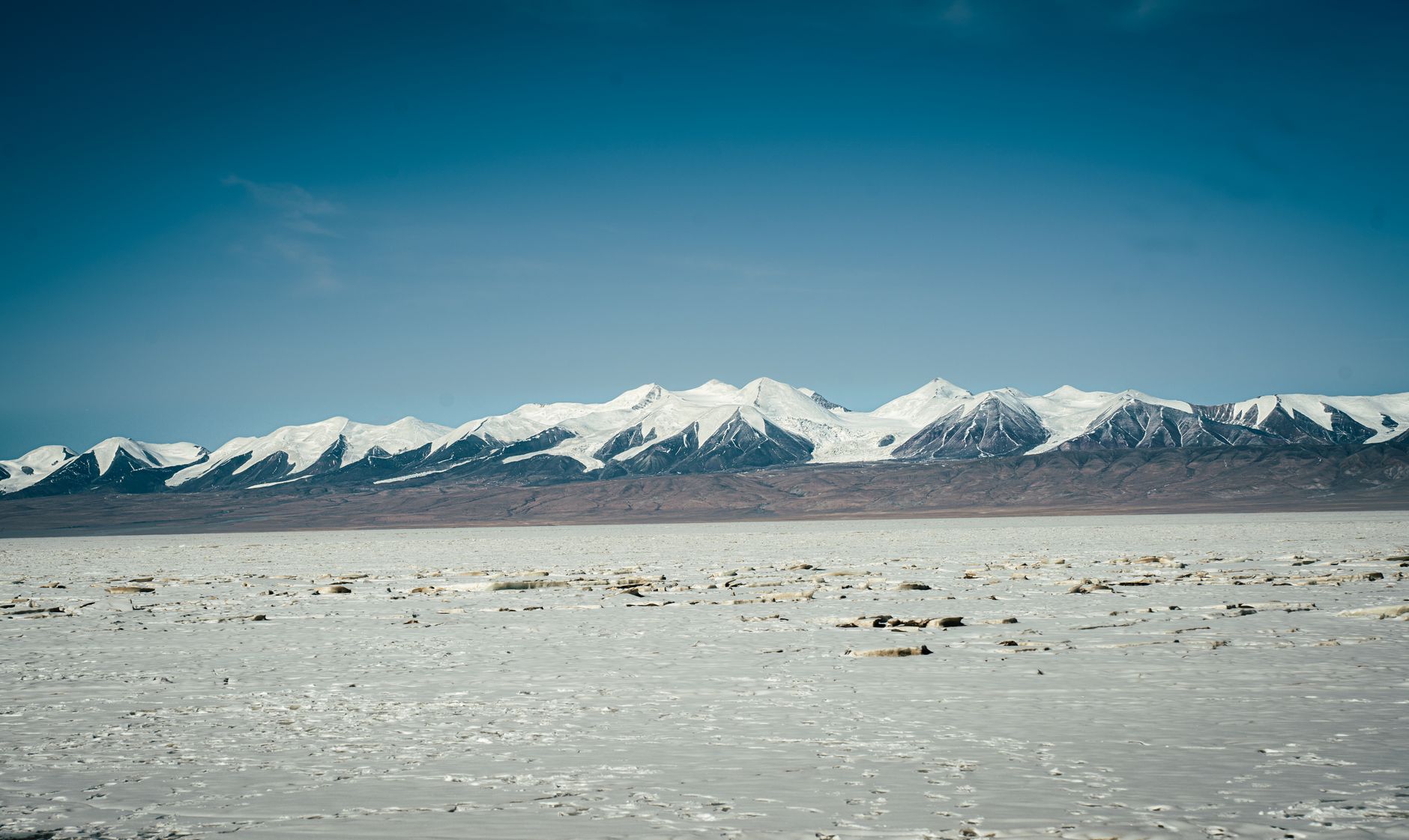
The complete journey of the Qingzang line covers 1,956 kilometers from Xining to Lhasa, but it is the 1,142-kilometer section between Golmud and the Tibetan capital that concentrates the greatest epic of the journey. After departing from Golmud, the train climbs rapidly, flanking the majestic Kunlun Mountains. The landscape changes dramatically, transitioning from the arid deserts of the Qaidam Basin to endless steppes dotted with salt lakes and eternal glaciers.
Among the most notable geographical milestones is the Fenghuoshan Tunnel, the world’s highest railway tunnel excavated in permafrost at 4,905 meters above sea level, and the Tuotuo River Bridge, which crosses the headwaters of the Yangtze River. As the train gently descends into the Lhasa Valley, the grasslands of northern Tibet (Changtang) give way to barley fields and small traditional villages, announcing the arrival at the mystical capital of the autonomous region.
Socioeconomic Impact: Connecting Tibet with the Heart of China
The arrival of the railway in July 2006 marked an irreversible turning point for the region’s economy. Prior to its inauguration, the transport of goods relied on dangerous roads that were frequently blocked by snow during the winter. The cost of transporting fuel, fresh food, and building materials was prohibitive, limiting regional development.
«The reduction of logistical costs through the railway permanently integrated the plateau’s economy with the major production centers of the east, transforming the daily lives of its inhabitants.»
With the railway operational, the cost of transporting goods to Lhasa was reduced by more than 70%. This not only facilitated the supply of basic commodities but also boosted the export of local resources, such as glacial mineral water, traditional agricultural products, and handicrafts. Furthermore, tourism experienced exponential growth, allowing domestic and international travelers to access Tibet’s cultural treasures in a more affordable, safe, and sustainable manner compared to air travel.
Practical Guide for the High-Altitude Traveler: Planning, Permits, and Logistics
Taking a journey aboard the Qinghai-Tibet railway requires rigorous planning that goes beyond simply purchasing a train ticket. Due to the political and geographical nature of the region, there are strict administrative requirements that every traveler must fulfill in advance.
- Tibet Travel Permit (TTP): Foreign citizens cannot board the train to Lhasa without the official permit issued by the Tibet Tourism Bureau. This document must be managed through an authorized travel agency, and the original physical copy must be presented when boarding at key stations such as Xining, Chengdu, or Beijing.
- Accommodation types: The train offers three distinct classes: Soft Sleeper, which features closed four-berth compartments with greater privacy and space; Hard Sleeper, open six-berth compartments ideal for budget travelers; and Hard Seat, which is not recommended for long journeys due to the lack of resting space.
- Altitude acclimatization: Although the train is pressurized, it is highly recommended to start the journey from Xining (2,275 meters) rather than Beijing or Shanghai. This allows the body to make a more gradual transition to the plateau’s extreme altitude, significantly reducing the risk of suffering severe symptoms of hypoxia upon arrival in Lhasa (3,650 meters).
The Closing Horizon: The Impact of Lhasa Station
The journey culminates at the imposing Lhasa Railway Station, a monumental structure that fuses traditional Tibetan architecture with highly efficient contemporary design. Located south of the Lhasa River, the station welcomes travelers with its characteristic sloping walls painted in white and red, emulating the aesthetics of the Potala Palace. The silence and vastness of the landscape surrounding the tracks contrast with the advanced technology that enables the daily operation of this terminal.
The Qinghai-Tibet railway is not merely a transport route; it is a testament to human capability to overcome the most extreme physical frontiers on Earth. By permanently connecting the high-altitude plateau with the rest of the world, this railway has shown that even the most remote and sacred territories of our planet can be integrated into the global mobility network, leaving an indelible mark on the history of engineering and travel exploration.