Berrechid appears on maps as an urban patch on the Chaouia plain, some thirty kilometres south of Casablanca and at an elevation of around 220 metres. For many travellers it is just a name on a road sign or a train stop between Morocco’s economic capital and Marrakech. Yet the city has a life of its own, one that unfolds far from tourist circuits and offers an honest reading of the country’s Atlantic plains.
The province of Berrechid belongs to the Casablanca-Settat region and forms part of the country’s third administrative division. Its population, according to available data, exceeds 149,000 inhabitants, a figure that reflects sustained growth in recent decades. It is not a monumental destination, but it is a place where visitors can observe how daily life is built in an intermediate Moroccan city.
A geography of plains and passage
The Chaouia plain is an agricultural expanse that has become the region’s breadbasket. Berrechid sits on fertile soils and its economy has historically been tied to the land, although industry and services now occupy a growing place. The surrounding landscape alternates cereal plots, olive groves and an industrial periphery that stretches towards the highway.
The climate is Mediterranean with Atlantic influence: hot, dry summers, mild winters and moderate rainfall. The light on the plain is intense and the horizon wide, a characteristic that defines the experience of walking its streets and contrasts with the density of historic medinas.
The city has developed around two axes: the road linking Casablanca with Settat and the railway connecting the coast with the interior. That strategic position has turned it into a communications hub, but it has also generated an identity as a place of passage that its inhabitants have nuanced with an intense local life.
The weekly market as an urban calendar
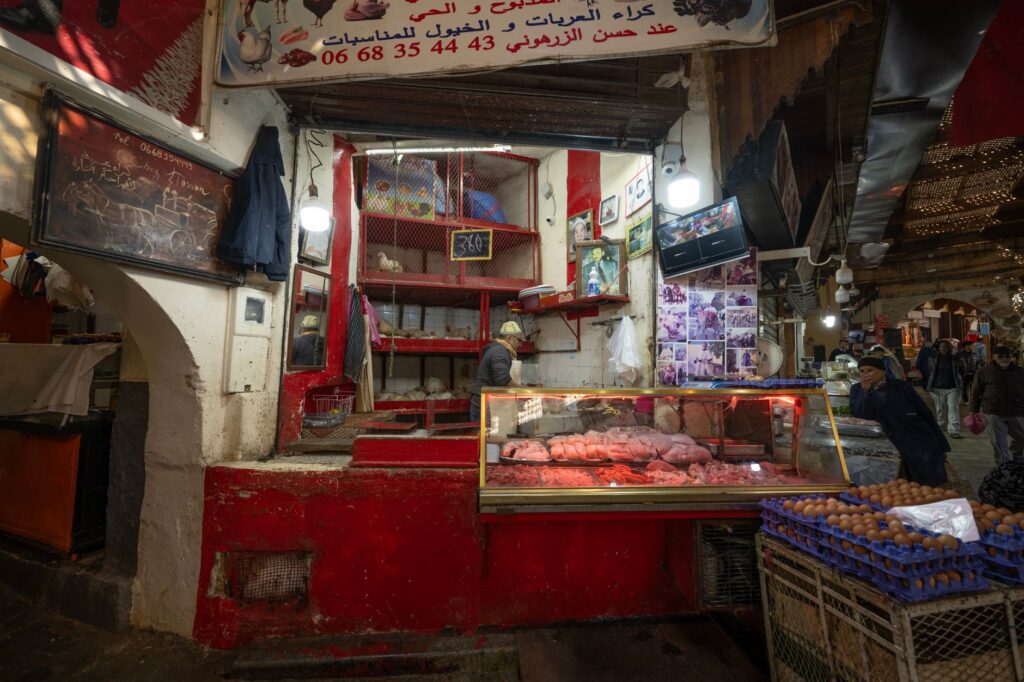
One of the elements that best explains life in Berrechid is its weekly market. Every week the city changes rhythm: producers from the plain arrive with their goods, traders set up their stalls and residents travel from neighbourhoods and nearby villages. The market is not only a marketplace but a space of social exchange where prices are negotiated, news is shared and alliances are renewed.
For the traveller, the market is an opportunity to observe the region’s food chain without intermediaries. Olives, oil, cereals, spices, seasonal vegetables and craft products share space with clothing and household utensils. The visit requires respect and patience: it is not a spectacle but an economic and social activity that follows its own rules.
Berrechid’s weekly market is not designed for tourists, and precisely for that reason it offers one of the most honest readings of life on the plain.
Neighbourhoods of rural origin and urban expansion
Berrechid has grown in waves. Historic cores have been joined by neighbourhoods born of rural migration, with self-built housing and an urban fabric that has consolidated over time. That mix is visible in the architecture: one- and two-storey houses, interior courtyards, rooftops and a growing presence of collective housing in newer areas.

The result is a heterogeneous city, where the concrete of recent expansion coexists with traditional materials and techniques. Walking its streets allows visitors to understand how domestic space is organised and how services are managed in an intermediate city, from water supply to waste collection.
Neighbourhood life revolves around the mosque, the school and local shops. It is common to see neighbours gathered at their doorways at dusk, a moment when the city recovers its calm after the busiest hours.
Discreet heritage: between the protectorate and the present
Berrechid preserves no great monuments, but its heritage is that of a city that grew during the French protectorate and was transformed after independence. Some administrative buildings and colonial-era houses show a style that combines European elements with local adaptations, from facades to ventilation systems.
Religious architecture also deserves attention. Neighbourhood mosques, modest in scale, reflect the evolution of communities and their capacity to organise. In the surroundings, some rural constructions and old storage spaces recall the historical importance of agriculture in the area.

For visitors interested in heritage, the recommendation is to wander without haste and with curiosity, paying attention to details: window grilles, interior courtyards, building materials and the relationship between the city and the countryside.
A cuisine of plains and seasons
Berrechid’s gastronomy is marked by the products of the plain. Olive oil, olives, homemade bread, seasonal vegetables and legumes form the basis of a simple, flavoursome cuisine. The markets offer a variety of products that reflect the seasonality and agricultural wealth of the region.
The most common dishes include vegetable tagines, Friday couscous and preparations with lamb or chicken. The local cuisine does not seek sophistication but the use of what the territory offers. For the traveller, eating in local establishments is a way to understand the relationship between the city and its rural surroundings.
It is worth trying freshly baked bread, regional olives and the traditional sweets sold in neighbourhood patisseries. Moroccan hospitality is expressed in the invitation to share tea, a gesture that forms part of social life and that visitors should accept with respect.

Getting around and when to visit
Berrechid is well connected by road and rail. The railway station links it with Casablanca, Settat and other inland cities. Local taxis and buses allow movement within the city and towards nearby rural areas. For those travelling by car, the road network is adequate and makes it easy to explore the plain.
The best time to visit is spring and autumn, when temperatures are mild and the agricultural landscape is at its best. Summer can be hot and winter brings moderate rain. It is important to bear in mind the weekly market calendar, as the city changes rhythm on those days.
Clothing should be respectful of local customs, especially in religious spaces and in more traditional neighbourhoods. Comfortable shoes, water and sun protection are recommended, and the hottest hours should be avoided in summer.
Responsible choices for the visitor
Berrechid is not a mass destination, and that demands a particularly careful attitude. Visitors should remember that they are in a city where daily life does not revolve around tourism. It is therefore important to ask permission before photographing people or private spaces, respect mosque schedules and avoid interfering with commercial activities.
Local consumption is another way to travel responsibly. Shopping in neighbourhood stores, eating in local establishments and hiring local guides or transport services helps ensure that economic benefit stays in the area. Avoiding single-use plastic and managing waste properly are also recommended.
The city offers a slow travel experience, without major tourism infrastructure but with an authenticity that few places can offer. For those seeking to understand the Morocco of the plains, Berrechid is a necessary stop.
Practical guide
- Getting there: Berrechid has a railway station and road connections from Casablanca and Settat. Local taxis and buses facilitate internal movement.
- When to go: Spring and autumn are the most pleasant seasons. Summer is hot and winter can be rainy.
- What to see: The weekly market, traditional neighbourhoods, protectorate-era architecture and the surrounding farmland.
- Where to eat: Local establishments offer plain cuisine based on seasonal products. It is worth trying the bread, olives and tagines.
- Cultural respect: Discreet clothing, asking permission before photographing and respecting religious schedules.
- Budget: Berrechid is an affordable city. Accommodation and food prices are moderate compared with major tourist destinations.
Travelling to Berrechid means accepting that a place’s interest does not always lie in its monuments, but in the way its inhabitants organise daily life.
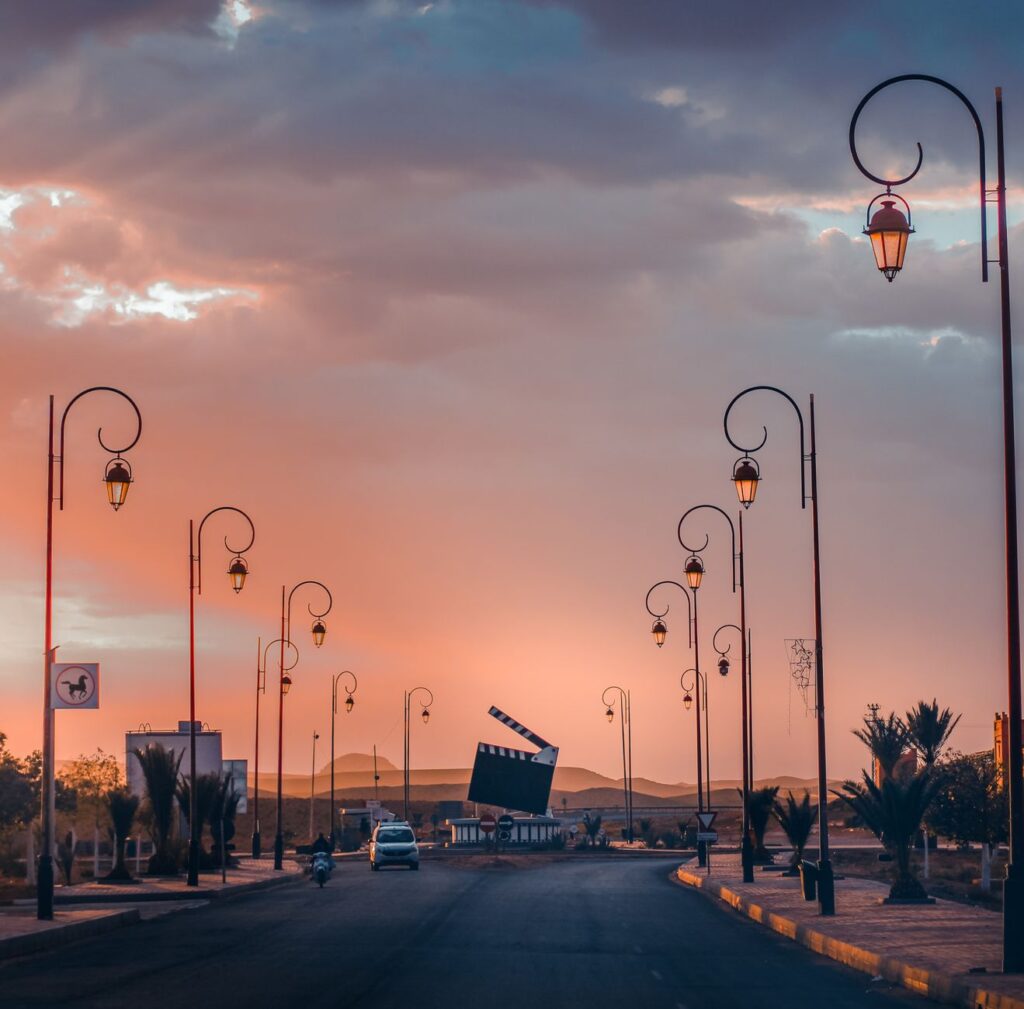
At the end of the day, when the sun falls over the plain and the streets recover their shade, Berrechid shows its most serene face. There are no grand stages, but there is a life that unfolds with dignity and invites the traveller to stop, look and learn.