
Kolding does not present itself to the traveller with grand gestures. At the head of the fjord that carries its name, in southern Denmark, life unfolds between a castle that was once a ruin and is now a museum, a harbour that still works, and streets where Danish design sits alongside the red brick of older houses. The city, seat of the同名 municipality in the Region of Southern Denmark, has just over sixty thousand inhabitants and an identity built precisely on the ability to transform what others might have let fall.
For those arriving from Copenhagen or Hamburg, Kolding appears as a logical stop on the rail and motorway map. But staying a few days reveals a human scale that invites walking, looking slowly, and understanding that heritage is not always displayed: sometimes it is used.
A castle that stopped being a ruin
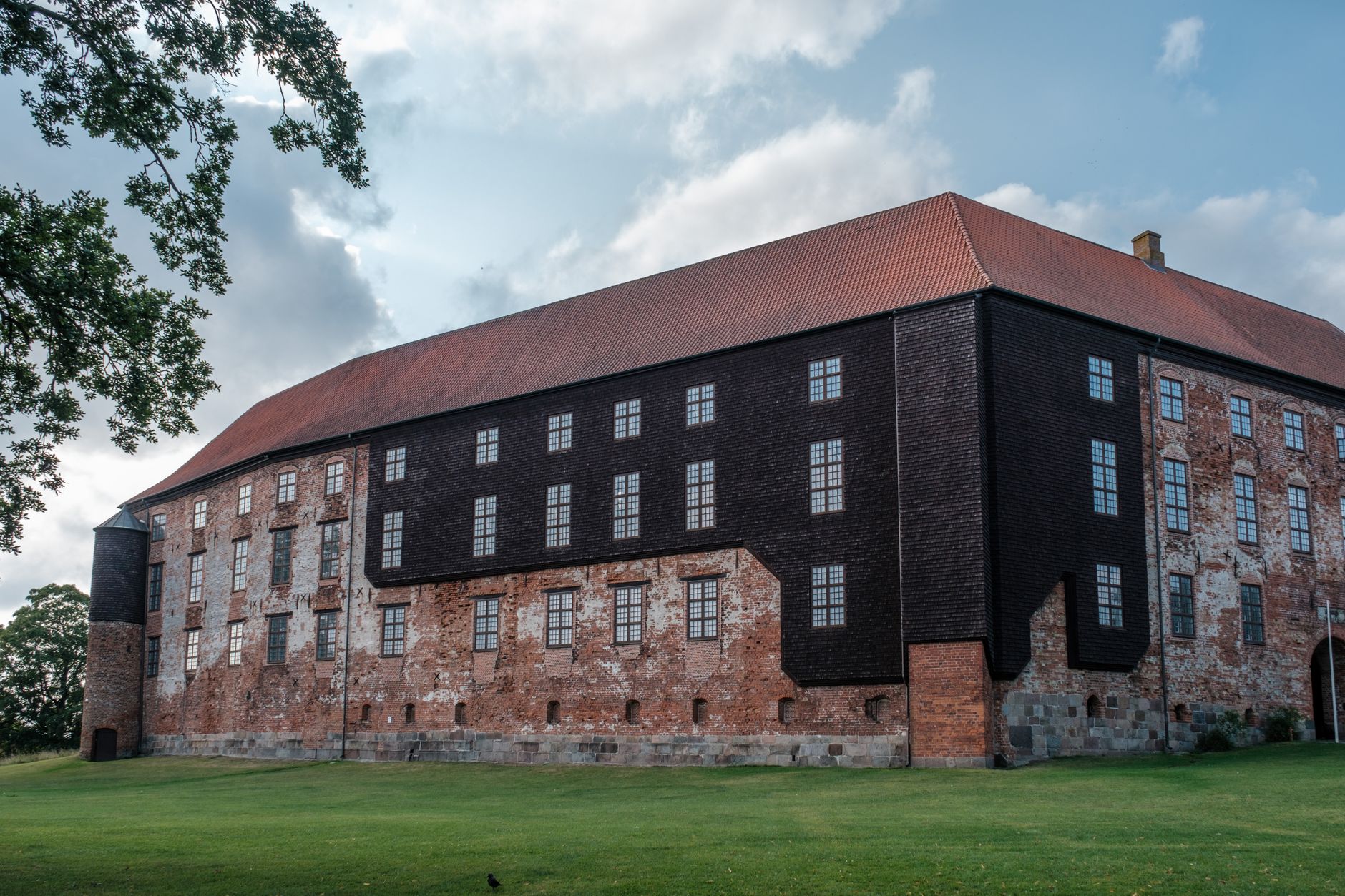
Koldinghus is the unavoidable reference point. The medieval fortress that served as a royal residence and was later reduced to a brick skeleton after a nineteenth-century fire is now a museum that preserves the traces of its own destruction. The restoration, carried out in different phases during the twentieth century, did not hide the scars: it left them visible, integrated into a contemporary architecture that dialogues with the original walls.
Climbing the tower offers a panorama of the fjord, the city centre and the surrounding woods. On clear days, the view reaches the bridges that cross the water and reminds us that Kolding has been a crossing point between Jutland and the continent for centuries. That crossroads condition has shaped its character: open, practical, accustomed to receiving without losing its centre.
The castle was not rebuilt to erase the fire, but to tell what happened. That decision explains much of Kolding’s relationship with its own past.
Visiting the museum requires time. The exhibitions combine historical objects with contemporary art, and the building itself functions as an exhibit: staircases, windows and floors reveal the different layers of construction and destruction. It is worth pausing on the upper floors, where the contrast between the old brick and the new structural elements becomes most evident. This approach to restoration, common in Denmark, reflects a broader cultural attitude: rather than reconstructing an idealised past, the aim is to make the passage of time legible.
The fjord as landscape and memory
The Kolding Fjord is not a backdrop. It is a body of water that has determined the city’s economy, defence and social life. Shipyards, factories and, more recently, spaces for leisure and education have settled on its shores. The university hospital and several training centres face the water, reminding us that the fjord remains a functional axis, not just a viewpoint.
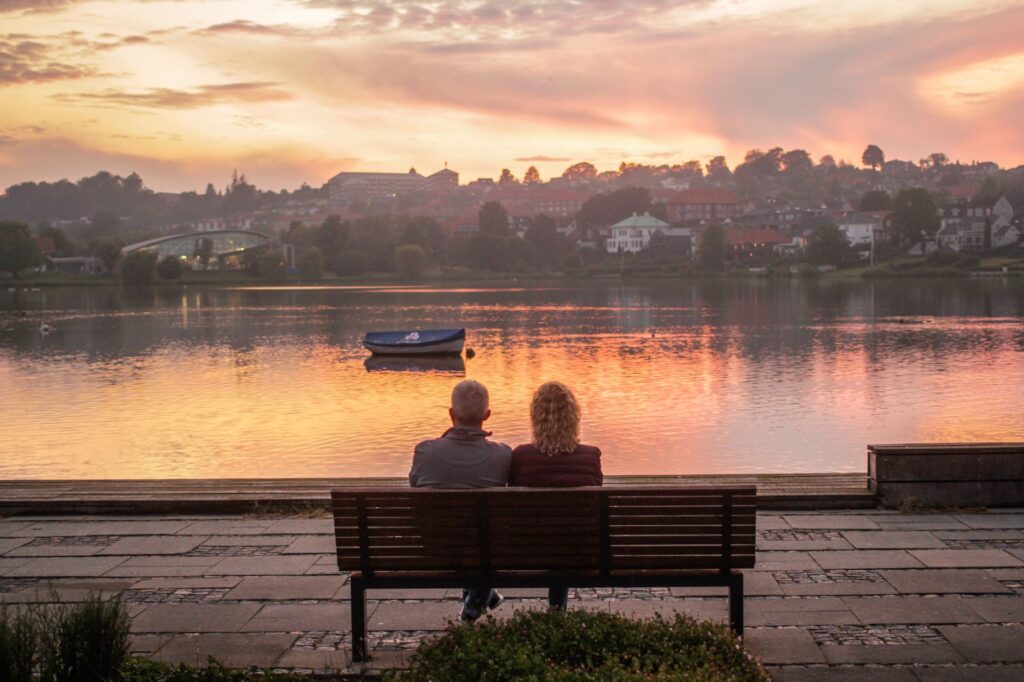
Walking along the shore at dusk reveals how pleasure boats coexist with industrial structures. There is no forced separation between the picturesque and the productive. That mixture is perhaps the most honest hallmark of Kolding: a city that has not expelled its working past to please the visitor.
The fjord also plays a role in the city’s environmental planning. Like other Danish coastal towns, Kolding faces the challenge of balancing urban development with the protection of water quality and natural habitats. The green corridors along the shore are not only recreational spaces but also part of a broader effort to keep the landscape accessible and ecologically functional. For the visitor, this means that a simple walk along the water is also an encounter with contemporary urban policy.
The centre: design, brick and daily life
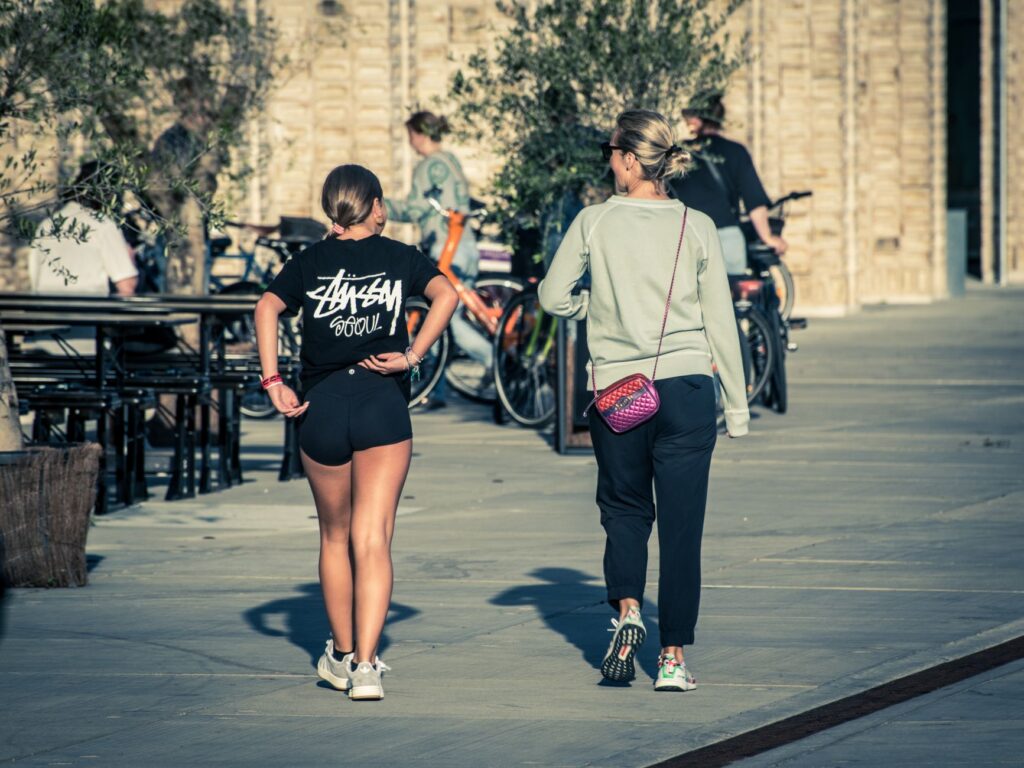
The centre of Kolding is organised around pedestrian streets where Danish design shops share space with bakeries, bookshops and cafés. The architecture combines historic red-brick buildings with modern interventions of clean lines. There is no enclosed monumental zone: heritage is scattered, integrated into the routine of those who live there.
The Church of Saint Nicholas, with its medieval origins, and the old town hall are habitual stops. But the interest lies not only in individual buildings but in the whole: the scale of the streets, the inner courtyards, the way the city invites you to walk without haste.
- Koldinghus: museum and viewpoint, with temporary exhibitions on history and art.
- Pedestrian centre: local shops, design and seasonal food.
- Fjord: walks, green areas and views towards the bridges.
- Residential neighbourhoods: everyday architecture, without tourist pretensions.
One of the most striking aspects for a visitor accustomed to cities where the historic centre is a stage set is the absence of theatricality. Shops close at ordinary hours, residents cycle to work, and the presence of tourists is just one more element in the daily rhythm. This does not mean the city is indifferent to visitors, but rather that it does not reorganise itself around them. That authenticity is, paradoxically, one of its main attractions.
A city that works and teaches
Kolding is home to educational institutions and companies linked to design, logistics and industry. That economic activity sustains a daily life that does not depend exclusively on tourism. The visitor notices it in the prices, the opening hours and the absence of forced gestures towards those who come from outside.
The Trapholt Art Museum, located on the outskirts, is one of the city’s surprises. Its collection of Danish furniture and modern art is presented in a building surrounded by gardens, with views over the fjord. The visit helps to understand how design is part of the country’s material culture, not just its shop windows.

In Kolding, design is not an ornament: it is a way of solving everyday problems, from a chair to the layout of a museum room.
Trapholt is also a good example of how cultural institutions in smaller Danish cities operate. Rather than competing with the major museums of Copenhagen, they focus on specific collections and on the relationship between art, design and everyday life. The museum’s park, with its sculptures and views, is open to the public and functions as a green space for the local community, not only as an extension of the exhibition rooms.
Industrial heritage and landscape
Around the city, the landscape combines farmland, woods and small hills. Marielund Park and the green areas along the fjord offer routes for walking or cycling. The network of cycle paths is extensive and well signposted, in keeping with Danish cycling culture.
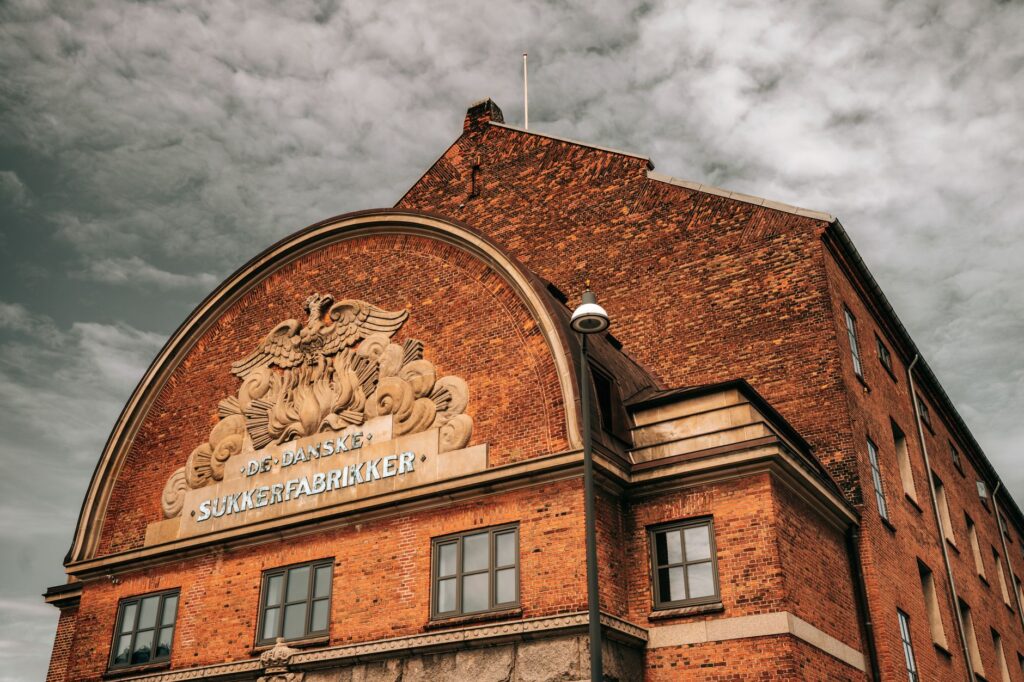
Kolding’s industrial history is visible in old factories and warehouses, some converted into cultural or educational spaces. This is not an open-air museum, but a city that has been adapting its structures without drama, with the pragmatic efficiency that characterises many Danish towns.
For those interested in architecture and urbanism, the outskirts of Kolding offer a counterpoint to the historic centre. Here, the logic of the working city is more evident: functional buildings, transport infrastructure and residential areas designed for daily life rather than for postcards. Exploring these areas on foot or by bicycle provides a more complete picture of how the city functions beyond its heritage core.
Seasonal food and local produce
Cooking in Kolding follows the rhythm of the seasons. In autumn and winter, stews, meats and fish from the fjord abound; in spring and summer, menus lighten with vegetables, herbs and berries. Markets and bakeries offer local produce, and some restaurants work with regional suppliers.
There is no spectacular gastronomy or dazzling fine-dining scene, but there is honest, well-made food that is coherent with its surroundings. Smørrebrød, marinated herring and seasonal sweets are common on local tables.
Danish food culture in a town like Kolding is closely tied to the concept of hygge, though the term is often overused in tourist contexts. In practice, it translates into simple things: a coffee taken slowly, a meal shared without haste, an appreciation for light and comfort during the dark months. For the visitor, adopting this rhythm is part of understanding the place.
Responsible choices for the visitor
Kolding does not demand great sacrifices from the traveller, but it does invite attentive tourism. Staying in the centre allows you to move on foot or by bicycle. Using public transport for nearby excursions reduces impact. Shopping in local businesses and respecting residential areas are simple gestures that maintain coexistence.

Kolding’s heritage is sustained because the city uses it. Museums, streets and the fjord are part of daily life, not a closed circuit for visitors. That is perhaps the best lesson to take away from a few days there.
It is also worth remembering that Denmark has a strong tradition of public access to nature, but this comes with responsibilities. Respecting marked paths, not littering, and keeping noise levels low in residential and natural areas are basic norms that locals appreciate. In a city where the boundary between urban life and natural landscape is so permeable, these small decisions have a direct impact on the quality of the place.
Practical guide
- Getting there: Kolding has a railway station with direct connections to Copenhagen, Aarhus and Hamburg. It is also well connected by motorway.
- When to go: spring and summer offer long days and outdoor activities; autumn is quiet and luminous; winter is cold and dark, but museums and cafés keep their rhythm.
- What to see: Koldinghus, Trapholt, the pedestrian centre, the Church of Saint Nicholas and the fjord walks.
- Getting around: on foot or by bicycle in the city; public transport for excursions to nearby towns.
- Language: Danish is the local language; English is widely spoken in hotels, museums and restaurants.
- Currency: Danish krone (DKK). Cards are accepted almost everywhere.
- Local respect: avoid noise in residential areas, respect museum opening hours and do not enter private property.
Kolding does not seek to impress with grandeur. Its strength lies in the way it has learned to live with what it has: a castle that was a ruin, a fjord that still works, a community that has not turned its history into a spectacle. For the traveller willing to walk slowly, the city offers something increasingly rare: the feeling of being in a real place, where heritage is measured by its everyday usefulness and not by its scenic value.