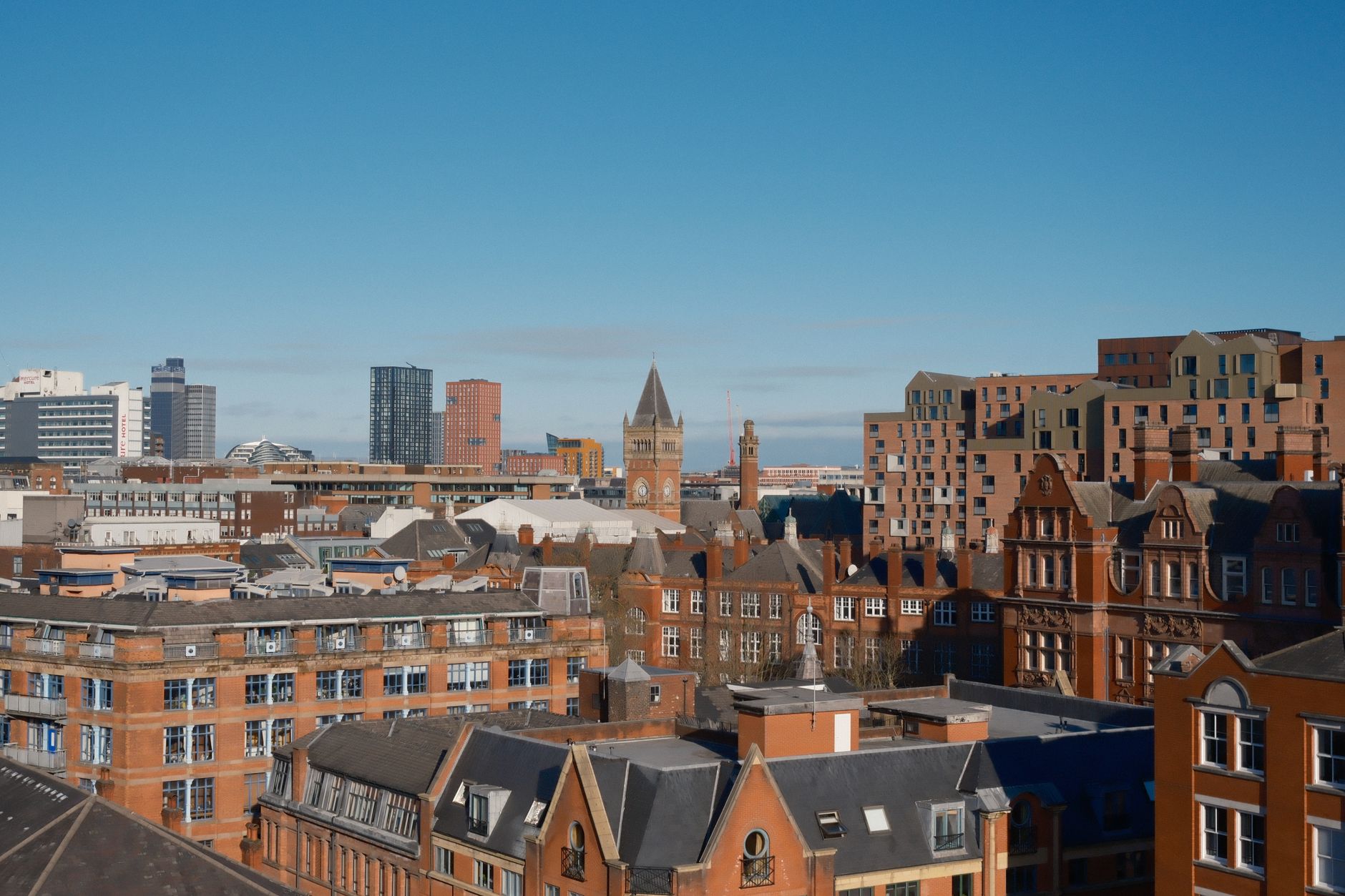

Manchester is not just the red brick of its warehouses or the music that spills from every corner. For those who arrive with an expeditionary eye, the city reveals itself as a territory of contrasts: a dense urban core, crossed by canals and old railway lines, that within an hour transforms into the Pennine moors. In the United Kingdom, adventure does not always involve high altitudes; it is often measured in miles of mud, in the damp that seeps into the bones, and in the ability to read a sky that changes every twenty minutes.
This feature offers a rigorous approach to planning an expedition in Manchester and its surroundings. There are no snow-capped peaks or impenetrable jungles, but there is an unpredictable oceanic climate, a network of historic trails, and a set of unwritten rules that separate a memorable day from a mishap. The key lies in preparation: logistics, equipment, permits, and responsibility toward an environment that is both natural and deeply humanised.
A territory shaped by water and coal
Manchester’s geography is marked by its industrial past. The canals that once carried coal and cotton are now green corridors connecting neighbourhoods and industrial estates. The River Irwell, the Mersey, and the Bridgewater Canal system form a navigable network that offers urban hiking and long-distance cycling routes. To the north and east, the Pennines rise as a natural barrier: the Peak District National Park begins less than thirty minutes by train from the centre.
This environment is not an empty backdrop. It is a landscape of dry stone walls, working farms, and nature reserves managed by the National Trust and other organisations. Walking here means sharing the space with sheep, cyclists, and other walkers. Signage is generally good, but fog can erase the horizon within minutes. Navigation with a map and compass, or at least with an offline map app, is not a whim: it is a necessity.
Adventure in Manchester is not measured in metres of altitude, but in the ability to adapt to a climate that changes as quickly as a traffic light on Oxford Road.
Logistics: arriving, getting around, and sleeping
Manchester Airport (MAN) is the main international gateway. From there, train and tram connect to the centre in under half an hour. For a multi-day expedition, staying in areas like Didsbury, Chorlton, or the Northern Quarter offers quick access to train stations and supermarkets for resupply. Public transport in Greater Manchester is integrated into the Bee Network, with buses and trams covering most trailheads.

If the plan includes overnight stays on the moors, keep in mind that wild camping outside authorised campsites is restricted in many areas. In the Peak District, wild camping is only tolerated in very specific zones and with minimum-impact criteria. The alternative is to sleep in villages such as Edale, Hayfield, or Glossop, which have managed accommodation and campsites. Booking ahead on weekends and holidays is almost mandatory.
The climate: a factor that rules
Manchester is known for its rain, but the reality is more nuanced: it rains less than in other British cities, although humidity and fog are constant. Average summer temperatures hover around 20 °C, and in winter it rarely drops below 0 °C, but the wind chill can feel much colder due to wind and horizontal rain. The golden rule is to dress in layers: a sweat-wicking base, a thermal mid-layer, and a waterproof windbreaker. Water-resistant hiking trousers and boots with good grip are essential, even for short routes.
The weather forecast should be checked several times a day. In the Pennines, fog can reduce visibility to less than ten metres. If the planned route crosses high ground or skirts cliffs, it is prudent to carry a whistle, an emergency shelter, and a thermal blanket. Exposure to wind and rain can cause hypothermia even in summer.
Permits and rules: what you need to know
Most hiking in the UK takes place on public footpaths and open access land. No general permit is needed to walk, but temporary restrictions must be respected, such as closures during bird breeding season or works. In the Peak District, some open access areas may be closed on certain days; checking the national park website is essential.
For activities such as climbing, canyoning, or mountain biking on specific routes, permits or insurance may be required. Fishing in rivers and canals requires a licence from the Environment Agency. And if travelling with a dog, note that in many reserves and open access areas it must be kept on a lead between March and July to protect wildlife.

Real risks: mud, rivers, and traffic
Mud is an underestimated risk. In winter and spring, Pennine trails become slippery stretches that can cause falls and sprains. Walking along canal banks also demands attention: cold water and slippery edges are dangerous. In the city, traffic and unmarked crossings are the main threat to pedestrians; in the countryside, narrow roads without pavements force you to walk in single file and wear visible clothing.
Wildlife is another factor. Ticks are present in tall grass areas and can transmit Lyme disease. Wearing long sleeves and checking your body at the end of the day is a simple and effective measure. Birds of prey and deer are part of the appeal, but they should not be fed or disturbed.
Essential equipment for a Manchester expedition
The list may vary by season and duration, but some items should never be missing:
- Waterproof hiking boots with grippy soles.
- Waterproof and windproof jacket, preferably with a hood.
- Thermal layers and spares in a dry bag.
- Map of the area and compass, or GPS device with external battery.
- Headlamp or torch, especially in winter when it gets dark before 4 p.m.
- Basic first-aid kit with bandages, painkillers, and blister treatment.
- Water and energy food; on long routes, a filter or purification tablets.
- Whistle, thermal blanket, and mobile phone with the 999 emergency app.
Don’t forget a backpack with a rain cover and, if camping, a sleeping bag suitable for temperatures down to 5 °C in summer and below zero in winter.
Heritage and culture: walking through stories
Manchester is a city of museums and libraries, but also of routes that tell the story of the Industrial Revolution. The Bridgewater Canal, opened in 1761, was one of Britain’s first artificial navigable waterways and can now be walked or cycled. Dunham Massey Castle, with its deer park, offers an accessible and well-signposted walk. In the Pennines, villages like Castleton retain lead mines and Norman castles.

Local culture also expresses itself in gastronomy: valley pubs serve hearty dishes such as meat pie and roast potatoes. A cup of tea with milk after a walk in the rain is almost a mandatory ritual.
Responsibility: leaving the least trace possible
The Leave No Trace principle is fundamental in such a busy environment. This means taking all rubbish with you, not lighting fires outside permitted areas, and respecting agricultural closures. On the moors, dry stone walls are historical heritage and must not be altered. Wildlife, from sheep to birds, should be observed from a distance.
Noise is also a form of pollution. In rural areas, the sounds of nature are part of the experience; loudspeakers and loud music break the balance and disturb other visitors and residents.
Practical guide
When to go: May to September offers longer days and mild temperatures, but also more people. Spring and autumn are ideal for those seeking solitude, although mud and rain are more frequent. Winter demands specific equipment and experience.
Getting there: Manchester Airport (MAN) has connections to major European cities. From Piccadilly station, trains reach Edale, Glossop, or Sheffield in under an hour. The Metrolink tram connects the centre with neighbourhoods and industrial estates.
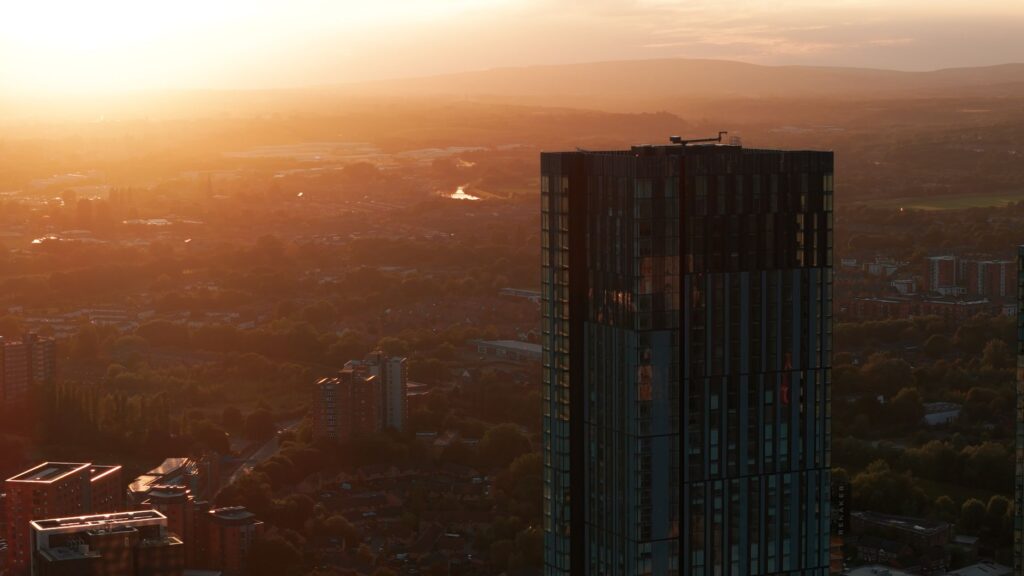
Where to sleep: in the city, hotels and hostels in the Northern Quarter and Ancoats. In the valleys, pubs with rooms and campsites in Edale, Hathersage, and Hayfield. Book ahead in high season.
Budget: a hiking day can cost just public transport (around £5-10) and food. Hostel accommodation is around £20-30 per night; a pub with a room, between £80 and £120. Campsites usually charge £10-20 per person.
Safety: the emergency number in the UK is 999. For mountain rescue, you can request the team through the police. It is advisable to inform someone of your itinerary and expected return time.
The inner journey: what remains after the mist
At the end of the day, when light filters through the clouds and the green of the valleys becomes almost unreal, Manchester reveals its other face. It is not the city of factories or concerts, but a place where nature and history intertwine. Adventure here is not about conquering peaks, but about learning to move with respect through a landscape shaped by generations of walkers. The reward is a sense of connection with a territory that, despite the rain, still invites exploration with calm and preparation.