
Patarrá is one of those places most travelers pass through without stopping. Located in the canton of Desamparados, in the province of San José, this district of some 24,000 inhabitants stretches across the western slopes of La Carpintera hill, at about 1,180 meters above sea level. From the highway connecting the capital to Cartago, the streams that descend between coffee farms, concrete-block houses, and patches of secondary forest are barely visible. Yet beneath that everyday appearance lies an aquatic system that performs essential functions: it filters runoff water, recharges the aquifers of the Central Valley, and sustains biodiversity that resists the advance of concrete.
The question guiding this report is simple: what role do Patarrá’s aquatic ecosystems play in the lives of the communities around them, and how can a visitor experience them without disrupting their fragile balance? The answer requires looking beyond the urban landscape and venturing into the streams, the remnants of riparian forest, and the wetlands that still survive among housing developments.
A district between the city and the mountain
Patarrá borders San José to the north, the canton of Cartago to the east, and the districts of San Miguel and Damas, also in Desamparados, to the south. Its topography is rugged: slopes descend from the 1,500 meters of La Carpintera hill to the 1,100 meters of the valley, creating a network of drainages that feed the Tiribí River and, further down, the María Aguilar River. These waterways have historically shaped life in the district, from colonial times when coffee estates used the flows to power mills, to the present day, when those same streams face growing urban pressures.
Patarrá’s demographic growth in recent decades transformed the area. What was once a landscape of farms and pastures became a mosaic of residential neighborhoods, narrow streets, and schools. Even so, geography imposed limits: steep slopes and water recharge zones slowed expansion in certain sectors, allowing strips of riparian vegetation and small wetlands to survive.

What Patarrá’s aquatic ecosystems are
When people talk about aquatic ecosystems in an urban Costa Rican context, they don’t think of large lakes or reefs. In Patarrá, these systems take modest but functional forms: streams with variable flow, springs, infiltration zones, and seasonal wetlands that appear during the rainy season, from May to November.
The streams descending from La Carpintera hill carry water year-round, though their flow drops noticeably in the dry season. Trees such as guácimo, poró, and willow grow along their banks, their roots stabilizing the slopes and shading the channel. These strips of riparian forest, though fragmented, function as biological corridors for birds, insects, and small mammals.
Wetlands are less visible. They are areas where water emerges or pools temporarily, allowing aquatic plants and amphibians to develop. Their importance lies in their ability to retain sediment, filter pollutants, and recharge the aquifers that supply water to entire communities.
The relationship with coastal and urban communities
Although Patarrá has no sea coast, its connection to water is just as deep. The communities living on its slopes depend on the streams for daily activities: watering gardens, livestock troughs, and in some cases, a supplementary water supply. These currents also feed the rivers that cross San José and eventually empty into the Pacific Ocean, carrying sediment, nutrients, and unfortunately, pollutants.
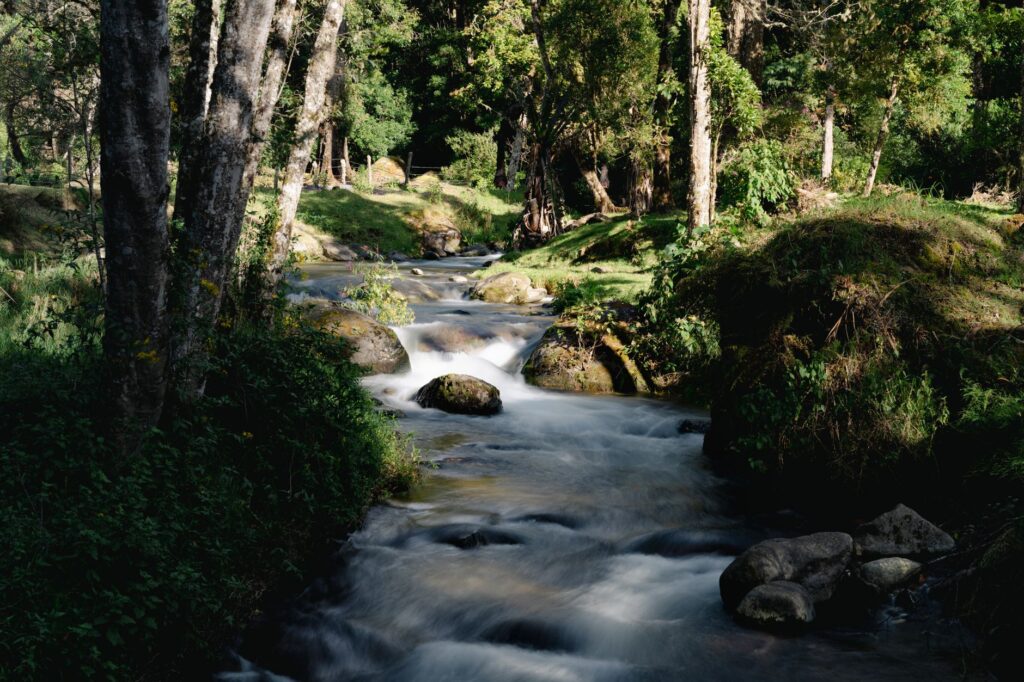
The relationship is not always harmonious. Urban expansion has brought familiar problems: wastewater discharges, garbage accumulation in channels, and loss of vegetation cover. However, community initiatives have also emerged to clean streams, reforest banks, and monitor water quality. These actions, though local, reflect a growing awareness of the value of aquatic ecosystems.
The water flowing through Patarrá’s streams does not belong only to those who live beside it: it is part of a cycle that sustains life throughout the Central Valley.
Biodiversity in a fragmented landscape
Despite urban pressure, Patarrá retains remarkable biodiversity. The streams and their banks shelter birds such as the kingfisher, the white heron, and the hummingbird, as well as amphibians like glass frogs and toads. In the forest remnants, squirrels, opossums, and a variety of insects that serve as pollinators and decomposers can be observed.
Wetlands, though small, are especially valuable. They serve as resting areas for migratory birds and as nurseries for aquatic species. The presence of plants like rushes and cattails indicates that these ecosystems still maintain suitable conditions for wildlife, provided they are managed with care.
Habitat fragmentation is the main challenge. Roads, walls, and buildings interrupt biological corridors, isolating populations and reducing their adaptive capacity. That is why every patch of riparian vegetation counts: they are not just green spaces, they are natural infrastructure that sustains urban biodiversity.
Heritage and context of the place
Patarrá has a history dating back to pre-Columbian times, when the Huetar peoples inhabited the slopes of La Carpintera. During the colonial period, the area was part of the communal lands of San José and later became integrated into coffee cultivation, which transformed the landscape and local economy. Coffee mills, some still standing, used the streams to wash and process the beans, leaving a mark that persists in collective memory.

Today, Patarrá’s heritage is less monumental and more everyday: the adobe and wattle-and-daub houses that survive among modern constructions, the old oxcart roads, and above all, the names of the streams passed down from generation to generation. Getting to know this heritage means walking its streets, talking with its inhabitants, and understanding that the history of water is also the history of the district.
How to visit without leaving a trace
A low-impact visit to Patarrá’s aquatic ecosystems requires planning and respect. The first thing is to recognize that this is not a conventional tourist destination: there are no marked trails or visitor centers. Therefore, it is essential to research routes beforehand and, preferably, contact local organizations or community guides who know the area.
When walking along the banks, avoid leaving established paths, do not collect plants or capture animals, and do not leave waste. Noise is also a factor: keeping your voice low allows you to observe more wildlife and avoid disturbing the species that inhabit these spaces. During the rainy season, it is important to take extra precautions due to sudden increases in water flow.
Birdwatching is one of the most rewarding activities. With patience and binoculars, it is possible to identify species such as the great kiskadee, the tanager, and the woodpecker. For those interested in photography, morning light offers the best conditions to capture the discreet beauty of these landscapes.

Management and conservation: challenges and opportunities
Conserving Patarrá’s aquatic ecosystems faces significant obstacles. Inadequate urban planning, weak wastewater treatment, and real estate pressure are constant threats. Added to this is the scarcity of resources for monitoring and enforcement.
However, opportunities also exist. Growing environmental awareness has led to the creation of neighborhood committees that work on stream cleanup and environmental education. Municipalities have begun to incorporate sustainability criteria into their regulatory plans, and some universities conduct research on water quality and local biodiversity.
Low-impact tourism can be an ally if managed properly. Visitors who respect the environment and contribute to the local economy can become advocates for these ecosystems. The key is to avoid overcrowding and ensure that benefits reach host communities.
Practical guide
For those wishing to explore Patarrá’s aquatic ecosystems, here are some useful tips:

- Getting there: Patarrá is about 15 kilometers southeast of San José. It can be reached by bus from the capital or by car via the highway to Cartago. The most accessible streams are near the central neighborhoods.
- Best time: The dry season (December to April) offers more stable conditions for walking, although the rainy season (May to November) is when the wetlands reach their full splendor. In any case, it is advisable to check the forecast before heading out.
- What to bring: Footwear suitable for uneven terrain, water, sunscreen, insect repellent, and binoculars. Don’t forget a bag to collect any waste you generate.
- Where to stay: Accommodation options in Patarrá are limited. Most visitors stay in San José or nearby towns such as Desamparados, from where public transport is available.
- Respect for the environment: Do not remove plants or animals, do not litter, do not light fires, and keep your distance from wildlife. Remember that these ecosystems are fragile and their conservation depends on the attitude of those who visit them.
- Local contact: For guided visits, it is recommended to contact local environmental organizations or the municipality of Desamparados, which can provide updated information on routes and conditions.
A closing perspective
Patarrá is not a postcard destination, but its value lies precisely in its authenticity. Its streams and wetlands bear witness to a history of adaptation and resistance, where nature and the city learn to coexist. Visiting these spaces with respect is a way of recognizing that the water flowing through them is a common good, a heritage that deserves to be cared for.
In a country that has made conservation a pillar of its identity, Patarrá reminds us that the most valuable ecosystems are not always the most spectacular. Sometimes, they are just around the corner, waiting to be seen with different eyes.
Patarrá’s true wealth is not in its streets or its buildings, but in the water that flows beneath them, silent and essential.
For the traveler willing to look beyond the obvious, Patarrá offers a lesson in humility and connection with nature. It is not about conquering a landscape, but about understanding and protecting it. In that gesture, perhaps, lies the most authentic way to travel.