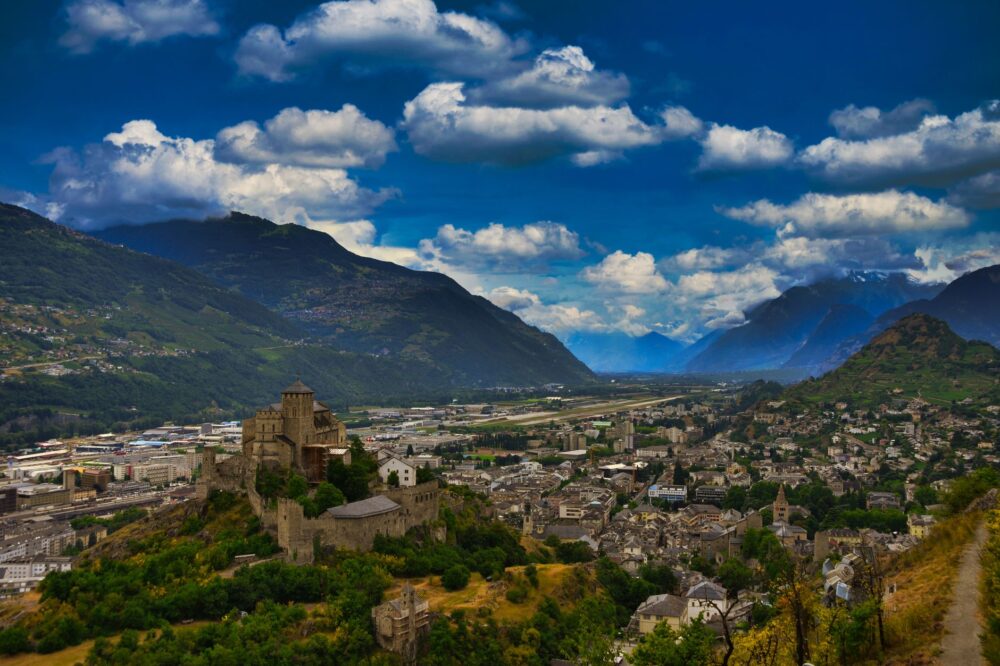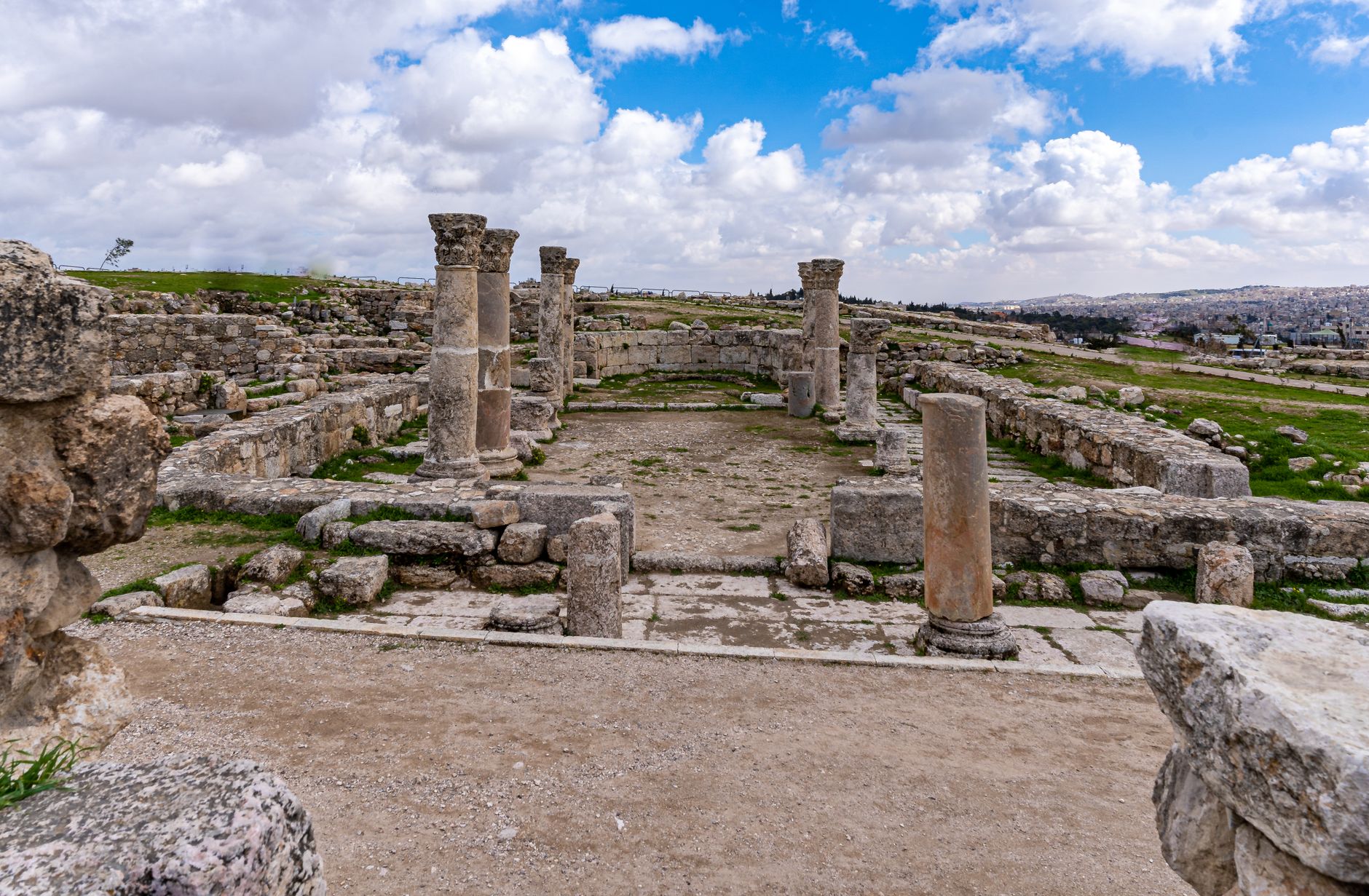

Al Fuheis does not appear in Jordan’s most repeated postcards. It has no Roman theater like Amman, no Nabataean facades like Petra, no intense blue like Madaba. Yet some 20 kilometers northwest of the capital, this municipality in the Balqa Governorate, at an elevation of about 900 meters, offers something increasingly rare in the country: an urban core where daily life is not organized around the visitor. Here tourism is not a main industry, and that, far from being a flaw, becomes an invitation to observe with respect.
The question guiding this report is simple: what can be learned from a place that has not been designed for quick consumption? The answer lies in its streets, in the way local architecture adapts to climate and topography, and in how a predominantly Christian community in a predominantly Muslim country has woven its identity without fanfare. Al Fuheis is, in many ways, an exercise in slow reading.
A Balqa Municipality That Does Not Compete with Grand Narratives
The Balqa Governorate stretches between the Jordan Valley and the plateau leading to Amman. Al Fuheis is one of its administrative centers, with a population of around 19,000 according to available geographic data. Its altitude, close to 900 meters, grants it summers less stifling than those of the valley and winters that can surprise with cold and, occasionally, snow. That intermediate position has marked its history: neither fully urban nor completely rural, it has served as a place of passage and settlement for families arriving from different regions.
The name appears in records with variations: Fuheis, El Fuheis, Feheis. The Arabic transcription is الفحيص. That multiplicity of spellings says something about the nature of the place: it has not been a pilgrimage center or a first-order commercial hub, but a town that has grown at the pace of its inhabitants. Its recent history is linked to the cement industry, which transformed the local economy in the 20th century, but also to an agricultural tradition of olive groves and vineyards that still resists on the edges of the urban core.
Limestone as a Common Language
If there is one material that unifies Al Fuheis, it is the light-toned limestone extracted from nearby quarries. The facades of the oldest houses show it without cladding, with irregular blocks that reveal the stonemason’s hand. There is no monumental architecture, but there is a constructive coherence that responds to the climate: thick walls that insulate against heat, small windows on the most exposed orientations, inner courtyards that function as an extension of the home and as a space for socializing.
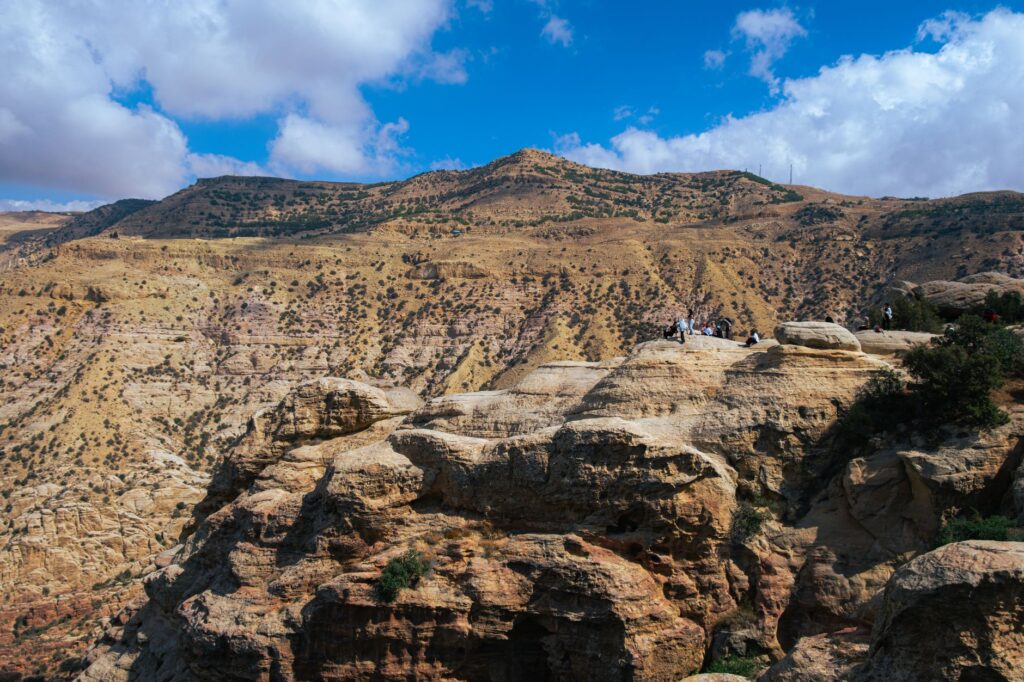
That architecture is not a museum. It is a way of living. Walking through the center reveals how new constructions coexist with old ones, sometimes with harmonious results and sometimes with evident tensions. Visitors seeking a homogeneous historic ensemble will feel disoriented; those interested in the evolution of a real town will find abundant material.
The beauty of Al Fuheis is not in a singular building, but in the collective logic of its streets: shade, stone and proximity.
A Christian Community in a Majority-Muslim Country
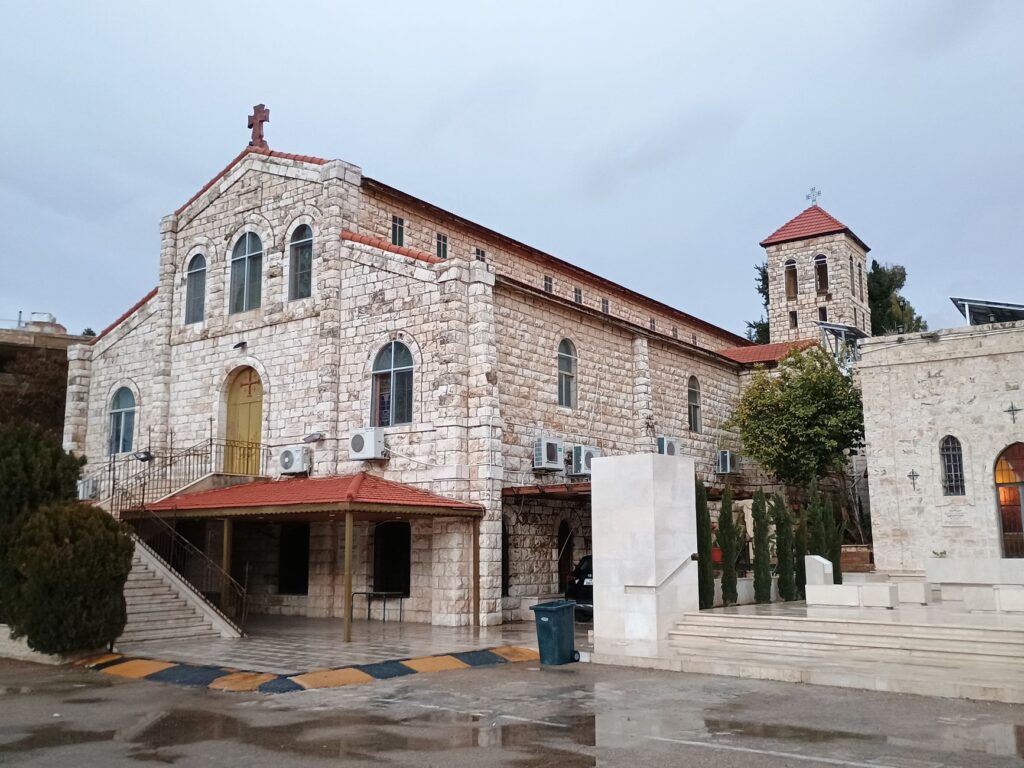
Al Fuheis has a characteristic that distinguishes it within Jordan: a significant proportion of its population is Christian, mainly Orthodox and Catholic. That composition has shaped its calendar, its spaces and its customs. The churches are not grand monuments, but they are integrated into the urban fabric and social life. During festivities, the town acquires its own rhythm, with processions and family gatherings that fill the streets.
For the visitor, this implies a practical consideration: respect for the schedules and norms of each religious community is not an optional gesture, but the basis of a responsible visit. This is not a destination where one can enter and exit temples as if they were attractions, but a place where faith is part of daily intimacy.
The Market and the Table: Flavors of the Balqa
Local gastronomy has not been designed for tourism, and that is an advantage. Products from the area—olives, olive oil, aromatic herbs, dairy—appear in markets and on family tables. Manakish with za’atar, freshly baked bread, legume dishes and homemade preserves are part of an honest cuisine, without pretensions.
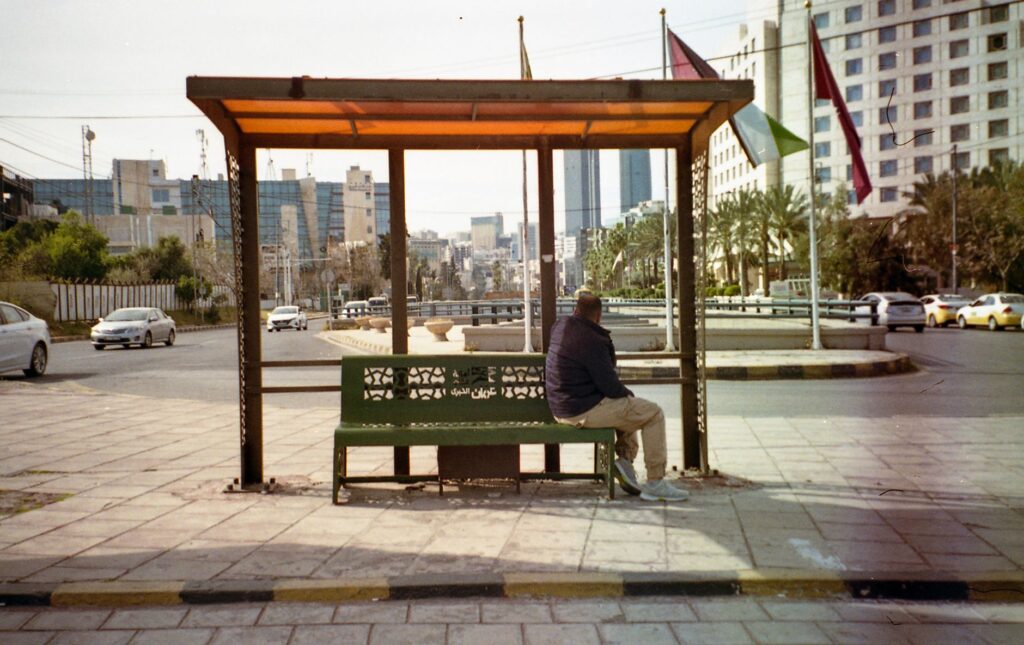
Eating in Al Fuheis is not a fine dining experience, but an approach to the Balqa pantry. Small shops and food stalls allow direct purchase from local producers, which besides being more sustainable, offers a path of contact with the town’s life. Travelers who ask about the origin of what they buy will often receive answers that speak of family gardens and seasons.
Domestic Architecture and Public Space
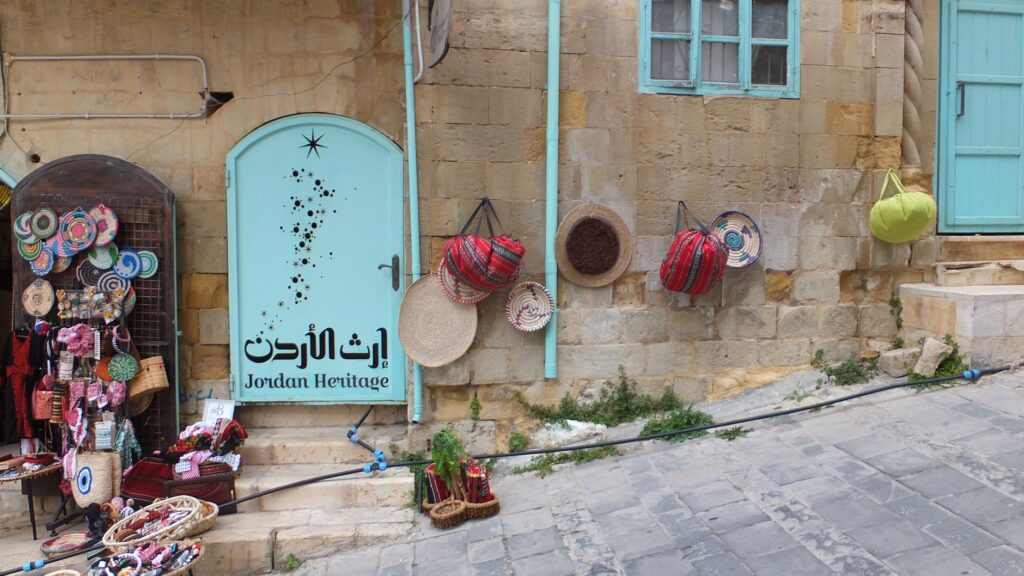
One of the most interesting aspects of Al Fuheis is the relationship between the house and the street. Unlike other cores where the exterior wall is blind and life retreats inward, here a gradation is perceived: there are narrow streets, courtyards, terraces, small shops opening directly onto the public way. That gradation creates an urban space that invites walking without a fixed destination.
Stairs and slopes are constant, because the town sits on undulating terrain. Walking involves going up and down, and that marks the pace of the visit. It is not a place to tour in a hurry. The reward lies in the details: a carved wooden door, a balcony with flower pots, a stone bench in the shade.
Industrial Heritage and the Memory of Work
The cement industry has been fundamental to the economy of Al Fuheis and neighboring municipalities. Although visitors will not find an industrial museum, the presence of that activity is felt in the infrastructure, the landscape and conversations. It is an uncomfortable heritage, because it is not picturesque, but it is as much a part of local identity as the olive groves.
Recognizing it is important so as not to reduce the place to a bucolic image. Al Fuheis is a town that works, that has grown with industry and that continues to transform. Cultural tourism that ignores that dimension risks becoming a superficial gaze.
What the Responsible Visitor Can Do
The first recommendation is to adjust expectations. Al Fuheis is not a destination for grand monuments or designed experiences. It is a place to walk, observe and, above all, not interfere. That means dressing respectfully, asking permission before photographing people, not entering private property without invitation and spending in local businesses.
The second is to inform yourself before going. Understanding the religious and social context of the town helps avoid misunderstandings and establish more honest relationships. The third is to accept that the visit will be brief: half a day or a full day is enough to explore the urban core and its surroundings. The temptation to seek more than the place offers is the main mistake of the visitor.
Traveling to Al Fuheis does not consist of seeing something extraordinary, but of learning to look at the ordinary without turning it into a spectacle.
Surroundings: The Balqa as Context
The Balqa Governorate offers other points of interest that help contextualize the visit. The Jordan Valley, with its agricultural landscapes and settlements, is relatively close. So are the archaeological sites of the region, although Al Fuheis is not an archaeological center itself. Integrating the town into a broader route through the Balqa helps understand its function within a larger territory.
It is advisable to dedicate time to the natural viewpoints of the area, from where the transitions between the plateau and the valley can be appreciated. Those landscapes explain why the region has historically been a corridor between the interior and the Jordan River.
Practical Guide
How to get there: Al Fuheis is located about 20 kilometers northwest of Amman, in the Balqa Governorate. Road access is straightforward and can be done by taxi or private vehicle from the capital. There is no train station or airport in the municipality; the nearest international airport is Queen Alia, south of Amman.
When to go: Spring and autumn are the most pleasant seasons, with moderate temperatures. Summer can be hot, although the altitude softens the highs. Winter is cold and there may be rain and even occasional snow. Christian religious festivities, such as Christmas and Easter, transform the life of the town and can be an interesting time to visit, always with respect.
What to bring: Comfortable footwear for walking on irregular and sloping streets. Modest clothing, especially if visiting churches or interacting with the community. Water and sun protection in the warmer months. Cash for purchases in small shops, as not all accept cards.
Where to eat: Local establishments offer basic Jordanian cuisine: bread, olives, dairy, legumes and grilled meats. It is advisable to ask about seasonal products and homemade specialties. There is no tourism-oriented restaurant scene, which guarantees reasonable prices and direct treatment.
What to avoid: Do not photograph people without their consent. Do not enter private properties or religious spaces without authorization. Do not leave waste outside containers. Do not assume the place is prepared to receive large groups; the visit should be discreet and unhurried.
Language: Arabic is the main language. English is understood in some shops and among younger people, but it is not universal. Learning a few basic courtesy words in Arabic notably improves interaction.
A Final Look
Al Fuheis does not pretend to seduce the visitor with grand gestures. Its value lies in the coherence between landscape, architecture and social life. It is a place where heritage is not exhibited, it is inhabited. For those willing to walk without haste and accept that not everything is arranged for their consumption, the town offers a lesson in authenticity not found on Jordan’s more traveled circuits.
The photograph that closes this report does not seek the monument, but the gesture: a sloping street, a half-open door, the shadow of a tree on limestone. That is the tone of Al Fuheis: discreet, everyday, resistant to simplification.