
In Copenhagen, Denmark, the sound of traffic is not a constant roar but a tinkling of bells and the whisper of tires on asphalt. The Danish capital has made active mobility—walking and cycling—the backbone of its daily life. This is not a passing fad or a tourist attraction: it is how the city functions, plans, and is experienced. For first-time visitors, the sensation is one of strange, almost unreal calm in a mid-sized metropolis. But behind that serenity lie decades of political decisions, infrastructure investment, and a culture that treats public space as a common good.
This report explores how Copenhagen has woven an ecosystem where bicycles and pedestrians come first, and how that reality transforms the travel experience. It is not a tale of technological feats or record-breaking figures, but a look at everyday life in a city that has learned to move without haste, without fumes, and without fanfare.
An urban landscape designed for the human body
Copenhagen spreads across islands and canals, with a flat topography that invites walking. The historic center, with its cobbled streets and brick buildings, is made to be explored on foot. But what truly sets the city apart is its network of segregated bike lanes, which wind alongside sidewalks and often have their own traffic lights. These are not mere painted lines on asphalt: they are priority routes, maintained in winter and connected to outlying neighborhoods.
Urban planning has gone further: dedicated bicycle bridges, such as the Cykelslangen (Bicycle Snake), cross the harbor and keep cyclists from mixing with motorized traffic. These details are not aesthetic whims; they respond to a mobility strategy aimed at reducing car dependence and improving air quality.
The result is a landscape where the human body sets the pace. Pedestrians have wide sidewalks, car-free squares, and rest areas. Cyclists have their own space and respect from drivers. And drivers, fewer and fewer, travel on limited roads with priority given to active modes.
The bicycle as an extension of home
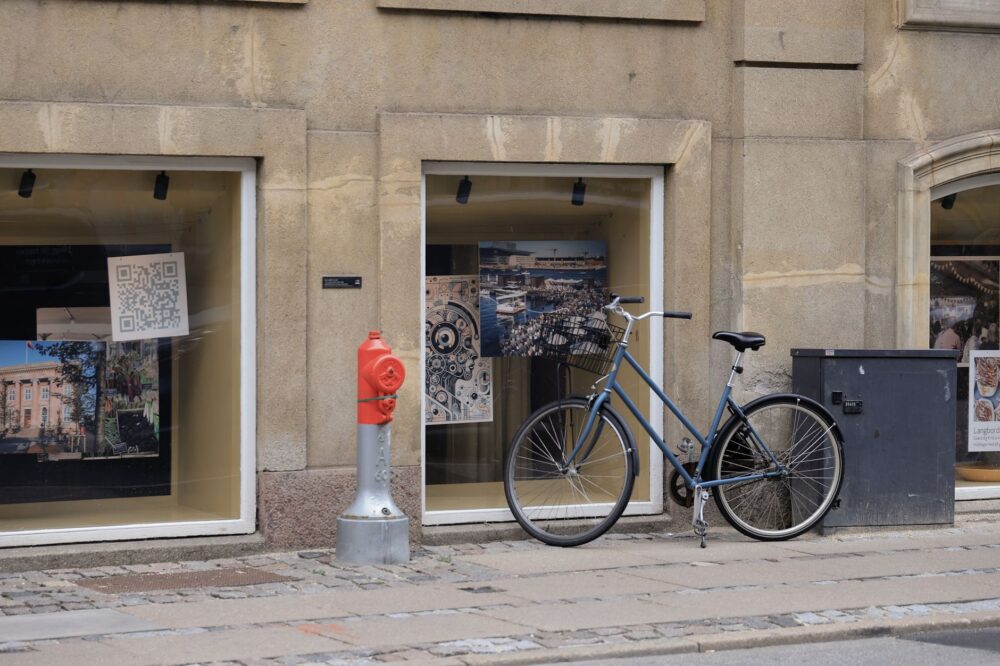
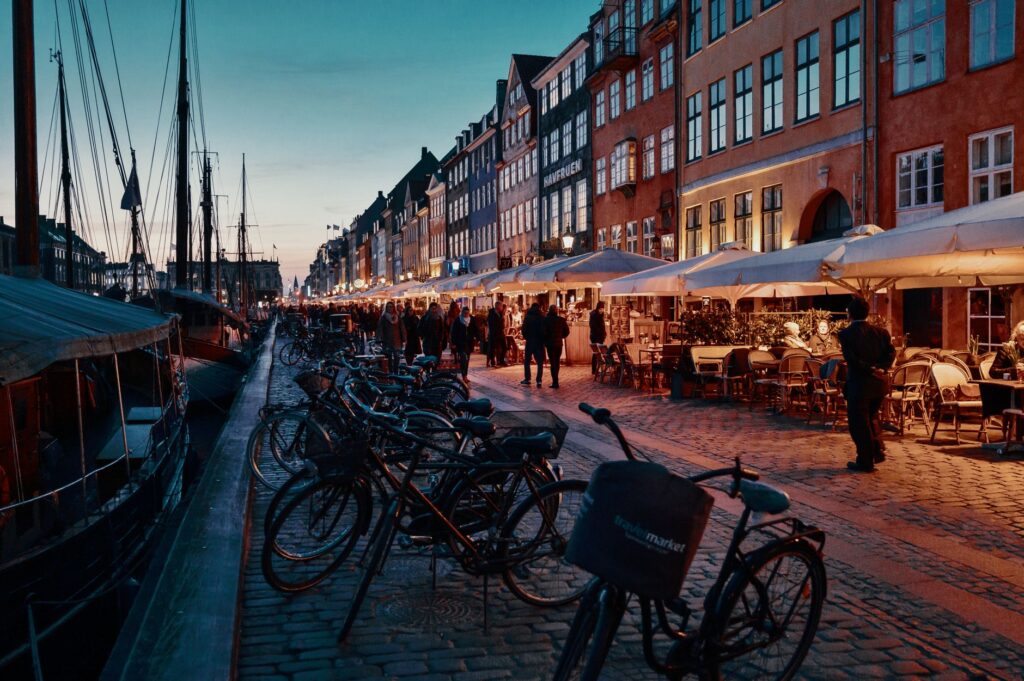
In Copenhagen, the bicycle is not kept in a garage: it is left on the street, parked on angled racks, and used in any attire. It is common to see people in suits pedaling to a meeting, parents with child trailers, or young people with shopping baskets. The bike is an everyday tool, not a symbol of athletic identity.
This normalization has been possible thanks to infrastructure that prioritizes safety. Lanes are designed to avoid conflicts: at intersections, cyclists have their own space and signage. In addition, the bike-share system, while not the only one, complements the public transport network.
“The bicycle is not a sport, it is a right,” summarizes a local saying that has become the city’s unofficial motto. It is not a grandiloquent phrase but a description of reality: anyone can pedal, regardless of age or fitness level.
Coexistence between pedestrians and cyclists also has its codes. Cyclists are expected to signal turns, respect traffic lights, and not invade sidewalks. Pedestrians, in turn, should avoid walking in bike lanes. It is an unwritten pact that is learned quickly and maintains order without constant surveillance.
Neighborhoods that breathe: from Vesterbro to Christianshavn
Each Copenhagen neighborhood has its own character, but all share the same mobility logic. In Vesterbro, a former working-class district now creative, streets have been partially pedestrianized and café terraces occupy space once used for parking. In Nørrebro, cultural diversity is reflected in heavy bicycle traffic and the presence of markets and local shops.
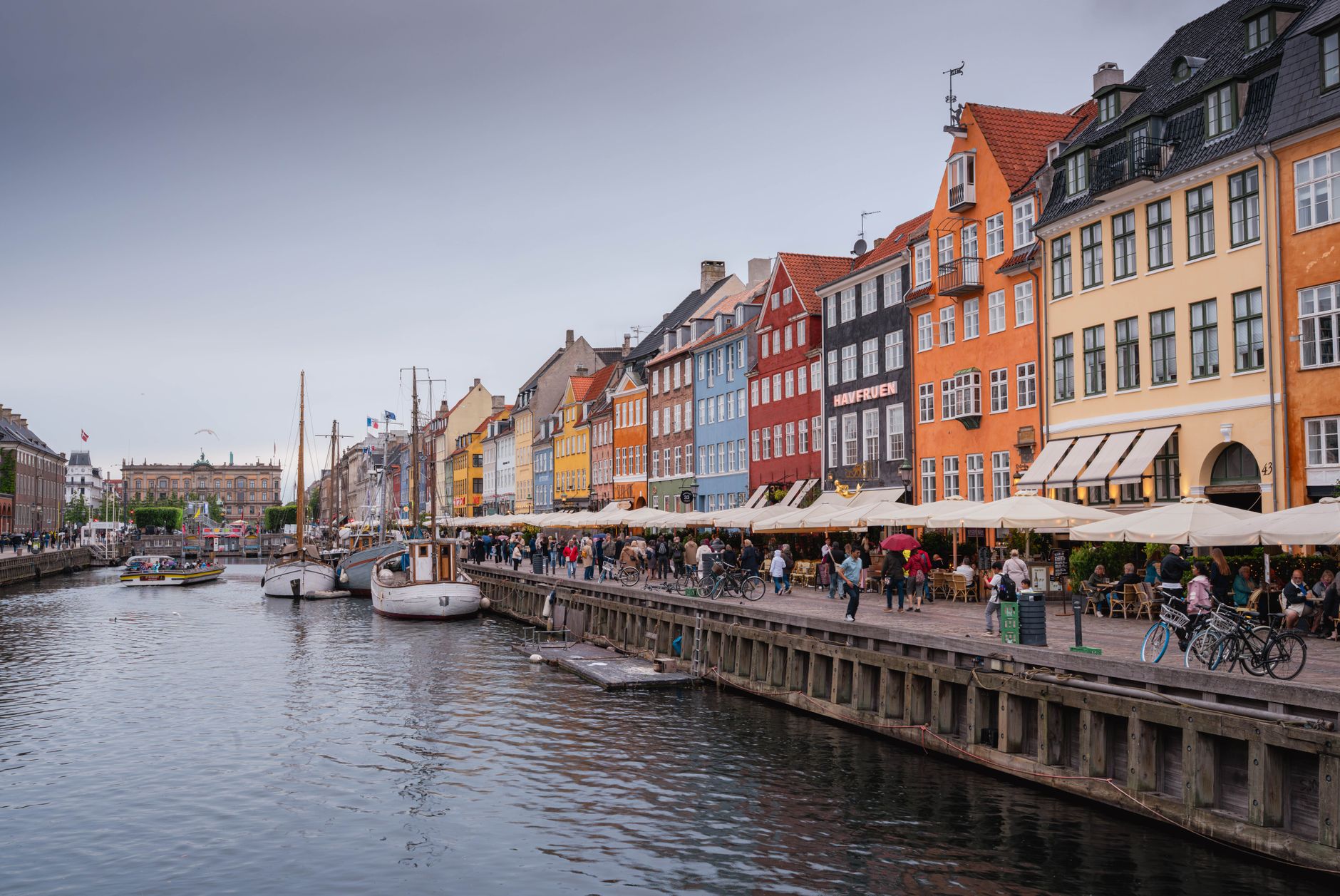
In Christianshavn, canals and houseboats invite aimless walking. Here, water is an extension of the public thoroughfare: there are pedestrian bridges, jetties, and routes that allow crossing the city without touching asphalt. To the east, in Amager, there are nature areas and beaches reachable by metro or bike, proving that active mobility also serves to escape the center.

The relationship between landscape and daily life is evident: parks, gardens, and waterfronts are integrated into daily commutes. They are not separate destinations but parts of the journey. Going to work may involve crossing a bridge over the canal, skirting a lake, or passing through a park. That connection to the natural environment improves the experience of moving and strengthens the bond with the city.
Stations and harbors: nodes of active mobility
Copenhagen’s public transport network is designed to complement cycling and walking. Metro and train stations allow bicycles at certain times, and many have secure parking. The central station, København H, is an example of integration: on exiting, travelers find bike lanes and wide sidewalks connecting to the center.
The harbor, once industrial, has been transformed into public space with promenades and swimming areas. Urban ferries, known as havnebusser, carry passengers and bicycles between key points, offering a waterborne alternative to land transport. This maritime network reinforces the idea that active mobility need not conflict with efficiency.
Airports also reflect this philosophy. Copenhagen Airport at Kastrup is connected to the center by metro and train, and has bicycle parking. Although most visitors arrive by plane, once in the city, a car becomes unnecessary.

A culture of coexistence and respect
What sustains this system is not just concrete and paint but a deeply rooted civic culture. Danes pay high taxes and expect that money to translate into quality public services, including infrastructure for getting around. There is trust that rules are followed because they benefit everyone.
That trust translates into everyday behaviors: yielding, signaling, not invading another’s lane. There is no omnipresent authority watching everything; the community itself maintains order. For visitors, this can be surprising but also inspiring.
“Here it’s not about saving time, it’s about gaining quality of life,” comments a resident who prefers not to be identified. The phrase sums up the spirit of a city that has opted for a mobility model prioritizing well-being over speed.
This approach also has implications for sustainability. By reducing the number of cars, emissions and noise decrease. The air is cleaner and the streets safer. Active mobility benefits not only those who practice it but the entire community.
The visitor before Copenhagen’s mirror
For those arriving from elsewhere, Copenhagen offers a practical lesson: getting around need not be stressful. Renting a bike or simply walking allows discovering the city at a human pace. Itineraries are not measured in kilometers but in experiences: a coffee in a courtyard, a swim in the harbor, a conversation on a bench.
The city invites you to leave the map behind and get lost. Neighborhoods follow one another with distinct personalities, and signage for cyclists is clear. Even in winter, when the cold bites, infrastructure is maintained and cyclists keep riding. There are no weather excuses: the bicycle is a means of transport for all seasons.

That constancy has created a unique soundscape and visual scene. The tinkling of bells, the sway of legs, baskets with flowers or bread. It is an urban choreography that works because every piece knows its place. Visitors who join it soon understand that this is not a tourist attraction but the very life of the city.
Practical guide
If you plan to visit Copenhagen and want to move like a local, here are some recommendations based on available information and observation of common practices. They do not include specific fares or schedules, as these may change.
- Bicycle rental: There are numerous rental points in the center and neighborhoods. Many shops offer bikes by the day or week. Make sure they include lights and a lock.
- Traffic rules: Cyclists must use designated lanes, signal with their hands, and obey traffic lights. Pedestrians should avoid walking in bike lanes.
- Public transport: The metro and trains allow bicycles at specific times, generally outside peak hours. Check signage at stations.
- Havnebusser: Water buses are a pleasant way to move between harbor points and usually allow bicycles. They are part of the public transport network.
- Proper footwear: Walking is the best way to explore the center. Wear comfortable shoes, as cobbled streets can be uneven.
- Weather: Rain and wind are frequent. A raincoat and light warm clothing are useful in any season.
- Respect: Observe how locals behave and follow their example. Coexistence is the key to the system.
Beyond logistical recommendations, the experience of moving in Copenhagen invites deeper reflection. In a world where speed seems a value in itself, this city shows that it is possible to slow down without losing efficiency. Active mobility is not just a matter of infrastructure but of priorities: what we want a city to be, how we want to live in it, and what legacy we leave to those who come after.
At the end of the day, when the sun sets over the canals and lights come on, the landscape fills with bicycles heading home. There are no traffic jams, no horns. Just the soft pedaling of a city that has chosen a different path. For travelers, that image stays with them: proof that another urban model is possible, and that Copenhagen, in Denmark, has made it real.