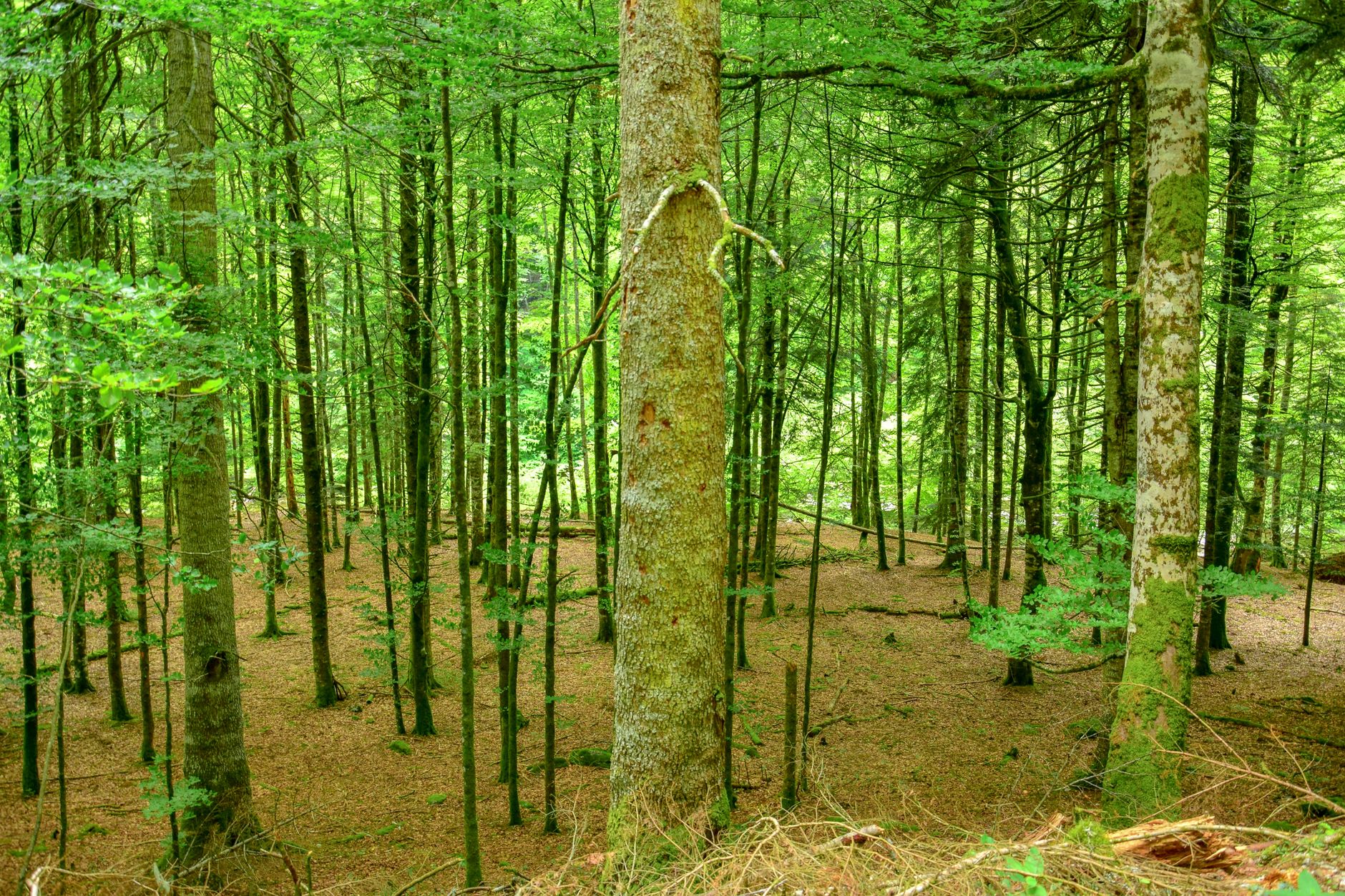

Mist clings to the beech trees like damp fabric. In the Irati Forest, in the far north-east of Navarre, silence is not an absence of sound: it is a texture, broken by the snap of a branch or the drumming of a woodpecker. This woodland, one of the largest and best-preserved beech-fir forests in Europe, is not a theme park. It is a living territory, home to deer, roe deer, wild boar and birds that find one of their last refuges here. And for years now, it has also been a major tourist destination that demands careful management.
The question is not whether it is worth visiting, but how to do so without contributing to its deterioration. The answer lies in planning, respecting the rules and understanding that this forest is, above all, a shared heritage.
A forest with history and rules
The Irati Forest stretches across the Navarrese valleys of Aezkoa and Salazar, and to a lesser extent the French valleys of Cize and Soule. Its forestry exploitation dates back to the 15th century, but the people of these valleys have managed to keep it in fine shape. Today, three protected areas — the Mendilatz and Tristuibartea nature reserves, and the Lizardoia integral reserve — safeguard its health. It is not an untouched forest, but it is an example of coexistence between use and conservation.
To manage visits, there are access points with information centres, car parks and services. In high season, some of these access points charge a maintenance fee. It is not a whim: it funds trail conservation, signposting and ranger services. Up-to-date information on fees, opening times and road conditions should be checked on Navarre’s official tourism channels before setting out.
Access points: gates to the same forest
The Irati Forest has no single entrance. Each access point offers a different experience, and it is worth choosing according to the season, fitness level and the type of route you are looking for.
Salazar Valley: Casas de Irati and Ochagavía
From Ochagavía, a turn-off onto the NA-2012 road leads in about 40 minutes to the Casas de Irati visitor centre. There you will find an information point, ranger service, car park, picnic area, bar-restaurant and bicycle hire with a small repair workshop. This is the most complete access point and therefore the busiest. In high season a maintenance fee applies. In winter, the road may be closed, so checking its status is essential.
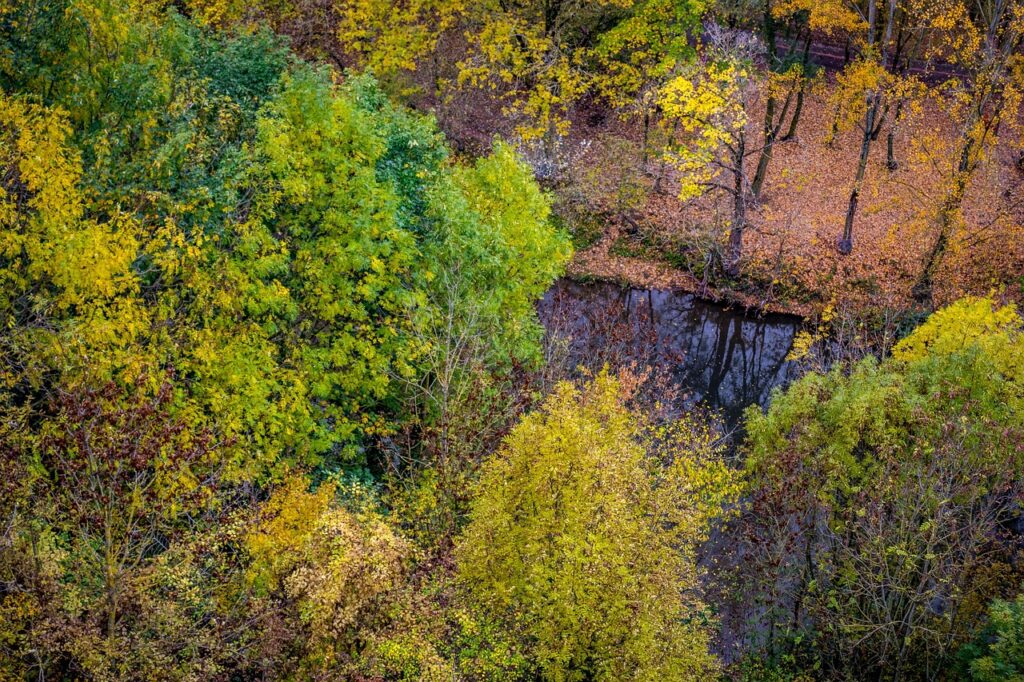
From this point, routes set off such as the Cubo Waterfall and the Urbeltza river path, the Zabaleta Forest, Errekaidorra, the Old Path to Koixta, the Old Path to Irati and Muskilda, the Path of the Senses and the circuit around the Irabia Reservoir. The variety allows you to choose between gentle walks and hikes of several hours.
Salazar Valley: Irati-Abodi and the Pikatua viewpoint
About 3.5 kilometres from Ochagavía lies Izalzu, from where the Gartxot Route sets off, based on a local legend. Following the road towards Larrau (France), you reach the Irati-Abodi mountain centre, in the Pikatua area. This access point never charges a maintenance fee. It is the starting point for mountain sports at any time of year: in winter, its four trails — Cerrillar, Cruz de Osaba, Zamukadoia and Koixta — can be explored on skis or snowshoes. The centre offers information, bike, ski and snowshoe hire, a café-bar-restaurant and parking. From the car park, five colour-coded routes of varying difficulty set off, known as Irati Bortz Kolore. Nearby, the Pikatua viewpoint, at about 1,300 metres, offers views of Mount Orhy, the first two-thousander of the Pyrenees.
Aezkoa Valley: Arrazola and the Irabia dam
About 8 minutes from Orbaizeta is the Arrazola information point, with ranger service, car park and picnic area. From there, the Anbulolatz and Azalegi-San Esteban Hermitage trails begin. A 15-minute drive away, next to the Irabia Reservoir dam, there are two small car parks from which routes such as Paraísos-Erlan, Camino de Plaza Beunza and the circuit around the Irabia Reservoir start. In high season, a maintenance fee also applies at this access point.
Aezkoa Valley: Arms Factory and Azpegi
Five kilometres from Orbaizeta are the remains of the Orbaizeta Arms Factory, from where the Arlekia-Lauzaran trail sets off. This access point never charges a fee. Three kilometres further on is the Azpegi Refuge, starting point for routes such as the Ursario Forest, the ascent of Mount Mendilatz and the route through the Azpegi megalithic station.
Trails for every pace
The Irati trail network is extensive and varied. For those looking for easy walks, the Zabaleta Forest (8.74 km, medium difficulty) or the Path of the Senses are good options. The Cubo Waterfall, with its themed path, is one of the most photographed spots. For the more athletic, the ascent of Mount Ori (2,017 m), the westernmost two-thousander of the Pyrenees, offers an imposing panoramic balcony. The GR-11 and GR-12 long-distance routes cross the area, with stages that allow you to discover the forest on foot over several days.
In winter, the Irati-Abodi mountain centre opens cross-country skiing tracks and snowshoe routes. It is essential to check snow conditions and weather forecasts before setting out.
Heritage beyond the trees
The Irati Forest is not only nature. In its surroundings, a heritage is preserved that speaks of the relationship between people and the forest. The Orbaizeta Arms Factory, established in the 17th century to supply ammunition and weaponry to King Charles III, is the most important example of industrial architecture in the area. Today, its ruins, declared a Site of Cultural Interest, form an enigmatic landscape that can be visited. The recently restored Orbaizeta Kultur Ola Palace offers activities at this site.
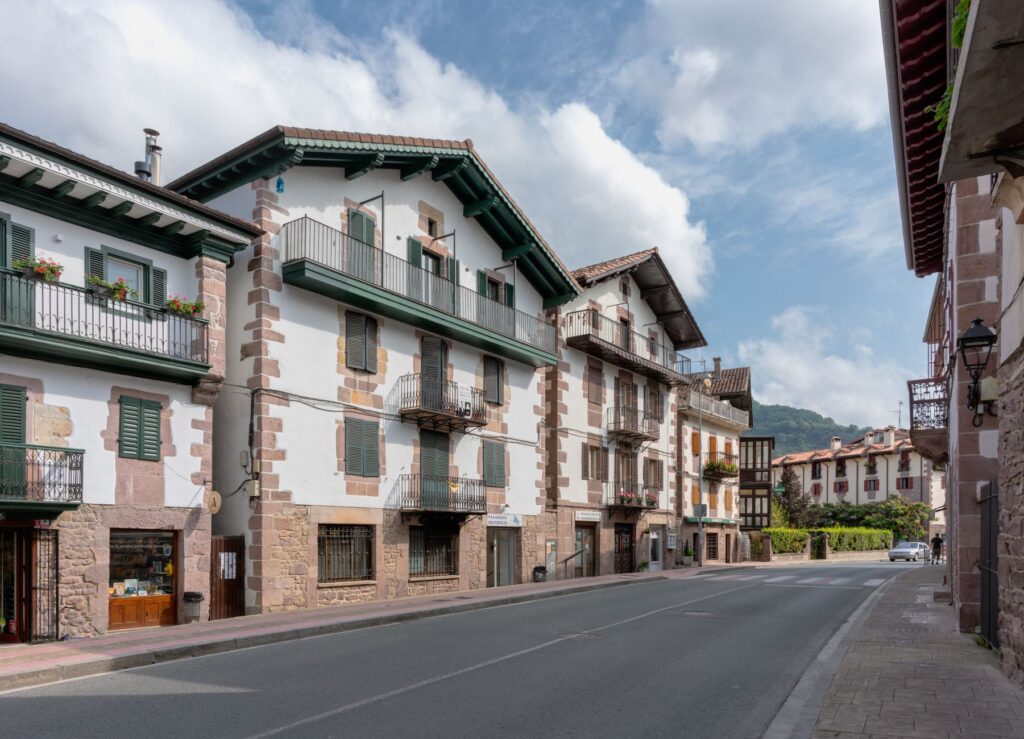
In the Aezkoa Valley, 15 of Navarre’s 22 granaries (hórreos) are preserved, also declared a Site of Cultural Interest. These structures, complementary to the houses, were used to store grain safe from damp and rodents. In Abaurregaina/Abaurrea Alta, the highest village in Navarre, the old cemetery has been turned into a museum, the Garden and Labyrinth of Steles, with more than thirty medieval steles recovered.
The forest does not need visitors who admire it in silence, but visitors who understand that its conservation is a shared responsibility.
Ochagavía, gateway to the Salazar Valley
At 764 metres above sea level, at the confluence of the Zatoya and Anduña rivers, Ochagavía is one of the most beautiful villages in Navarre. Its origins date back to the 11th century. The Plateresque cross over the Zatoya river welcomes you to a town of cobbled streets, 18th- and 19th-century manor houses and unmistakable Pyrenean architecture. From the upper part of the village, a cobbled path leads to the Sanctuary of Nuestra Señora de Muskilda, from the 12th century, with oak-board roofs.
In the town centre, next to the Tourist Office, the Ochagavía Nature Interpretation Centre (CIN) offers tourist and environmental information about the area, with exhibitions on geology, fauna, vegetation and the ethnography of the Salazar Valley. It is a recommended stop before venturing into the forest.
Food and rest
After walking, local cuisine is a reward. Migas de pastor (shepherd’s crumbs), autumn mushrooms, veal and suckling lamb, Navarrese trout and game stews are among the most common dishes. To finish, sheep’s cheese and pacharán. In the Aezkoa and Salazar valleys there are numerous restaurants and rural accommodations, from charming hotels to country houses, hostels and campsites. The offer allows you to organise multi-day stays to explore the area at a leisurely pace.
Practical guide
- When to go: Spring and autumn offer spectacular colours and fewer crowds. Summer is the busiest season. In winter, snow may close access points; check road conditions.
- Fees: In high season, the Casas de Irati (Salazar Valley) and Arrazola (Aezkoa Valley) access points charge a maintenance fee. The Irati-Abodi and Arms Factory access points do not.
- Information: Before setting out, check Navarre’s official tourism channels for opening times, trail conditions and available services.
- Equipment: Mountain footwear, water, sun protection and warm clothing even in summer. In winter, snowshoes or skis if opting for snowy routes.
- Respect: Do not leave the marked trails, do not leave waste, do not disturb wildlife and respect the rules of the nature reserves.
- Accessibility: Some routes are suitable for families with children; others require mountain experience. Check the difficulty before choosing.
A closing among beeches
At the end of the day, when light filters through the trunks and the forest recovers its silence, you understand why this place is protected with such care. It is not just a landscape: it is a fragile ecosystem, a legacy of centuries and a reminder that travelling also means taking care. The Irati Forest is not visited like a theme park; it is visited as you would enter someone’s home: with respect, with curiosity and knowing that our presence should leave as little trace as possible.